Novel Two-Stage Algorithm Outperforms Nine Competing Methods in Mapping Gene Regulatory Networks Across Varying Sizes
Combining exhaustive logical rule checks with evolutionary optimization helps scientists reconstruct cellular interactions more accurately than traditional tree-based models.

A new hybrid computational approach successfully maps how genes regulate one another over time by combining fast logical rule checks with evolutionary optimization.
Understanding how genes interact within living cells remains a major challenge in bioinformatics, particularly because complex regulatory networks control vital processes such as the initiation and progression of cancer. Researchers continuously strive to reconstruct these networks from time-series gene expression data, which capture the activity levels of genes across successive time steps. While many computational models exist, most struggle to scale up to larger systems or get trapped in suboptimal solutions when evaluating thousands of potential genetic relationships.
How Does the New Two-Stage Algorithm Function?
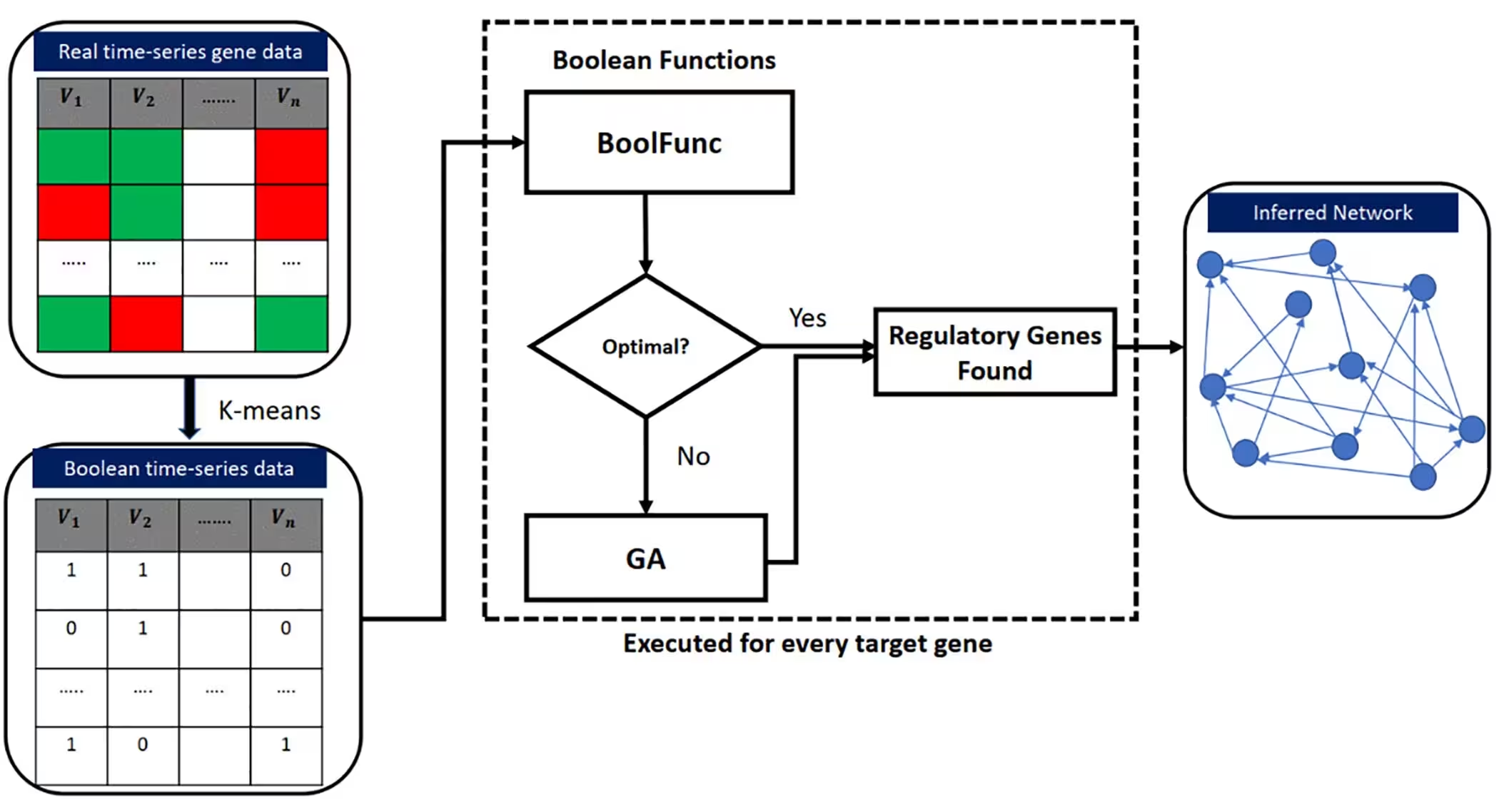
To overcome these computational bottlenecks, investigators Shohag Barman and Rudra Pratap Deb Nath developed a novel framework named BoolFunc-EA. The details of this approach are available in a study published in PLOS One. The method operates in two distinct tiers to reconstruct gene regulatory networks from binarized time-series datasets.
In the first stage, the algorithm performs an exhaustive evaluation of a restricted set of simple Boolean functions, treating gene states as binary variables that are either zero or one. This rapid screening phase identifies straightforward regulatory relationships for target genes without consuming excessive computer memory. If this initial step fails to find a satisfactory regulatory match, the algorithm transitions to its second stage, deploying a genetic algorithm to explore a broader solution space.
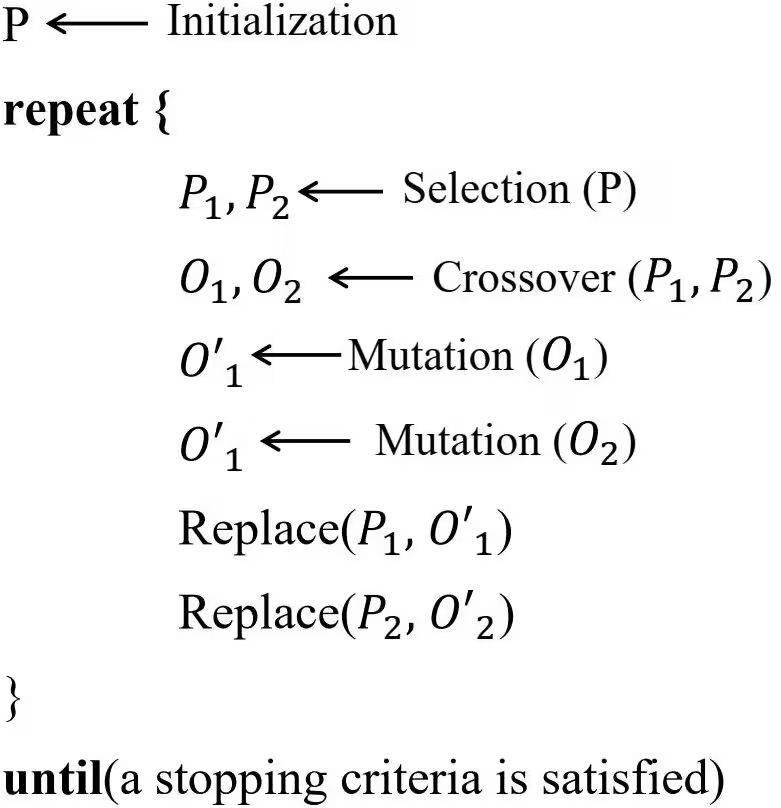
During the evolutionary optimization phase, candidate solutions undergo simulated reproduction, crossover, and mutation over five hundred generations. To prevent the search from stalling, the authors implemented strict constraints, including a mutual information threshold of zero point zero five to discard weak regulatory links, alongside a maximum limit on the number of regulators assigned to any single target gene.
What Did Performance Benchmarks Reveal Across Diverse Datasets?
The research team evaluated their framework against nine established benchmark methods, including LogicGEP, LogBTF, MIBNI, LBF-MI, RelNet, CLR, Genie3-time, dynGenie3, and Jump3. The assessment utilized one hundred artificial networks, fifty simulated datasets generated via GeneNetWeaver, and a real experimental dataset comprising the budding yeast cell cycle network, which contains eleven nodes and twenty-nine known interactions.
Across artificial networks ranging from ten to one hundred nodes, the proposed method consistently achieved the highest F-scores, starting near zero point nine for small networks and remaining above zero point seven five for larger systems. In contrast, mutual information and tree-based competitors exhibited steep performance drops as network complexity increased. When tested on the real budding yeast cell cycle dataset, the new framework achieved an F-score of zero point seven nine zero seven, outperforming the second-best competitor by more than forty-two percent.
What Are the Current Limitations and Future Directions?
Despite its high structural accuracy and moderate runtime, the framework relies on synchronous Boolean network semantics as a simplifying assumption. Biological regulatory events rarely occur in strict unison, and synchronous modeling can occasionally miss intermediate states that asynchronous updating might capture.
Furthermore, the current implementation relies entirely on transcriptomic data without incorporating complementary biological layers such as protein-protein interactions or epigenetic modifications. The authors plan to address these limitations in future work by exploring asynchronous and hybrid update mechanisms, as well as integrating multi-omics data to further enhance biological realism and predictive power.
The research was published in PLOS One on November 23, 2026.
This article has been fact checked for accuracy, with information verified against reputable sources. Learn more about us and our editorial process.
Last reviewed on .
Article history
- Latest version
Reference(s)
- Barman, Shohag., et al. “BoolFunc-EA: A Boolean–evolutionary approach for accurate inference of gene regulatory networks from time-series gene expression data.” PLOS One, vol. 21, no. 11, November 23, 2026, pp. e0362956 Public Library of Science (PLoS), doi: 10.1371/journal.pone.0362956. <https://doi.org/10.1371/journal.pone.0362956>.
Cite this page:
- Posted by Elizabeth Taylor