Hospital Patients Rate Wearable Health Sensors High Despite Comfort And Communication Gaps
A Catharina Hospital study reveals that while surgical patients appreciate continuous vital-sign tracking, physical friction and missing information remain common hurdles.
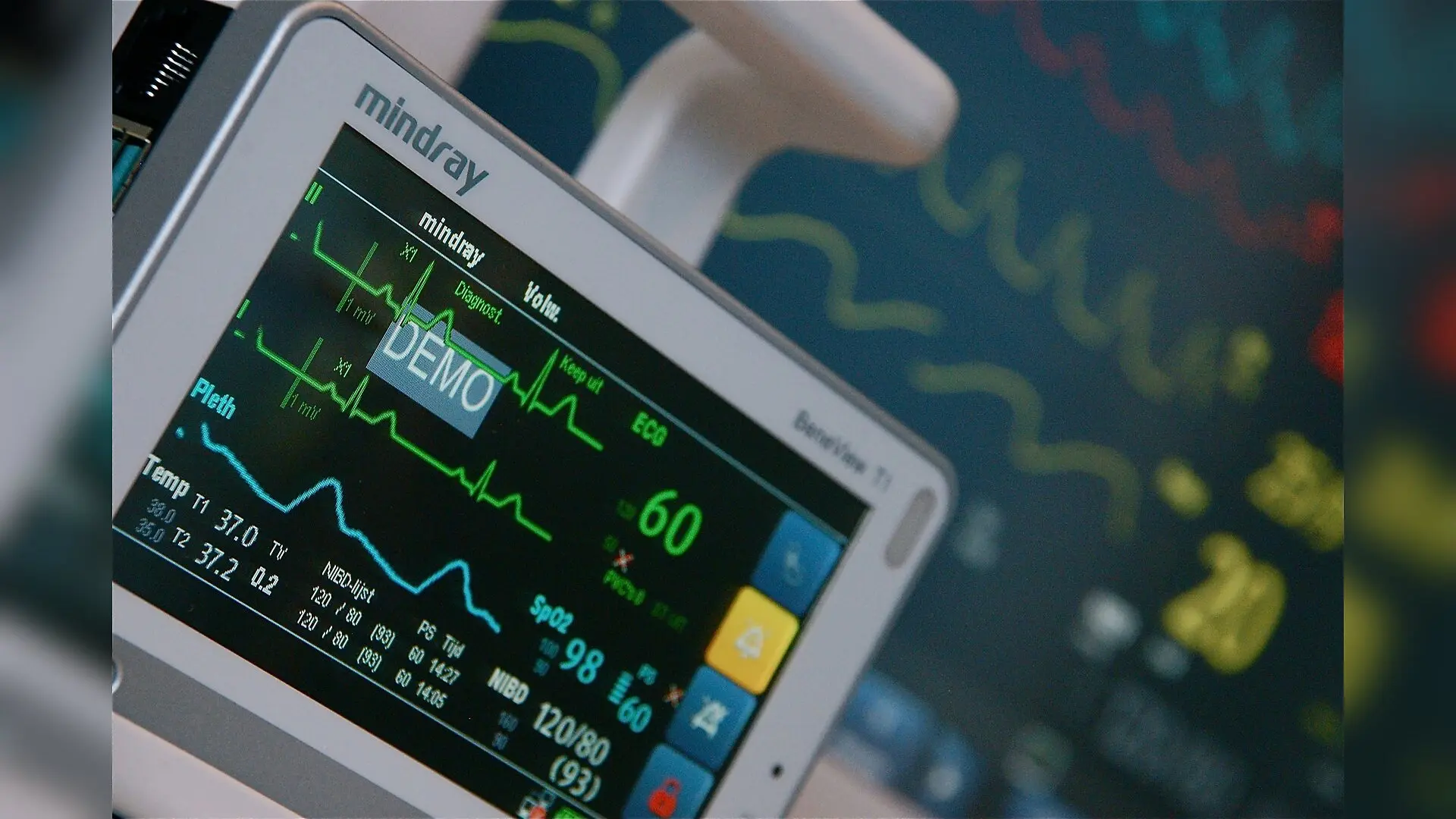
Wearable vital-sign monitors worn by hospital patients during recovery bring high satisfaction ratings alongside physical friction and communication gaps, according to a recent evaluation. Researchers at Catharina Hospital Eindhoven in the Netherlands evaluated 102 surgical ward patients wearing digital health sensors for at least 24 hours to understand how continuous monitoring affects comfort, sleep, and peace of mind during hospital stays.
Continuous monitoring has gained traction as hospitals seek alternatives to manual checks performed every four to eight hours. While traditional spot checks create temporal gaps where clinical deterioration can go unnoticed, wearable sensors track metrics like heart rate and respiratory rate continuously. The study, published in PLOS One, surveyed patients to capture their experiences beyond clinical feasibility.
How Did 102 Surgical Patients Rate Wearable Health Sensors?
The study population included adults with a mean age of 65.5 years, where nearly 60 percent were male. Participants were monitored using one of two CE-marked devices: the Healthdot adhesive data logger placed on the left lower rib or the viQtor armband worn on the upper arm. Both devices transmitted physiological data every five minutes to hospital dashboards.
Overall patient acceptance scored a mean of 4.05 out of 5, while overall satisfaction reached 8.21 out of 10. Domain scores varied across categories, with comfort scoring the highest at 4.42 and reassurance scoring the lowest at 3.50. Cronbach’s alpha for the scored questionnaire items reached 0.84, indicating strong internal consistency.
What Caused Physical Discomfort and Patient Confusion?
Despite high general satisfaction, qualitative feedback from 36 respondents revealed notable friction points. About 28 percent of respondents reported physical discomfort, including tightness, pressure, skin irritation from elastic bands, or device displacement during movement. Additionally, 27.8 percent of respondents highlighted a lack of information regarding the device purpose.
Patients frequently expressed a desire to view their own physiological measurements. Reassurance scores remained moderate, suggesting that continuous automated monitoring does not automatically translate into a conscious feeling of increased safety for every patient.
Can Device Differences Explain Variations in Patient Acceptance?
Acceptance scores were higher among patients using the Healthdot adhesive dot compared to those using the viQtor armband. However, the authors emphasized that device and ward were almost completely confounded, as Healthdot was used primarily on the oncological surgery ward and viQtor on general surgery. Consequently, observed differences cannot be definitively attributed to device hardware alone rather than ward-specific workflows or patient populations.
The study carries several limitations, including a non-validated questionnaire adapted from the Technology Acceptance Model 2, a single-center design, and a limited qualitative sample consisting of free-text responses and two interviews. The authors noted that patient acceptance does not substitute for clinical effectiveness or safety validation.
The research was published in PLOS One on November 23, 2026.
This article has been fact checked for accuracy, with information verified against reputable sources. Learn more about us and our editorial process.
Last reviewed on .
Article history
- Latest version
Reference(s)
- Jerry, Ephrahim E.., et al. “Patient acceptance of continuous wearable vital-sign monitoring on surgical wards: A prospective mixed-methods survey study.” PLOS One, vol. 21, no. 11, November 23, 2026, pp. e0363253 Public Library of Science (PLoS), doi: 10.1371/journal.pone.0363253. <https://doi.org/10.1371/journal.pone.0363253>.
Cite this page:
- Posted by Priya Sharma