How SARS-CoV-2 Infection Rewires the Human Body into a Tightly Coupled Multi-System Symptom Web
Network analysis of 1,361 adults reveals that viral exposure transforms isolated complaints into an interconnected web driven by sensory and respiratory hubs.
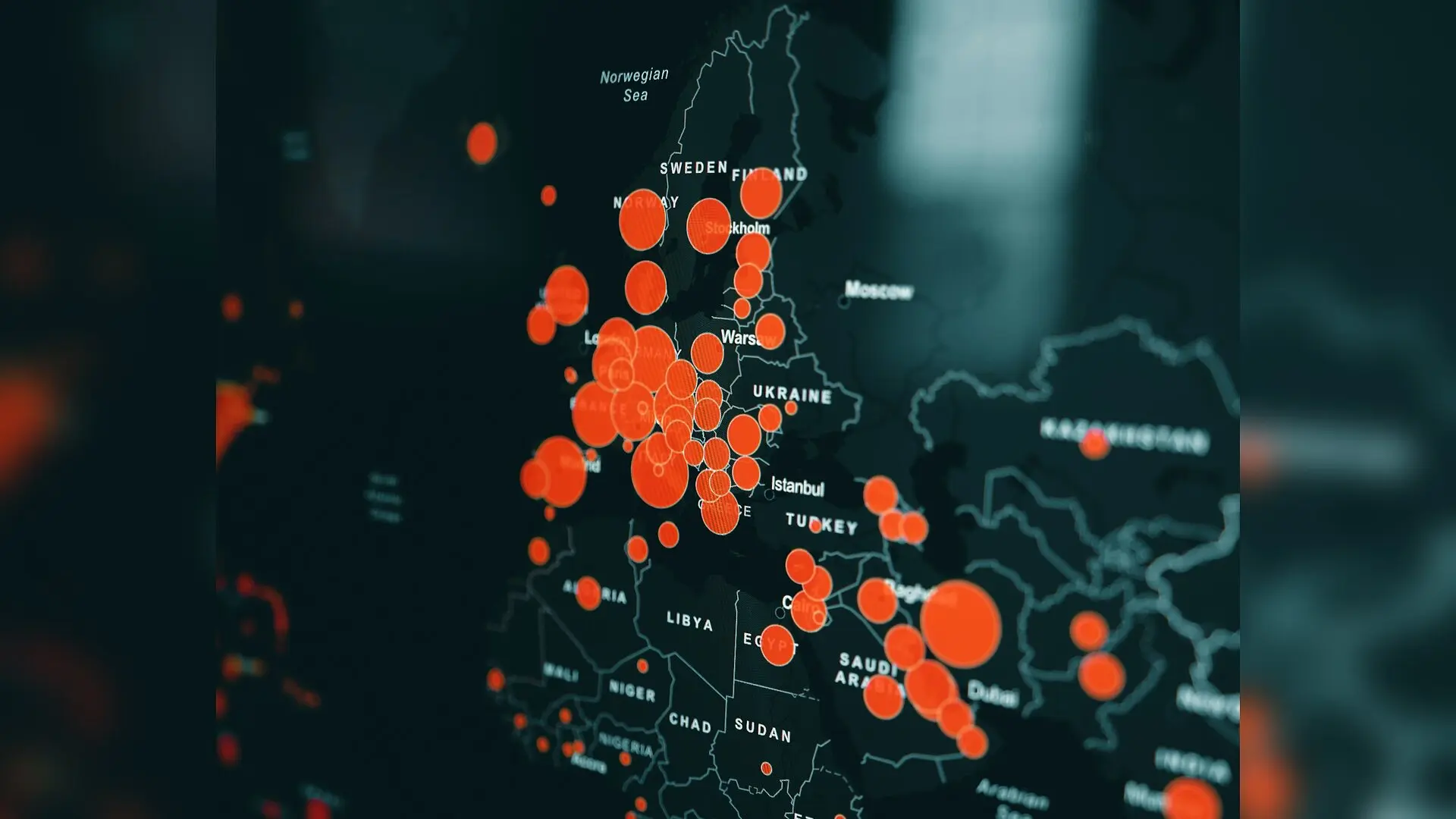
Symptom networks in people recovering from COVID-19 show that the illness reorganizes how physical complaints interact rather than just adding new discomforts, according to a cohort investigation published in PLOS Complex Systems. The study followed 1,361 adults, comparing 787 individuals with prior SARS-CoV-2 infection to 574 uninfected controls across 12 hospitals in Korea to map out how 29 distinct symptoms cluster and influence one another over time.
How Does Infection Change the Architecture of Daily Discomfort?
While ordinary illnesses tend to produce scattered and loosely connected complaints, prior infection creates a much tighter web where individual symptoms reinforce each other. The research team, led by Youngji Jo and colleagues at Hallym University, used weighted network analysis to evaluate both local connectivity and global system influence across multiple clinical domains. In the infected group, weighted network density reached 61.0 points compared to just 4.91 points in the uninfected group, indicating that post-infection symptoms appear together far more frequently across individuals.
At the same time, modularity—a measure of how cleanly symptoms separate into distinct functional groups—dropped from 0.0433 in healthy controls down to 0.0098 after infection. This collapse in modular boundaries suggests that respiratory, sensory, and systemic complaints stop acting as independent medical issues and instead merge into a unified multi-system state.
Which Symptoms Act as the Main Drivers of Long-Term Suffering?
Fatigue remains a common fixture in both groups, but its structural role shifts dramatically after viral exposure. Although fatigue and muscle aches showed massive local strength gains, they functioned more as downstream reflections of overall distress rather than isolated triggers. In contrast, differential network analysis revealed that less common peripheral complaints, notably ageusia, or loss of taste, and sore throat, exhibited some of the largest statistical surges in global network influence.
These sensory and upper-airway issues act as structural bridges, connecting localized mucosal inflammation to broader neurological and metabolic disturbances. The authors noted that cough and sputum also emerged as central hubs, pulling the entire network toward a respiratory-centered core that distinguishes post-infection illness from conventional fatigue states.
Does the Symptom Web Change as Months Pass by?
Tracking participants through discrete intervals from zero to 24 months revealed that symptom coupling is highly time-dependent. During the initial zero to 3 month window, network density peaked at 41.2 alongside positive strength assortativity, meaning highly connected symptoms clustered heavily together while acute immune activation was highest. By 12 to 24 months, network density declined toward 9.24 and modularity partially rebounded, pointing to a gradual decoupling over time as patients either recovered or settled into stable chronic profiles.
The investigators confirmed these patterns through rigorous uncertainty testing, including bootstrap resampling, permutation checks, and prevalence-preserving null models to ensure the observed shifts were not simply byproducts of basic symptom counts. Conditional-dependence checks via regularized Ising networks further corroborated that viral exposure fundamentally restructures symptom associations rather than merely inflating overall reporting frequency.
What Limitations Shape These Network Findings?
Several caveats temper the conclusions, beginning with the reliance on self-reported binary symptom markers that omit individual severity gradations or functional impact scores. Additionally, because the networks pool data across individuals at different time points, the temporal trajectories reflect population-level shifts rather than direct within-person disease progression. Differential attrition in later follow-up windows also means that observations past twelve months should be viewed as exploratory until confirmed by longitudinal individual tracking.
The research was published in PLOS Complex Systems on November 23, 2026.
This article has been fact checked for accuracy, with information verified against reputable sources. Learn more about us and our editorial process.
Last reviewed on .
Article history
- Latest version
Reference(s)
- Jo, Youngji., et al. “Network drivers of long COVID: SARS-CoV-2 infection reshapes symptom interdependencies.” PLOS Complex Systems, vol. 3, no. 11, November 23, 2026, pp. e0000146 Public Library of Science (PLoS), doi: 10.1371/journal.pcsy.0000146. <https://doi.org/10.1371/journal.pcsy.0000146>.
Cite this page:
- Posted by Zubair Ali