Blood Tests On 369 Infants Reveal Unexpected Spread Of Bacterial Infection In Ecuador
Antibody tracking confirms the successful elimination of river blindness and yaws, but uncovers high rates of Chlamydia trachomatis exposure in remote rural villages.

Antibody tests on 369 infants in coastal Ecuador reveal that two historically devastating tropical diseases remain successfully eradicated, while uncovering unexpected signs of a third bacterial infection spreading in remote river communities.
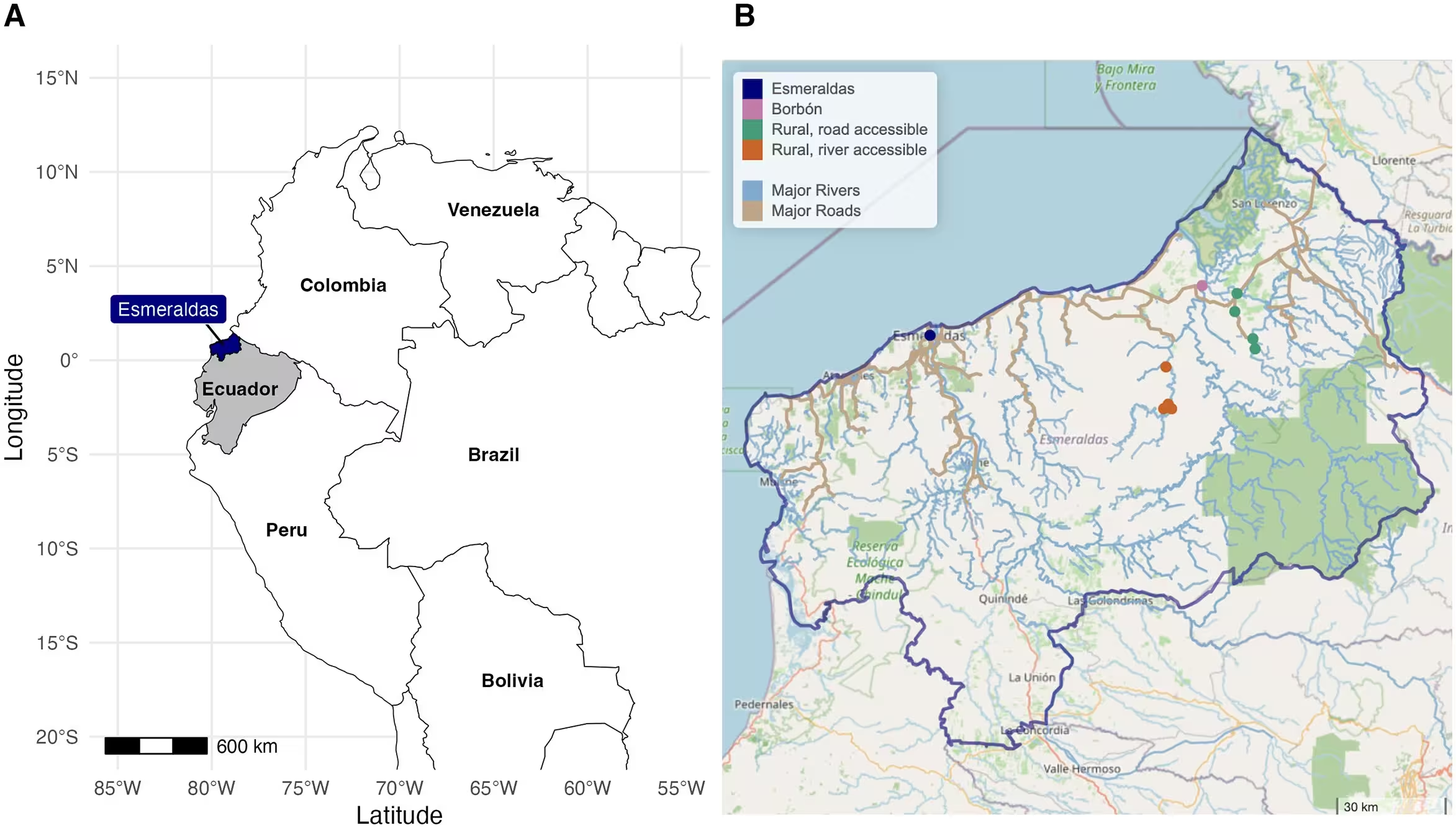
Researchers tracked children aged 6 to 24 months across urban and rural parts of Esmeraldas Province from 2021 to 2024, analyzing dried blood spots using a multiplex bead assay that measures immunoglobulin G (IgG) antibody responses to multiple pathogens simultaneously. The investigation, published in PLOS Neglected Tropical Diseases, confirms that onchocerciasis (also known as river blindness) and yaws (a chronic bacterial infection affecting skin and bone) show no evidence of active transmission in the region.
How Do Blood Tests Track Disease Elimination Over Time?
Evaluating the success of disease elimination programs is challenging because clinical cases can become extremely rare long before transmission stops entirely. To solve this, public health scientists look at antibodies, which are specialized blood proteins produced by the immune system to fight off foreign invaders. When a community eliminates a pathogen, young children born after the interruption will lack antibodies against it, aside from temporary maternal antibodies passed down during infancy.
Lead author Lesly Simbaña and colleagues at the University of Washington and collaborating institutions tested 1,574 blood samples from the birth cohort at ages 6, 9, 12, 18, and 24 months. For onchocerciasis, caused by the parasitic worm Onchocerca volvulus, and yaws, caused by the bacterium Treponema pallidum, fewer than 1 percent of all samples tested positive. The few positive results appeared in older infants and matched the expected pattern of waning maternal antibodies disappearing as the children grew.
What Did the Findings Reveal About Trachoma Risks?
While the data reinforced the elimination of river blindness and yaws, the results told a very different story for Chlamydia trachomatis, the bacterium responsible for trachoma, which is the leading infectious cause of blindness worldwide. Although the status of trachoma in Ecuador has long remained unknown, the study found that 6.3 percent of all samples and 14.1 percent of children overall tested positive for antibodies to the Pgp3 antigen associated with the bacterium.
Seroprevalence and cumulative incidence climbed steadily along an urban-rural gradient. While infants living in the city of Esmeraldas showed low rates of exposure, children in isolated rural river-accessible villages faced a much higher burden, with nearly half testing positive at some point during their first two years of life.
Why Are Infants Developing Antibodies So Early in Life?
To determine whether these antibodies resulted from active postnatal infections rather than lingering maternal protection, the team calculated prospective seroconversion rates, measuring how often children transitioned from antibody-negative to antibody-positive. The analysis identified 34 incident seroconversions after age 6 months, yielding a seroconversion rate of 15.1 per 100 person-years in rural villages.
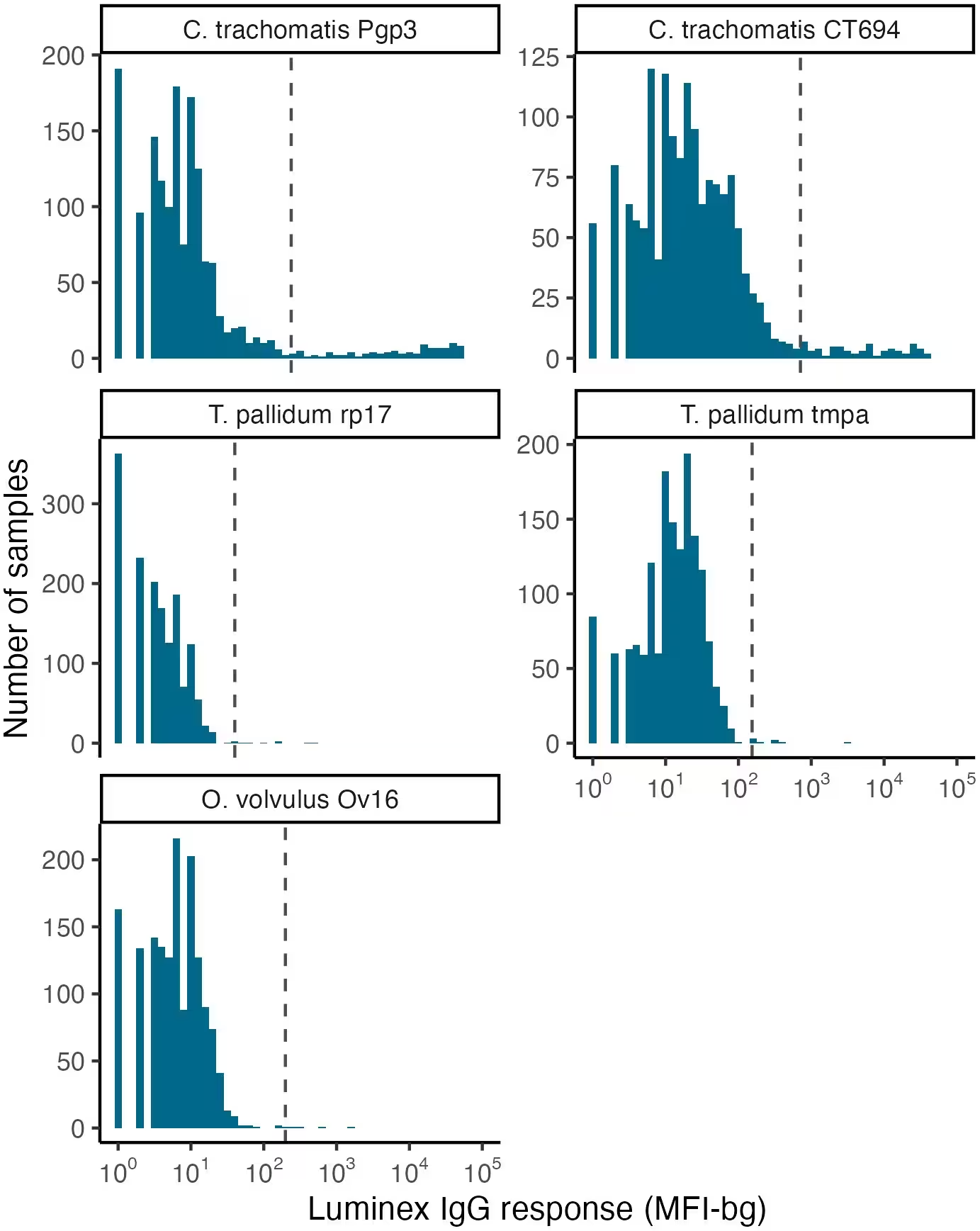
Even when researchers applied a stricter definition requiring antibodies to react to a second confirmatory antigen named Ct694, rural infection rates remained high at 8.2 per 100 person-years. Longitudinal tracking also revealed that many infants experienced rapid seroreversion, losing their detectable antibodies within months, a pattern that highlights how fragile infant humoral immunity can be against mucosal pathogens.
What Are the Next Steps for Public Health Action?
The authors note several limitations, including a relatively small sample size of 177 children in rural historically endemic zones, which falls short of the thousands required for official World Health Organization verification guidelines. Furthermore, the Pgp3 antibody test cannot distinguish between ocular strains of chlamydia that cause blinding trachoma and urogenital strains transmitted among adults.
Nevertheless, the high frequency of early childhood exposure highlights the power of integrated serological surveillance to spot hidden public health threats in tropical Latin America. Additional clinical eye exams and broader testing are now required to clarify whether these infant exposures stem from ocular transmission or urogenital strains, and to determine if public health interventions are needed in the region.
The research was published in PLOS Neglected Tropical Diseases on November 23, 2026.
This article has been fact checked for accuracy, with information verified against reputable sources. Learn more about us and our editorial process.
Last reviewed on .
Article history
- Latest version
Reference(s)
- Simbaña, Lesly., et al. “Integrated serosurveillance to assess disease elimination in coastal Ecuador: Onchocerciasis, yaws, and trachoma.” PLOS Neglected Tropical Diseases, vol. 20, no. 11, November 23, 2026, pp. e0014904 Public Library of Science (PLoS), doi: 10.1371/journal.pntd.0014904. <https://doi.org/10.1371/journal.pntd.0014904>.
Cite this page:
- Posted by Sana Malik