Superfluid Physics Model Explains How Dead Stars Suddenly Speed Up
New research shows how quantum whirls escaping inside decelerating containers slam on their own brakes, shedding light on pulsar glitches.
When super-cold quantum fluids slow down inside a spinning container, microscopic whirlpools of liquid suddenly burst outward in a collective exodus that could explain the mysterious speeding up of dead stars. Physicists have long puzzled over how superfluids maintain their pace when their outer boundary decelerates, and new theoretical work now reveals why these violent structural shifts slam on their own brakes before emptying the entire vessel.
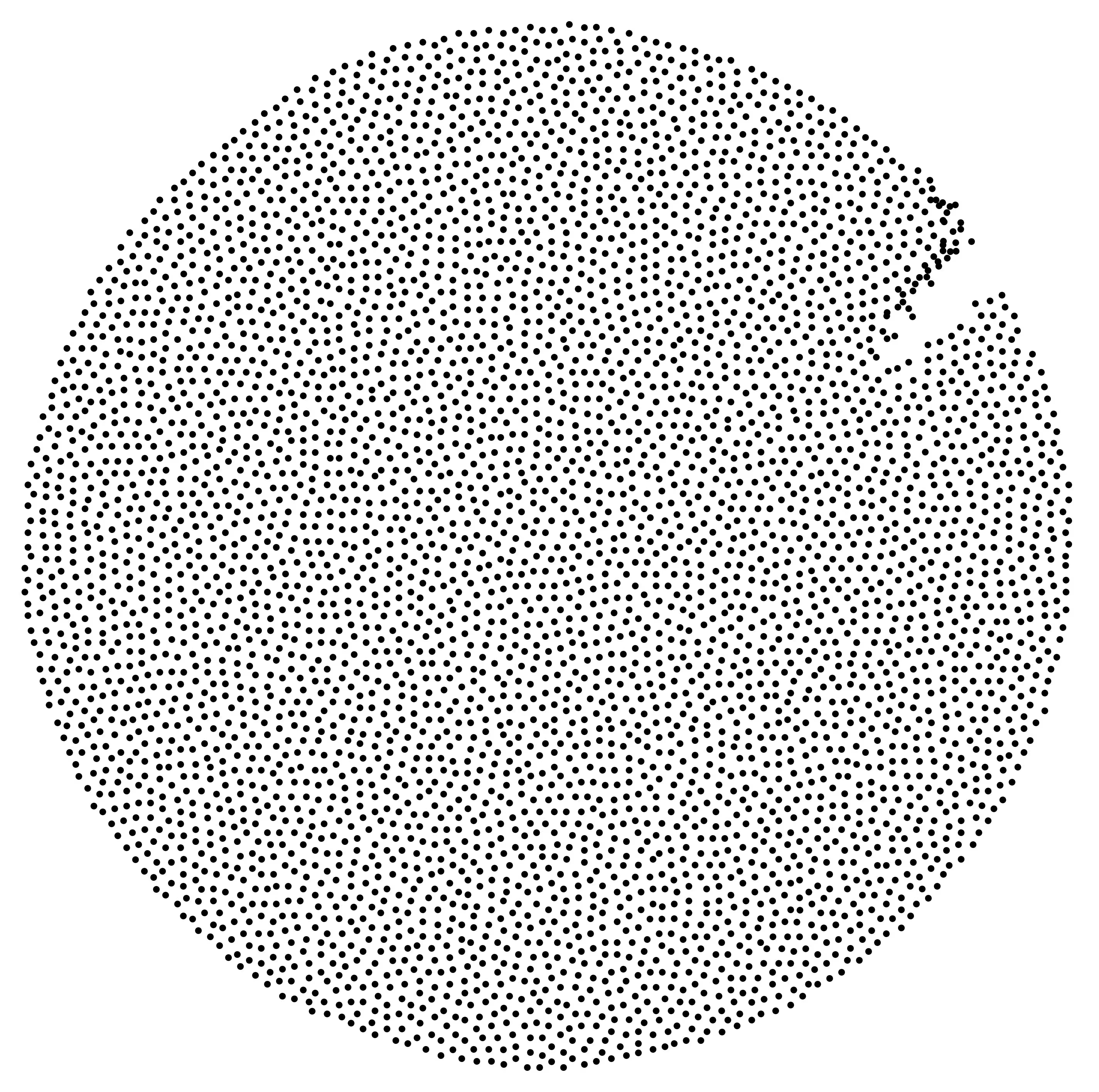
Superfluids are strange states of matter that flow without any friction whatsoever. To rotate, they cannot simply spin like a solid bucket of water, instead forming thousands of tiny quantized whirls known as vortices that arrange themselves into a neat hexagonal grid called an Abrikosov lattice. When the outer container slows down, the fluid keeps pace by shedding these outer whirls so the overall density drops in tandem with the rotation rate.
That smooth slowdown changes dramatically if imperfections or physical obstacles anchor the whirls in place. As the container decelerates, a growing rotational lag builds up across the fluid until the force overcomes the anchorage points, triggering a sudden escape. In a study published in arXiv, researchers Anantharaman Sekharipuram Viswanathan and Dipankar Bhattacharya from Ashoka University in India set out to investigate how these rearrangement events start, progress, and finally stop.
How Does a Giant Exodus of Quantum Whirls Stop Itself?
The authors demonstrated that the initial escape begins when a wedge-shaped sector near the container wall loses its vortices. As that empty wedge opens up, it alters the internal flow velocities of the remaining fluid. Once the opening angle of the cleared sector exceeds a critical threshold, the flow at the tip of the wedge becomes fast enough to tear more vortices away from their anchoring sites.
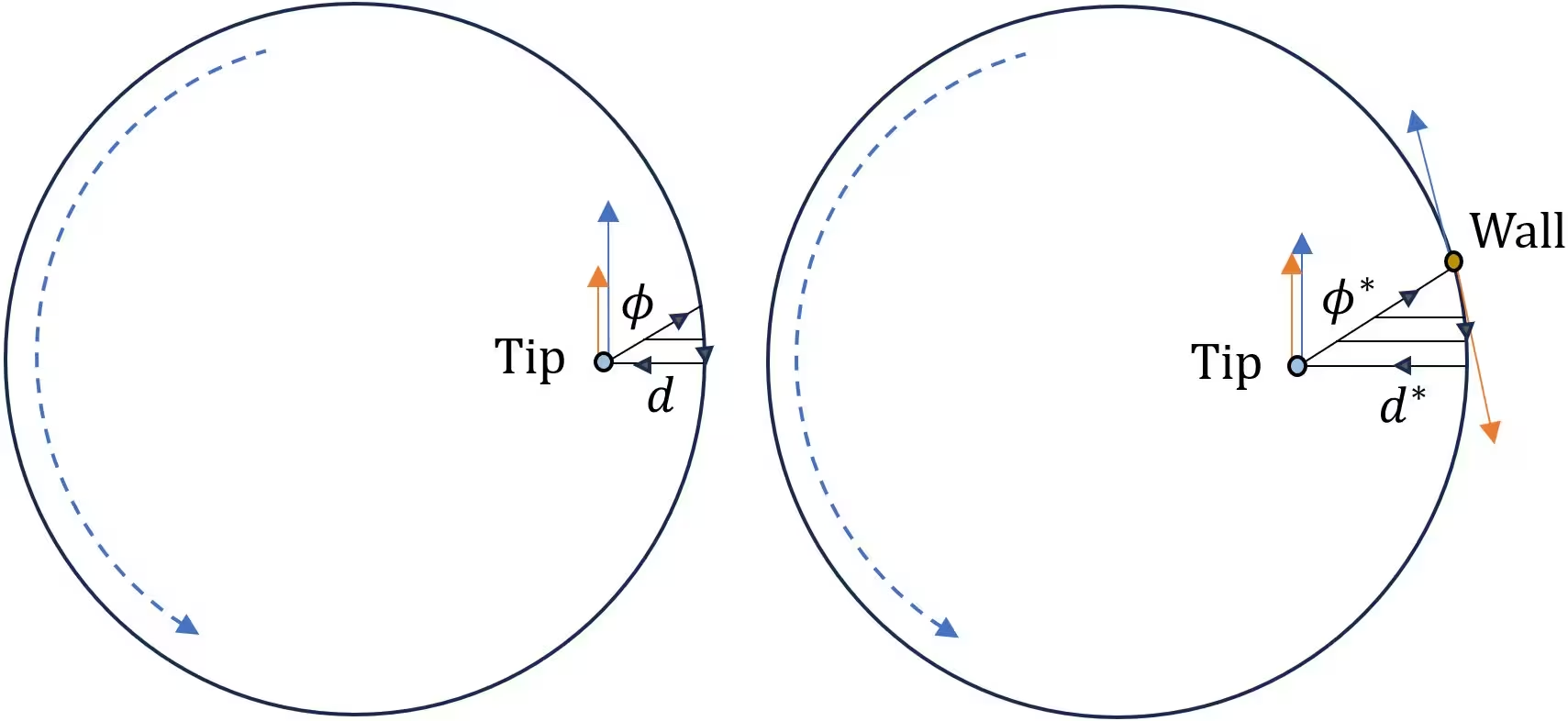
However, this mass exodus does not continue indefinitely. As the cleared region grows deeper, the fluid motion near the container boundary weakens and eventually reverses direction. This creates a powerful opposing force that drives escaping vortices back outward or traps them, effectively choking off the exit route and forcing the system to arrest its own rearrangement.
What Controls the Final Size of the Empty Region?
The analytical calculations and computer simulations show that the final dimensions of the depleted zone depend primarily on three factors, namely the critical unpinning speed required to break a whirl free, the radius of the container, and the initial rotation rate of the superfluid. When the researchers tested their model against numerical simulations using varying unpinning speeds, the predicted opening angles and sector depths matched the simulated outcomes closely.
This self-arresting mechanism has direct implications for pulsars, which are rapidly spinning neutron stars that occasionally exhibit sudden rotational speed increases known as glitches. Inside these stellar remnants, neutron superfluids are thought to be pinned to the nuclear crystal lattice of the crust. When enough lag builds up, a massive vortex avalanche takes place, transferring angular momentum to the solid crust and causing the star to spin faster abruptly.
Can This Model Explain Real Starquakes in Pulsars?
By treating a neutron star as a cylindrical container with a radius of about ten kilometers, the authors calculated the expected fractional spin-up values for well-known stellar objects. For the Crab pulsar, the model yields a fractional spin-up on the order of one in ten billion, while the Vela pulsar yields an estimate of about one in one hundred thousand. These theoretical values align reasonably well with the actual glitch sizes observed by astronomers.
Despite the successes of the model, the team notes several simplifying assumptions in their approach. Real neutron stars feature highly complex, inhomogeneous pinning landscapes and possess spherical geometries with radially stratified layers rather than simple cylinders. Nevertheless, the discovery of this self-arresting hydrodynamical process offers a fresh perspective on how internal quantum friction and vortex interactions shape macroscopic astrophysical events.
The study was posted to the arXiv preprint server on November 24, 2026.
This article has been fact checked for accuracy, with information verified against reputable sources. Learn more about us and our editorial process.
Last reviewed on .
Article history
- Latest version
Reference(s)
- Viswanathan, Anantharaman. “Self-arresting vortex rearrangements in pinned spinning-down superfluids.” arXiv.org <http://arxiv.org/abs/2611.33103v1>.
Cite this page:
- Posted by Farah Siddiqui