New Framework Ranks Over Six Thousand Exoplanets to Reveal Which Temperate Worlds Deserve Telescope Time First
A novel Monte Carlo model evaluates thousands of exoplanets to build facility-specific priority lists for the James Webb Space Telescope and Extremely Large Telescope.
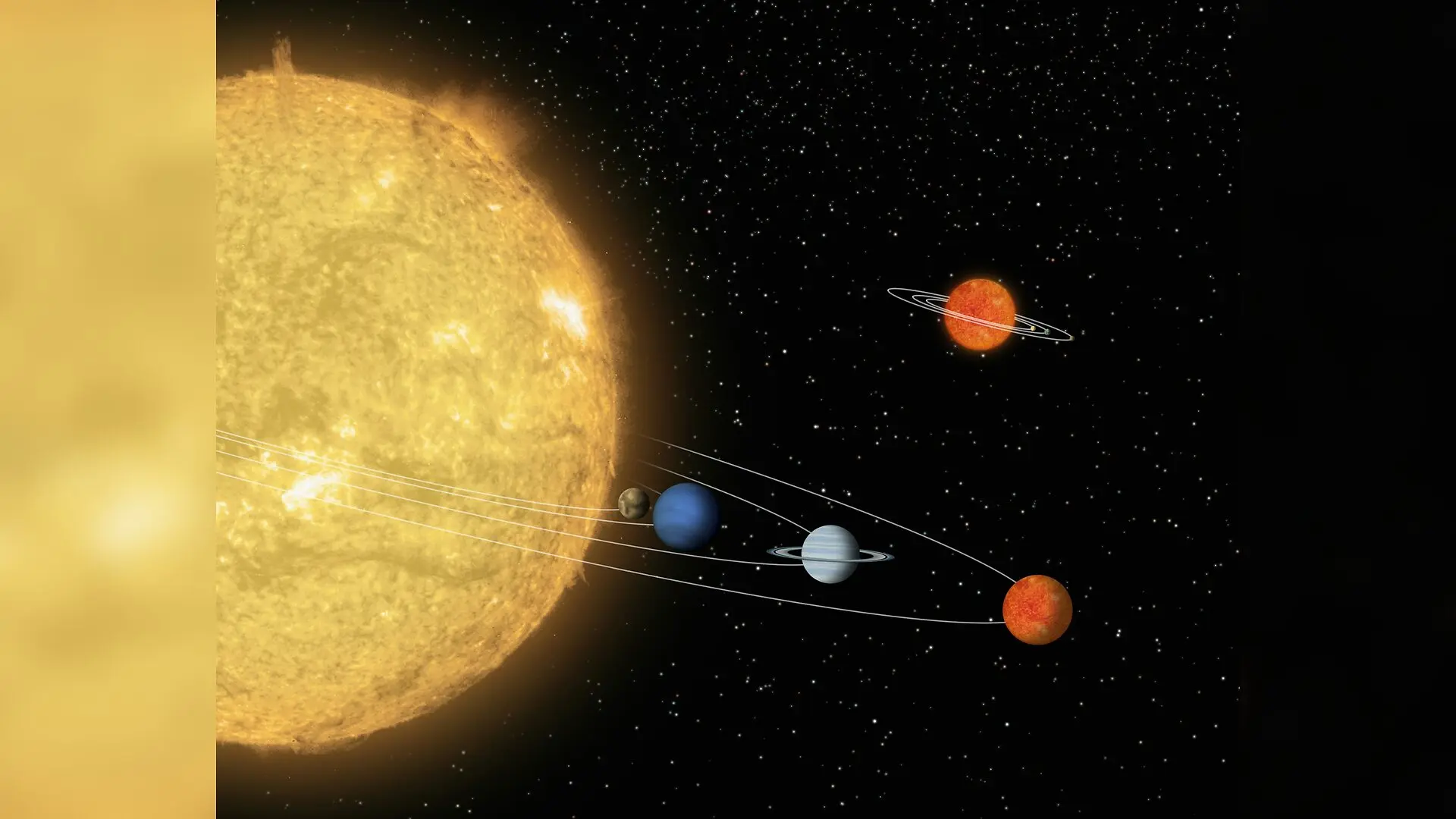
Deciding which temperate exoplanets deserve scarce telescope time is one of the most pressing challenges in modern astronomy. A new open-source Monte Carlo framework designed by independent researcher Effy Viridis aims to solve this dilemma by generating facility-specific priority lists for both the James Webb Space Telescope and planned Extremely Large Telescope instruments. By evaluating thousands of potential scenarios for thousands of known worlds, the model bridges the gap between raw signal strength and planetary habitability.
Observing time on flagship space and ground observatories is fiercely contested, with the Space Telescope Science Institute projecting roughly thirty thousand hours of lifetime exoplanet observations for the James Webb Space Telescope alone. Traditional target selection metrics often focus exclusively on instrument detectability or idealized planetary similarity, treating all potential targets on a single linear scale. The new study, available on the arXiv preprint server, introduces the Unified Habitability Index version 6.1 framework to process catalog uncertainties across six thousand one hundred twelve planets from the NASA Exoplanet Archive.
How Does the New Framework Rank Habitable Worlds?
Instead of merging all observatories and planetary types into one master ranking, the framework builds separate priority lists tailored to specific instrument capabilities and physical compositions. For transiting planets suited to transmission spectroscopy, the system models James Webb Space Telescope signal-to-noise ratios alongside cloud cover factors and systematic noise floors. For non-transiting worlds, it evaluates reflected-light imaging contrast ratios and angular separations for the Planetary Camera and Spectrograph concept proposed for the ground-based Extremely Large Telescope.
Each world undergoes ten thousand Monte Carlo realisations, which are computational simulations that test how varying input parameters affect planetary outcomes. In every simulation draw, the model evaluates seven sub-scores covering physical size and mass, climate stability, atmospheric retention, stellar activity, geological regime, magnetic protection, and observability. Rather than relying on a single set of fixed priorities, the relative importance of these categories shifts dynamically according to a probability distribution, ensuring that uncertainties in planetary science are fully represented in the final rankings.
Which Exoplanets Top the Priority Lists?
When evaluated at a five-sigma threshold, the analysis reveals that two hundred fifty-five rocky planets and seventy-one Hycean candidates, which are water-rich worlds beneath hydrogen-rich atmospheres, remain viable targets. For space-based transit observations with the James Webb Space Telescope, the leading rocky targets include TRAPPIST-1 e, Kepler-442 b, TRAPPIST-1 f, TRAPPIST-1 d, and TOI-1452 b. Among these front-runners, TRAPPIST-1 e achieves the highest list score of zero point zero eight two, surviving in about eighty-two percent of model realisations and occupying a top-ten ranking in more than sixty percent of draws.
For ground-based reflected-light observations with the Extremely Large Telescope, the top-ranked non-transiting rocky targets are GJ 273 b, Wolf 1061 c, GJ 1061 d, Proxima Centauri b, and GJ 3378 b. Because these nearby worlds lack measured radii, their classifications rely on mass-to-radius relationships and statistical routes. The author notes that obtaining precise radius measurements for these specific targets would alter their standing far more than refining the instrument detection models themselves.
What Drives the Uncertainty in Target Rankings?
To understand which theoretical assumptions and measurements influence the priority lists the most, the study conducted a global Saltelli-Sobol sensitivity analysis across thirty-two model parameters. The results demonstrate that the rocky lists are dominated by the location and width of the cosmic shoreline, a theoretical boundary defined by extreme-ultraviolet stellar radiation that separates planets that retain their atmospheres from those that are stripped bare.
The global sensitivity analysis confirms that observational campaigns designed to test atmospheric retention on rocky M-dwarf planets will provide the most valuable feedback for future target prioritisation. While the framework provides a robust statistical foundation for selecting observation targets, the author emphasizes that the Hycean branch remains strictly indicative due to climate model degeneracies, and all underlying code and per-planet summaries have been made publicly available for researchers to rerun under custom instrument assumptions.
The study was posted to the arXiv preprint server on November 23, 2026.
This article has been fact checked for accuracy, with information verified against reputable sources. Learn more about us and our editorial process.
Last reviewed on .
Article history
- Latest version
Reference(s)
- Viridis, Effy. “Probabilistic, facility-specific prioritisation of temperate exoplanets for atmospheric characterisation with JWST and the ELT.” arXiv.org <http://arxiv.org/abs/2611.31181v1>.
Cite this page:
- Posted by Nida Rehman