Four Separate Paths Through Ancient Light Yield Identical Cosmic Expansion Rates
A new theoretical network reveals deep consistency in the standard cosmological model, sharpening a major puzzle in modern astrophysics.
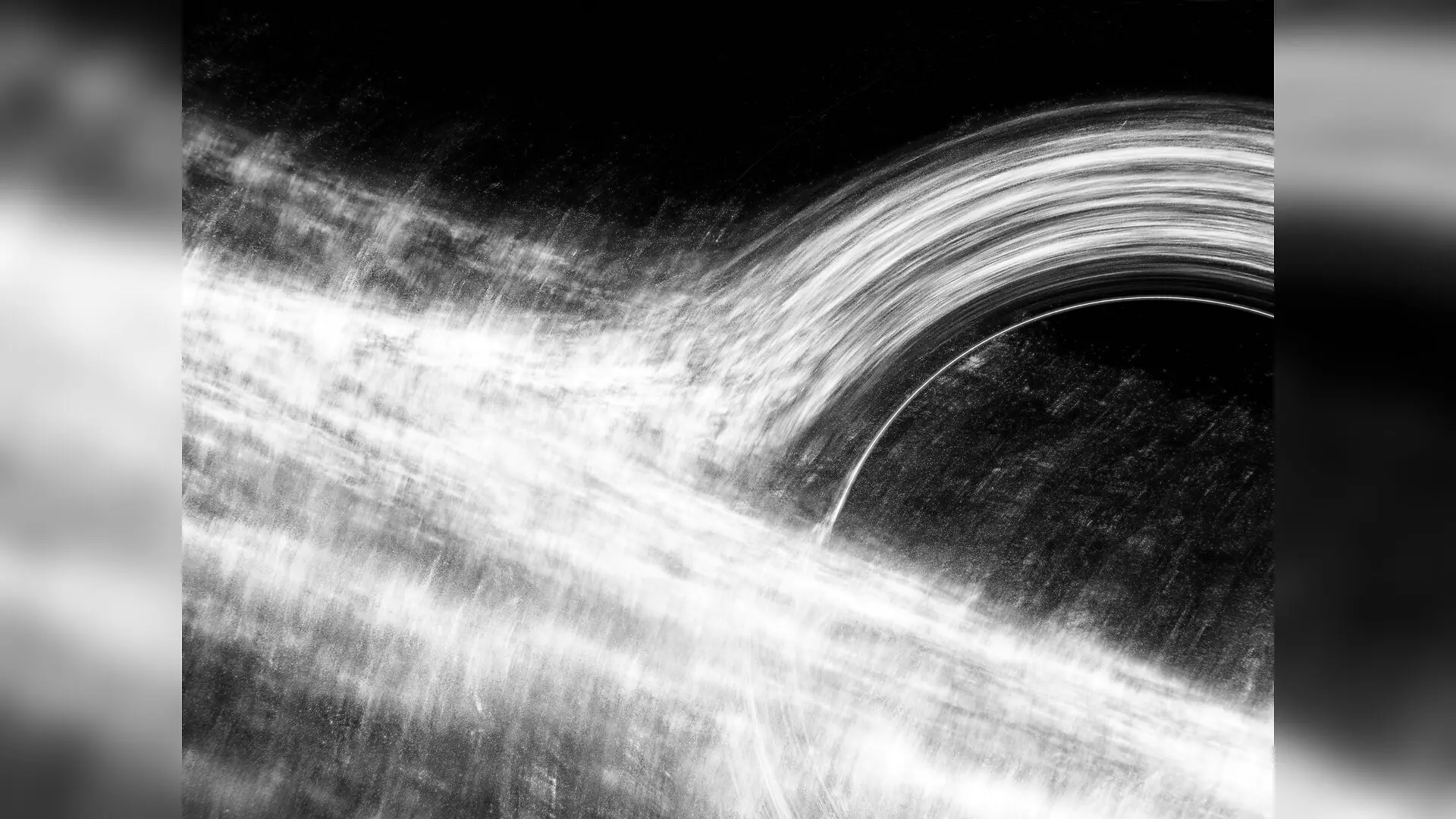
Cosmological data from the ancient echo of the Big Bang reveal four separate pathways to calculate the universe expansion rate, and all of them unexpectedly point to the exact same numerical result. Gabriel P. Lynch and Lloyd Knox from the University of California, Davis, investigated how measurements of the cosmic microwave background, which is the oldest light in the cosmos dating back about 13.8 billion years, encode the Hubble constant through different physical mechanisms. Their new analysis, published in the arXiv preprint server, demonstrates that four distinct theoretical routes through the standard cosmological model yield mutually consistent expansion speeds, deepening a major puzzle in modern astrophysics known as the Hubble tension.
How Can Four Different Routes Lead to the Same Expansion Speed?
The standard model of cosmology relies on precise observations of the oldest thermal radiation in the universe to set its baseline parameters. When researchers analyze these microwave background fluctuations, they typically assume that all components of the cosmos interact in a very specific, pre-determined way. However, the underlying equations governing these interactions possess a hidden mathematical scaling symmetry. This symmetry means that if certain rates and energy densities are scaled together, the resulting observable patterns in the sky remain completely unchanged.
To untangle this behavior, the authors built a theoretical network that organizes cosmological inferences into interconnected pathways. Each route bridges calibrated anchor measurements of photon density to the current expansion rate using a different physical assumption and a unique combination of dimensionless ratios called invariants. These paths include a radiation route based on matter and radiation density, a pressure-support route examining baryonic matter, a free-streaming route tracking relativistic particles, and a Thomson scattering route governed by early electron interactions.
What Did the Analysis Reveal About Model Consistency?
When the researchers evaluated these four distinct pathways using primary cosmic microwave background data from the Planck satellite, the Atacama Cosmology Telescope, and the South Pole Telescope, the resulting expansion rate estimates showed remarkable agreement. The four derived values for the Hubble constant hovered tightly around sixty-eight kilometers per second per megaparsec, with statistical tests confirming that their small differences are entirely consistent with random variation. The largest discrepancy observed between any two routes amounted to only about 1.7 times the standard deviation.
This internal harmony provides a stringent test for the standard cosmological model, which successfully passes the examination when confronted with combined satellite and large-scale structure datasets. At the same time, this strict consistency creates a serious hurdle for alternative theories attempting to solve the Hubble tension. Local measurements of nearby exploding stars and pulsating stars place the expansion rate significantly higher, near seventy-four kilometers per second per megaparsec.
Why Does This Redundancy Complicate Solutions to the Hubble Tension?
If the faster local expansion rate measured by nearby distance ladders is ultimately correct, it implies that all four cosmic microwave background routes are wrong and must be wrong by nearly the same amount. For a higher expansion rate to hide inside these ancient observations, a universe would somehow have to masquerade as a standard low-expansion cosmos across four completely independent physical frameworks. The study outlines three potential ways this could happen, though each faces steep physical obstacles.
The first possibility involves a systematically misestimated matter density parameter shared by all routes, but reaching the local measurement value would require increasing total matter density by nine to eighteen percent across the board. The second scenario requires all four fundamental modeling assumptions to fail by the exact same scaling factor, a solution that typically demands exotic mirror-world dark sectors and an unrealistically low primordial helium abundance. The third option requires an unmodeled ingredient to bias the inferred invariants identically across unrelated physical routes, which also appears highly unlikely. Consequently, the authors suggest that future attempts to resolve the Hubble tension should categorize proposed modifications by which specific invariants they leave untouched.
The study was posted to the arXiv preprint server on November 23, 2026.
This article has been fact checked for accuracy, with information verified against reputable sources. Learn more about us and our editorial process.
Last reviewed on .
Article history
- Latest version
Reference(s)
- Lynch, Gabriel. “Four consistent estimates of $H_0$ from a $Λ$CDM inference network given CMB data.” arXiv.org <http://arxiv.org/abs/2611.31183v1>.
Cite this page:
- Posted by Aisha Ahmed