Engineered Carbon Dots Transform Cancer Therapy by Dismantling Tumors and Waking Up the Immune System
Multifunctional carbon nanomaterials show promise in preclinical models by bypassing biological barriers and triggering targeted cancer cell death, though long-term safety and manufacturing consistency require further study.
Tiny engineered nanoparticles called carbon dots are moving past their traditional roles as simple drug delivery vehicles to become multifunctional cancer-fighting platforms that can actively reshape the hostile environment surrounding solid tumors. In recent years, researchers led by Yalin Wu at the Hunan University of Chinese Medicine have reviewed how these carbon-based nanomaterials can integrate targeted transport, enzyme-like catalytic activity, and immune system activation within a single system to overcome two major therapeutic barriers: inefficient drug delivery and immunosuppression.
Solid tumors are notoriously difficult to treat because abnormal blood vessels and a dense extracellular matrix, which is the supportive network of proteins and molecules surrounding cells, physically block drugs from penetrating deep into the tissue. Furthermore, persistent oxygen starvation known as hypoxia and an acidic environment help cancer cells evade immune attacks. The comprehensive review published in the International Journal of Nanomedicine details how engineered carbon dots tackle these physical and biochemical hurdles through specialized transport mechanisms and reactive chemical properties.
How Do Engineered Carbon Dots Cross Biological Barriers?
To reach cancer cells, carbon dots must bypass vascular walls and tissue barriers that normally keep foreign substances out. While standard nanoparticles rely primarily on passive accumulation through leaky tumor blood vessels, a phenomenon known as the enhanced permeability and retention effect, this process varies wildly between patients and tumor types. Engineered carbon dots can instead use active transport strategies such as transporter hijacking, receptor-mediated targeting, and biomimetic membrane camouflage.
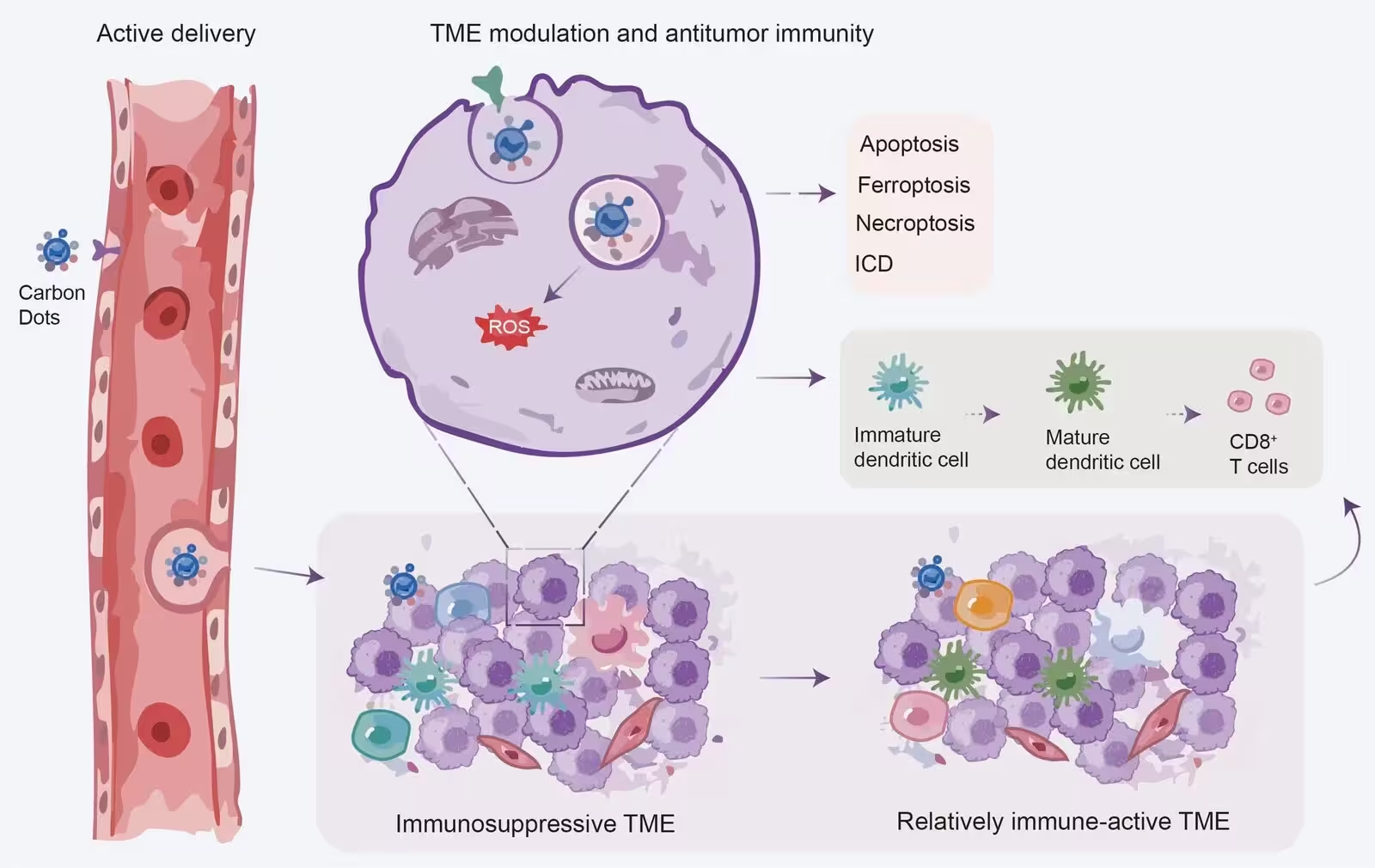
By coating carbon dots with natural cell membranes derived from red blood cells, platelets, or macrophages, scientists can help the nanoparticles evade immune clearance while actively homing in on inflamed tumor blood vessels. Additionally, attaching specific targeting ligands like folic acid or transferrin allows the carbon dots to lock onto overexpressed receptors on cancer cells. Once inside the tissue, their ultrasmall size, often measuring under five nanometers, helps them diffuse through tight spaces that larger drug carriers cannot penetrate.
What Happens When Carbon Dots Trigger Cancer Cell Death?
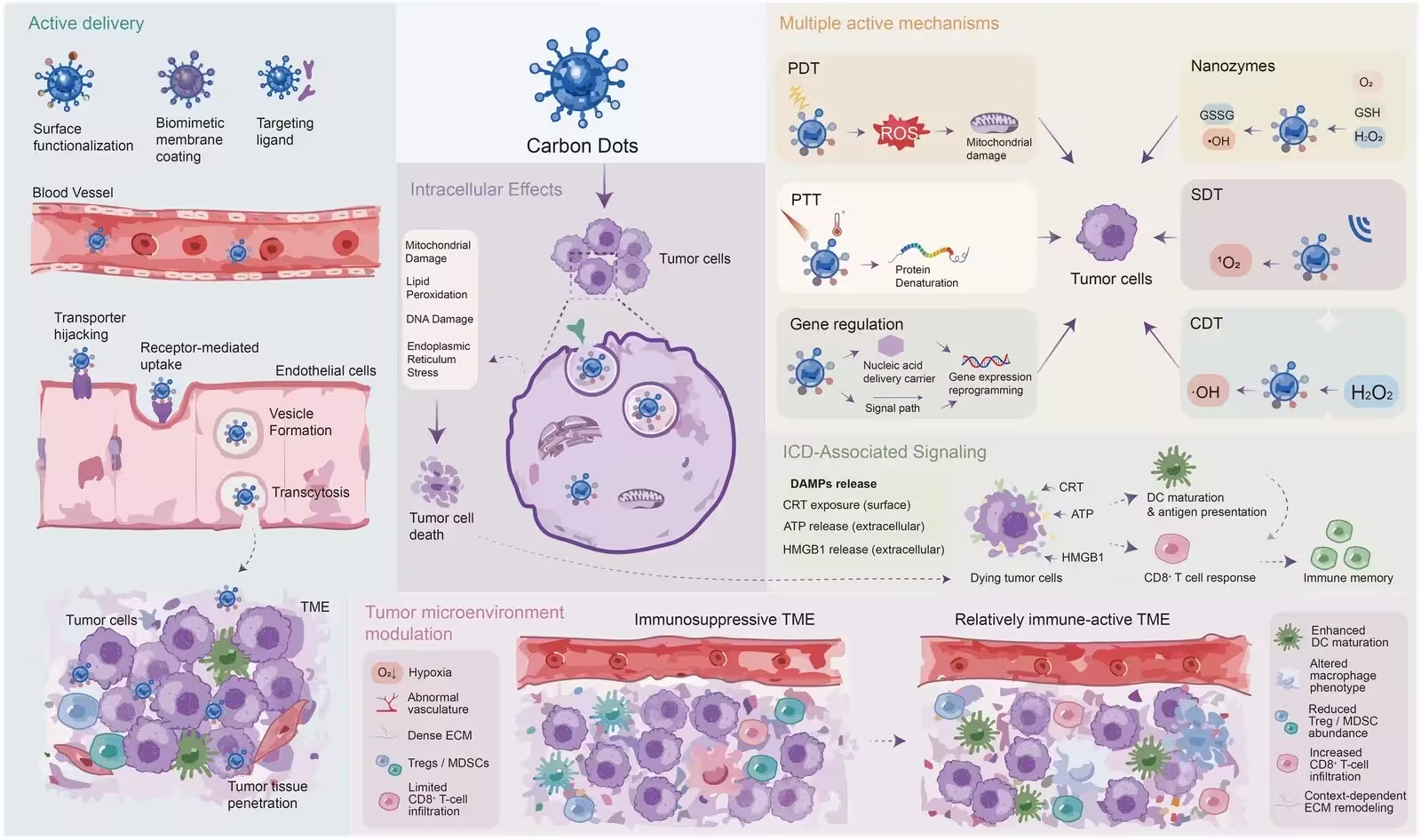
Once they arrive at the tumor site, carbon dots can exploit chemical abnormalities within the microenvironment to unleash tumor-killing effects through various light-activated, chemical, or enzymatic mechanisms. Many systems act as artificial enzymes, known as nanozymes, that catalyze reactions inside the cancer cells. For instance, they can convert cellular hydrogen peroxide into highly reactive hydroxyl radicals, which cause severe oxidative damage to DNA, proteins, and lipids.
Some carbon dot formulations are designed to deplete glutathione, a major antioxidant that cancer cells rely on to survive oxidative stress. When glutathione levels drop and reactive oxygen species accumulate, the cancer cells undergo specialized forms of programmed cell death such as ferroptosis, a type of cell death driven by iron-dependent lipid peroxidation, or pyroptosis, a highly inflammatory form of cell lysis. These cell death pathways do more than just kill individual cancer cells, because they also release danger signals that alert the immune system.
Can Carbon Dots Wake Up an Exhausted Immune System?
One of the most promising aspects of these nanomaterials is their potential to transform immunologically “cold” tumors, which are ignored by the immune system, into “hot” tumors packed with active immune cells. When carbon dots induce certain types of cell death, dying cancer cells release damage-associated molecular patterns, including proteins that signal danger to nearby immune cells. These signals promote the maturation of dendritic cells, which are specialized cells that present tumor antigens to T cells.
Preclinical animal studies highlighted in the review showed that local treatment with specific carbon dot systems increased the infiltration of cytotoxic CD8 plus T cells into both primary tumors and distant untreated metastases, pointing to a systemic immune response and immune memory. Researchers have also combined carbon dot treatments with immune checkpoint blockade therapies, such as antibodies targeting PD-L1, to further boost antitumor efficacy and prevent cancer recurrence in mouse models.
What Challenges Remain Before Human Clinical Trials?
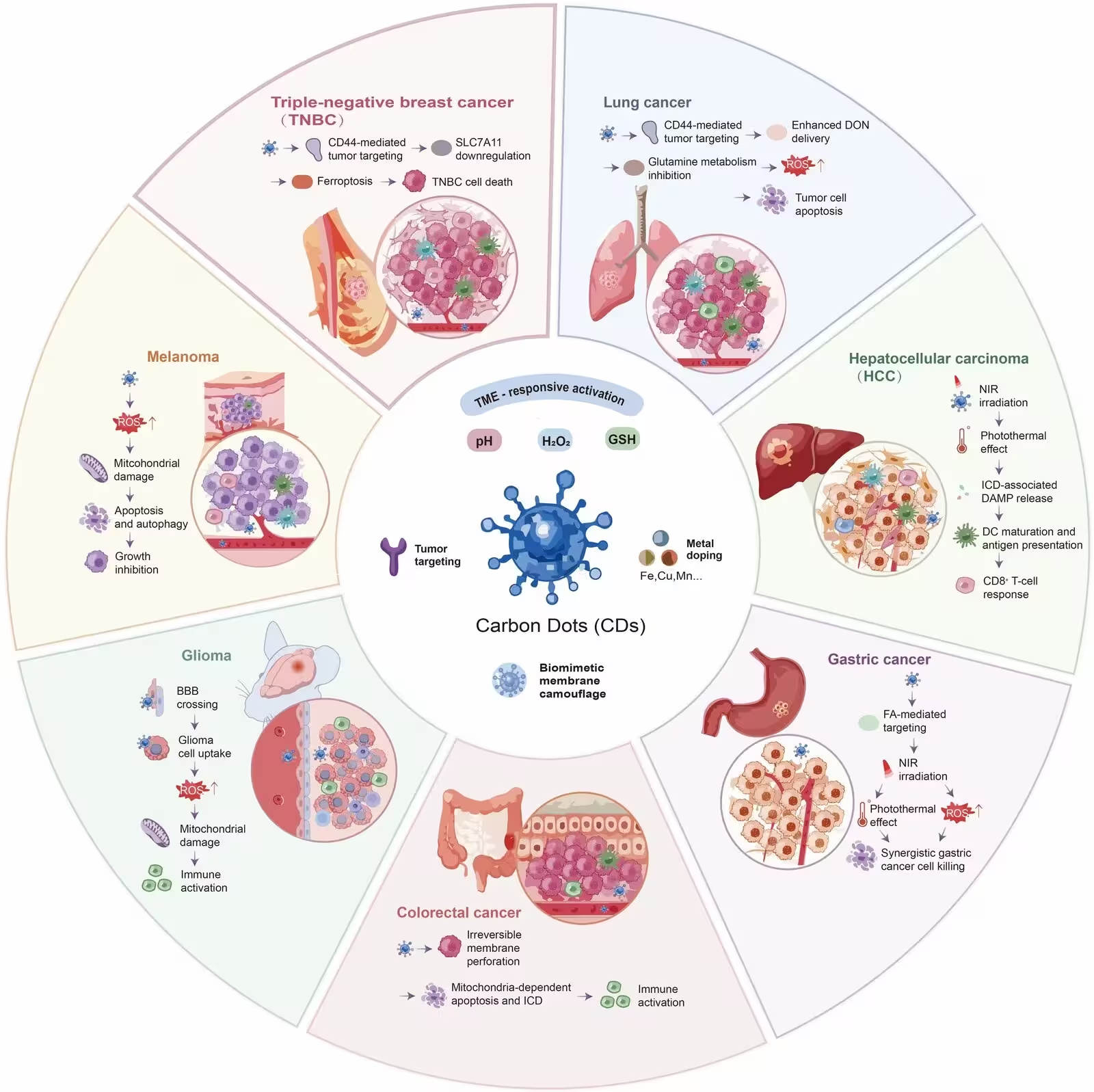
Despite these encouraging preclinical results, translating carbon dot therapies from animal models to human patients faces several significant hurdles. The authors emphasized that the therapeutic outcomes and toxicity profiles depend heavily on each system’s specific precursor materials, surface chemistry, doping elements, and administration routes. Findings from one specific carbon dot formula cannot be generalized to all carbon-based nanomaterials.
Long-term safety remains a primary concern, particularly regarding the potential accumulation of metal dopants in non-target organs like the liver and spleen, as well as possible developmental toxicity observed in early embryonic models. Furthermore, scalable manufacturing processes must be optimized to ensure strict batch-to-batch consistency and quality control before these advanced nanoplatforms can be safely evaluated in human clinical trials.
The research was published in International journal of nanomedicine on November 17, 2026.
This article has been fact checked for accuracy, with information verified against reputable sources. Learn more about us and our editorial process.
Last reviewed on .
Article history
- Latest version
Reference(s)
- Wu, Yalin., et al. “Engineering Carbon Dots for Cancer Therapy: Active Delivery, Tumor Microenvironment Modulation, and Translational Challenges.” International Journal of Nanomedicine, vol. Volume 21, November 1, 2026, pp. 1-28. Informa UK Limited, doi: 10.2147/IJN.S649071. <https://doi.org/10.2147/IJN.S649071>.
Cite this page:
- Posted by Rohan Kumar