SpaceX Dragon Undocks from ISS, Begins Autonomous Return with 6,500‑lb Science Cargo
SpaceX’s unpiloted Dragon is set to undock from the ISS, returning vital scientific cargo to Earth in a key phase of its research‑focused resupply mission.
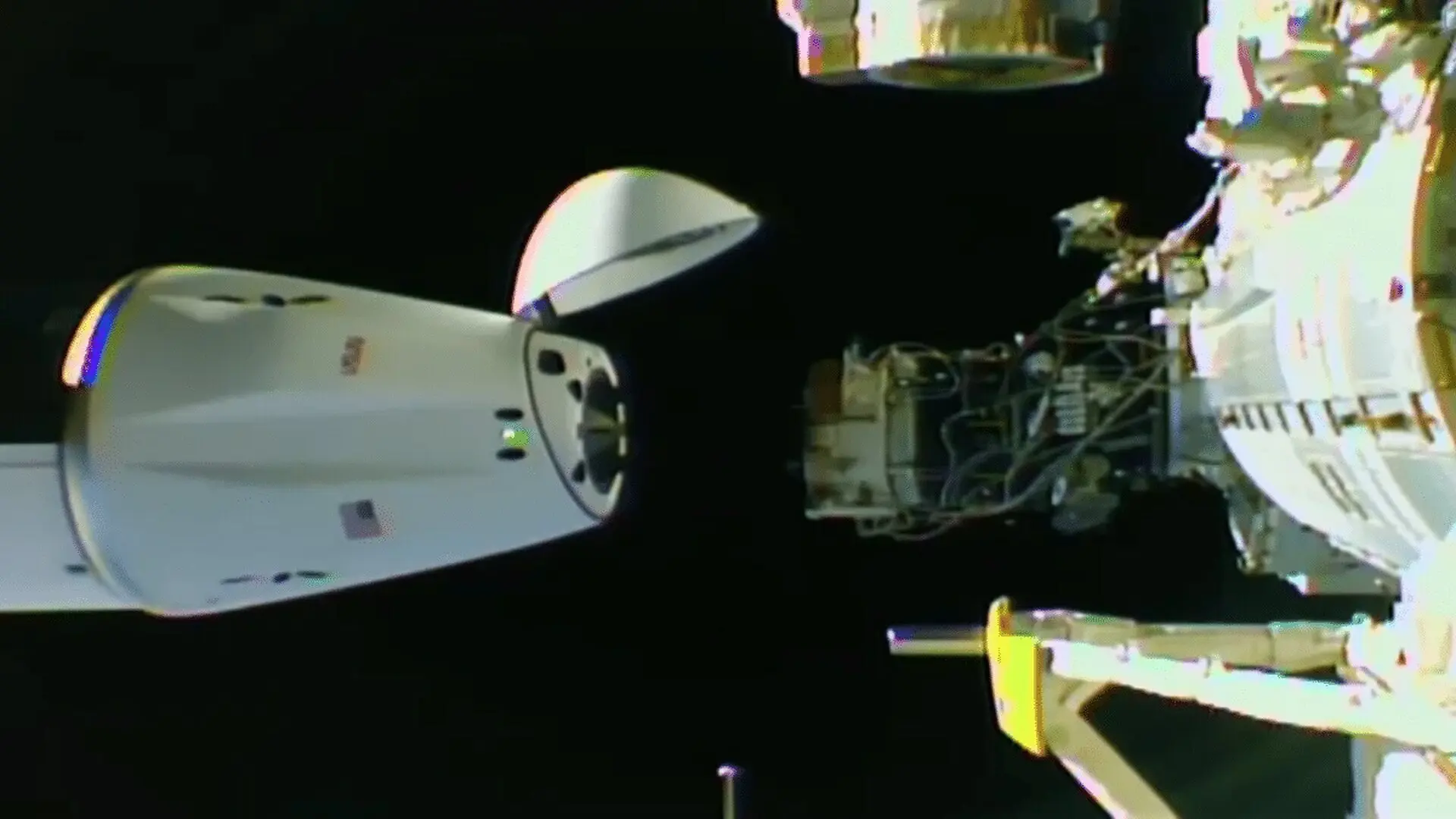
SpaceX’s Dragon capsule left the International Space Station today after a scheduled undocking, kicking off its uncrewed journey back to Earth. At roughly 12:05 p.m. EDT the vehicle pulled away from the Harmony module, initiating the autonomous sequence that will guide it toward a splashdown off the California coast.
Autonomous Separation and Early Flight Operations
Following a precise detachment from the International Space Station, Dragon performed a series of thruster firings to establish a safe distance and prevent any re‑approach. These burns created a clear corridor for the spacecraft, after which onboard navigation systems began a pre‑programmed series of orbital adjustments. Ground controllers monitor each maneuver in real time to verify that the vehicle remains on the intended trajectory toward re‑entry.
Now free of the ISS, Dragon is operating in low Earth orbit where even minor variations in thrust timing can influence later deorbit conditions. NASA’s flight team continuously tracks telemetry to confirm that the post‑separation steps align with the planned descent profile, while the capsule prepares its orbit for the upcoming deorbit burn.
Separation confirmed! Dragon is performing four departure burns to move away from the @Space_Station. Splashdown in ~20 hours off the coast of California pic.twitter.com/F85xpP6vCu
— SpaceX (@SpaceX) June 16, 2026
Scientific Cargo and Hardware on Return
Dragon is carrying close to 6,500 pounds of cargo, making this mission one of the most heavily loaded returns in recent ISS history. The manifest includes bioprinted tissue samples such as organ and cartilage constructs, which are being evaluated for space‑based manufacturing techniques that could enhance regenerative medicine on Earth.
Additional experiments focus on the behavior of cryogenic propellants in microgravity, data that will inform future deep‑space propulsion concepts. The payload also features DNA‑inspired materials under study for potential cancer‑treatment applications, as well as operational hardware like an ocular imaging system for astronaut eye health, air‑filtration components, and life‑support mechanical parts. These items illustrate the dual role of ISS logistics: sustaining the station while delivering valuable research to terrestrial labs.
Mission Timeline and Reentry Plan
Dragon arrived at the ISS on May 17 after a launch on a Falcon 9 from Cape Canaveral Space Force Station. Docked to the Harmony module, the spacecraft served both as a supply vessel and a return platform for completed experiments. Today’s undocking concludes that phase and sets the capsule on a gradually lowering orbit.
The vehicle will continue to descend until it executes a deorbit burn that targets a reentry corridor for June 17. Planned splashdown time is around 5:08 a.m. PDT off the California shoreline, where recovery crews will retrieve the capsule and its cargo. NASA has indicated that live video of the splashdown will not be broadcast, but mission updates will be posted through official channels as the event unfolds. The reentry will subject Dragon to extreme thermal and aerodynamic forces as it transitions from orbital speed to a controlled ocean landing.
This article has been fact checked for accuracy, with information verified against reputable sources. Learn more about us and our editorial process.
Last reviewed on .
Article history
- Latest version
Reference(s)
- “https://twitter.com/SpaceX/status/2066920772044505545/video/1.” <https://t.co/F85xpP6vCu>.
Cite this page:
- Posted by Rohan Kumar