Webb Telescope Reveals The Secret Origin Of The Universe’s Mysterious Little Red Dots
New research into mysterious “little red dots” suggests the universe’s first supermassive black holes may have formed before the very first stars ignited.
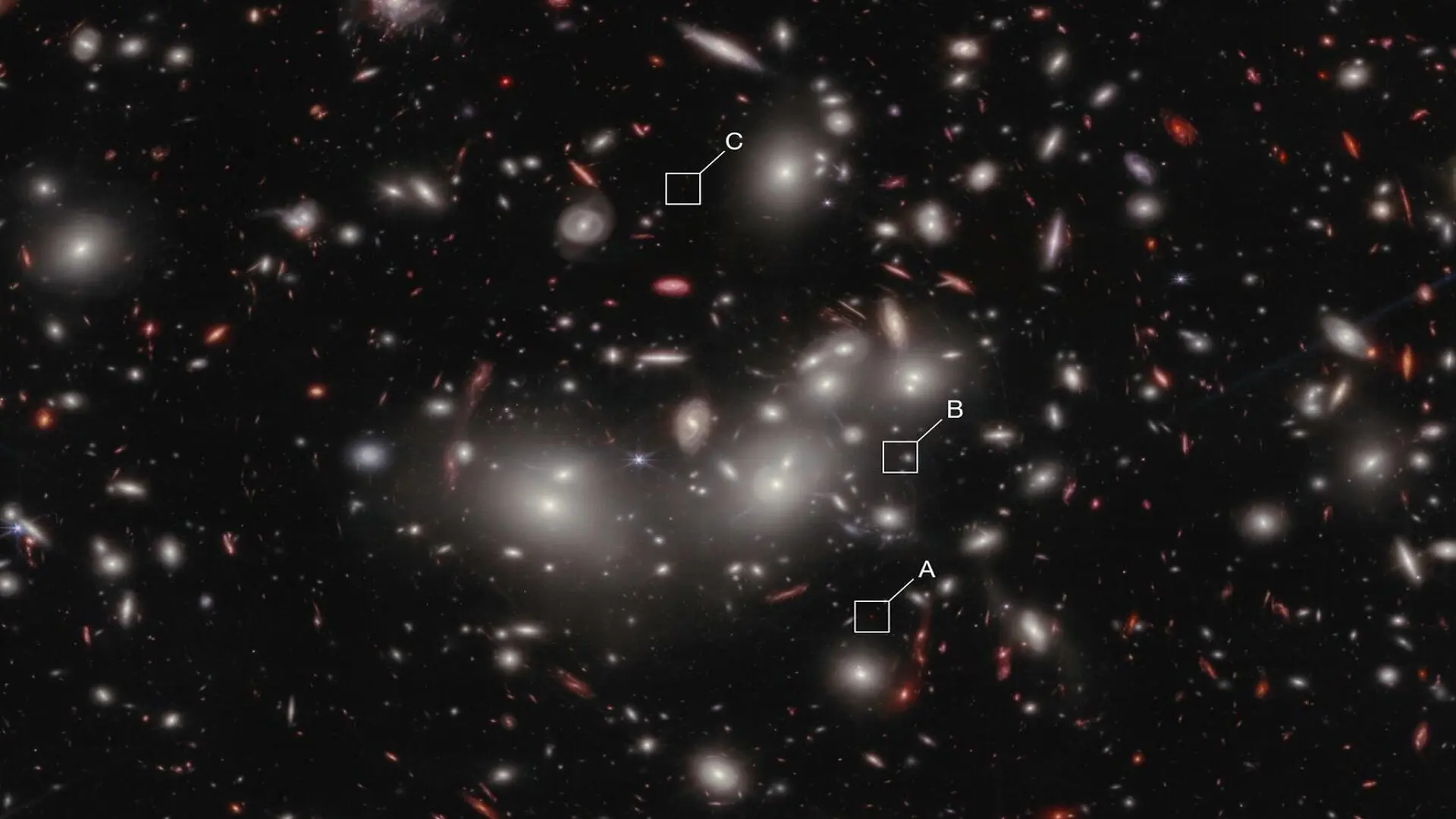
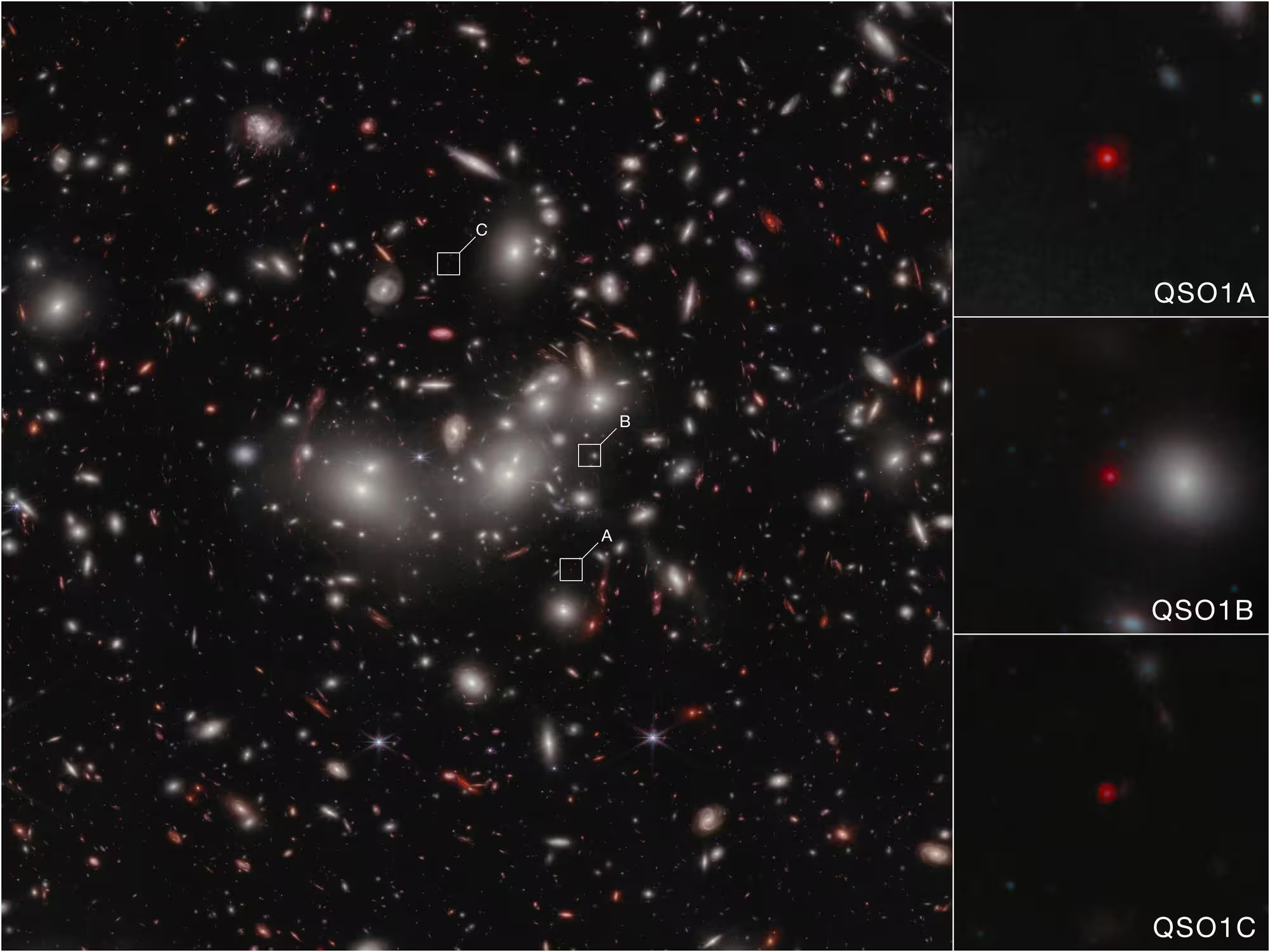
A curious, compact speck of crimson light captured by the James Webb Space Telescope is challenging current models of cosmic history. Known as QSO1, this object harbors a supermassive black hole—estimated at 50 million times the mass of our Sun—existing when the universe was a mere 700 million years old. Adding to the mystery, the region surrounding this behemoth is remarkably deficient in heavy elements, sparking a debate among astrophysicists about how such a massive structure could have emerged so early in cosmic time.
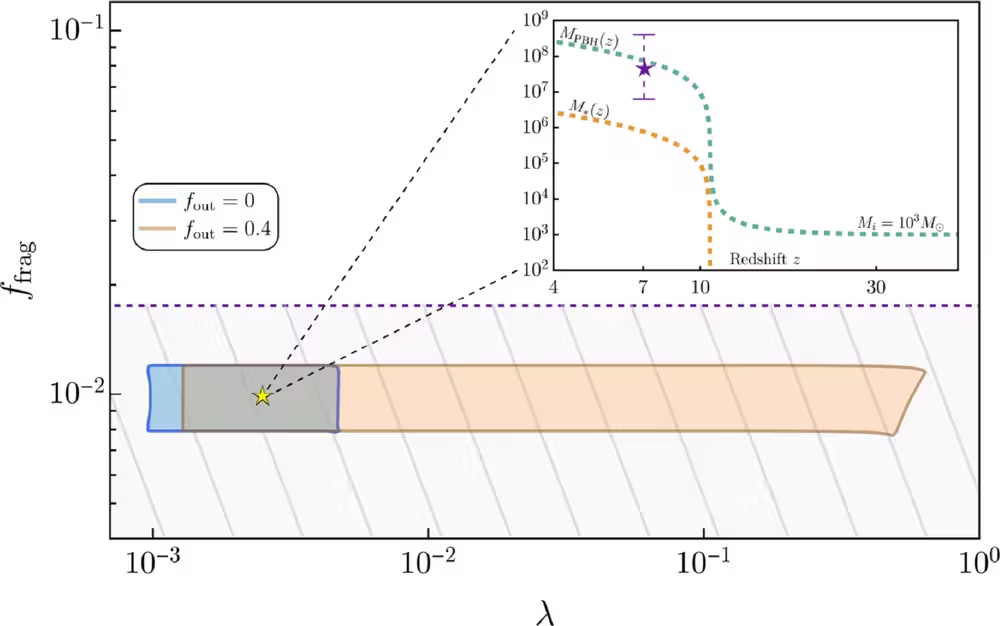
Researchers at Johns Hopkins University have investigated whether QSO1 could have originated as a primordial black hole, a theoretical phenomenon formed in the immediate aftermath of the Big Bang, long before the ignition of the first stars. Their findings, detailed in Physical Review Letters, evaluate three distinct evolutionary pathways that might account for the object’s immense current mass.
Unpacking the Enigma of Early Cosmic Giants
The team’s analysis suggests that the most viable explanation is a smaller, initial seed that rapidly consumed ambient gas. This model successfully accounts for the rapid accumulation of mass while remaining consistent with the observed lack of significant star formation in the immediate vicinity. Because QSO1 is part of a diverse collection of enigmatic red objects, scientists caution that a single origin story may not apply to every such source detected by Webb.
QSO1 is particularly valuable to researchers because it sits behind a foreground galaxy cluster, which acts as a gravitational lens, magnifying the light and providing a rare, high-resolution glimpse into its composition. A separate report in Nature utilized the dynamics of orbiting gas to calculate the black hole’s mass with greater precision than traditional methods that rely solely on emission lines. The data reveals that the gas surrounding the black hole contains only one percent of the heavy element abundance found in our Sun, creating a strict constraint for any formation theory.
Testing the Primordial Hypothesis
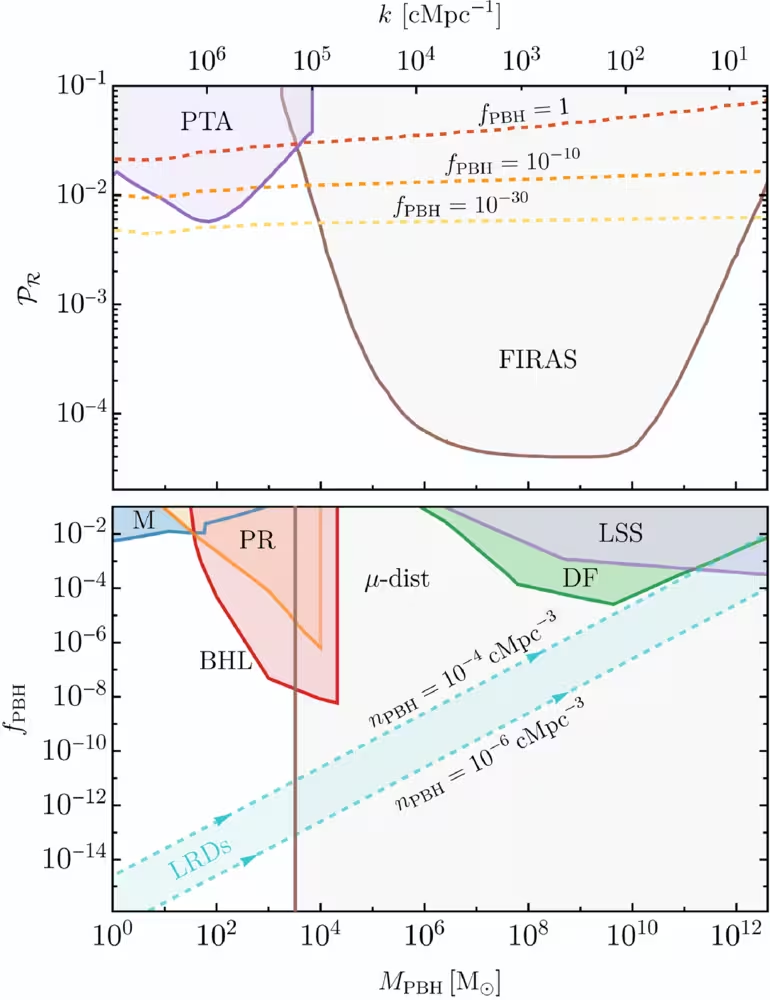
If these objects were truly primordial, they would have emerged from extremely dense regions of the early universe. However, the study points out that if such massive primordial seeds were common, they would have left distinct signatures in the Big Bang’s afterglow. High-precision measurements from the FIRAS instrument on NASA’s COBE satellite effectively rule out the most extreme versions of this theory by showing a lack of expected distortions in the cosmic microwave background.
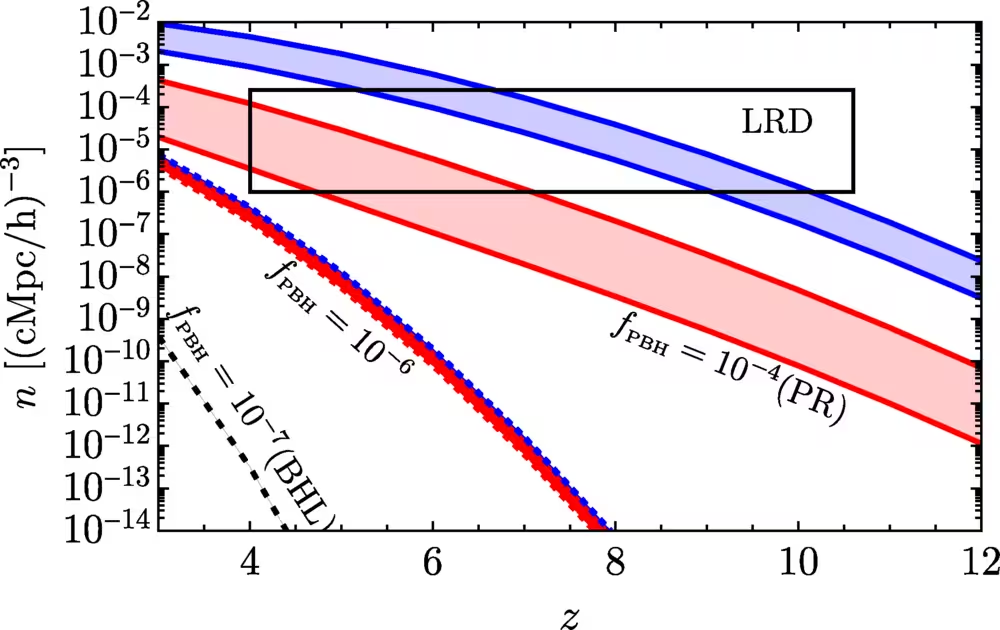
The research team also explored the possibility of smaller primordial seeds undergoing repeated mergers. While this process can theoretically produce a massive object, it faces significant logistical hurdles. Frequent mergers require an environment dense enough to facilitate collisions while possessing a gravitational well strong enough to retain the resulting black hole—which can often be ejected from its host galaxy following a merger event. Furthermore, the time required for multiple generations of mergers to reach the mass of QSO1 may exceed the age of the universe at that specific epoch.
Future Directions for Galactic Archaeology
As investigators Valerio De Luca and Loris Del Grosso expand their modeling to include more of the nearly 100 known “little red dots,” the focus remains on whether QSO1 is a statistical anomaly or representative of a larger, hidden population. By analyzing the gas kinematics, chemical markers, and stellar populations of these candidates, the team hopes to distinguish between models of direct gas collapse and black holes spawned by the first generation of stars.
Ultimately, QSO1 provides a crucial benchmark. While its current age doesn’t definitively prove a primordial origin, it serves as a laboratory for testing the limits of early-universe physics. The ongoing study of these objects promises to refine our understanding of how the first massive structures in the cosmos grew into the galaxies we see today.
Additional Reading
- Where the red rise stops
- A direct black-hole mass measurement in a little red dot at high redshift
- Newfound Galaxy Class May Indicate Early Black Hole Growth, Webb Finds
- Constraints on Primordial Black Holes
- The Cosmic Microwave Background Spectrum from the Full COBE/FIRAS Data Set
This article has been fact checked for accuracy, with information verified against reputable sources. Learn more about us and our editorial process.
Last reviewed on .
Article history
- Latest version
Reference(s)
- <https://hub.jhu.edu/>.
- De Luca, Valerio., et al. “Primordial-Black-Hole-Based Pathways to Little Red Dots.” Physical Review Letters, vol. 136, no. 23, June 12, 2026 American Physical Society (APS), doi: 10.1103/6y1w-87pd. <https://journals.aps.org/prl/abstract/10.1103/6y1w-87pd>.
- Juodžbalis, Ignas. “A direct black-hole mass measurement in a little red dot at high redshift - Nature.”, vol. 653, no. 8116, pp. 1017-1021. Nature, doi: 10.1038/s41586-026-10579-4. <https://www.nature.com/articles/s41586-026-10579-4>.
- Iani, E.. “Where the red rise stops: JWST/MIRI reveals a near-infrared turnover in the Little Red Dot Abell2744-QSO1.” arXiv.org <https://arxiv.org/abs/2611.09397>.
- McCoy, Marty. “Newfound Galaxy Class May Indicate Early Black Hole Growth, Webb Finds - NASA Science.”, January 14, 2025 NASA <https://science.nasa.gov/missions/webb/newfound-galaxy-class-may-indicate-early-black-hole-growth-webb-finds/>.
- Carr, Bernard. “Constraints on Primordial Black Holes.” arXiv.org, doi: 10.1088/1361-6633/ac1e31. <https://arxiv.org/abs/2002.12778>.
- Fixsen, D.. “The Cosmic Microwave Background Spectrum from the Full COBE/FIRAS Data Set.” arXiv.org, doi: 10.1086/178173. <https://arxiv.org/abs/astro-ph/9605054>.
Cite this page:
- Posted by John Williams