A Robot Just Built Its First Structure In Orbit Without Human Help
Caltech’s ASTRA robot has successfully assembled a truss in orbit, paving the way for constructing massive space structures too large to launch from Earth.
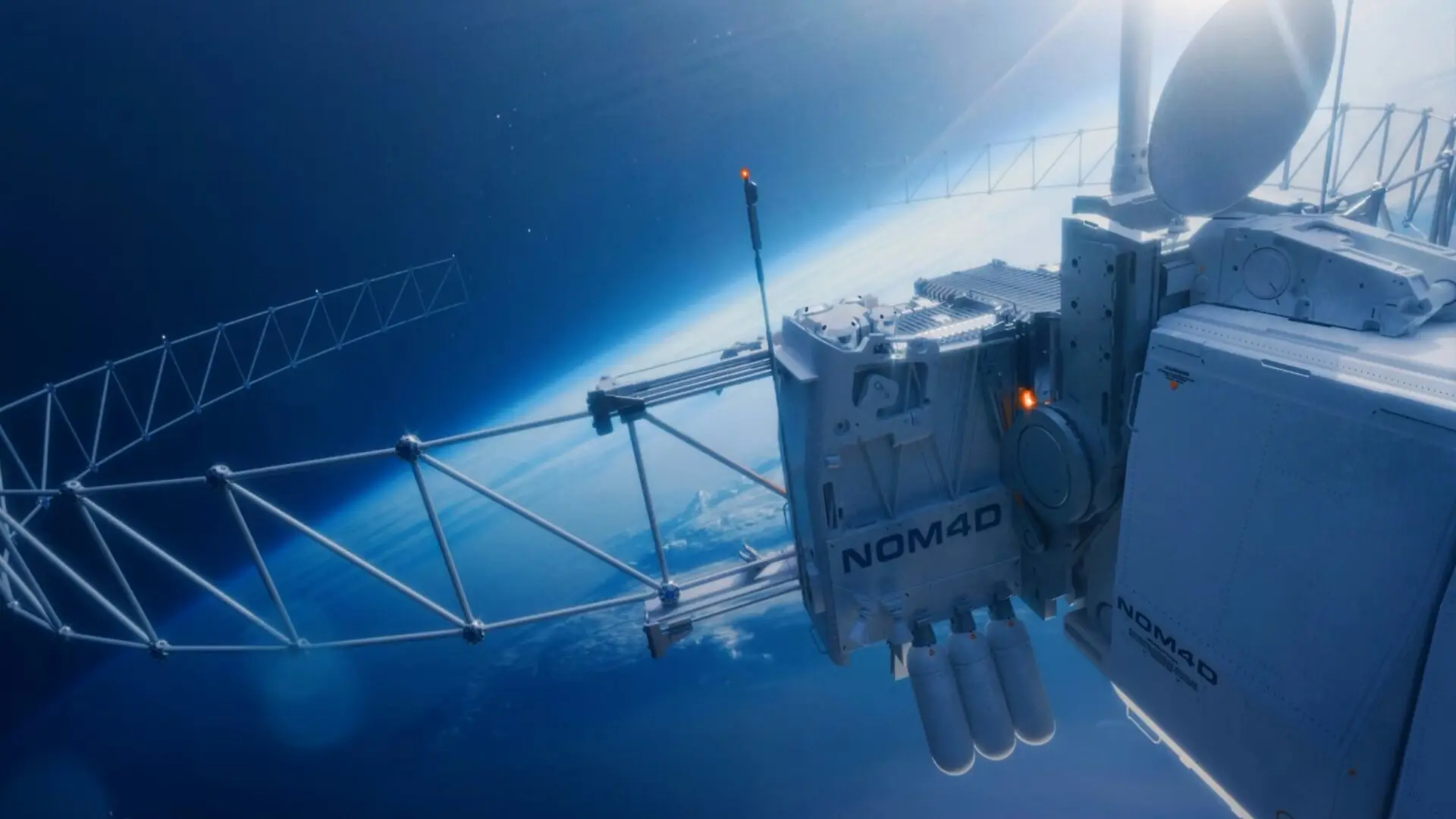
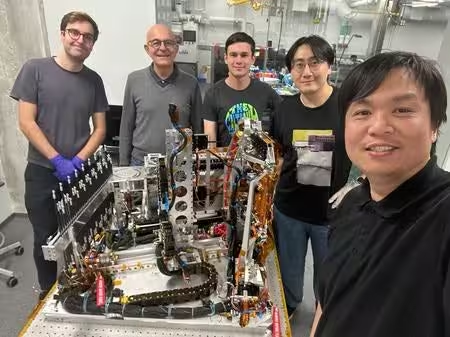
In a milestone for orbital construction, a robotic system developed by researchers at Caltech has successfully built a new section of a structural truss in low Earth orbit. The experiment, known as Autonomous In-Space Tensioned Reflector Assembly (ASTRA), marks the first instance of a machine autonomously assembling a complex structure from individual components without human intervention in space.
The mission launched on March 30, 2026, aboard a SpaceX Transporter-16 flight. The ASTRA payload was integrated into a Vigoride 7 spacecraft operated by Momentus, which provided essential utilities including power, imaging, and data transmission. While the spacecraft handled logistics, the Caltech-built robot functioned as a mechanical architect, retrieving composite fiber tubes and aluminum joints from dispensers to construct a new truss bay.
Redefining Construction Beyond the Launch Fairing
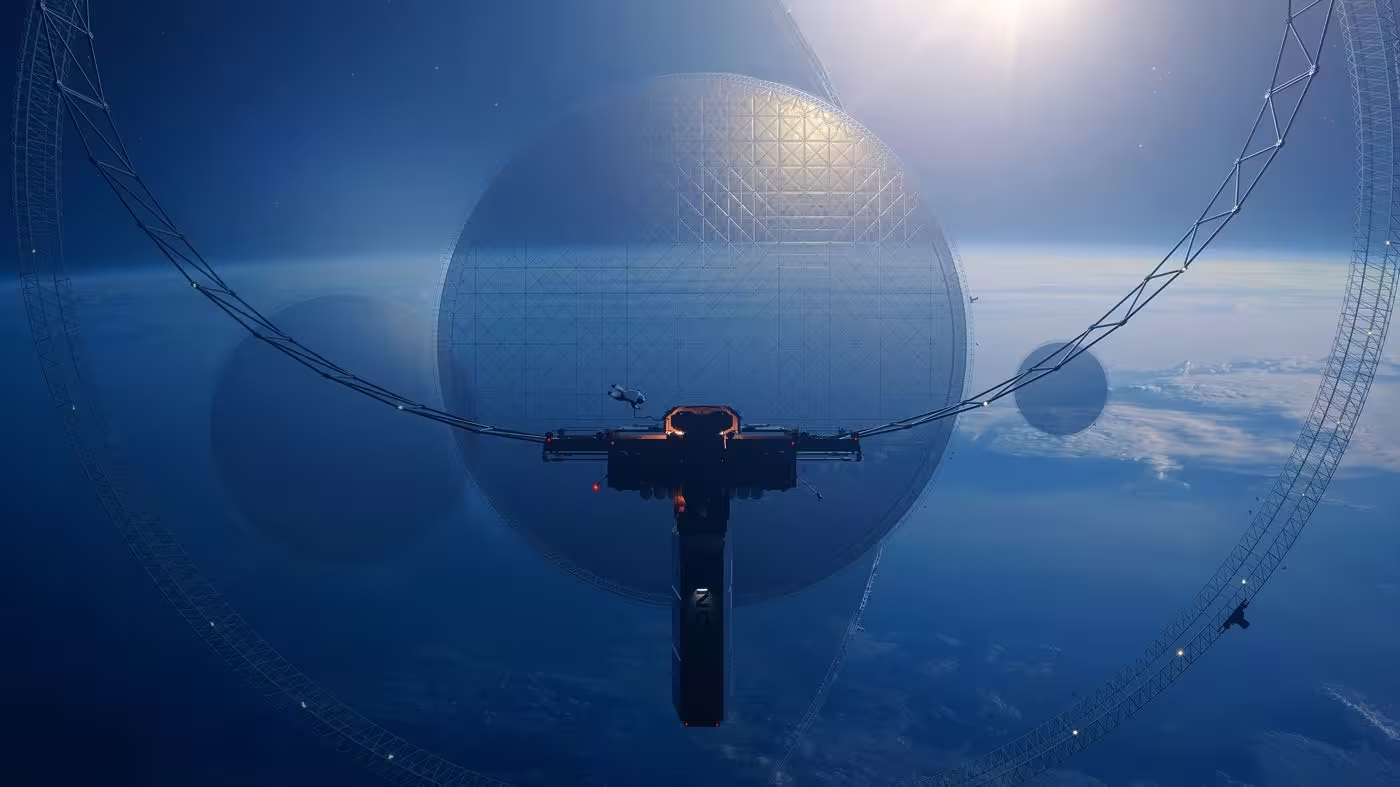
Current space missions, such as the James Webb Space Telescope, are constrained by the physical dimensions of launch vehicle fairings, requiring delicate folding and deployment mechanisms. Orbital assembly bypasses these limitations by allowing components to be launched as compact, separate pieces, which are then integrated into their full-scale, operational configuration once they reach space.
Led by professor of aerospace and civil engineering Sergio Pellegrino, the Caltech team designed ASTRA to demonstrate the feasibility of modular, robotic assembly. While the current test focused on a 1.4-meter-wide reflector framework, the methodology is intended to scale toward massive antennas, space-based solar power arrays, and large-aperture telescopes that would otherwise be impossible to launch in one piece.
Refining Precision Through Ground-Based Digital Twins
The assembly process required meticulous coordination between the autonomous robot and the operations team on the ground. Because communication windows were limited to brief intervals of approximately 15 minutes, the team utilized a ground-based flight spare to troubleshoot issues in real-time. By replicating the orbital hardware in the lab, engineers could simulate malfunctions and test potential solutions before transmitting commands to the device in orbit.
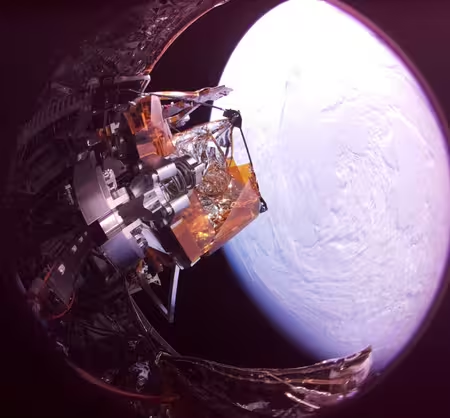
This iterative process allowed the robot to successfully complete the assembly of its third truss bay. The architecture relies on repeatable geometry, where identical parts and assembly motions are used to build outward from a central point, a design philosophy that could support the construction of structures hundreds of meters in length.
Future Applications in Deep Space
The research is supported by the Defense Advanced Research Projects Agency (DARPA) under its Novel Orbital and Moon Manufacturing, Materials, and Mass-efficient Design (NOM4D) program. The broader initiative seeks to develop technologies for building expansive, low-mass infrastructure in the vacuum of space, which could eventually include habitats or massive power-gathering platforms.
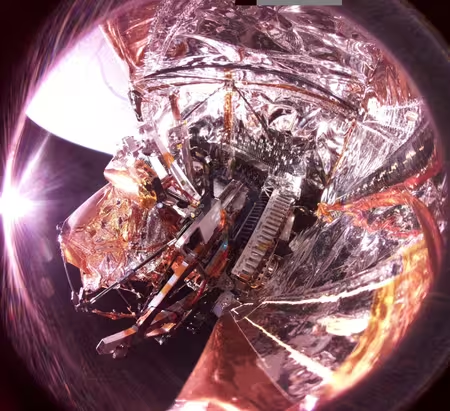
The ASTRA experiment also incorporates advanced reflective materials developed by researchers at the University of Pennsylvania, which allow for lighter and more efficient surfaces than traditional knitted mesh. By reducing the tension requirements on the support frame, these materials contribute to the overall goal of maximizing surface area while minimizing launch mass.
As the mission progresses, the focus remains on validating the reliability of these assembly steps. While the full 11-bay configuration may not be achieved during this specific mission window, the successful integration of a third bay provides a critical proof-of-concept for the future of in-space manufacturing.
Resources for Further Exploration
- DARPA project overview regarding future large-scale space structures.
- NASA comprehensive report on the current state of in-space servicing, assembly, and manufacturing.
- European Space Agency update on orbital metal 3D printing technology.
- Review of Caltech’s previous experiments with lightweight deployable solar structures.
- Historical documentation on the deployment of the Webb Space Telescope.
This article has been fact checked for accuracy, with information verified against reputable sources. Learn more about us and our editorial process.
Last reviewed on .
Article history
- Latest version
Reference(s)
- “Caltech Homepage.”, November 11, 2026 California Institute of Technology <https://www.caltech.edu/>.
- “Home | DARPA.” darpa.mil <https://www.darpa.mil/>.
- <https://www.upenn.edu/>.
- “DARPA demos will test novel tech for building future large structures in space | DARPA.” <https://www.darpa.mil/news/2025/novel-tech-space-structures>.
- Arney, Dale. “In-space Servicing, Assembly, and Manufacturing (ISAM) State of Play - 2024 Edition.”, October 31, 2024 <https://ntrs.nasa.gov/citations/20240012414>.
- “N° 49-2024: ESA 3D prints first metal part on the International Space Station.” ESA: TBD <https://www.esa.int/Newsroom/Press_Releases/ESA_3D_prints_first_metal_part_on_the_International_Space_Station>.
- “Space Solar Power Project Ends First In-Space Mission with Successes and Lessons.”, January 16, 2024 California Institute of Technology <https://www.caltech.edu/about/news/space-solar-power-project-ends-first-in-space-mission-with-successes-and-lessons>.
- “NASA’s Webb Telescope Reaches Major Milestone as Mirror Unfolds - NASA.” NASA <https://www.nasa.gov/news-release/nasas-webb-telescope-reaches-major-milestone-as-mirror-unfolds/>.
Cite this page:
- Posted by Nida Rehman