Strange Gas Detections Near Martian Cracks May Hint At Secret Volcanic Activity
Unexpected hydrogen chloride gas detected above Martian fissures suggests potential new volcanic activity, though the exact source remains a mystery.
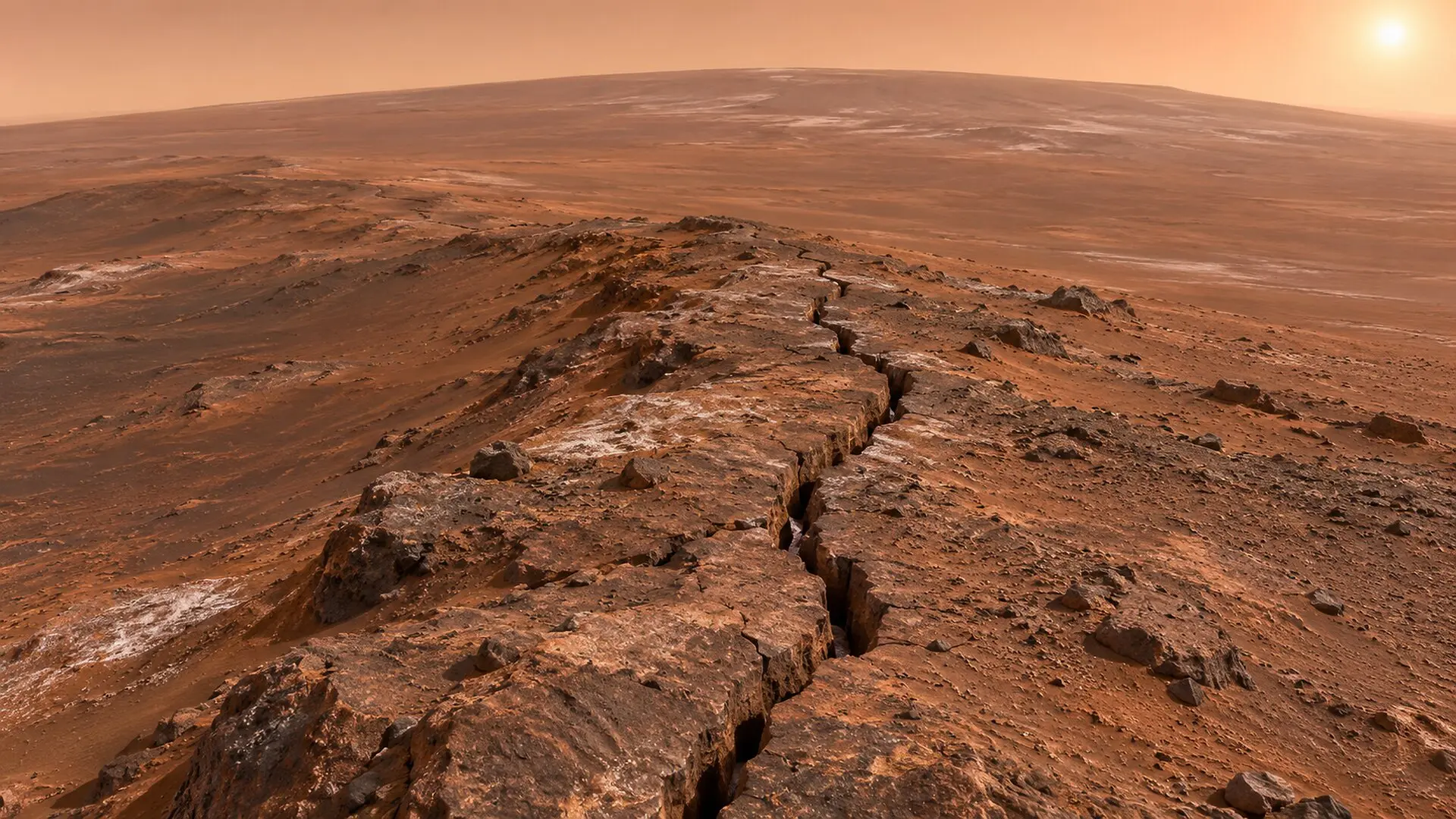
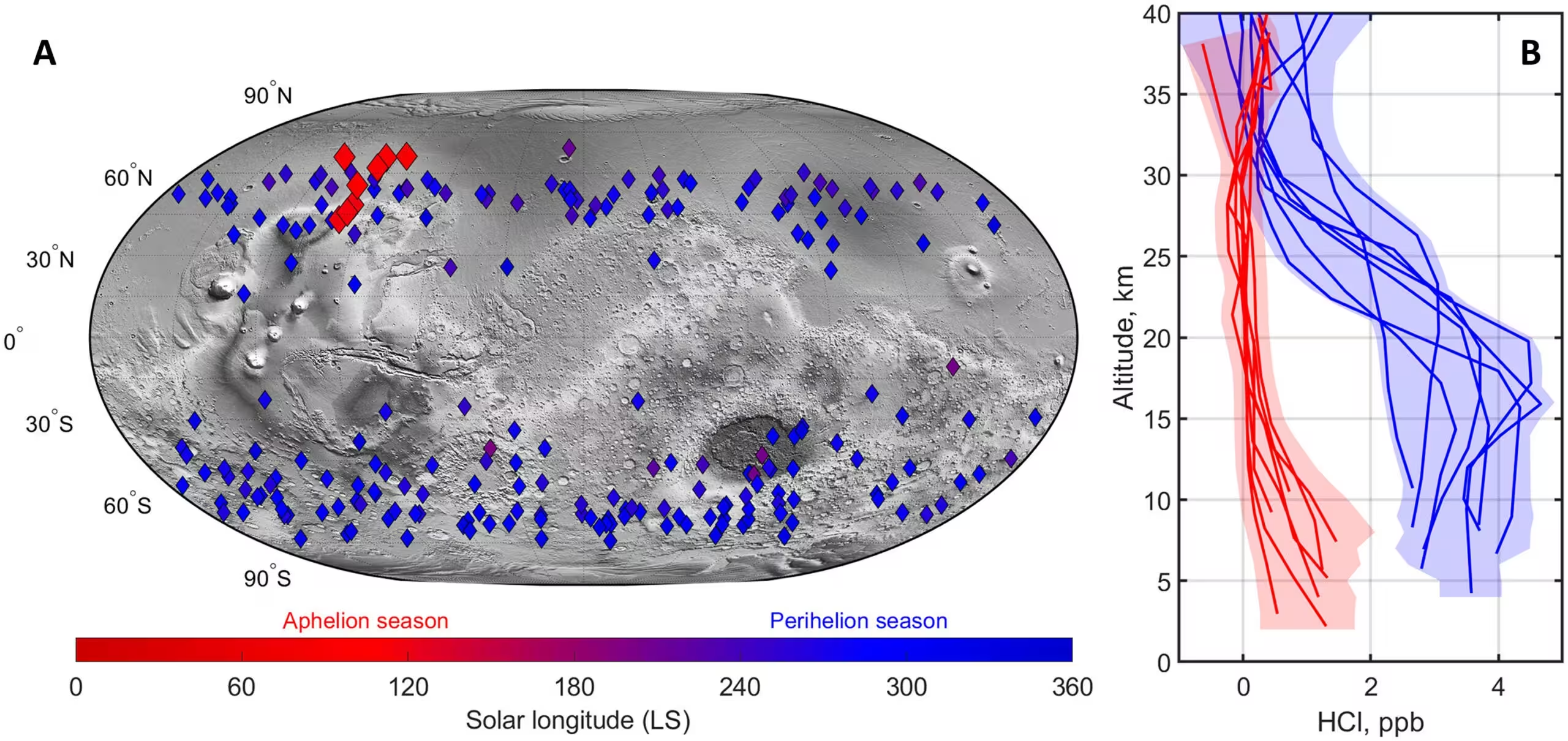
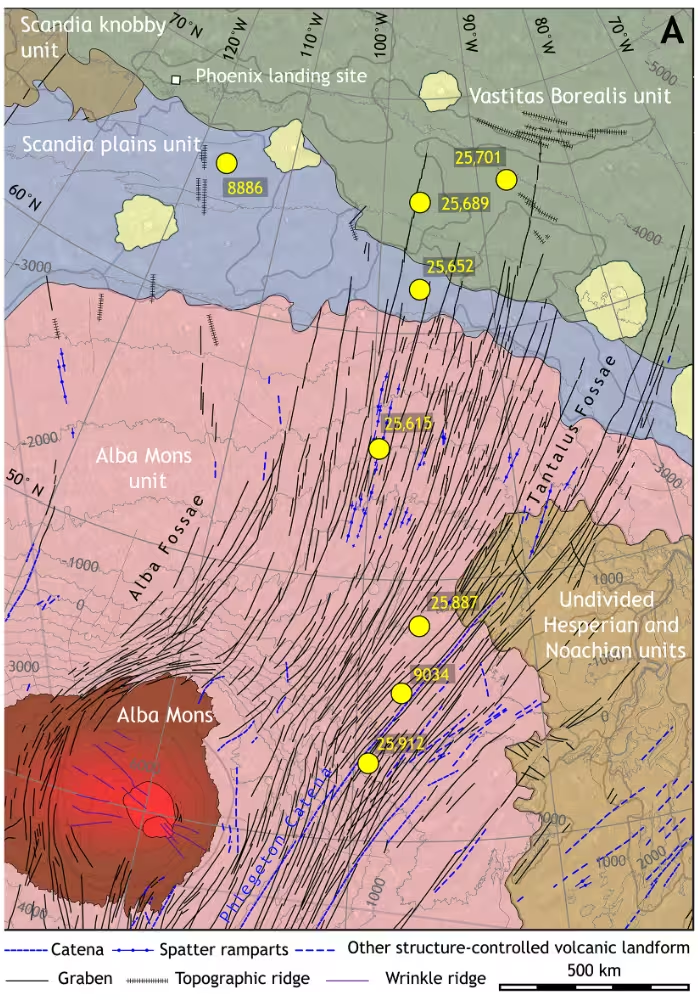
Data captured by the ExoMars Trace Gas Orbiter (TGO) has revealed an unexpected presence of hydrogen chloride (HCl) near Alba Mons, a massive volcano in the northern hemisphere of Mars. The detection, which occurred during a time of the Martian year when the gas is typically absent, has prompted researchers to investigate whether the planet’s interior may still harbor active volcanic processes.
- TGO instruments detected hydrogen chloride at parts-per-billion concentrations in the lower atmosphere near Alba Mons.
- The detection occurred during aphelion, a period of the Martian orbit when the gas is usually undetectable.
- High-resolution orbital imagery identified narrow surface fissures in the vicinity, potentially serving as conduits for subsurface gases.
The findings, detailed in Science Advances by a team led by Alexander Trokhimovskiy of the Space Research Institute, suggest a departure from the planet’s known seasonal chemistry. While previous sightings of hydrogen chloride in 2021 were linked to widespread interactions between dust, water, and atmospheric particles, this localized cluster near Alba Mons suggests a discrete source point rather than a global atmospheric cycle.
Detecting Volatile Traces from Orbit
The TGO identifies these trace molecules by analyzing sunlight filtering through the Martian atmosphere during occultations, where the planet passes between the Sun and the spacecraft. By measuring the specific wavelengths of light absorbed by gas molecules at different altitudes, researchers can map trace elements despite their extremely low concentrations.
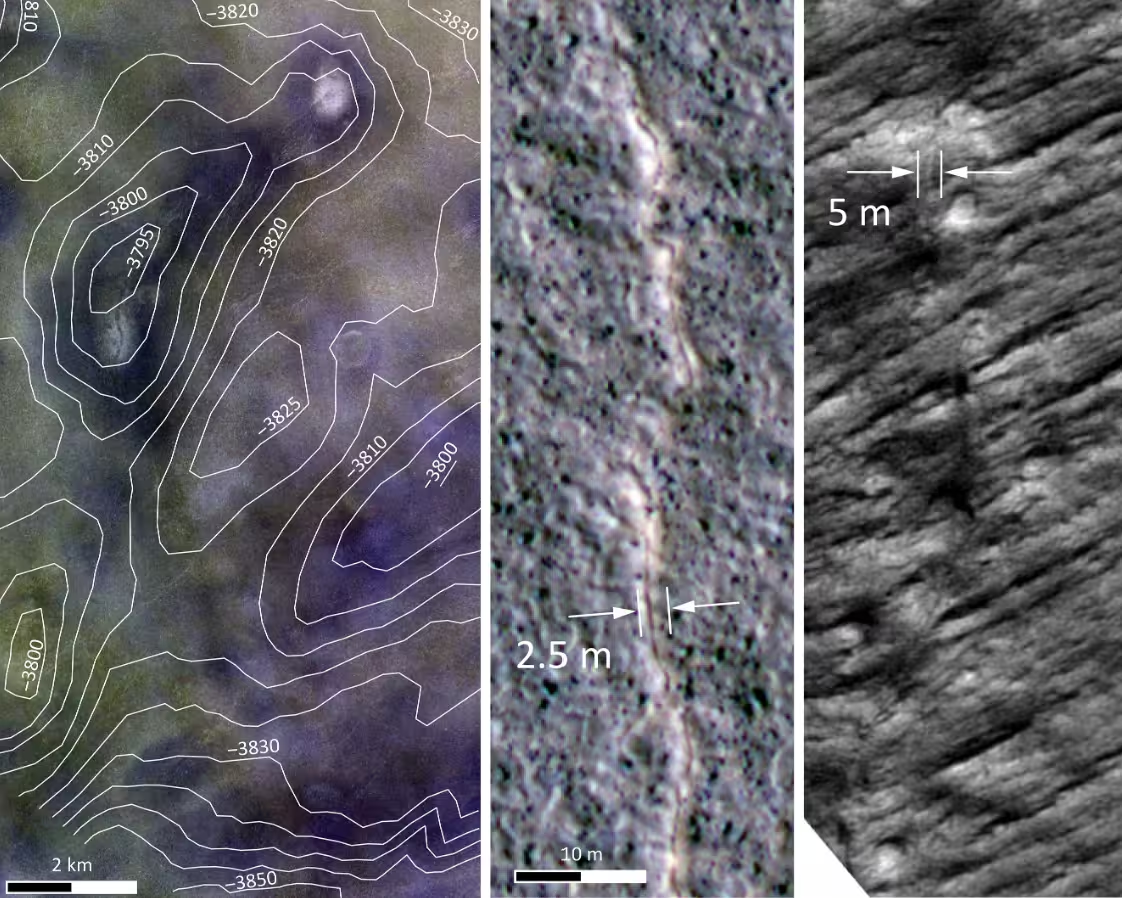
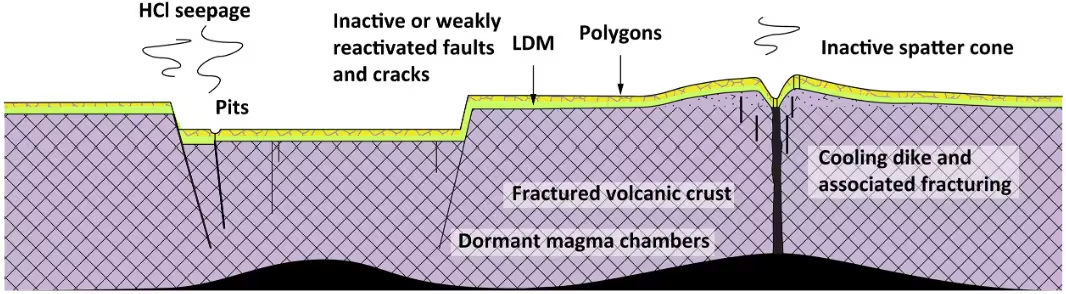
Near Alba Mons, the TGO recorded a sharp vertical gradient of hydrogen chloride, with concentrations peaking in the lower layers of the atmosphere. This distribution pattern steered the research team toward a surface-based origin. Upon reviewing high-resolution images provided by the TGO and NASA’s Mars Reconnaissance Orbiter, scientists identified a series of narrow fissures—some less than a meter wide—cutting through the volcanic terrain. These fractures are considered prime candidates for pathways through which volcanic gases might escape from the subsurface.
Signs of Modern Internal Heat
The existence of these fissures, combined with the timing of the gas release, has renewed discussions regarding Mars’ thermal state. While the planet is often characterized as geologically dormant, evidence from NASA’s InSight lander has previously confirmed that seismic activity persists in regions like Cerberus Fossae. The presence of gas at Alba Mons adds a chemical dimension to the hypothesis that molten or partially molten magma might still exist deep within the Martian crust, providing the necessary heat to drive such outgassing.
Researchers are cautious about confirming active volcanism, noting the absence of sulfur dioxide—a key marker typically associated with volcanic eruptions. Instead, the team suggests the data is consistent with the passive venting of gases from a magmatic source, rather than a violent surface eruption.
Future Investigations
The discovery provides a clear target for future planetary missions. By returning to the Alba Mons region, researchers hope to determine if the hydrogen chloride emissions are a recurring, seasonal phenomenon or an indication of sporadic, localized activity. Integrating this atmospheric data with ongoing seismic and geological studies remains essential to building a more comprehensive understanding of the Martian interior.
Additional Research Context
- Geological intuition for Mars: ESA mission team insights.
- Heterogeneous chemistry and seasonal hydrogen chloride: Astronomy & Astrophysics, 2024.
- Mantle plumes in Elysium Planitia: Nature Astronomy, 2022.
- Tectonics and seismicity at Cerberus Fossae: Nature Astronomy, 2022.
- Recent explosive volcanism in Elysium Planitia: Icarus, 2021.
This article has been fact checked for accuracy, with information verified against reputable sources. Learn more about us and our editorial process.
Last reviewed on .
Article history
- Latest version
Reference(s)
- “IKI RAS | Space Research Institute - IKI.” <https://iki.cosmos.ru/en>.
- <https://blogs.esa.int/to-mars-and-back/2026/11/04/geological-intuition-for-mars/>.
- Taysum, Benjamin M.., et al. “Observed seasonal changes in Martian hydrogen chloride explained by heterogeneous chemistry.” Astronomy & Astrophysics, vol. 687, July 12, 2024, pp. A191 EDP Sciences, doi: 10.1051/0004-6361/202449546. <https://doi.org/10.1051/0004-6361/202449546>.
- Broquet, A.. “Geophysical evidence for an active mantle plume underneath Elysium Planitia on Mars - Nature Astronomy.”, vol. 7, no. 2, pp. 160-169. Nature, doi: 10.1038/s41550-022-01836-3. <https://www.nature.com/articles/s41550-022-01836-3>.
- Stähler, Simon. “Tectonics of Cerberus Fossae unveiled by marsquakes - Nature Astronomy.”, vol. 6, no. 12, pp. 1376-1386. Nature, doi: 10.1038/s41550-022-01803-y. <https://www.nature.com/articles/s41550-022-01803-y>.
- Horvath, David G.., et al. “Evidence for geologically recent explosive volcanism in Elysium Planitia, Mars.” Icarus, vol. 365, September 1, 2021, pp. 114499 Elsevier BV, doi: 10.1016/j.icarus.2021.114499. <https://www.sciencedirect.com/science/article/pii/S0019103521001779>.
Cite this page:
- Posted by Karan Das