Astronomers Reconstruct Classic Geneva Photometry For Twenty Five Million Stars Using Gaia Data
A new astronomical catalogue translates space telescope spectra into a traditional seven-color filter system to solve long-standing accuracy problems for hot stars.
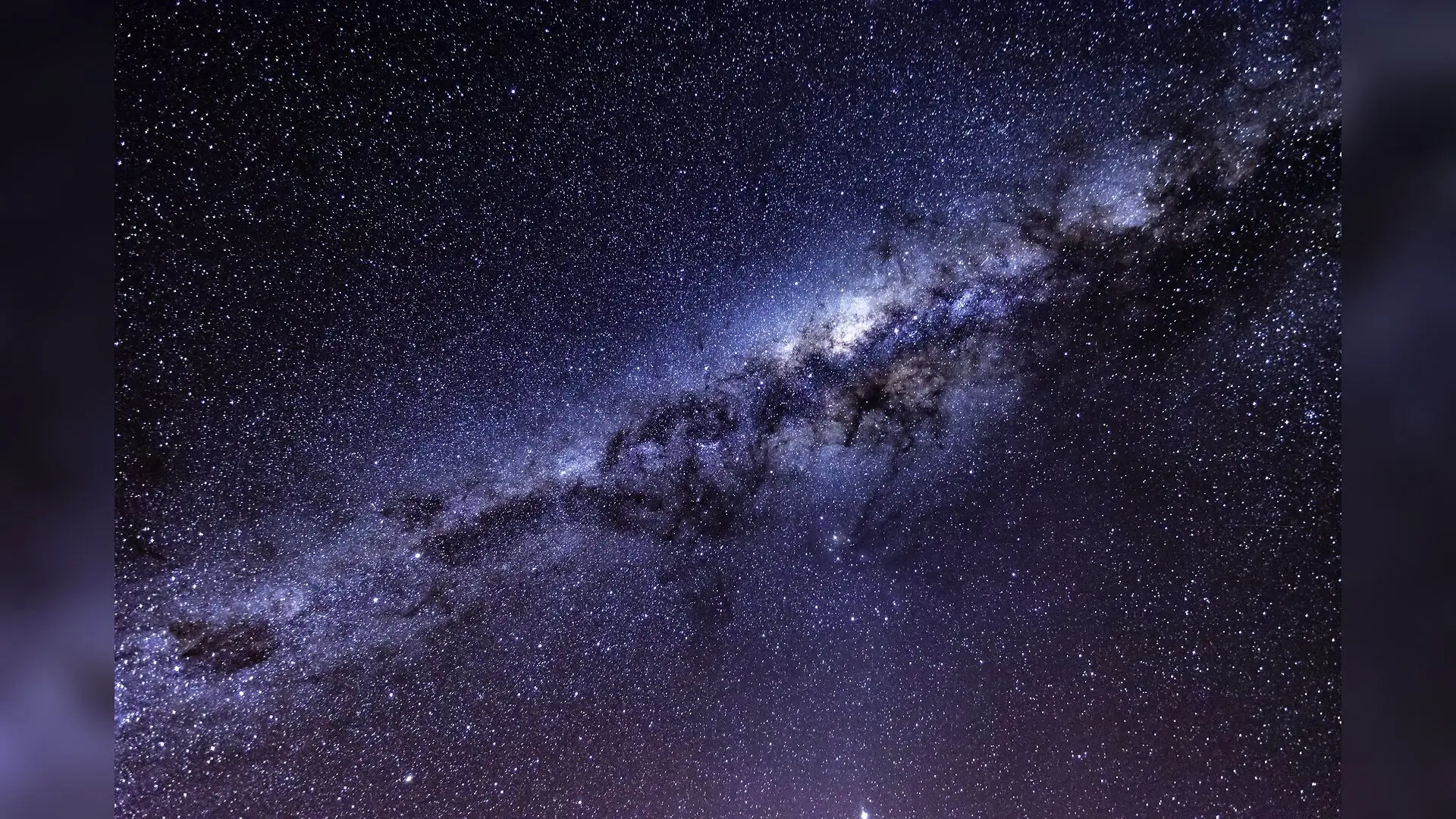
Astronomers have successfully reconstructed the classic Geneva seven-colour photometric system for more than twenty-five million stars by transforming low-resolution spectrophotometric data from the Gaia space observatory. While modern astronomy often relies on broad-band filters and automated spectral energy distribution fitting, these contemporary techniques can introduce significant errors when estimating the physical properties of hot, massive stars near the upper main sequence. By translating space-based spectral observations into a well-tested ground-based framework, researchers have opened a reliable new pathway for analyzing stellar characteristics across our galaxy.
How did researchers synthesize the Geneva system from Gaia data?
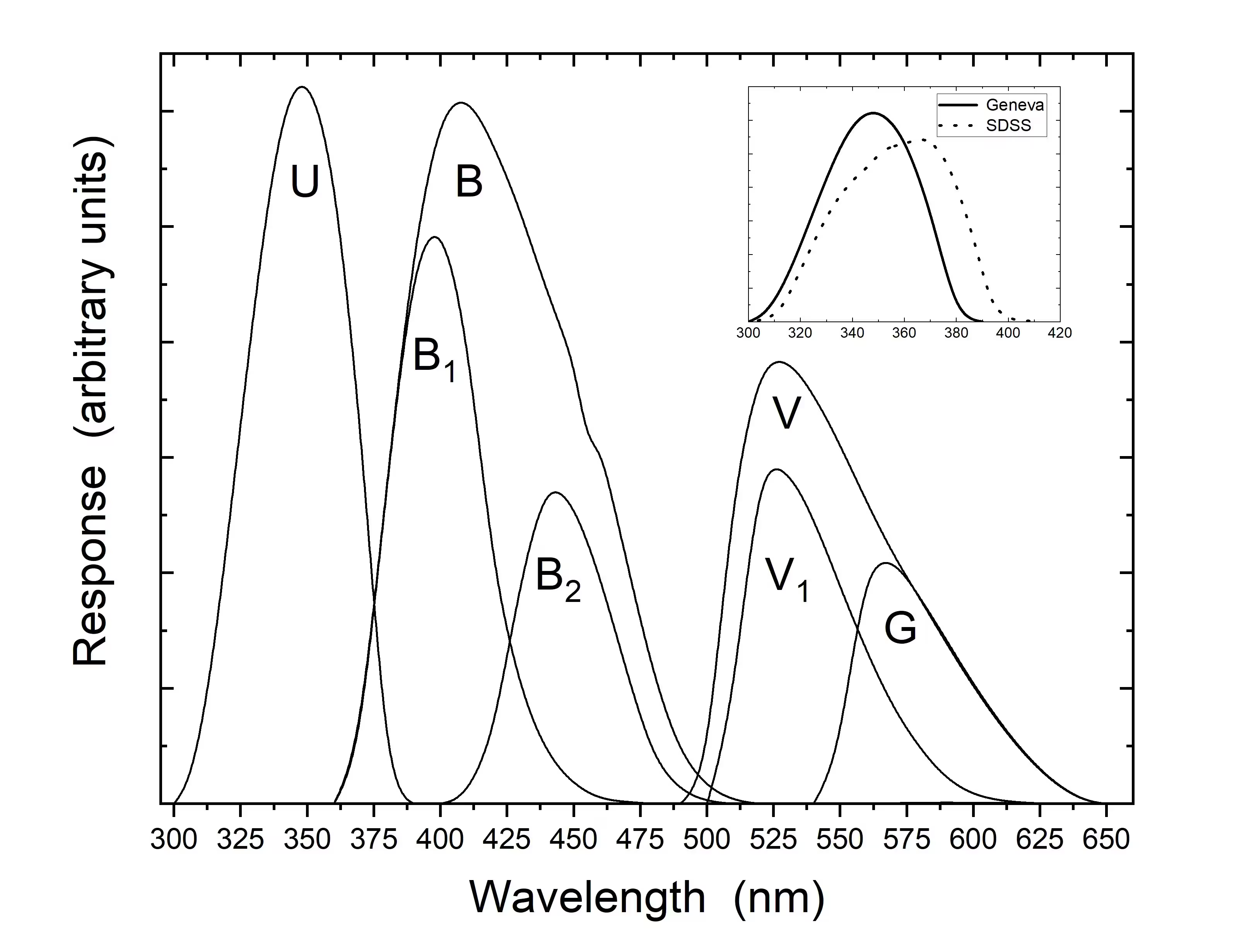
To bridge the gap between historic ground-based photometry and modern space astrometry, E. Paunzen from Masaryk University used the GaiaXPy software tool to simulate the specific passbands of the Geneva system. Because the original ultraviolet filter known as Geneva U falls beyond the wavelength cut-off of the Gaia blue photometer and red photometer spectra, the team substituted it with an ultraviolet filter from the Sloan Digital Sky Survey. Ground-based photoelectric observations from a comprehensive archival catalogue were subsequently employed to calibrate the synthetic magnitudes, correcting for known instrumental offsets and ultraviolet temperature dependencies.
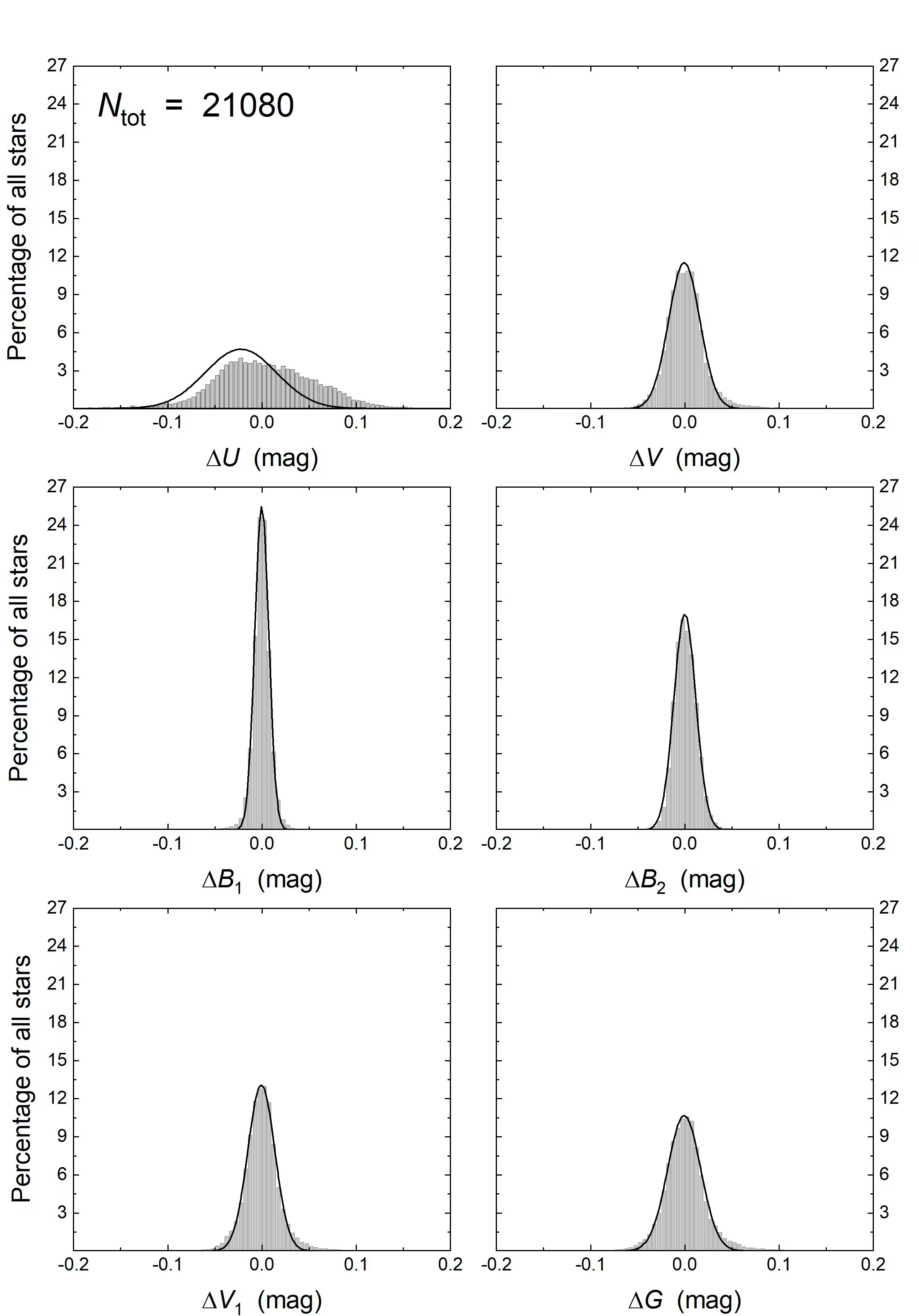
The resulting dataset, published in arXiv, includes over twenty-five million entries for stars hotter than spectral type K0. The validation process involved cross-matching the synthetic data against more than twenty-one thousand calibration stars without pre-selecting against binaries, stellar rotation, or interstellar dust reddening. Statistical comparisons confirmed that the synthetic magnitudes match observed values with high precision, and tests revealed no spurious correlations linked to rotational velocity or stellar duplicity.
What does this new catalogue reveal about Milky Way star clusters?
Armed with this large homogeneous photometric dataset, the author determined the chemical composition, specifically the heavy element abundance known as metallicity, for over five hundred open star clusters. These measurements allowed the team to map the radial Galactic metallicity gradient, which describes how the abundance of elements heavier than hydrogen and helium changes with distance from the center of the Milky Way. The analysis established a downward gradient of about seventy-six thousandths of a dex per kiloparsec, matching established expectations from previous astronomical studies.
Mapping this gradient is vital for understanding how galaxies accumulate gas, form stars, and enrich themselves chemically over billions of years. While previous studies have occasionally reported variations in metallicity trends across different star cluster age groups, the new analysis found no statistically significant differences between young and old populations within the examined distance range of two thousand parsecs around the Sun.
What are the limitations and future prospects for this photometric catalog?
Despite the high accuracy achieved for most filters, the reliance on Gaia spectrophotometry introduces certain boundaries. The ultraviolet filter substitution and the decreasing signal-to-noise ratio in the blue wavelength region mean that researchers must exercise caution when analyzing specific ultraviolet-sensitive indices. Furthermore, the current metallicity calibrations are optimized for early-type stars ranging from spectral types A to K, leaving out cooler pre-main sequence objects.
The newly compiled catalogue is now publicly available for the astronomical community through the Centre de Données astronomiques de Strasbourg. Future research aims to expand these synthetic methodologies to extragalactic stellar systems, refine rotation and metallicity models, and further investigate the three-dimensional distribution of dust and gas in the interstellar medium.
The study was posted to the arXiv preprint server on November 23, 2026.
This article has been fact checked for accuracy, with information verified against reputable sources. Learn more about us and our editorial process.
Last reviewed on .
Article history
- Latest version
Reference(s)
- Paunzen, E.. “Geneva seven-colour synthetic photometry from Gaia DR3 spectrophotometry.” arXiv.org <http://arxiv.org/abs/2611.30853v1>.
Cite this page:
- Posted by Deepak Malhotra