AI Agent Learns to Play and Rewrite Video Games to Boost Human Mastery
A new framework lets artificial intelligence agents experience games like humans and rewrite their rules to create smoother learning curves.
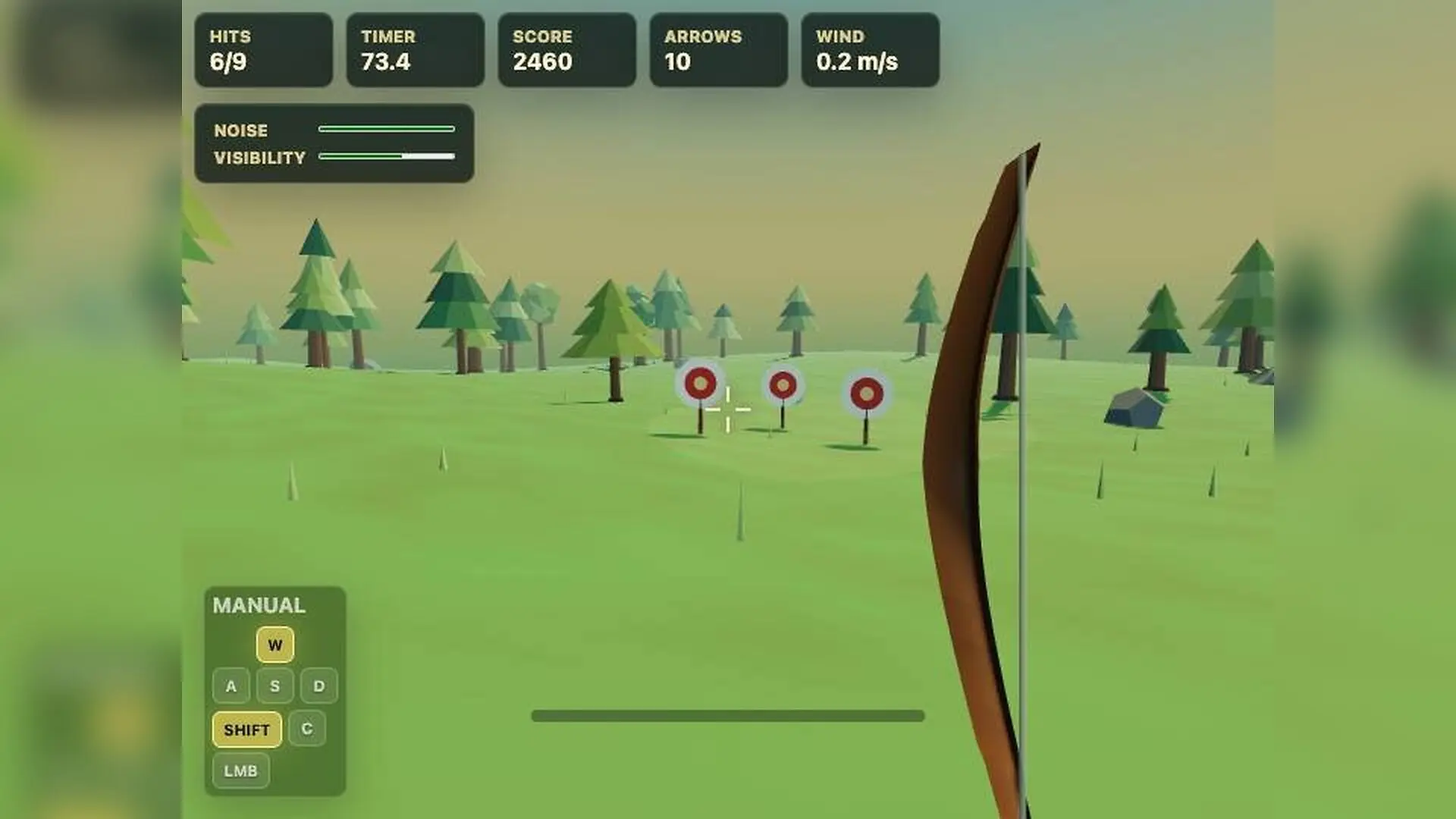
Artificial intelligence is now designing video games that teach players how to win by watching how an advanced digital agent learns through repeated play. While recent systems can write code for playable titles, they often fail to create the engaging progression that humans find satisfying. To solve this, researcher Weihao Cheng introduced PlayCraft, a new framework that lets artificial intelligence agents play games, experience failure, and rewrite rules to ensure mastery. The system was detailed in a study available on the arXiv preprint server, showcasing tests across ten different 2D and 3D browser games.
How Artificial Intelligence Plays and Learns Like a Human
The PlayCraft framework operates in a continuous loop divided into two distinct stages: playing and crafting. During the playing stage, a foundation model acts as a virtual gamer, observing the screen through rendered video frames rather than examining raw code. The agent uses standard mouse and keyboard controls to navigate obstacles, shoot targets, or steer vehicles across ten episodes of active play. Between attempts, the game resets to its initial state, but the player agent retains its memory and builds a growing list of natural language lessons. After each run, the agent writes a detailed report covering its progress, failures, perceived difficulty, and strategic decisions.
Once the playing phase concludes, a second artificial intelligence known as the crafter agent steps in to analyze the play records. Instead of blindly altering code, the crafter evaluates baseline player abilities and compares expected performance against predefined targets for beginner, intermediate, and expert tiers. It then modifies the game mechanics to bridge any gaps, introducing fresh opportunities for skill development while preserving the core identity of the title. This iterative cycle repeats across three rounds of refinement, shaping games to provide smoother learning curves and more rewarding challenges.
Measuring Skill Growth Across Classic and 3D Titles
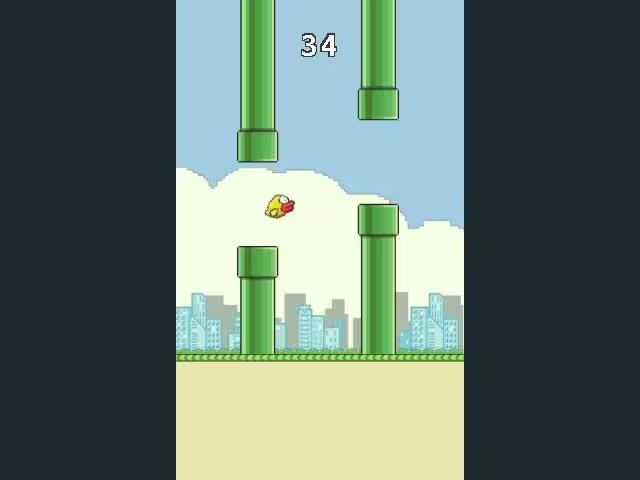
The research team tested PlayCraft on a suite of ten browser-based games built using Three.js. The lineup included five classic 2D recreations, namely Flappy Bird, T-Rex Runner, Breakout, Snake, and Pac-Man, alongside five prompt-generated 3D titles covering Archery Hunting, Desert Racing, Robotic Arm, Drone Delivery, and Space Shooter. To measure success, the authors tracked learning gain, which captures overall score improvement from early to late episodes, and learning slope, which summarizes the steady rate of performance growth over time.
The results indicate that PlayCraft significantly outperforms traditional automated revision methods that rely purely on code analysis or policy-based controllers without memory retention. Under medium intelligence settings, PlayCraft achieved a macro-average learning gain of 31.5 percentage points, marking a substantial 14.0 point improvement over the initial unrevised games. Furthermore, the system surpassed baseline approaches across all tested intelligence levels, proving that incorporating visual play experience into game design yields more engaging and learnable challenges.
Understanding Game-Specific Revisions and Performance Hurdles
Qualitative analysis of specific games revealed how different design modifications influenced player progression. In Breakout, for instance, PlayCraft introduced armor mechanics that retained damage from underside hits, allowing players to prepare bricks for future strikes rather than clearing everything in a single unpredictable bounce. In Archery Hunting, the system added environmental cover and caused targets to react to acoustic noise, encouraging players to approach targets stealthily and refine their aiming precision over time.
However, the experiments also highlighted certain limitations and trade-offs in automated game balancing. In Robotic Arm, the introduction of wrist sway and moving receivers created additional execution demands that temporarily disrupted established routines, resulting in a temporary dip in learning metrics after the first revision. The authors note that the framework currently relies on the assumption that foundation models learn in ways similar to humans, a hypothesis that will require extensive future validation through direct comparisons with human playtest data.
The study was posted to the arXiv preprint server on November 19, 2026.
This article has been fact checked for accuracy, with information verified against reputable sources. Learn more about us and our editorial process.
Last reviewed on .
Article history
- Latest version
Reference(s)
- Cheng, Weihao. “PlayCraft: Designing Engaging Games from Agent Play Experience.” arXiv.org <http://arxiv.org/abs/2611.26624v1>.
Cite this page:
- Posted by James Whitmore