Outdoor Painting Environments Boost Student Confidence Through Mental Escape
A survey of fine arts students reveals how psychological distance from routine pressure and creative involvement shape academic self-efficacy.
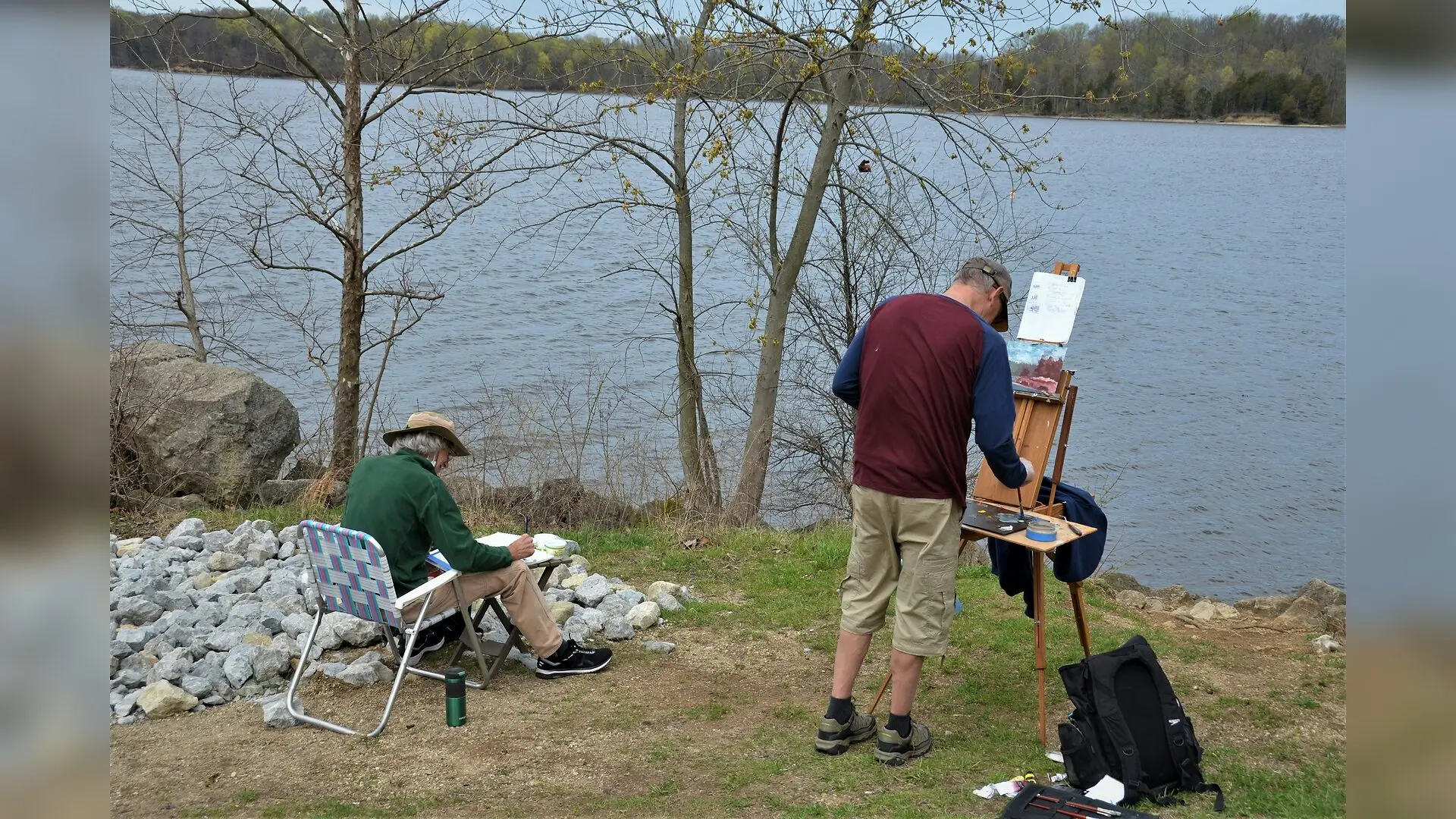
Stepping outside a traditional studio to paint landscapes or city streets might do more than sharpen an artist’s eye, as a new study points to how natural surroundings boost student confidence.
When art students immerse themselves in outdoor painting sessions, their psychological sense of being detached from routine pressures serves as a powerful driver of academic self-efficacy, meaning their belief in their own capability to organize and tackle learning tasks.
While fine arts education traditionally focuses on technical skill development, researchers are increasingly investigating how the learning environment shapes student psychology. The new work, published in PLOS One, examined how outdoor settings influence 386 fine arts students across Mainland China through a survey conducted in January 2026.
Understanding Attention Restoration Theory Outdoors
The research builds on Attention Restoration Theory, a framework in environmental psychology suggesting that urban or academic environments deplete our finite reserves of directed attention. Nature and other stimulating spaces are thought to engage effortless attention, allowing the mind to rest and recover from mental fatigue.
Outdoor painting, known as plein-air painting, places students directly into natural or urban settings filled with changing light, spatial depth, vegetation, and architecture. These elements act as visual puzzles that students must observe, simplify, and reconstruct on canvas.
To evaluate how outdoor spaces affect learners, the authors focused on four core restorative qualities defined by environmental psychologists: Fascination, Compatibility, Being Away, and Extent. Fascination involves effortless attention captured by aesthetically engaging stimuli. Compatibility reflects how well an environment meets the practical needs of an activity. Being Away represents psychological distance from daily routines and academic pressures. Extent refers to the perceived richness and spatial coherence of a landscape.
How Statistical Models Unravelled Environmental Perceptions
The research team surveyed 386 undergraduate, master’s, and doctoral students from eight universities who had completed at least one university-level outdoor sketching activity. Of the participants, 53.6 percent identified as female and 46.4 percent as male, with the largest age group falling between 21 and 25 years old.
Using a dual analytical approach combining partial least squares structural equation modeling and fuzzy-set qualitative comparative analysis, the authors tested how environmental qualities related to fine-arts involvement and academic self-efficacy. Fine-arts involvement was defined as the physical and mental energy, interest, attention, and effort invested in creative work.
The structural equation model revealed that a sense of Being Away had the strongest direct association with academic self-efficacy, registering a path coefficient of 0.403. Fine-arts involvement also showed a positive direct association with self-efficacy at 0.263.
However, other direct pathways presented surprises. Perceived Fascination, Compatibility, and Extent did not show statistically significant direct associations with academic self-efficacy on their own. Instead, they exerted positive indirect associations through fine-arts involvement.
Why Creative Involvement Bridges Nature and Confidence
All four restorative qualities showed strong, positive associations with fine-arts involvement. When students perceived outdoor spaces as fascinating, compatible with their painting needs, psychologically distant from routine stress, and visually expansive, they reported deeper psychological investment in their creative tasks.
This pattern indicates that environmental qualities may become educationally meaningful when they translate into active artistic observation and decision-making. Deeper involvement in painting under open-ended conditions allows students to experience situated mastery, reinforcing their confidence in handling demanding artistic challenges.
The configurational analysis added further nuance by showing that high academic self-efficacy is not tied to a single universal pathway. Instead, multiple combinations of environmental perceptions and creative involvement corresponded to high efficacy, demonstrating that different students thrive under different configurations of external and psychological conditions.
Study Limitations and Future Directions
The authors noted important limitations in their design. Because the survey was cross-sectional, the findings do not establish temporal order, meaning the indirect paths cannot be interpreted as proof of a causal mediation process. Longitudinal or experimental studies are required to track changes over time.
Additionally, all constructs relied on self-reported questionnaires collected from the same respondents at one point in time, leaving room for potential common method bias. The sample was also restricted to fine arts students with prior outdoor painting experience, meaning the results may not generalize to other academic disciplines or cultural settings.
The research was published in PLOS One on November 20, 2026.
This article has been fact checked for accuracy, with information verified against reputable sources. Learn more about us and our editorial process.
Last reviewed on .
Article history
- Latest version
Reference(s)
- Zhu, Xiaohui., et al. “Restorative plein-air environments and academic self-efficacy among fine arts students:A PLS-SEM–fsQCA study.” PLOS One, vol. 21, no. 11, November 20, 2026, pp. e0362667 Public Library of Science (PLoS), doi: 10.1371/journal.pone.0362667. <https://doi.org/10.1371/journal.pone.0362667>.
Cite this page:
- Posted by Deepak Malhotra