Novel Hydrogel Clears 99 Percent of Acne Bacteria and Repairs Skin
A combined plant extract and stem cell exosome hydrogel breaks the cycle of inflammation, bacterial growth, and poor skin healing in animal models.
A new hydrogel treatment combining stem cell components with a traditional plant extract cleared 99.8 percent of bacteria and resolved severe inflammation in a rat ear model of acne. The research highlights an integrated approach that targets multiple drivers of the condition simultaneously.
How a Dual-Action Hydrogel Breaks the Acne Cycle
Acne vulgaris is driven by a stubborn cycle of blocked pores, bacterial overgrowth, and deep inflammation that can lead to permanent scarring. Traditional treatments like topical antibiotics often lose effectiveness due to bacterial resistance and generally do not repair damaged skin tissue. To address this limitation, researchers engineered an alginate-based hydrogel co-loaded with Phellodendron bark extract and human umbilical cord mesenchymal stem cell-derived exosomes, referred to as PE gel. The study is published in PLOS One.
The plant extract contains active components such as berberine, which provides potent broad-spectrum antibacterial activity against acne-associated pathogens like Cutibacterium acnes. Meanwhile, the exosomes deliver bioactive molecules that regulate immune responses, promote blood vessel growth, and facilitate organized collagen remodeling. Encapsulating both agents within an ionically crosslinked alginate matrix allows for the continuous release of the plant extract over a 24-hour period, protecting the fragile biological molecules of the exosomes while maintaining a clean local microenvironment.
Evaluating Broad-Spectrum Bacterial Clearance
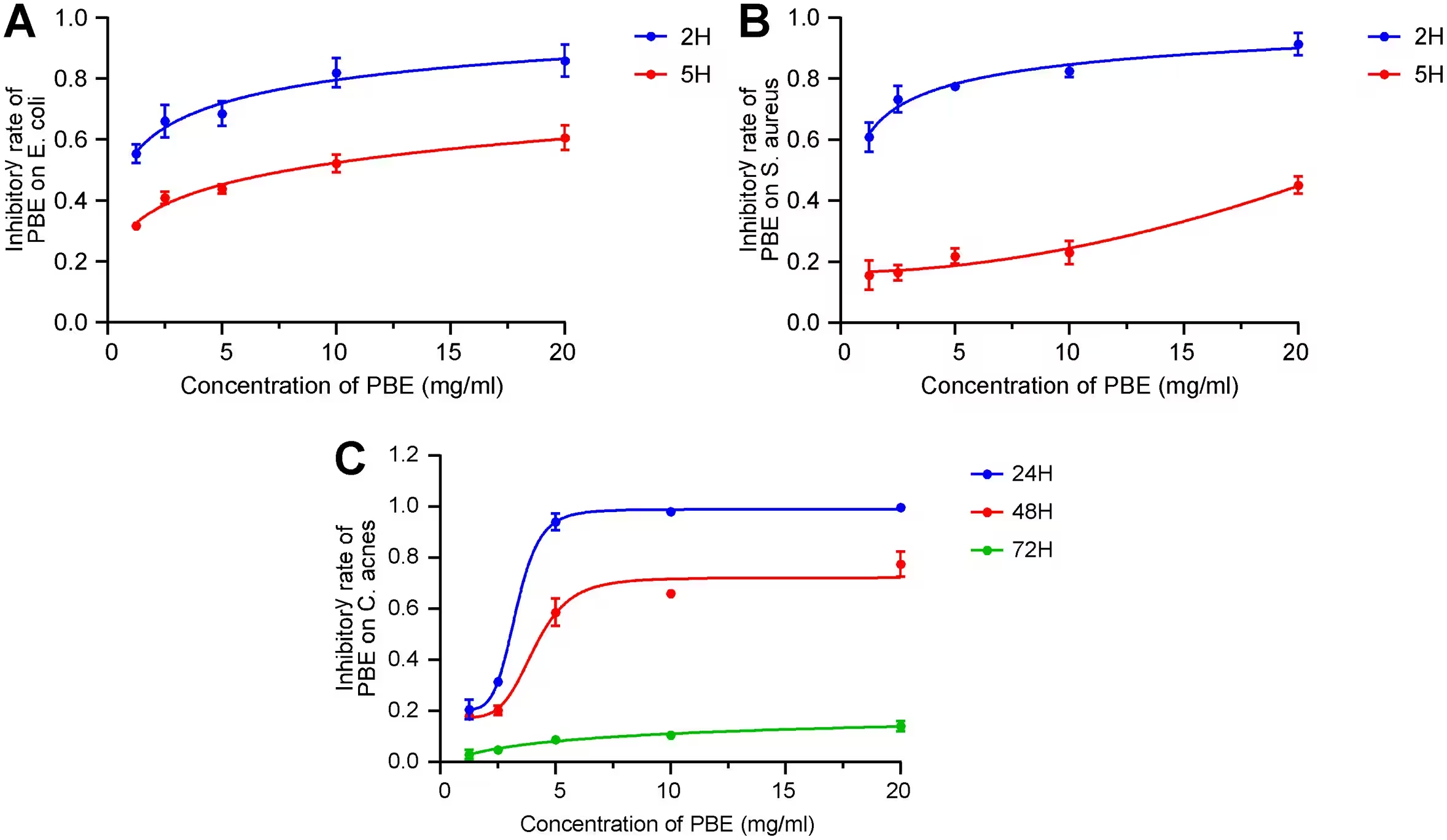
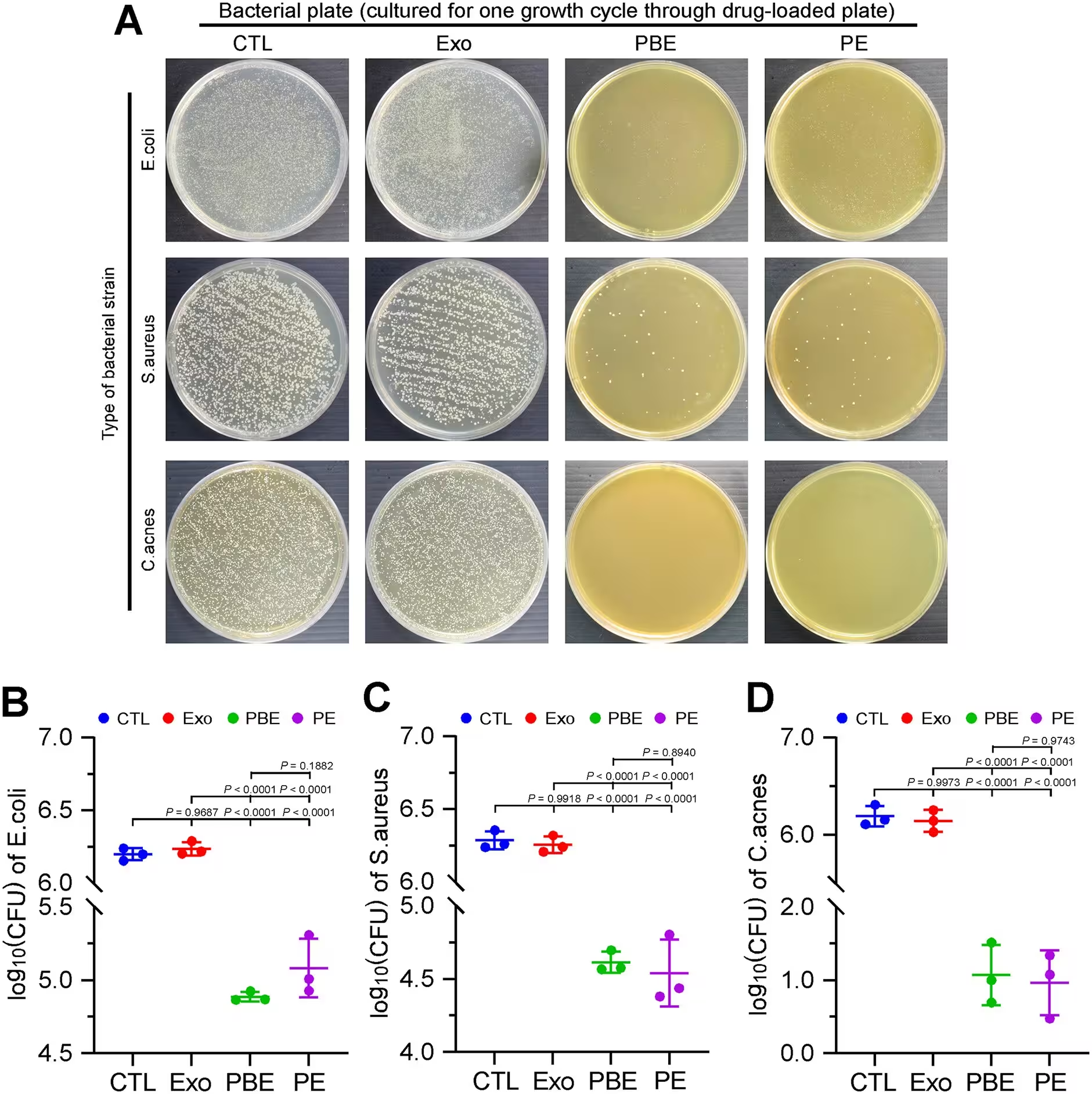
Laboratory tests demonstrated that the Phellodendron bark extract achieved an inhibition rate of 92.3 percent against Cutibacterium acnes at a concentration of 5 milligrams per milliliter. Colony-forming unit assays showed that the extract and the combined PE mixture reduced bacterial counts by approximately five orders of magnitude compared to untreated controls. The formulation also effectively disrupted bacterial biofilms, which are notoriously difficult to treat with conventional antibiotics.
Dynamic light scattering and transmission electron microscopy analyses confirmed that the exosomes and the plant extract existed as distinct particle populations within the mixture without forming unwanted complexes. This coexistence ensured that the antibacterial properties of the plant extract remained fully active while operating alongside the regenerative properties of the exosomes.
In Vivo Efficacy in a Rat Ear Acne Model
When tested on a Cutibacterium acnes-induced rat ear acne model, the PE gel accelerated swelling resolution significantly. By day 11 of treatment, the swelling resolution rate reached 74.9 percent in the PE gel group, compared to just 6.3 percent in the untreated model group and 11.6 percent in the blank hydrogel group. Tissue homogenate cultures revealed that the local bacterial load plummeted by over 99 percent in the PE-treated subjects.
Histopathological examinations using Hematoxylin and Eosin staining showed that the PE gel markedly reduced the cross-sectional area of acne-like pustules and decreased follicular hyperkeratosis. Masson’s trichrome staining further revealed improved collagen maturity and orderly fiber alignment within the dermis, pointing to effective structural tissue remodeling.
Complementary Biological Mechanisms at Play
Immunohistochemical analysis shed light on the distinct contributions of each component in the composite gel. The plant extract was primarily responsible for suppressing inflammatory cytokines, showing dramatic reductions in the levels of tumor necrosis factor-alpha and interleukin-6 within the lesion sites. Conversely, the stem cell exosomes drove tissue repair by significantly upregulating vascular endothelial growth factor and increasing microvessel density.
Safety evaluations demonstrated normal serum biochemical parameters and healthy histological architecture across major organs including the heart, liver, spleen, lung, and kidney after 14 days of topical application. While these preclinical findings point to a promising non-antibiotic strategy for managing acne, further investigations in larger animal models and controlled clinical trials will be necessary before human application can be considered.
The research was published in PLOS One on November 20, 2026.
This article has been fact checked for accuracy, with information verified against reputable sources. Learn more about us and our editorial process.
Last reviewed on .
Article history
- Latest version
Reference(s)
- He, Yu., et al. “Alginate hydrogel co-loaded with phellodendron bark extract and HucMSC-exosomes for combined antibacterial, anti-inflammatory, and pro-repair acne effects.” PLOS One, vol. 21, no. 11, November 20, 2026, pp. e0363272 Public Library of Science (PLoS), doi: 10.1371/journal.pone.0363272. <https://doi.org/10.1371/journal.pone.0363272>.
Cite this page:
- Posted by Asif Iqbal