Common Herbicides May Accidentally Make Some Weeds Bloom More Instead Of Killing Them
New research reveals that common weed control practices may be inadvertently making plants along field and lawn perimeters stronger and more resilient.
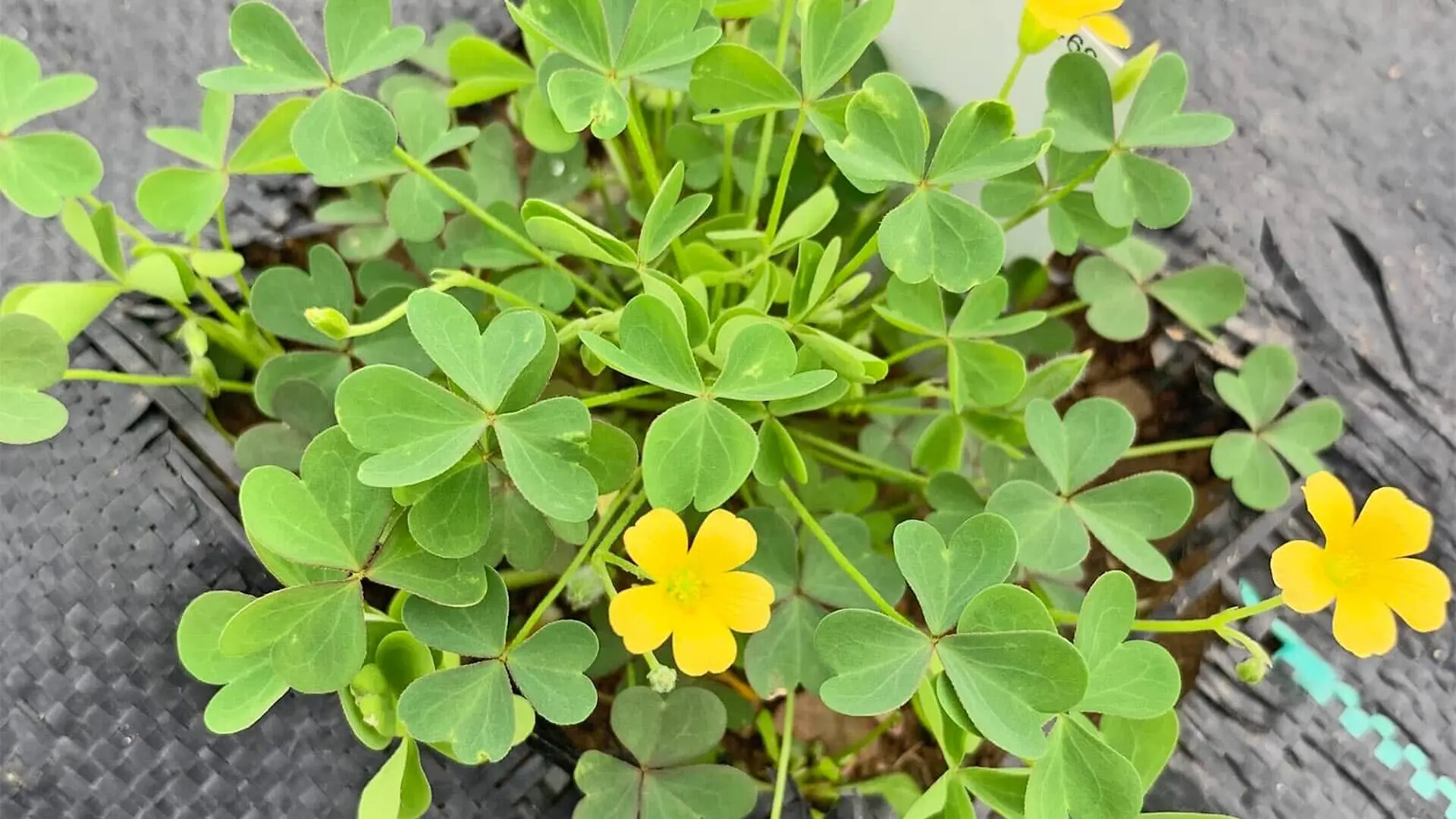
Unintended Consequences: Common Weed Blooms More After Herbicide Exposure
A prevalent weed known as oxalis may be receiving an unexpected boost from the very chemicals intended to eradicate it. Recent research reveals that exposure to sublethal concentrations of dicamba, a widely used agricultural and residential herbicide, triggers a surge in flowering activity in these plants.
This phenomenon, which researchers documented in the journal New Phytologist, suggests that standard weed control practices might inadvertently bolster the resilience of surrounding vegetation. While users typically apply herbicides to eliminate unwanted growth, the drift of these chemicals—often carried by wind currents to plants bordering target areas—can result in low-dose exposure that yields surprising biological reactions.
“The general public uses herbicides in their lawn to kill weeds. They’re not using herbicides to make the weeds do better,” says senior author Regina Baucom, a professor of ecology and evolutionary biology at the University of Michigan. “They probably don’t even know this is a potential side effect.”
The observation aligns with a long-studied biological concept known as hormesis, or the “stimulation effect.” First identified in the early 20th century, the principle posits that low levels of environmental toxins, including zinc and copper, can paradoxically stimulate growth or reproductive output in various organisms, such as fungi and algae.
To quantify how this process affects oxalis, the research team conducted a multi-year field experiment. Under the leadership of graduate student Anah Botran, the team cultivated two plots of oxalis, applying trace amounts of dicamba to one group while leaving the other as an untreated control. Over the course of the study, investigators tracked various metrics, including growth rates, seed production, and flower count.
During the initial year, the herbicide-exposed plants produced a notably higher number of flowers compared to their untreated counterparts. Although there were early signs of increased seed production, that trend did not persist into the second year of the study. Furthermore, the team sought to determine if this heightened reproductive output was an evolutionary adaptation that could be passed to future generations.
“We found no evidence of genetic variation—so what we’ve captured is basically just a single-generation response of the plants getting exposed to low doses of dicamba,” Baucom explains. “It may translate to increased fitness in some years, but there’s no evidence this trait would increase in the population, or evolve.”
Future inquiries will focus on the nutritional quality of these smaller blooms and whether they provide adequate sustenance for local pollinators. While the current study indicates that this specific response in oxalis does not appear to be heritable, Baucom emphasizes that the findings provide a robust framework for assessing how other weed species might react to chemical stressors.
“What I think is scientifically interesting about this is that folks in both weed science and ecotoxicology have been interested in hormesis, and have been interested in whether this overproduction is heritable,” Baucom says. “We put this question in a framework where you could examine the potential that this trait will evolve.”
This article has been fact checked for accuracy, with information verified against reputable sources. Learn more about us and our editorial process.
Last reviewed on .
Article history
- Latest version
Reference(s)
- Botran, Anah Soble., et al. “Hormesis without evolution: plastic compensatory responses to herbicide drift in Oxalis stricta , a common weed of agriculture.” New Phytologist, October 5, 2026 Wiley, doi: 10.1111/nph.71643. <https://doi.org/10.1111/nph.71643>.
Cite this page:
- Posted by Asif Iqbal