Dual Neural Networks Restore Microgrid Frequency in 0.3 Seconds
A new machine learning framework selects optimal control settings in real time, outperforming traditional fixed-structure microgrid controllers.
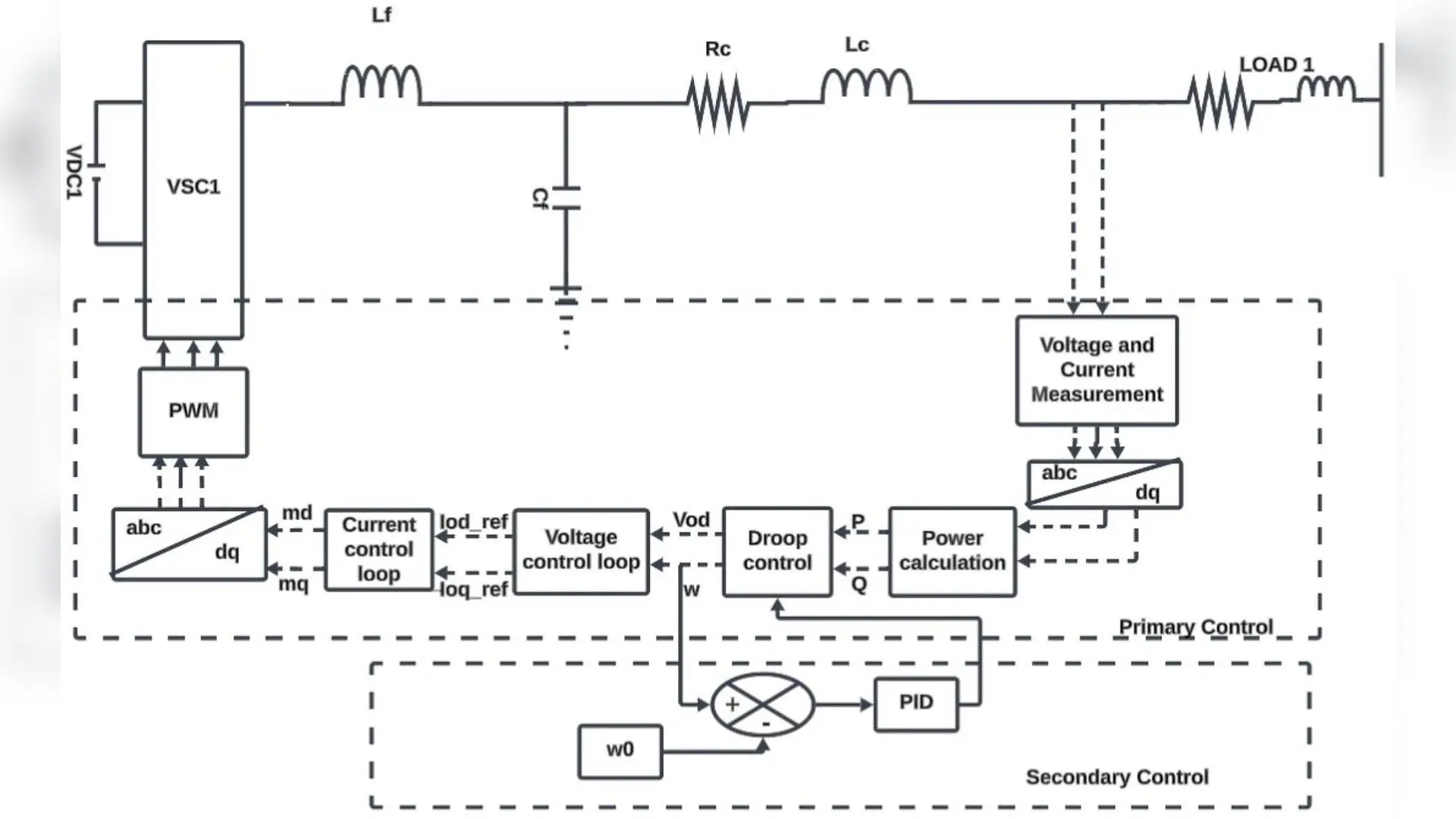
A new dual artificial neural network framework restores microgrid frequency to 50 Hz in just 0.3 seconds by automatically choosing the best control settings without human tuning. When islanded microgrids lose connection to the main power grid, keeping a stable frequency and sharing power fairly among distributed generators becomes an urgent challenge. Traditional control methods require tedious manual adjustments and often struggle to maintain stability when electrical loads change suddenly.
Researchers developed a data-driven approach that pairs two neural networks to handle these adjustments offline before real-time deployment. The study is published in PLOS One, detailing how the system combines regression and classification to optimize microgrid performance. Instead of relying on a single fixed controller, the system evaluates operating conditions and selects the most effective configuration from multiple pre-tested scenarios.
How Dual Artificial Neural Networks Power the Control Strategy
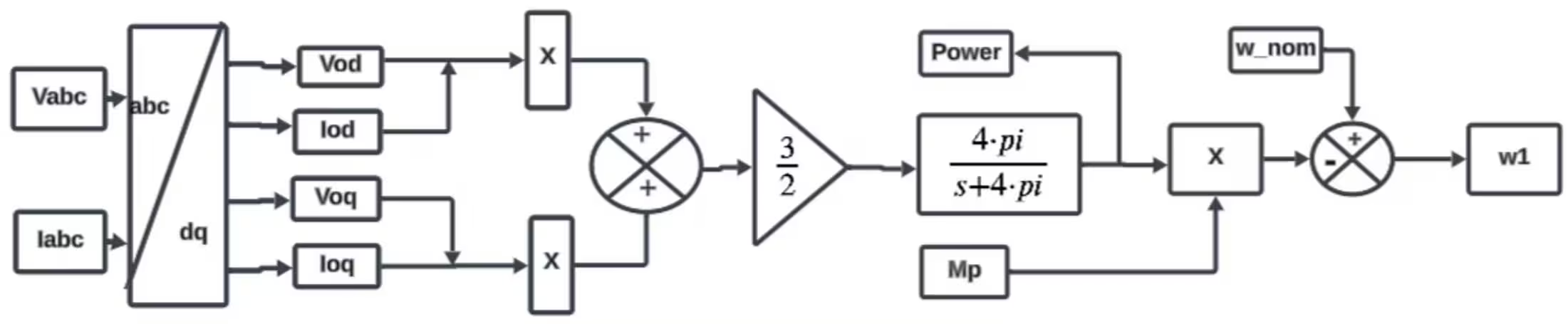
The system relies on two distinct feedforward neural networks integrated into a single MATLAB script. The first network acts as a regression model to predict the optimal droop coefficient, which governs how a generator adjusts its frequency in response to active power changes. The second network functions as a classifier that examines system features and selects the best-performing controller configuration among six distinct setups.
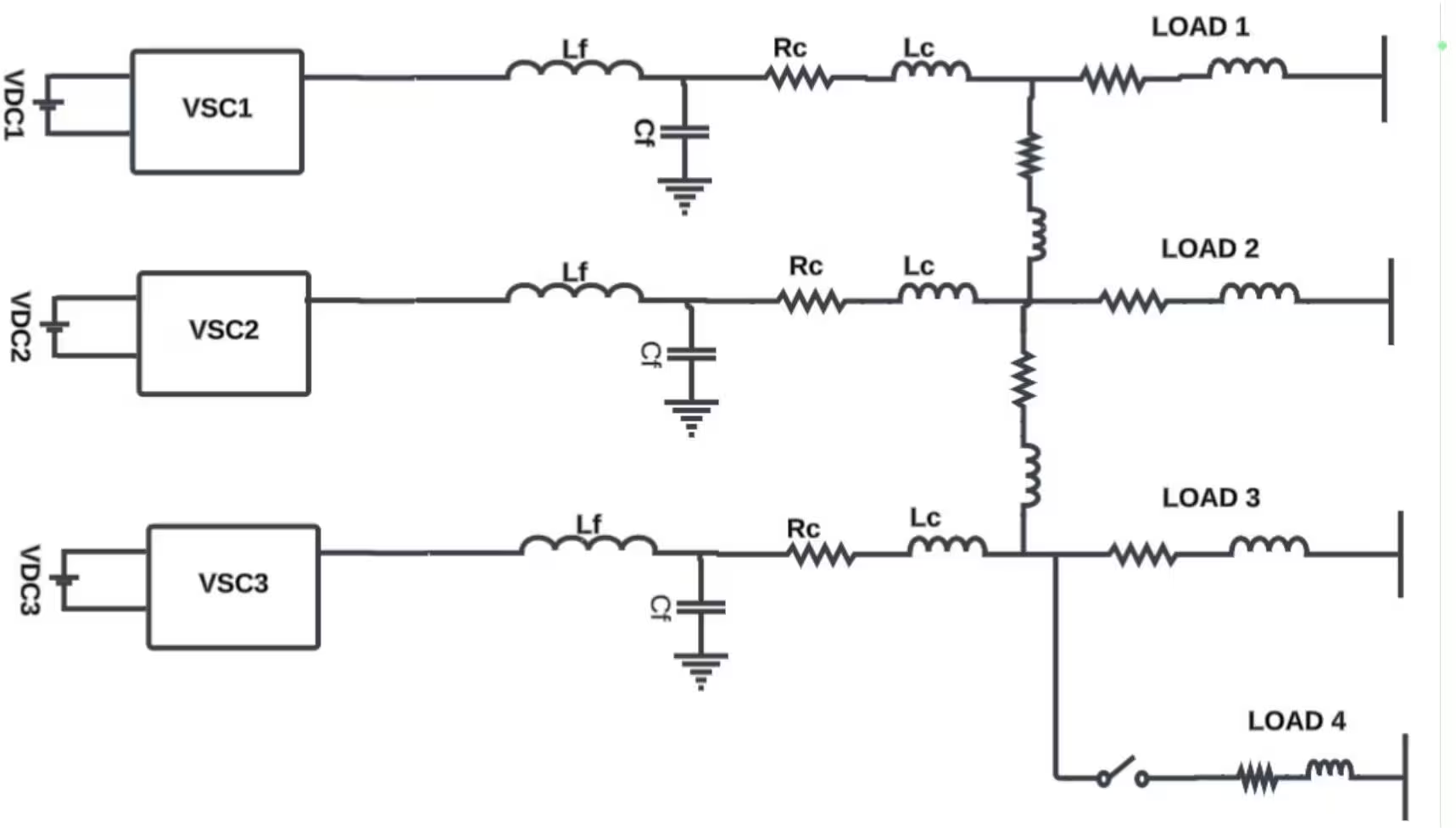
Training data came from extensive simulations executed in MATLAB Simulink across a three-distributed-generator network. The dataset covered eight different droop coefficient values and various dynamic load profiles where a secondary load was applied at 1 second and removed at 2 seconds. Both neural networks utilized a single hidden layer with 10 neurons, achieving a prediction accuracy exceeding 93% while avoiding overfitting through L2 regularization.
Real-Time Hardware Verification on an OPAL-RT Simulator
To confirm that the simulated success translates to physical systems, the authors tested the framework using an OPAL-RT OP4510 real-time simulator. This hardware-in-the-loop setup allowed researchers to run rapid control prototyping through the RT-LAB platform. The physical validation demonstrated that frequency anomalies caused by sudden load shifts were corrected within 0.3 seconds, outperforming conventional single-structure controllers that suffered from prolonged oscillations.
The chosen control strategy combined an auto-tuned proportional-integral-derivative controller with a low-pass filter and a proportional correction term. This hybrid configuration eliminated steady-state frequency errors while maintaining smooth power distribution across all generators. The hardware testing confirmed that the system returns precisely to the nominal 50 Hz frequency without significant overshoots or lingering instability.
Limitations and Future Research Directions
While the results show high accuracy, the current validation was limited to a three-generator islanded AC microgrid. Scaling this framework to larger, more complex topologies remains a challenge for future work. Additionally, the neural network models were trained on noise-free simulation data, meaning further testing under severe real-world measurement noise and parameter uncertainties is necessary.
The research team plans to expand the methodology by incorporating model predictive control as a secondary supervisor for even faster response times. Future iterations will also explore reinforcement learning agents to handle runtime adaptation without pre-generated datasets, alongside expanding the framework to cover voltage regulation and reactive power sharing.
The research was published in PLOS One on November 20, 2026.
This article has been fact checked for accuracy, with information verified against reputable sources. Learn more about us and our editorial process.
Last reviewed on .
Article history
- Latest version
Reference(s)
- Sharma, Juhee., et al. “D- ANN assisted decentralized frequency restoration schemes in Islanded AC microgrids using secondary control.” PLOS One, vol. 21, no. 11, November 20, 2026, pp. e0362304 Public Library of Science (PLoS), doi: 10.1371/journal.pone.0362304. <https://doi.org/10.1371/journal.pone.0362304>.
Cite this page:
- Posted by James Whitmore