New Wearable Tech Turns Your Entire Forearm Into A Smartwatch Trackpad
Engineers have developed new technology that transforms a smartwatch user’s forearm into a functional trackpad for improved wearable control.
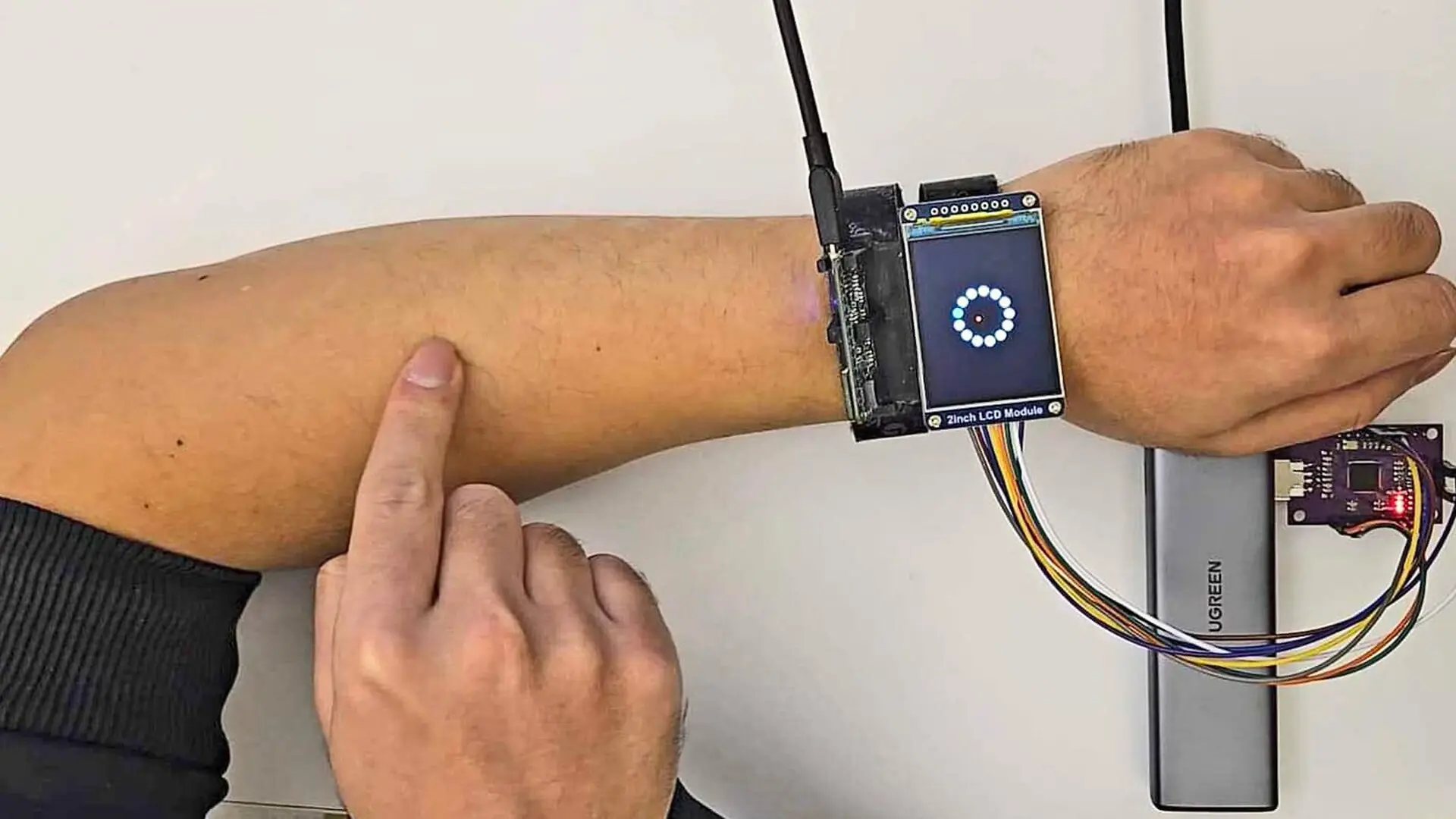
Engineers at North Carolina State University have unveiled a novel interface technology that transforms a user’s forearm into an expansive, high-precision trackpad. By repurposing the skin adjacent to a smartwatch as an interactive surface, the system enables complex gestures like pinch-to-zoom, two-finger scrolling, and nuanced force-based inputs that are typically hampered by the restrictive dimensions of modern wearable displays.
Expanding the Interface Beyond the Wrist
The innovation, dubbed EpiPad, utilizes a compact millimeter-wave radar integrated into a wristband. Unlike optical sensors that rely on cameras, this radar system detects the microscopic indentations created when a user’s fingertips press against their skin. This allows the device to track multiple points of contact simultaneously while measuring the pressure applied by each finger, mirroring the sophisticated force-touch capabilities found on high-end laptop trackpads.
“Smartwatch screens are too small for the touch interactions people use every day on phones and laptops, such as two-finger scrolling, pinch-to-zoom, or pressing harder to trigger a different command,” explains Chenhan Xu, an assistant professor of computer science at NC State and the study’s corresponding author. “Our goal was to develop a small, wearable technology that would provide that level of interactive control for users.”
Efficiency and Accuracy Gains
In pilot testing involving 20 participants, the research team evaluated the system’s performance against traditional input methods, including standard touchscreens and tilt-based cursor controls. According to Yuliang Fu, a PhD student at NC State and the paper’s lead author, the results were clear: the EpiPad prototype demonstrated superior efficiency and lower error rates across all evaluated metrics. The system requires a quick, four-minute calibration process when first fitted to a new user to ensure accurate gesture recognition.
The physical footprint of the technology is remarkably small, with the core sensor array measuring just 5 millimeters by 4 millimeters. While the current research prototype features an exposed circuit board, the researchers suggest the hardware is well-suited for integration into future commercial smartwatches or even screenless wearables like AI-integrated glasses.
Affordability and Future Potential
Beyond its functional advantages, the team emphasizes the economic viability of the project. The components required for the radar array are relatively inexpensive, with estimated production costs sitting below $10 per unit if manufactured at scale. As consumer electronics continue to shrink, the demand for intuitive, reliable input methods is expected to grow, positioning skin-based interfaces as a primary solution for the next generation of wearable tech.
The findings were detailed in a research paper presented at the UbiComp/ISWC conference. The team is currently seeking industry partnerships to explore the commercial integration of the hardware into upcoming consumer devices.
This article has been fact checked for accuracy, with information verified against reputable sources. Learn more about us and our editorial process.
Last reviewed on .
Article history
- Latest version
Reference(s)
- Fu, Yuliang., et al. “EpiPad: Enabling Multi-Finger and Force-Sensitive Skin Interface for Smartwatches.” Proceedings of the ACM on Interactive, Mobile, Wearable and Ubiquitous Technologies, vol. 10, no. 2, June 15, 2026, pp. 1-35. Association for Computing Machinery (ACM), doi: 10.1145/3810191. <https://doi.org/10.1145/3810191>.
Cite this page:
- Posted by Asif Iqbal