After 12 Years of Digging for Lost Bitcoin, He Gives Up the Drive and Launches a New Token
After 12 years hunting a Bitcoin stash hidden in a landfill, his quest ends—and his next move takes the story in an unexpected direction.

Beneath the rubbish mound at Newport’s Docksway landfill, James Howells remains convinced that a discarded hard drive still holds the private keys to a Bitcoin wallet he has been unable to open since 2013. The former computer engineer has spent more than a decade trying to turn that conviction into a real‑world excavation.
After pitching profit‑sharing schemes, courting investors, and outlining AI‑driven search methods, Howells eventually took the dispute to the courts. When the legal avenue closed, he explored a last‑ditch option: acquiring the portion of the landfill where he believed the drive was buried.
In 2025 he announced that he was no longer pursuing the purchase, an excavation, or further talks with Newport City Council. Nevertheless, he stressed that his claim to the cryptocurrency itself remains intact, and he has redirected his efforts toward a new token project called Ceiniog, which continues to dominate the story in 2026.
From a Misplaced Drive to a Multi‑Million‑Dollar Mystery
Early coverage estimated the holding at 7,500 BTC, with the BBC reporting in November 2013 that the coins were already worth millions of pounds. Subsequent reports have generally cited a figure of 8,000 BTC.
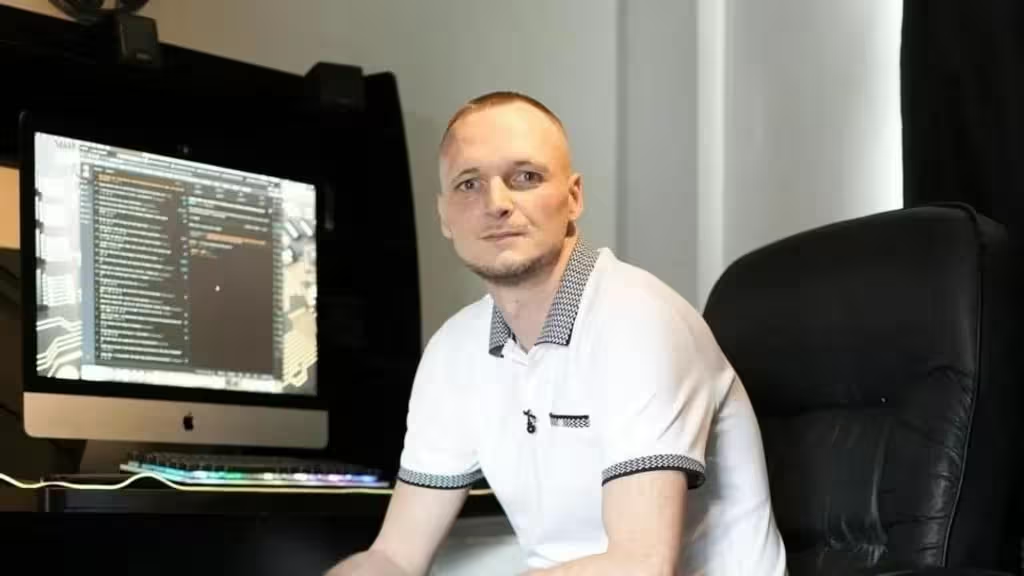
Fluctuations in Bitcoin’s price have repeatedly reshaped the estimated value of the missing stash. A Guardian report in 2021 pegged the fortune at £127 million, while later calculations have placed it well above that figure.
As of August 12 2026, Bitcoin traded around $63,804, meaning the 8,000‑BTC cache would be valued at roughly $510 million—a market‑driven estimate rather than a fixed sum attached to the lost drive.
High‑Tech Proposals and a Courtroom Showdown
Howells spent years lobbying Newport City Council for permission to conduct a controlled search of the landfill.
A 2021 BBC feature chronicled one of his proposals as the Bitcoin value surged. Subsequent plans grew more ambitious, incorporating artificial intelligence to sift through thousands of tonnes of waste in search of the elusive drive.
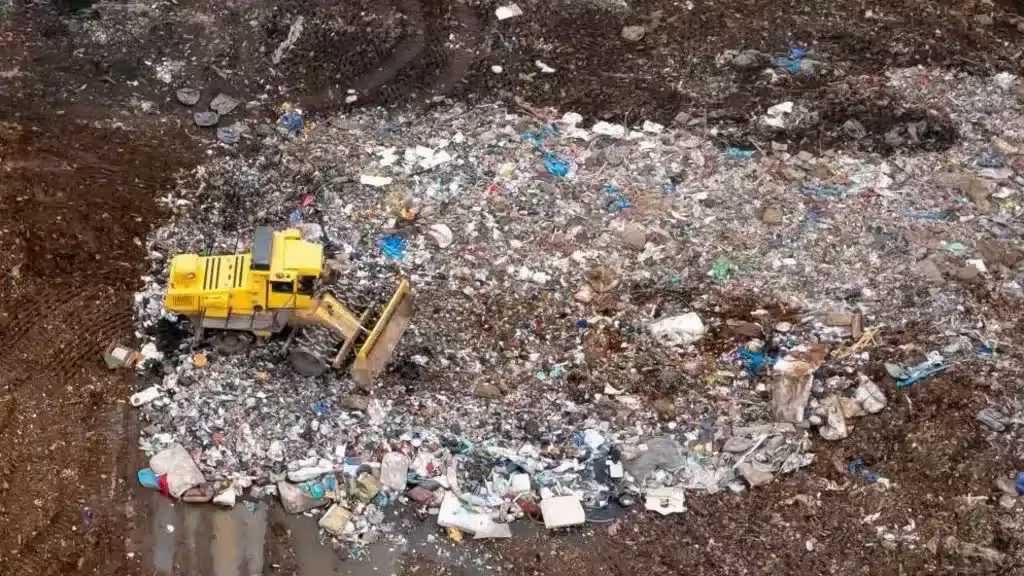
The council opposed any excavation, citing environmental and regulatory concerns. Howells’ legal challenge culminated in January 2025 when Judge Keyser KC dismissed his claim, stating it had “no realistic prospect of succeeding.” The judgment affirmed the council’s ownership of the drive and rejected Howells’ entitlement to retrieve it.
An appeal filed later that year was turned down in March 2025.
Attempted Landfill Purchase as a Last Resort
The court defeat did not immediately halt Howells’ pursuit.
In February 2025 he disclosed that he was exploring the possibility of buying the landfill itself after the council announced plans to close the site, indicating discussions with potential investors.
By July, he had lodged a formal bid for the specific section where he believed the hard drive lay, but the offer never translated into an excavation permit.
In August 2025 he publicly announced that he was ending all physical‑recovery efforts.

He told The Block, “I am no longer pursuing the purchase of the landfill, I am no longer pursuing excavation or remediation, I am no longer pursuing dialogue with the council or its representatives.” The statement underscored that while the physical hunt had ended, his claim to the Bitcoin remained unresolved.
Ceiniog Token Becomes the New Focus
Turning away from the landfill, Howells announced plans for Ceiniog Coin, a token designed to represent his legal ownership of the inaccessible 8,000 BTC.
In an August 2025 interview with The Block, he described the initiative as a strategic pivot rather than an abandonment of his broader goal to monetize the lost fortune.
The narrative also attracted media interest. In 2025, entertainment company Lebul secured rights to develop the saga as “The Buried Bitcoin,” a forthcoming docuseries, building on an earlier Lightbox and BBC announcement about documenting Howells’ quest.
By July 2026, coverage consistently reported that the excavation effort had been abandoned and that Ceiniog represented the next chapter in Howells’ long‑running pursuit. The hard drive itself has yet to be recovered.
This article has been fact checked for accuracy, with information verified against reputable sources. Learn more about us and our editorial process.
Last reviewed on .
Article history
- Latest version
Reference(s)
- “James Howells searches for hard drive with £4m-worth of bitcoins stored.”, November 28, 2013 BBC News <https://www.bbc.com/news/uk-wales-south-east-wales-25134289>.
- <https://www.theguardian.com/technology/2021/jan/15/the-man-who-lost-127m-in-bitcoin-its-been-a-hell-of-a-decade>.
- <https://www.bbc.com/news/uk-wales-56499947>.
- <https://www.lightboxent.com/news/2023/5/10/lightbox-and-bbc-to-tell-the-story-of-james-howells-search-for-his-lost-bitcoin-fortune>.
Cite this page:
- Posted by Asif Iqbal