NOAA’s Solar-1 Satellite Begins Continuous Watch of the Sun, Boosting Space Weather Preparedness
NOAA’s SOLAR-1 satellite offers 24/7 solar storm monitoring delivering early warnings to protect Earth and space from disruptive solar threats
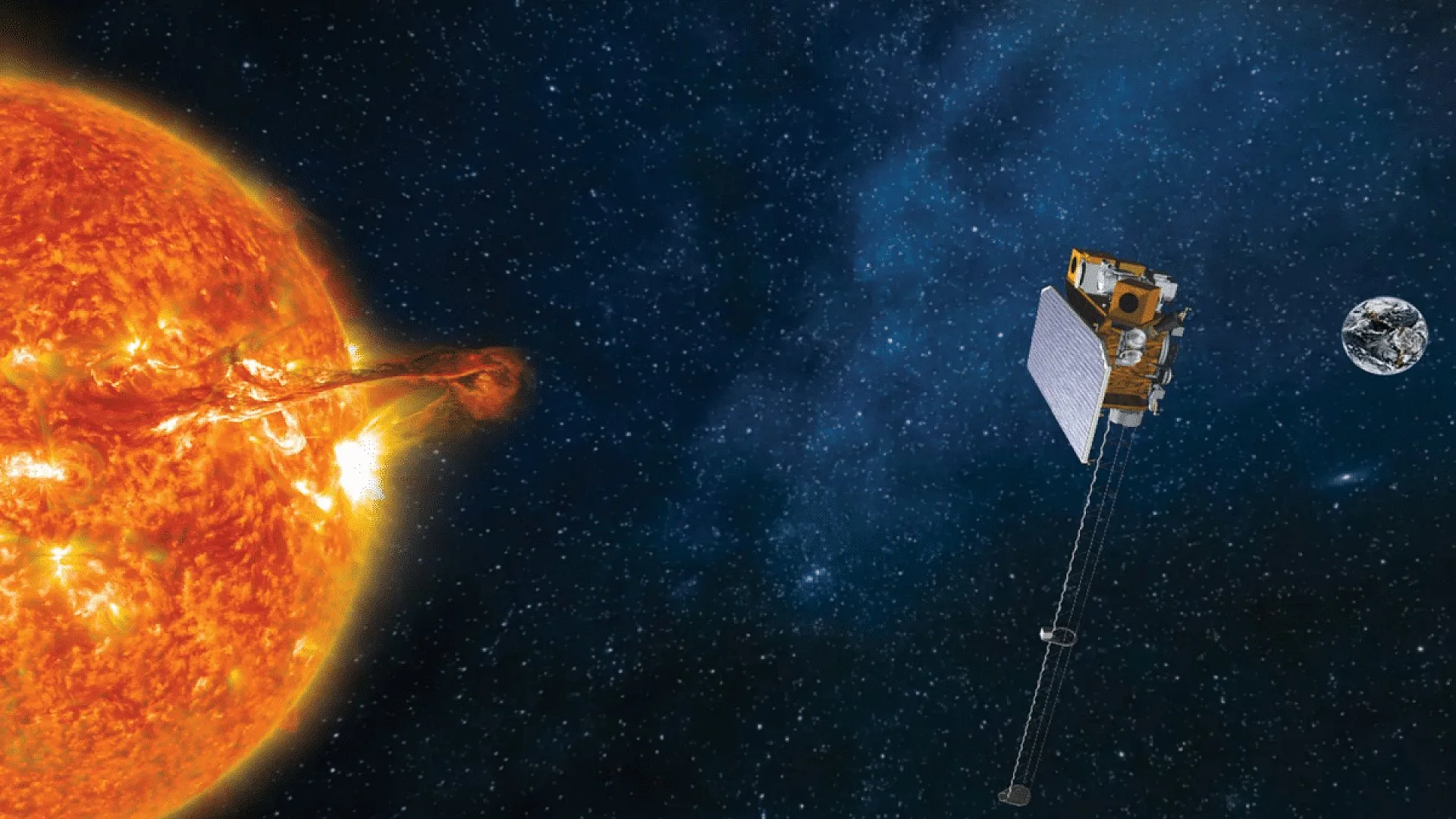
After a trek of almost a million miles to the Sun‑Earth Lagrange point 1 (L1), NOAA’s SOLAR‑1 spacecraft is now fully operational, marking the United States’ first dedicated platform for nonstop monitoring of solar phenomena that can affect Earth’s technology and crewed missions.
SOLAR‑1 Reaches L1, Boosting Real‑Time Solar Surveillance
The satellite lifted off on September 24, 2025 aboard a SpaceX Falcon 9 from Kennedy Space Center and spent four months cruising to its final orbit at L1. Positioned where the solar wind flows uninterrupted, SOLAR‑1—formerly known as SWFO‑L1 and renamed in January 2025 to highlight its operational role—offers a privileged view of the Sun’s outbursts, including coronal mass ejections (CMEs) and high‑speed solar streams.
An eight‑month commissioning phase, jointly overseen by NOAA and NASA, validated each sensor and subsystem, confirming the satellite’s ability to deliver real‑time, high‑resolution data for national space‑weather warning networks.
How Continuous Space‑Weather Tracking Safeguards Power Grids and Space Missions
Clinton Wallace, director of NOAA’s Space Weather Prediction Center, explained that the new capability “means more time to act. It gives time for power grid operators to prepare, more time for satellite operators to protect assets, more time for aviation and national security partners to understand risk, and more time for human spaceflight teams to protect astronauts and missions.” This extended warning window helps utilities, satellite fleets, airlines, and defense agencies mitigate the impacts of solar storms.
For NASA’s Artemis program, which is returning humans to the Moon, the steady flow of solar data from SOLAR‑1 provides crucial lead time to shield astronauts and spacecraft from hazardous radiation and electrical disturbances.
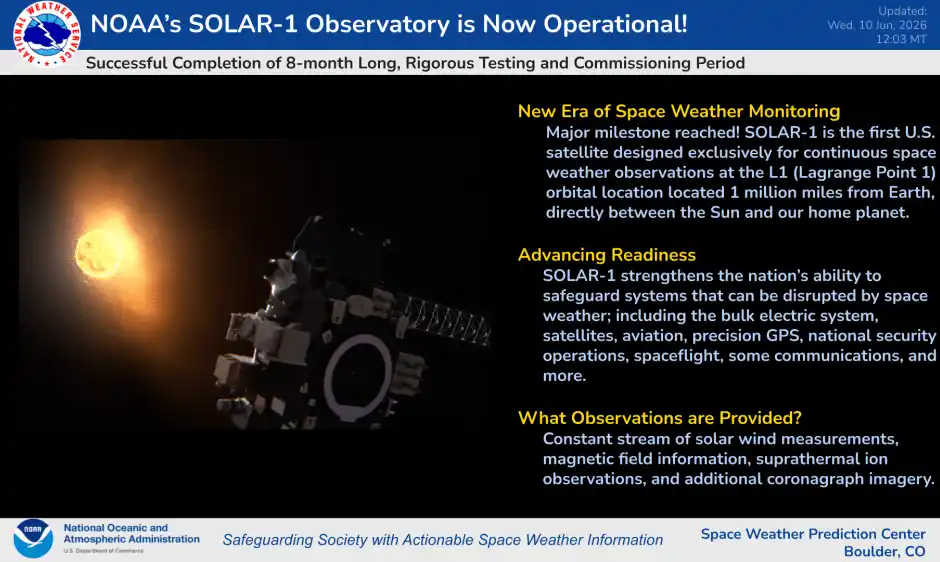
Cutting‑Edge Coronagraph Speeds Up Solar Storm Alerts
Among SOLAR‑1’s innovations is a coronagraph that captures CME events as they erupt from the Sun. NOAA notes that imagery from this instrument reaches forecasters within thirty minutes of acquisition, a dramatic improvement over research‑grade observatories that often take longer to process data.
The spacecraft streams its observations continuously, eliminating the coverage gaps that plagued earlier missions and delivering faster, more reliable alerts. The data are publicly available through NOAA’s Space Weather Prediction Center portal, enabling scientists, educators, and the interested public to follow solar activity in near real‑time.
Building a More Resilient Nation Against Solar Disruptions
Beyond immediate operational benefits, SOLAR‑1 reinforces the United States’ space‑weather infrastructure by providing an unbroken record of solar conditions that feed early‑warning systems and risk‑assessment tools for critical sectors. By turning solar observations into actionable intelligence, the satellite helps protect everything from satellite electronics to national power grids.
The launch underscores NOAA’s dual commitment to advancing scientific knowledge and bolstering national security, ensuring that as solar activity waxes and wanes, the country remains prepared to counter the Sun’s most disruptive effects on Earth and beyond.
This article has been fact checked for accuracy, with information verified against reputable sources. Learn more about us and our editorial process.
Last reviewed on .
Article history
- Latest version
Cite this page:
- Posted by Karan Das