Inside The Abandoned Namibian Diamond Town Being Slowly Swallowed By The Desert
Once a booming diamond town, this abandoned desert settlement has stood empty since 1956 as the dunes slowly reclaim its crumbling homes.
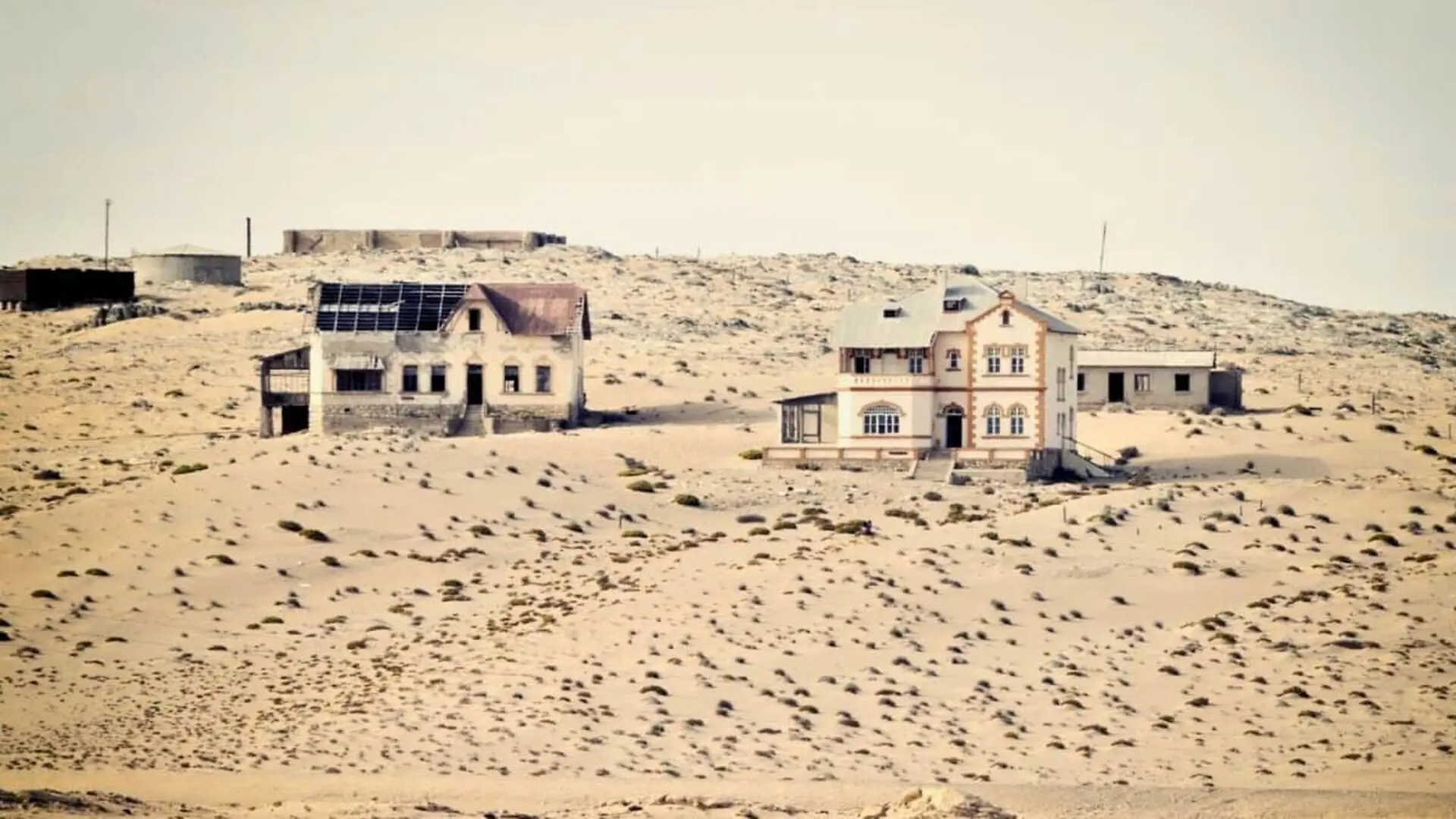
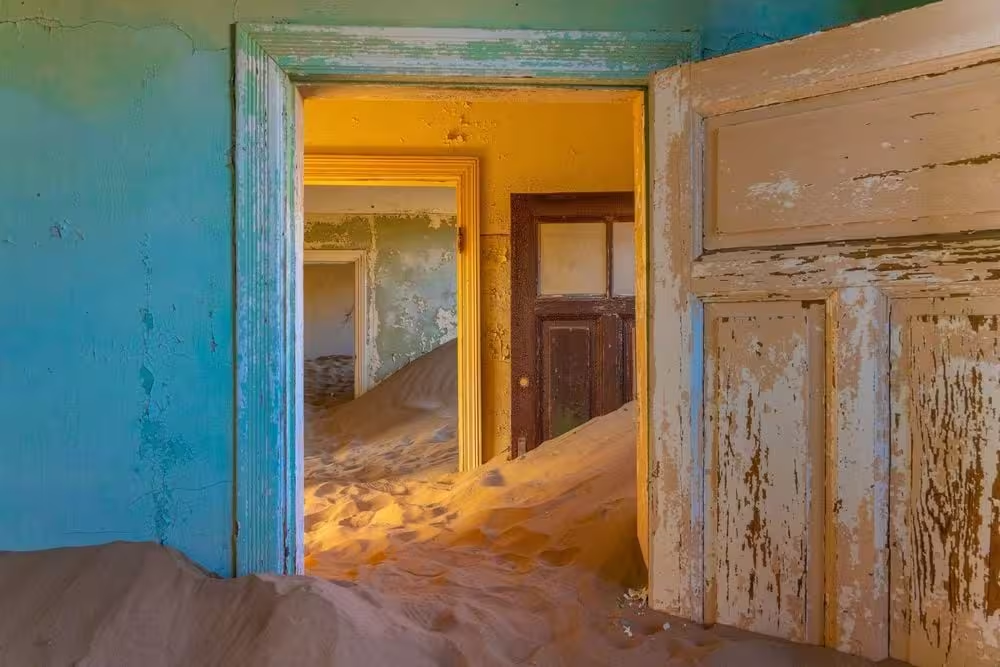
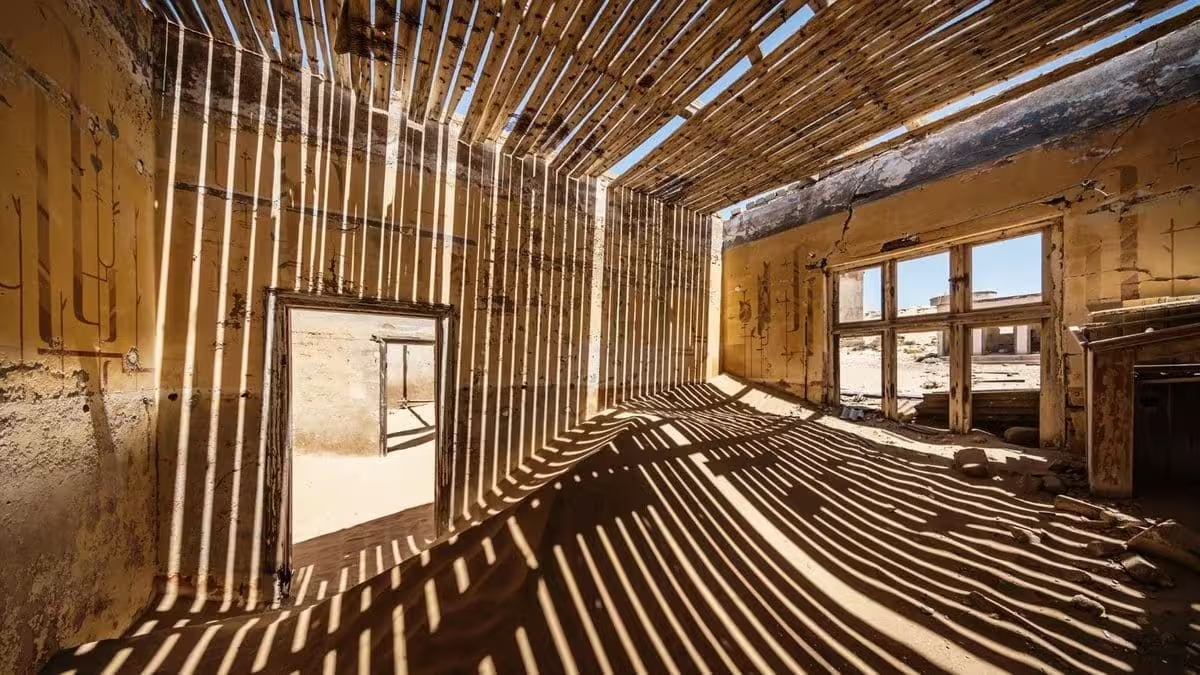
Deep within the Namib Desert, the skeletal remains of Kolmanskop stand as a haunting testament to the fragility of human ambition. In this remote corner of southern Namibia, just six miles from the port city of Lüderitz, architecture is being slowly erased by an encroaching tide of sand. Inside once-elegant homes, dunes now climb toward the ceilings, forcing visitors to navigate rooms where the grit rises to their knees—a silent occupation that began when the last residents departed nearly 70 years ago.
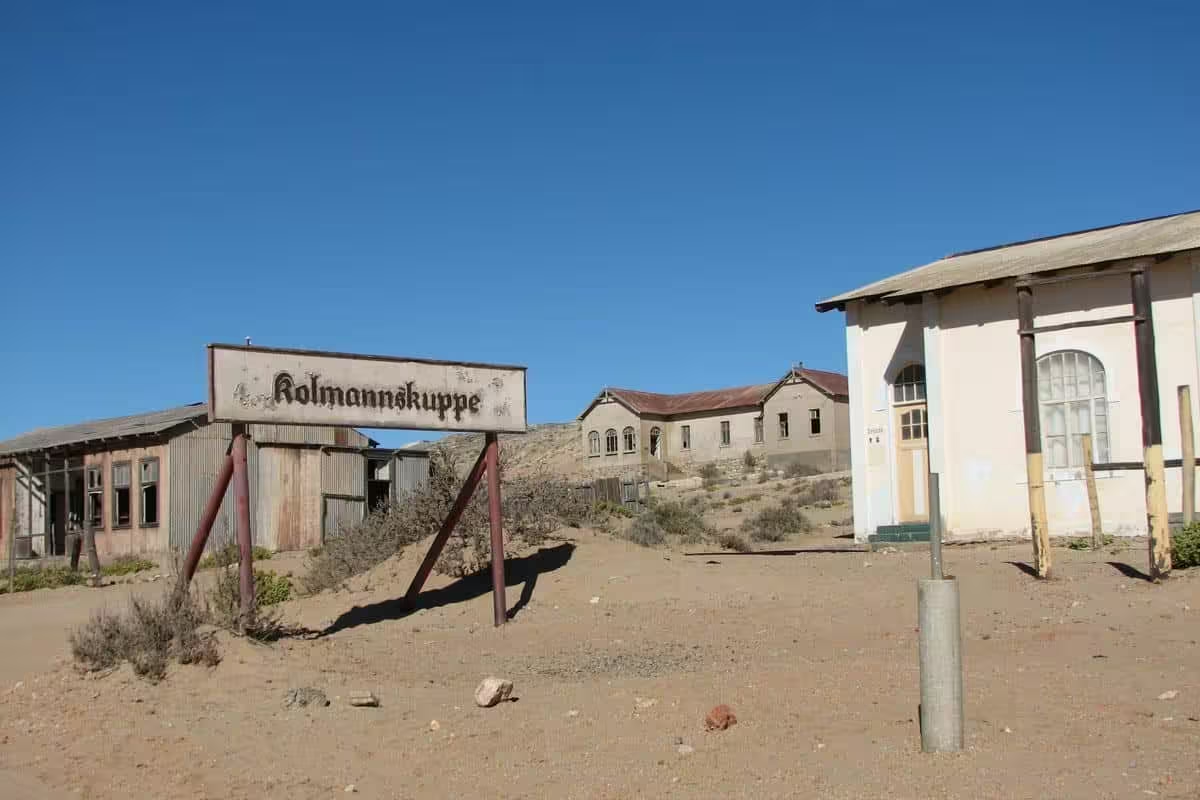
A Fortune Discovered in the Dust
The town’s unlikely birth began in April 1908, when a railway worker named Zacharias Lewala unearthed a sparkling stone while clearing sand from the tracks. His supervisor, August Stauch, quickly recognized the significance of the find. Rather than reporting it, Stauch and his associates secured mining rights to 29 square miles of the surrounding desert. By September, the German colonial government had designated the area a Sperrgebiet, or “prohibited area,” a restricted status that remains in effect today.
In those early years, diamonds were so abundant they were gathered by hand. As operations scaled, the gravel underwent mechanical sifting and washing; at its peak, the field yielded approximately 5 million carats before the outbreak of World War I. To oversee the region, authorities established a police presence, with officers patrolling the harsh terrain on camelback.
Engineering an Oasis
With diamond wealth flowing, Kolmanskop transformed into a lavish German outpost despite its hyper-arid location. The settlement boasted modern amenities including a school, a power station, a bakery, a lemonade factory, and a salt-water swimming pool. Every household received a daily delivery of ice, and the local hospital featured an X-ray machine—a technological marvel for southern Africa at the time. Residents enjoyed a vibrant cultural life, with the town’s theater and ballroom hosting performances.
Water, however, remained a precious commodity. Transported by ship from Cape Town and then by rail from Lüderitz, water was so expensive that it was treated with the same regard as fine wine. If supply chains faltered, residents famously resorted to using soda water to brew their coffee.
While the town served a community of roughly 300 German residents, the labor was performed by approximately 800 Oshiwambo workers. Their existence was strictly regimented, characterized by six-day, nine-hour work weeks and limited respite during the holidays.
The Slow Return to Nature
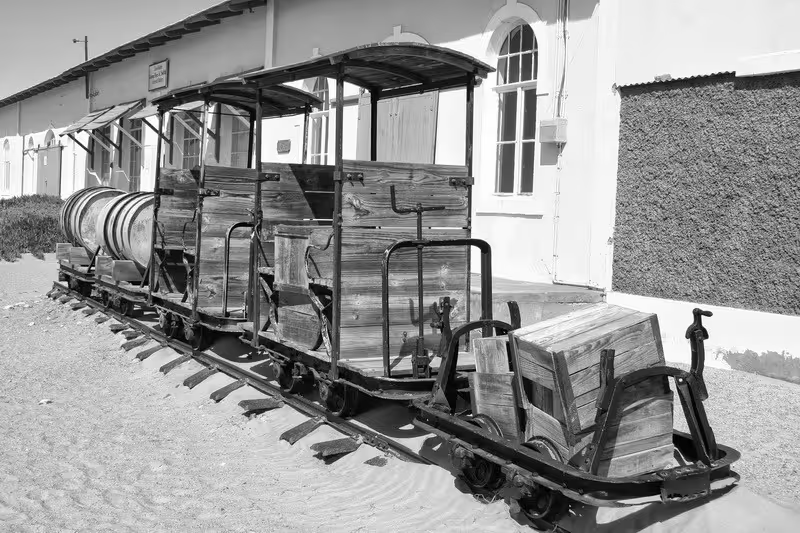
The prosperity of Kolmanskop was ultimately fleeting. The discovery of far richer deposits near the Orange River in 1928 triggered an exodus of mining operations toward the south. By 1943, the mining company had largely withdrawn, and by 1956, the last of the residents had moved on, leaving the town to the mercy of the wind. With no one left to clear the dunes, the desert began its steady reclamation.
Today, the site is managed by Namdeb—a partnership between the Namibian government and De Beers—and remains accessible only via permit. Guided tours offer a glimpse into the town’s former grandeur, while photographers can apply for special access to capture the stark beauty of the shifting dunes against the decaying architecture. The name of the place itself serves as a final, ironic link to its past: it is named for a transport driver named Coleman, who, in 1905, was forced to abandon his wagon during a fierce sandstorm, leaving it to be buried by the very landscape that would eventually consume the town.
This article has been fact checked for accuracy, with information verified against reputable sources. Learn more about us and our editorial process.
Last reviewed on .
Article history
- Latest version
Cite this page:
- Posted by Zara Tariq