Could Meditation Help Your Brain Access Hidden Information Beyond Known Reality
What happens to the brain during deep meditation? Scientists are uncovering the neurological basis behind out-of-body sensations and heightened awareness.

The daily struggle to maintain focus amidst a storm of competing thoughts is a universal human experience. Researchers are increasingly turning to meditation—specifically techniques designed to anchor awareness in the present—as a potential solution to this mental clutter. By studying the neurobiological impact of these practices, scientists are beginning to quantify how a calmer mind changes the way the brain processes incoming information.
However, this line of inquiry has sparked a more provocative debate: if meditative practice effectively clears away the “noise” of daily life, does it also grant the mind access to information that usually remains hidden? While some researchers are exploring links between deep meditation and reports of anomalous phenomena, the scientific community remains firmly divided on whether these states merely sharpen our perception or suggest something more exotic about the nature of consciousness.
Sharper Neural Signals During Deep Meditation
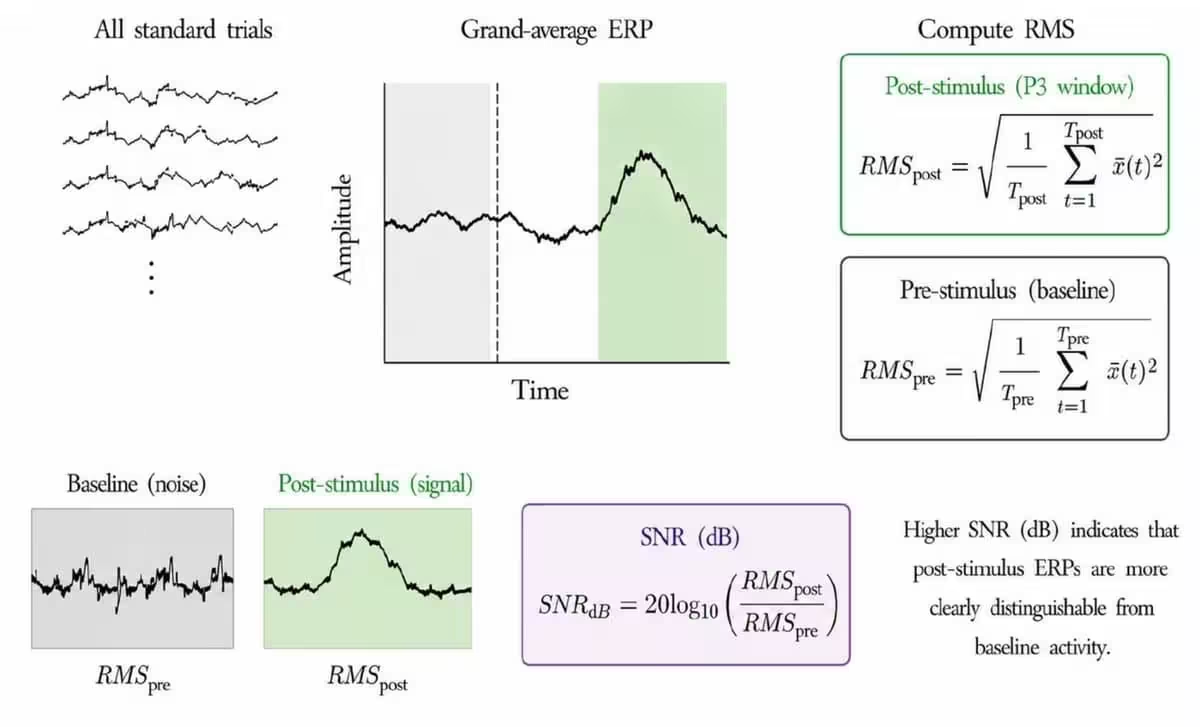
At the University of Oxford, neuroscientist Ruben Laukkonen investigates the “signal-to-noise ratio” of the brain. This metric quantifies how efficiently neural circuitry isolates relevant data against a background of distracting, unrelated activity. Laukkonen likens the concept to the focused attention required to truly observe an object, such as a rose, without the mind drifting toward memories or future obligations.
“If I gave you a rose and asked you to look at the rose, I can ‘decode’ or ‘mind-read’ that you’re looking at a rose from your brain with a certain accuracy,” Laukkonen explained. “The idea is that if you’re meditating, the rose in your brain becomes clearer, so I can more easily ‘see’ the rose from your brain.”
A recent study, published in preprint form on bioRxiv this past June, put this hypothesis to the test. Laukkonen and his colleagues monitored 29 experienced practitioners of Vipassana, a traditional Buddhist insight practice that focuses on observing thoughts and sensations without emotional entanglement.
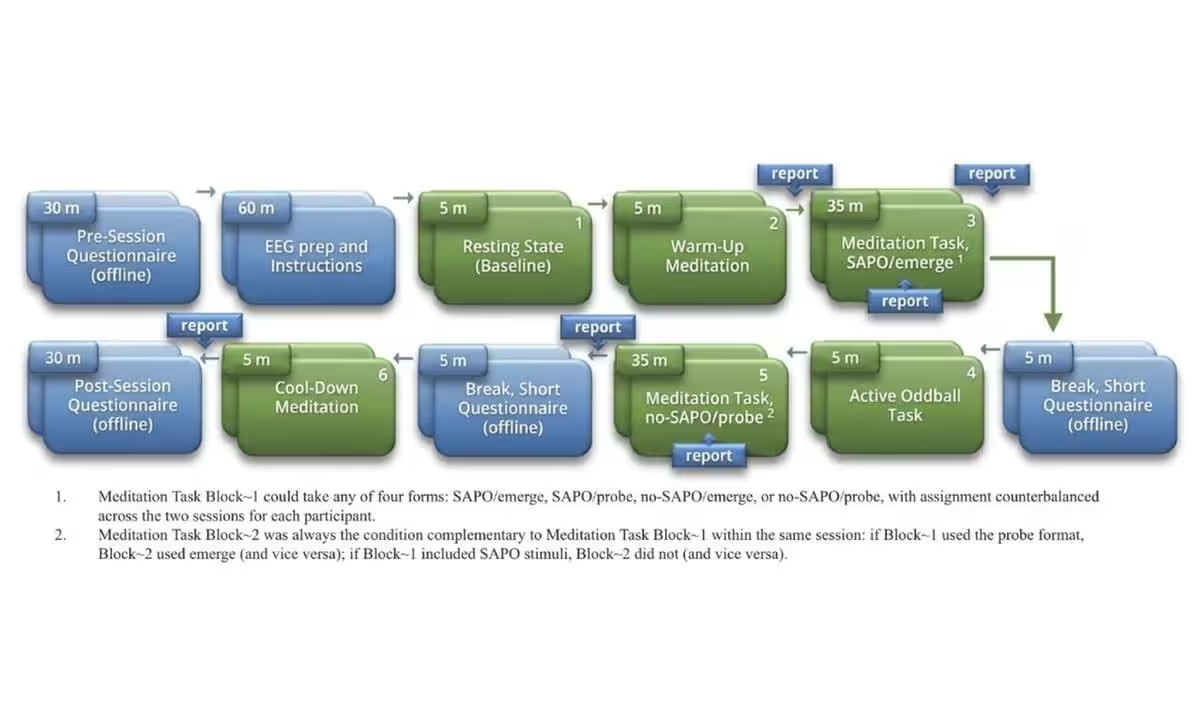
Using electroencephalography (EEG) to track electrical brain activity, the team presented participants with auditory tones while they self-reported their meditative depth. The data revealed that as participants entered deeper meditative states, their neural responses to the tones became significantly more stable and distinguishable from background neural activity.
“The activity is more stable and less buried beneath unrelated stuff,” Laukkonen said. “This clarity of neural signals, we believe, maps onto the clarity of the mind and subjective experience.”
The Radical Hypothesis of External Consciousness
The intersection of meditation and signal clarity has opened the door to speculative discussions regarding the origins of human consciousness. Some researchers are exploring Neural Transduction Theory (NTT), a provocative model suggesting that the brain may act as a receiver for consciousness rather than its source, drawing awareness from an external, yet-to-be-defined domain often dubbed the “Other Side.”
Psychology research scientist Timothy Lomas of the Harvard T.H. Chan School of Public Health is among those evaluating these cross-cultural and philosophical frontiers. In a recent preprint currently under review, Lomas explores how lowering the brain’s internal “noise floor” might theoretically allow for the perception of information beyond traditional sensory limits. His work touches on phenomena ranging from out-of-body experiences to remote viewing—the controversial claim of perceiving distant locations without direct physical contact.
Lomas further references Ganzfeld experiments, where researchers attempt to isolate individuals from external stimuli to test for extrasensory input. To provide a framework for these experiences, his research draws upon diverse concepts, including quantum nonlocality, panpsychism, and the Jungian collective unconscious. However, these remain theoretical frameworks; there is currently no empirical evidence that the brain can tap into an external source of information, nor is there a validated mechanism for extrasensory perception.
The Skeptical Lens of Modern Neuroscience
Other experts emphasize that subjective profundity does not constitute objective proof. David Vago, a neuroscientist affiliated with Harvard Medical School, points to the “noetic quality” identified by William James—a powerful, deep-seated feeling that a subjective experience is objectively true. Vago notes that such feelings of absolute certainty are common across various states, including sensory deprivation and psychedelic experiences.
“The brain can create a sense of significance on its own,” Vago explained. “Therefore, a strong sense of receiving something extraordinary is not evidence of an outside source.”
Vago maintains that for any claims of extrasensory perception to gain traction, they must meet the highest standards of the scientific method, including rigorous experimental controls, the elimination of all potential biases, and consistent replicability. He argues that past attempts to validate phenomena like remote viewing have largely collapsed under such scrutiny.
Even among the more optimistic researchers, the focus remains on the measurable benefits of meditation. Laukkonen acknowledges that while the study of unusual experiences is a valid pursuit, the primary takeaway from his current work is that meditation enhances the efficiency of standard sensory processing. He remains committed to a patient, evidence-based approach to the complexities of the human mind.
“I think, as a scientist, you always have to maintain an open mind, and certainly there are many reports of such [extrasensory] experiences,” Laukkonen said. “But we also need to treat the scientific method with a certain patience.”
As the field continues to evolve, the distinction between a clearer perception of the physical world and the potential for something more remains the central question. For now, neuroscience confirms that meditation serves as a powerful tool for tuning the brain’s focus, leaving the mystery of what lies beyond that focus for future research to uncover.
This article has been fact checked for accuracy, with information verified against reputable sources. Learn more about us and our editorial process.
Last reviewed on .
Article history
- Latest version
Reference(s)
- <https://rubenlaukkonen.com/>.
- Nath, Mihir. “Meditation Depth Enhances the Functional Signal-to-Noise Ratio of the Brain.” bioRxiv, October 5, 2026, pp. 2026.06.30.735351 bioRxiv, doi: 10.64898/2026.06.30.735351v2. <https://www.biorxiv.org/content/10.64898/2026.06.30.735351v2>.
- Selemin, Julian. “What Is Vipassana Meditation?.”, August 29, 2022 WebMD <https://www.webmd.com/balance/what-is-vipassana-meditation>.
- Aghilas, Slamani. “This Implant Smaller Than a Grain of Salt Can Track Brain Activity for an Entire Year!.”, November 4, 2025 Indian Defence Review <https://indiandefencereview.com/this-implant-smaller-than-a-grain-of-salt/>.
- <https://www.researchgate.net/profile/Tim-Lomas>.
- <https://www.researchgate.net/publication/405865423_From_siddhis_to_psionics_The_psi-meditation_connection>.
- “Checking your browser - reCAPTCHA.” <https://pmc.ncbi.nlm.nih.gov/articles/PMC12360698/>.
- “David R. Vago, PhD | Vanderbilt Institute for Infection, Immunology and Inflammation.” <https://www.vumc.org/viiii/person/david-r-vago-phd>.
- Team, All. “William James: The Founder Of Functionalism.”, March 21, 2026 The Home of Psychology <https://allthingspsychology.com/william-james/>.
- “Freedom of Information Act Electronic Reading Room | CIA FOIA (foia.cia.gov).” <https://www.cia.gov/readingroom/docs/CIA-RDP96-00789R002200070001-0.pdf>.
Cite this page:
- Posted by Zubair Ali