Solar Powered Refrigerator Design Cuts Food Loss In Rural Africa
Fluid dynamics simulations show how airflow routing and thermal storage can preserve fresh produce without grid electricity.
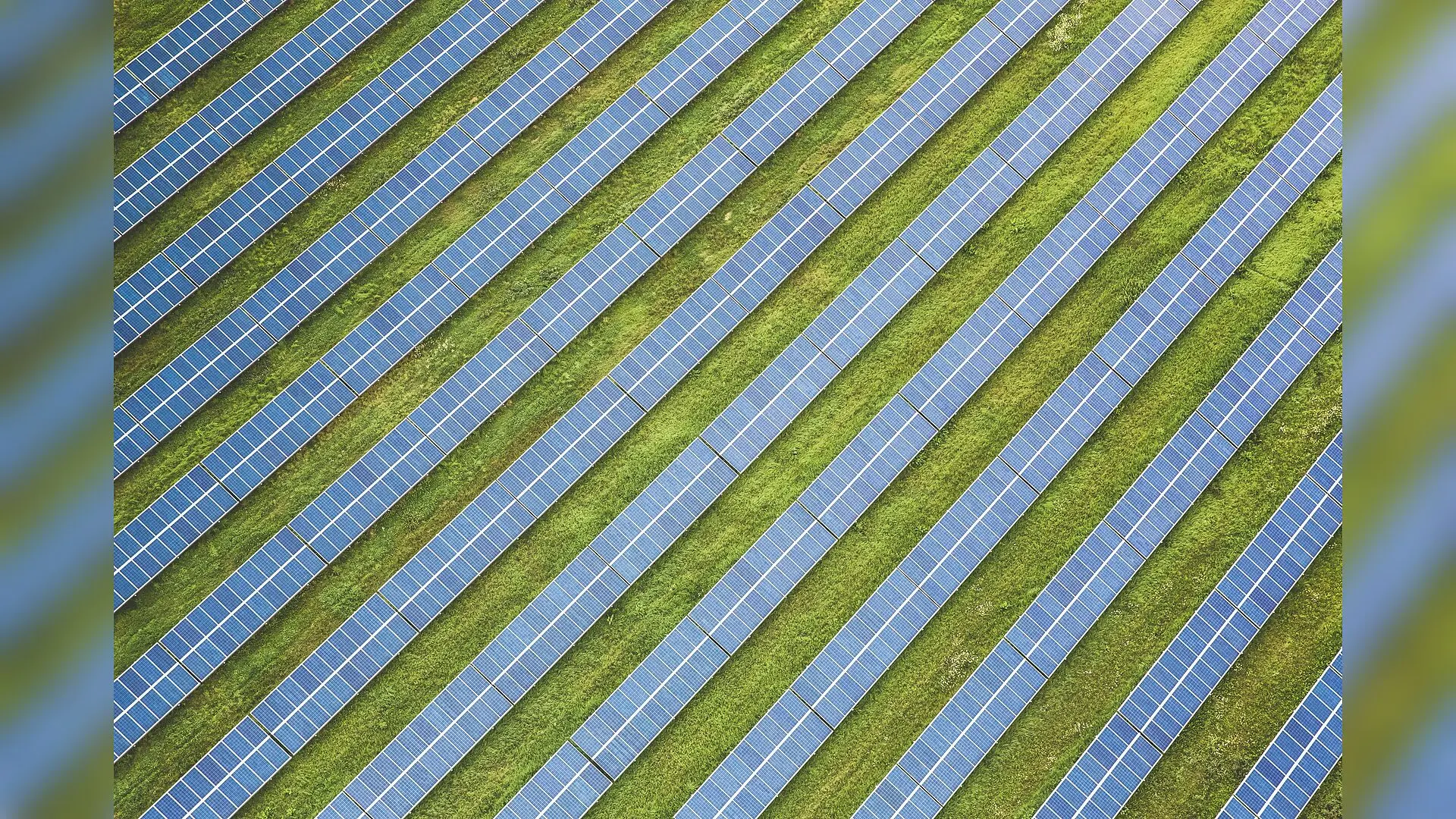
Fresh produce losses in rural Sub-Saharan Africa often reach fifty percent due to a lack of reliable cold storage during the first mile of transport. To tackle this challenge, researchers have designed a small, solar-powered refrigerator that maintains strict temperature control without connecting to an electrical grid.
The newly modeled appliance, developed by Vicent Marwa and detailed in a study published in PLOS One, features a fifty-liter capacity and operates on a modest two hundred watt solar panel paired with a small lithium iron phosphate battery and a phase-change material pack. By combining detailed airflow simulations with off-grid power calculations, the authors demonstrate how rural communities can chill produce evenly while consuming less energy than standard commercial units.
How Does Airflow Management Improve Small Refrigerator Efficiency?
Standard compact refrigerators often suffer from severe temperature unevenness, creating cold zones that chill sensitive crops and warm pockets that speed up spoilage. To solve this spatial problem, the authors utilized computer simulations based on Navier-Stokes equations to map air movement inside the insulated box. They modeled the stacked vegetable crates as porous media rather than individual items, allowing them to calculate pressure drops and heat transfer accurately across the entire chamber.
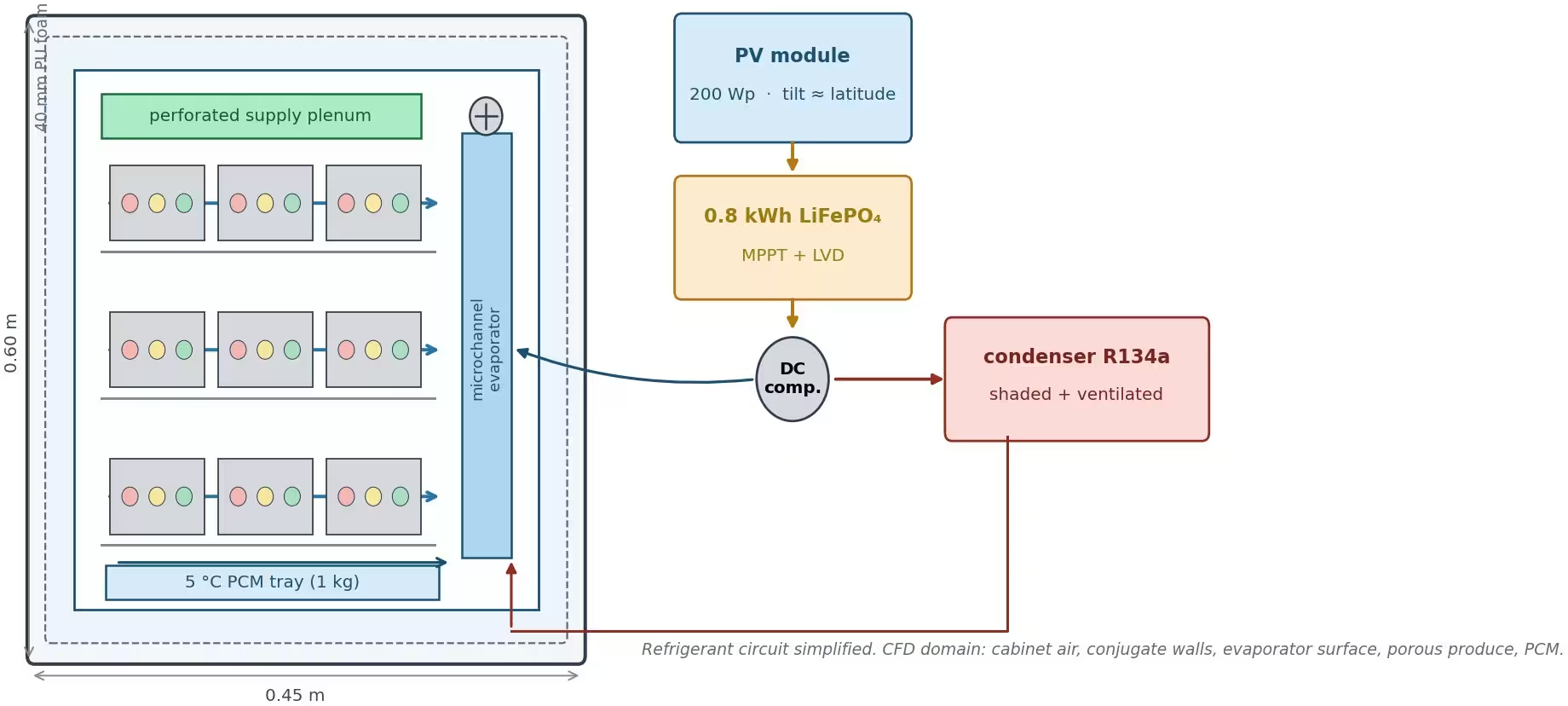
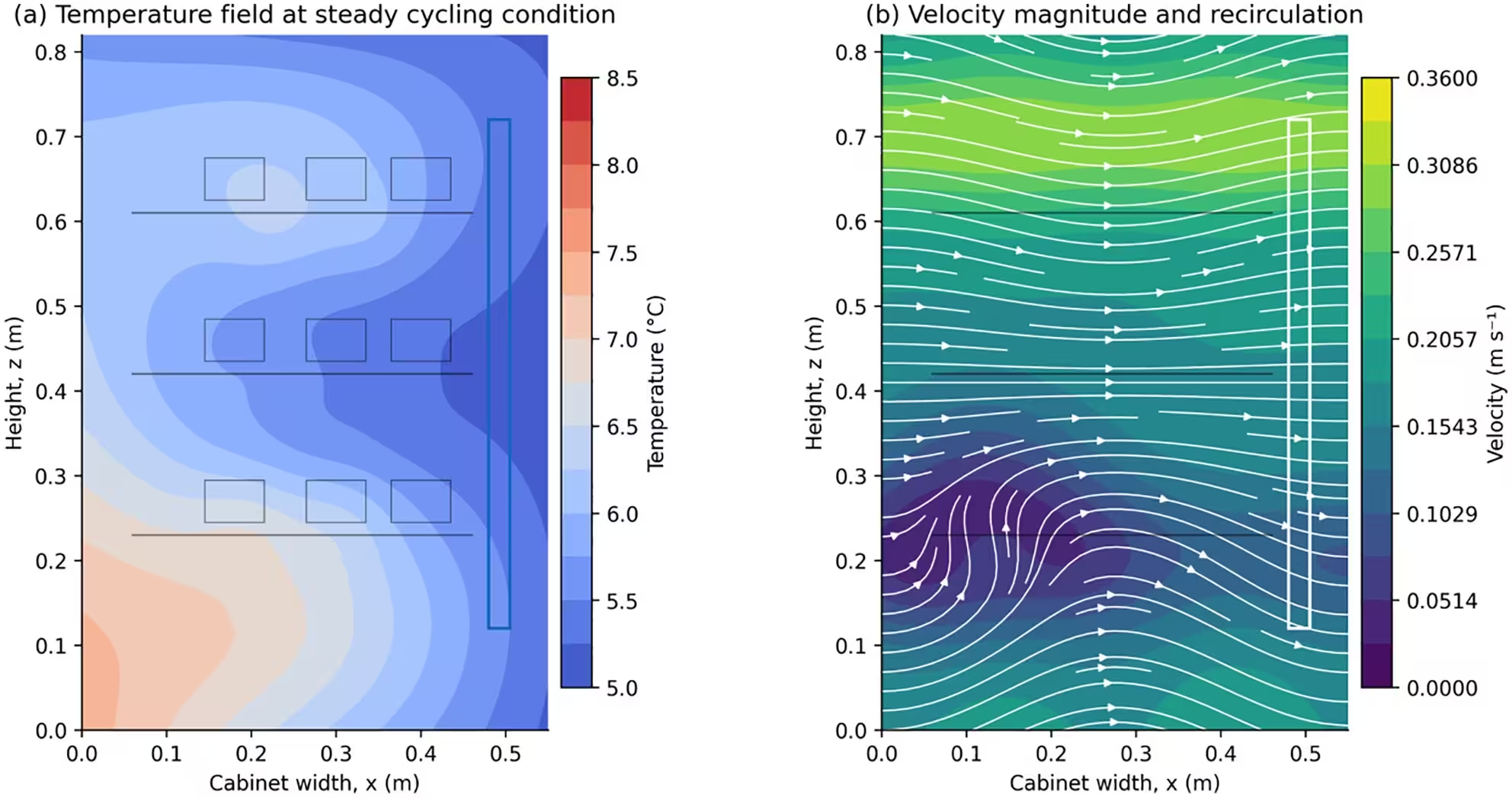
The team found that adding a perforated supply plenum transformed a concentrated evaporator jet into three distinct shelf-level streams. This simple ducting change reduced the internal temperature spread from 6.4 degrees Celsius down to 2.7 degrees Celsius. By preventing cold air from short-circuiting straight to the return vent, the revised airflow forced the cooling air to sweep directly through the produce crates.
What Role Does Phase-Change Material Play During Power Outages?
Maintaining stable temperatures when solar generation drops or nighttime approaches requires thermal storage beyond standard batteries. The optimized design incorporates one kilogram of organic phase-change material melting at five degrees Celsius placed directly beneath the lowest crate. This substance absorbs excess cooling capacity during active compressor cycles and releases latent heat when the compressor turns off.
During a simulated power failure starting from steady operation, the phase-change pack kept the warmest product simulator below ten degrees Celsius for four full hours. While the latent freezing process added a slight twenty-minute delay to the initial pull-down time when loading warm vegetables from thirty-one degrees Celsius, the resulting off-grid resilience proved substantial for remote agricultural kiosks.
How Much Energy Does the Off-Grid System Consume Daily?
Operating entirely off-grid requires balancing cooling loads against available photovoltaic generation and battery capacity. At a demanding thirty-five degrees Celsius ambient dry-bulb temperature, the optimized cabinet configuration consumed 0.51 kilowatt-hours per day. This energy demand sits about forty-five percent lower than conventional grid-powered small refrigerators derated for tropical conditions and twelve daily door openings.
The thermodynamic analysis showed that conduction through the forty-millimeter polyurethane insulation and heat introduced during door openings dominate the daily thermal load, while produce respiration contributes very little to the total energy balance. The system requires a standard two hundred watt peak photovoltaic module and an eighty-percent depth-of-discharge battery limit to maintain continuous operation through typical weather variations.
What Are the Manufacturing Requirements and Limitations of the Design?
Local fabrication of the hardware relies on accessible materials, including a 1.5-millimeter galvanized outer shell, a one-millimeter aluminum inner liner, and standard polyurethane foam panels. The estimated bill of materials places the standalone refrigerator hardware near 294 United States dollars, with the complete solar photovoltaic and battery kit bringing total system expenses to approximately 569 United States dollars.
The authors emphasize that while sheet metal fabrication and assembly can take place in regional workshops, refrigeration circuits containing refrigerant require certified technician handling for safe brazing, evacuation, and charging. Furthermore, the current study relies entirely on numerical simulations and fluid dynamics models, meaning physical prototype construction and experimental testing under strict standards remain necessary before commercial deployment in rural markets.
The research was published in PLOS One on November 25, 2026.
This article has been fact checked for accuracy, with information verified against reputable sources. Learn more about us and our editorial process.
Last reviewed on .
Article history
- Latest version
Reference(s)
- Marwa, Vicent. “CFD-guided design and optimization of an off-grid solar-powered refrigerator for fruit and vegetable storage in rural Sub-Saharan Africa.” PLOS One, vol. 21, no. 11, November 25, 2026, pp. e0363334 Public Library of Science (PLoS), doi: 10.1371/journal.pone.0363334. <https://doi.org/10.1371/journal.pone.0363334>.
Cite this page:
- Posted by John Williams