Granite Discs Shatter Six Times More Easily Than Thick Blocks Under Sudden Impact Shock Waves
Shock wave experiments reveal how specimen thickness and strain rates alter fracture toughness and energy absorption in pre-cracked granite.
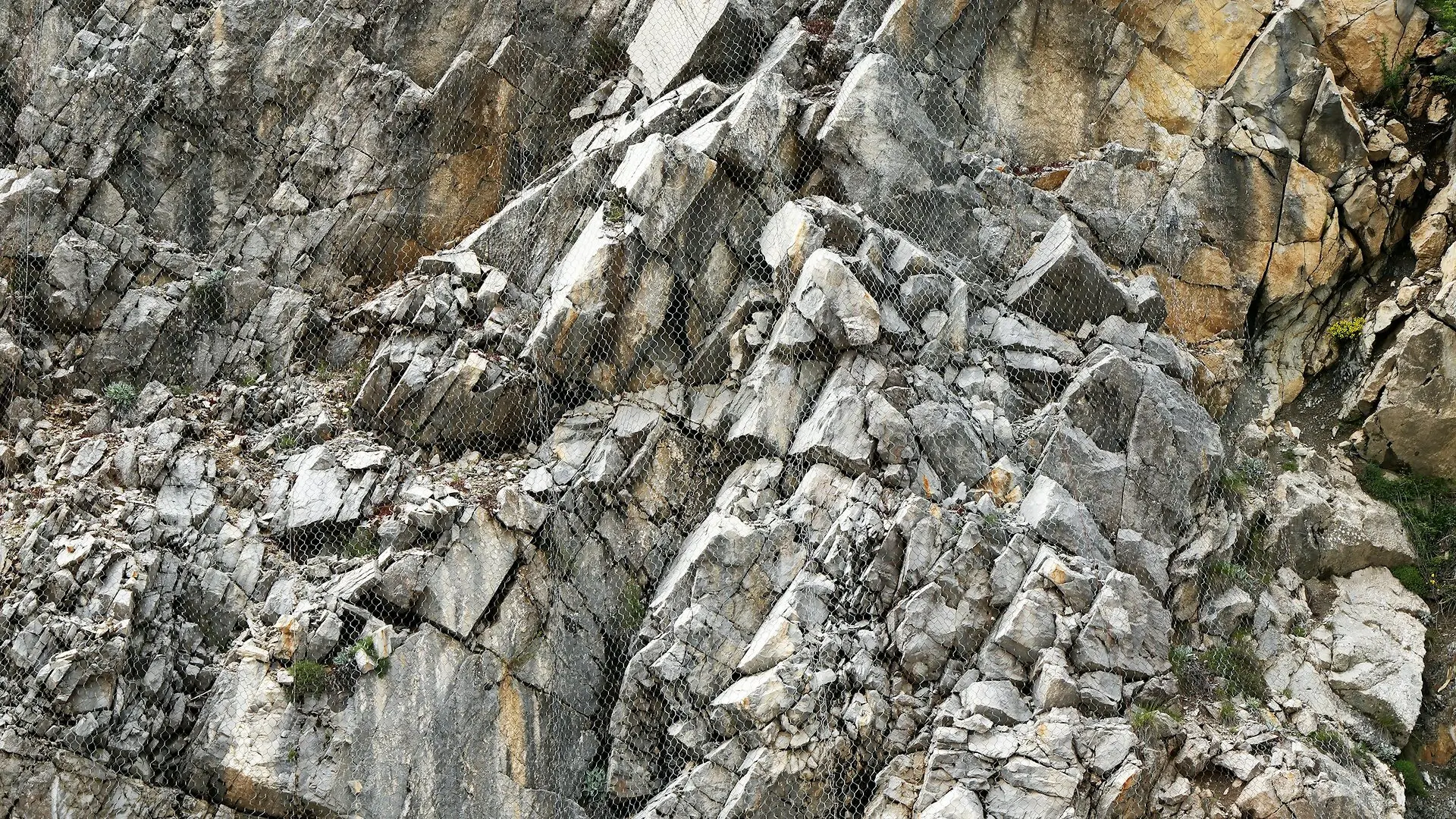
Thin rock slices shatter six times more easily than thick granite blocks when struck by sudden shock waves, according to a laboratory investigation on rock fracture physics. The study reveals how the physical dimensions of damaged stone change the way it absorbs and reflects explosive energy during rapid impacts.
Geotechnical engineers frequently encounter severe hazards like rockbursts and tunnel collapses driven by underground blasting and mechanical excavation. While researchers understand how intact stone behaves under stress, predicting the failure of rock masses containing pre-existing fractures remains challenging because materials often scale differently in the laboratory compared to real engineering sites.
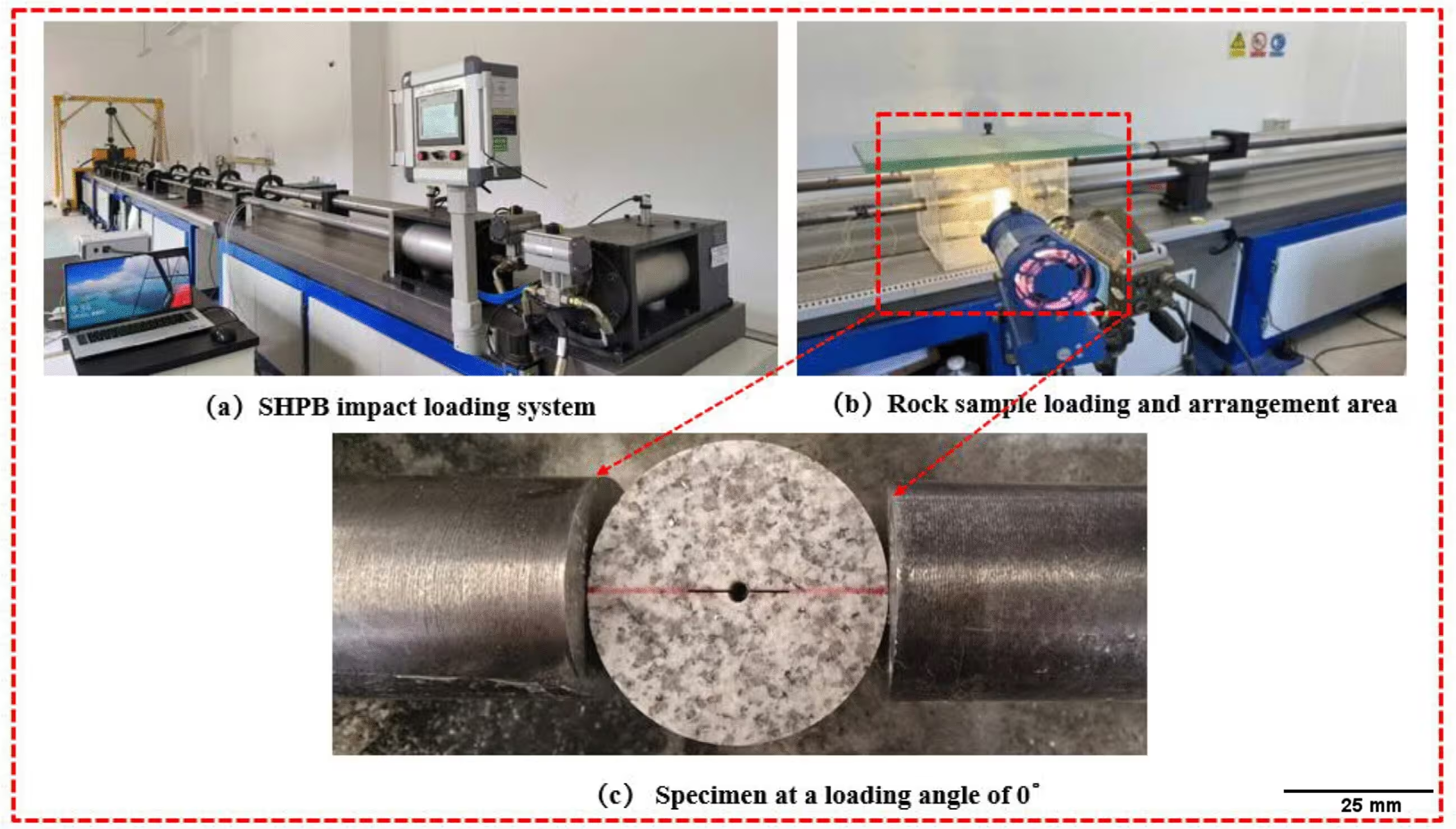
To examine these mechanisms, Yanli Wang and colleagues from the Beishan research team at Gansu Province published in PLOS One a series of dynamic impact tests on biotite granite specimens. The team utilized a specialized apparatus called a split Hopkinson pressure bar, which delivers high-speed impacts to material samples using pressurized gas.
How Did the Researchers Test Granite Under Shock Loads?
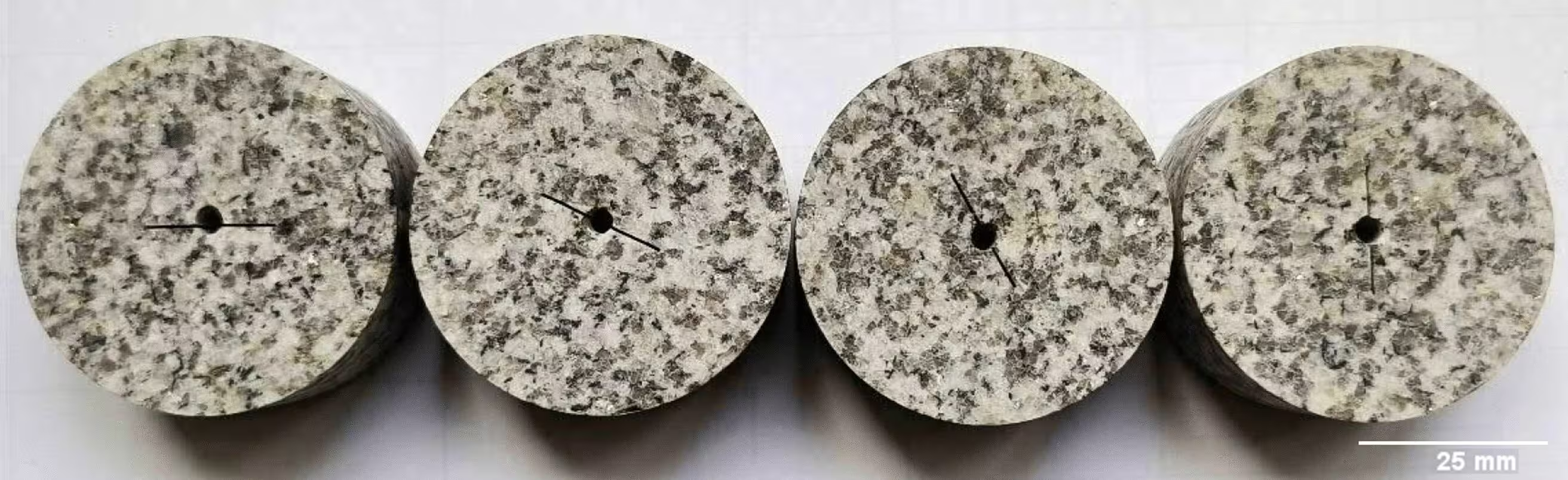
The investigators prepared central straight-crack Brazilian disc specimens with a constant diameter of 50 millimeters and a pre-cut mode-I tensile crack measuring 16.67 millimeters in length. To test size effects, they machined four different specimen heights of 5, 10, 15, and 25 millimeters, corresponding to height-to-diameter ratios ranging from 0.1 for the thinnest discs up to 0.5 for the thickest blocks.
Each sample was placed between an incident bar and a transmission bar inside the test system and subjected to gas pressures between 0.1 and 0.6 megapascals, producing impact velocities from 12 to 32 meters per second. High-speed cameras recorded the fracture propagation, while strain gauges measured incoming, reflected, and transmitted stress waves to calculate energy dissipation and dynamic fracture toughness.
What Did the Impact Tests Reveal About Strain Rates and Size Effects?
The experiments demonstrated that peak stress and fracture toughness increase exponentially as the average strain rate rises. Furthermore, both parameters exhibit an approximately linear increase as the height-to-diameter ratio grows from 0.1 to 0.5. Thin specimens with a ratio of 0.1 displayed the highest strain-rate sensitivity, shattering into small, irregular fragments with severe localized crushing at the loading ends.
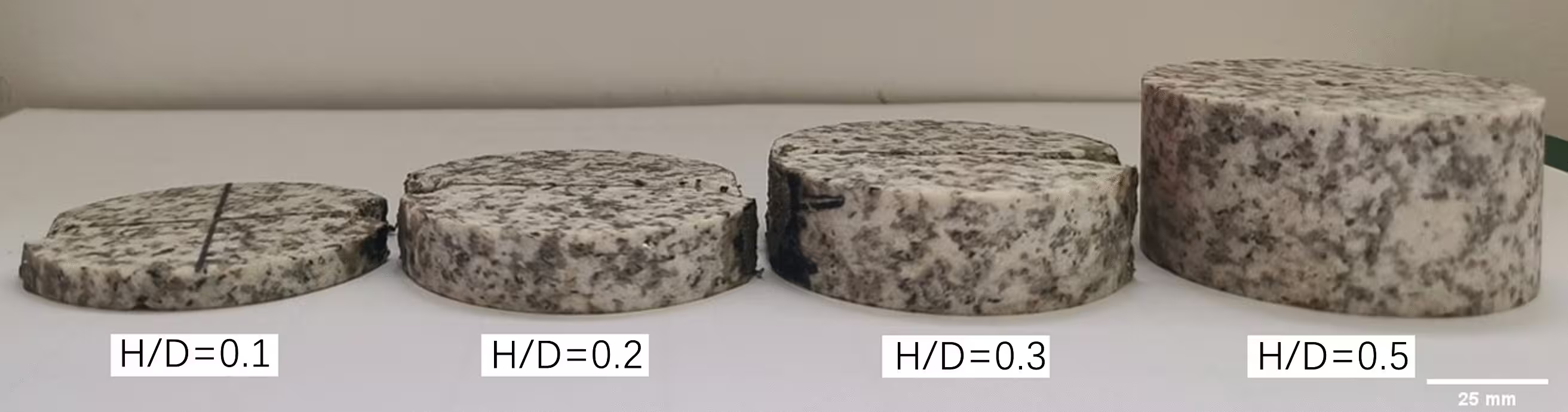
In contrast, thicker specimens with a ratio of 0.5 retained much higher structural integrity and broke into larger blocks. The data showed that the absorbed energy ratio at high strain rates jumped from about 3 percent for the thinnest discs to over 20 percent for the thickest blocks, representing a massive shift in energy utilization efficiency.
Why Do Thinner Rock Samples Shatter Differently Than Thick Blocks?
Numerical simulations using LS-DYNA software helped clarify the physical reasons behind these geometric variations. For thin discs, stress waves reflect rapidly from the free circular faces and return to the center almost instantly, creating complex tensile and compressive stress states that promote premature local crushing before the main crack can propagate.
For thicker blocks, the extended travel distance delays the arrival of reflected waves and attenuates their amplitude, resulting in a more uniform stress distribution and more efficient energy transfer to the crack tip. The authors noted a critical strain rate threshold between 387 and 578 inverse seconds, above which this geometric size effect begins to diminish because the loading duration becomes too short for wave reflections to interfere significantly.
How Can These Findings Improve Underground Engineering Safety?
The team successfully developed an energy-based damage constitutive model that incorporates the height-to-diameter ratio to predict stress-strain responses and damage evolution. This theoretical framework showed that internal rock damage progresses through three distinct phases: a slow growth stage during linear elastic deformation, a rapid growth stage during plastic yielding, and an approximately linear damage stage leading to post-peak failure.
The authors suggest these quantitative relationships can help engineers optimize blast designs, assess excavation damage zones around tunnels, and improve rockburst prevention strategies by identifying vulnerable, low-confinement rock masses that require extra reinforcement.
The research was published in PLOS One on November 25, 2026.
This article has been fact checked for accuracy, with information verified against reputable sources. Learn more about us and our editorial process.
Last reviewed on .
Article history
- Latest version
Reference(s)
- Wang, Yanli., et al. “Study on the dynamic fracture behavior and energy consumption characteristics of granite with a pre-cut mode-I crack under impact loading.” PLOS One, vol. 21, no. 11, November 25, 2026, pp. e0363058 Public Library of Science (PLoS), doi: 10.1371/journal.pone.0363058. <https://doi.org/10.1371/journal.pone.0363058>.
Cite this page:
- Posted by Aisha Ahmed