Okinawan Soft Coral Yields Four Rare Molecules and Corrects Old Data
Marine scientists isolate unusual trinor-guaiane sesquiterpenes from Clavularia viridis and resolve a long-standing structural mystery.
Marine scientists analyzing soft coral collected off the coast of Cape Kyan in Okinawa Prefecture, Japan, have discovered four previously unknown chemical compounds with unusual molecular skeletons. The research focuses on Clavularia viridis, a species of soft coral belonging to a group known for producing diverse natural products used in chemical defense and communication.
The study, published in ACS Omega, details how a team led by researchers from the University of the Ryukyus and Osaka Metropolitan University extracted and analyzed organic compounds from 1.40 kilograms of wet coral specimen. Soft corals inhabit environments packed with competing organisms, driving them to evolve complex secondary metabolites that can act as chemical deterrents or signals.
What Are Trinor-Guaiane Sesquiterpenes and Where Do They Come From?
The newly identified substances belong to a rare class of molecules known as trinor-guaiane sesquiterpenes. Sesquiterpenes are a broad category of organic compounds built from three isoprene units, while the prefix trinor indicates the loss of three carbon atoms from the standard skeleton. These structures are exceptionally uncommon in soft corals, with only a small number of similar compounds documented across the entire genus.
Through exhaustive fractionation using silica gel column chromatography, preparative thin-layer chromatography, and high-performance liquid chromatography, the authors successfully isolated four new chemical structures. They named these novel compounds clavuridin C, clavuridin D, 5-methoxyclavuridin B, and 5-epi-clavuridin B. Along with these four novel molecules, the team isolated three already known compounds, specifically clavuridin B, clavularin A, and clavularin B.
How Did Researchers Figure Out These Complex Molecular Shapes?
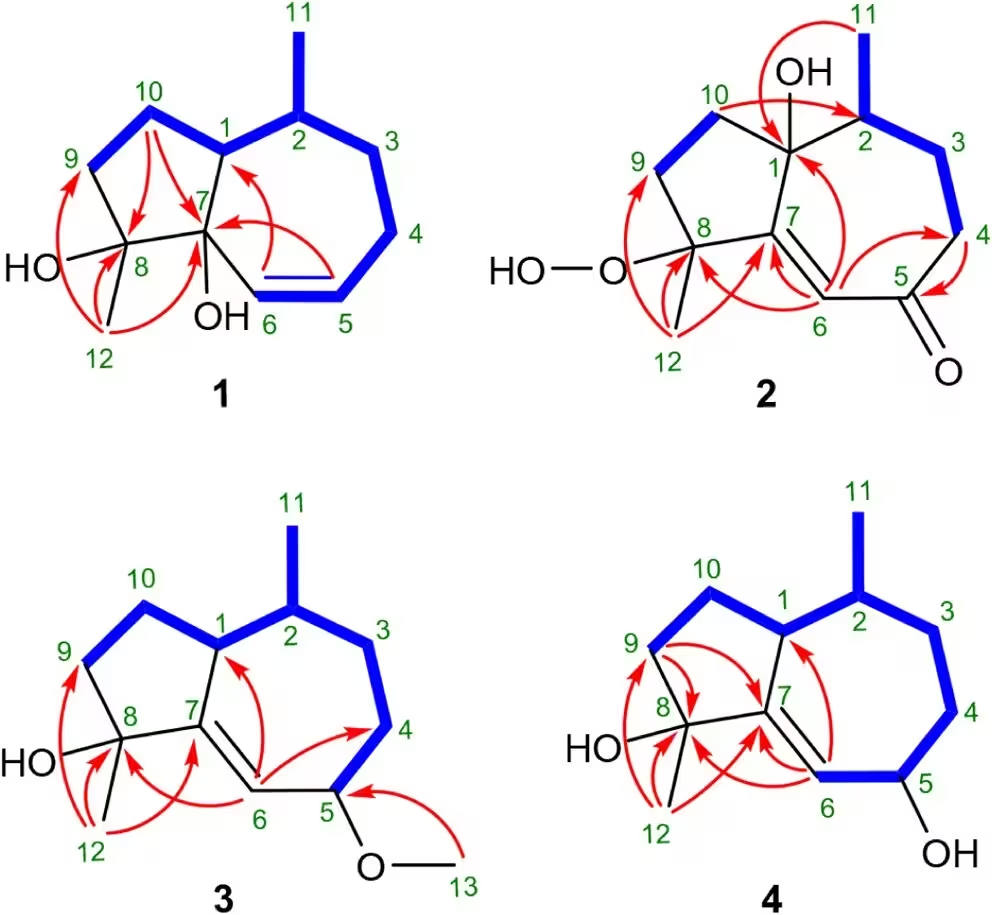
Determining the exact three-dimensional arrangement of atoms in these fragile organic structures required an integrated approach combining laboratory spectroscopy with advanced computer modeling. The team utilized infrared spectroscopy, nuclear magnetic resonance, and mass spectrometry to map the connectivity of hydrogen and carbon atoms within the bicyclic carbon frameworks.
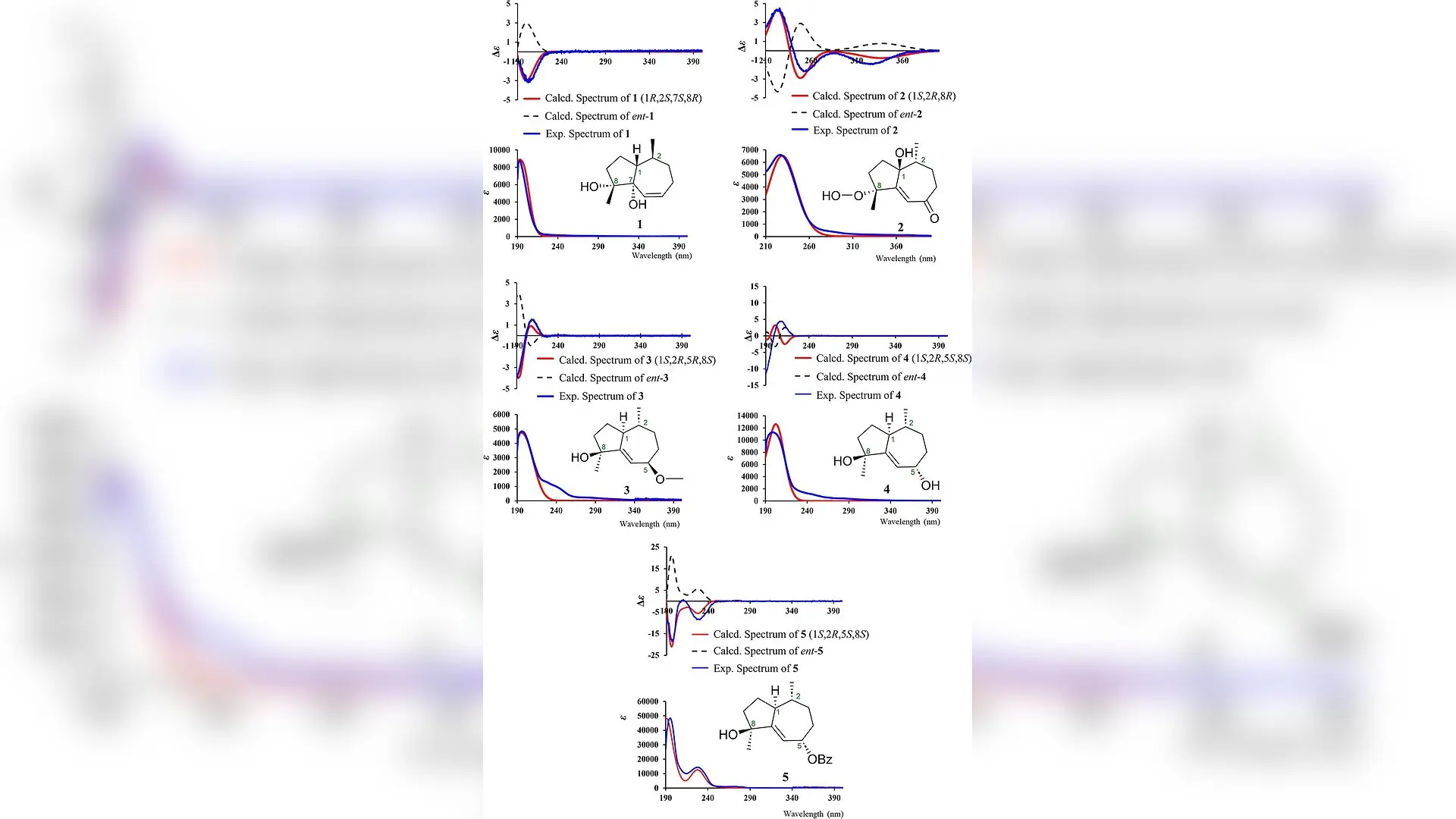
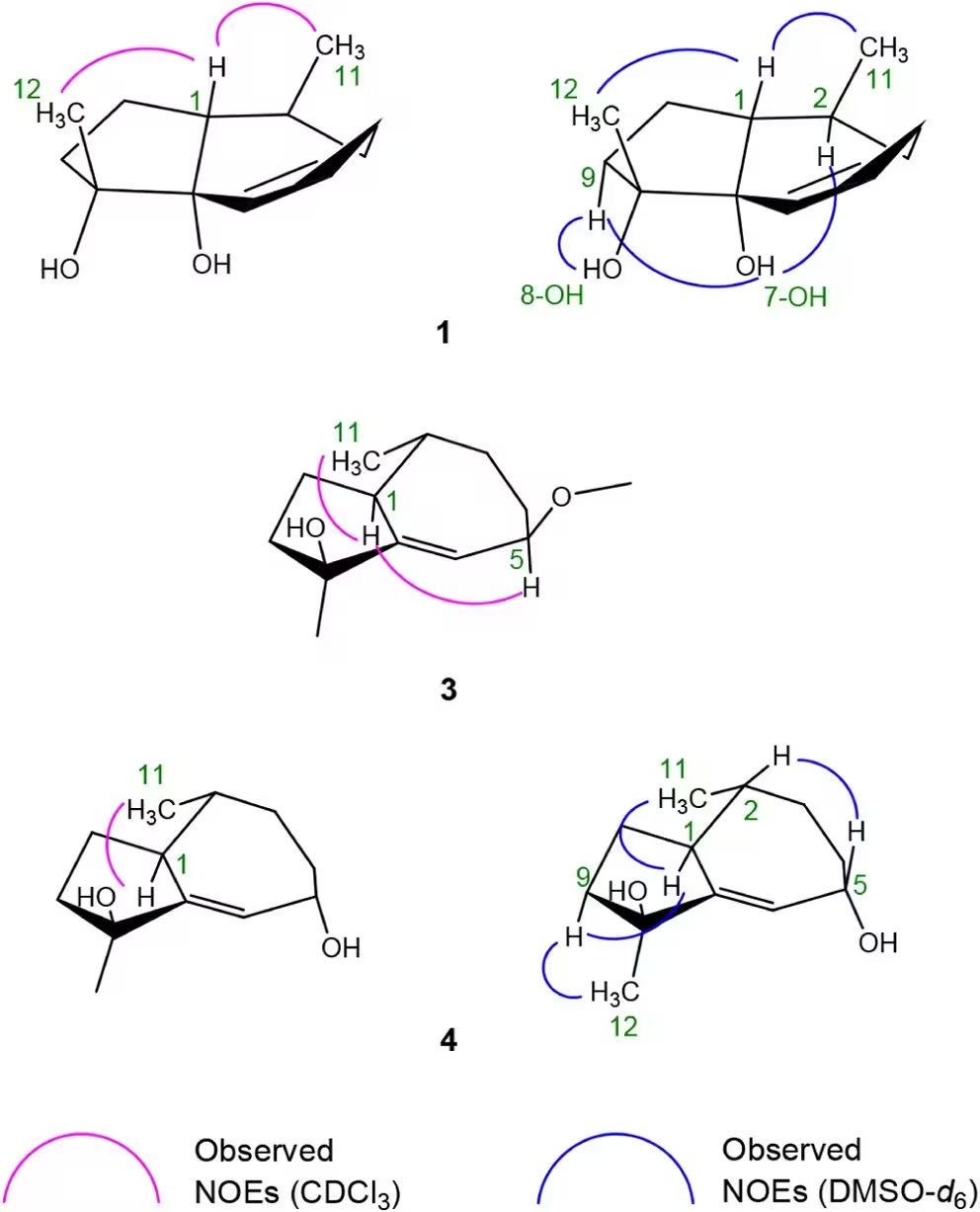
To establish the relative configurations of the atoms, the scientists relied heavily on density functional theory calculations and statistical probability tools known as DP4 analysis. For instance, when evaluating clavuridin C, the calculated carbon and hydrogen chemical shifts for all eight possible stereoisomers were compared against experimental data. The correct isomer showed a near-perfect statistical agreement. For other compounds, such as clavuridin D and 5-methoxyclavuridin B, electronic circular dichroism calculations helped confirm their absolute three-dimensional orientations.
Why Did This Discovery Force a Revision of Previous Coral Research?
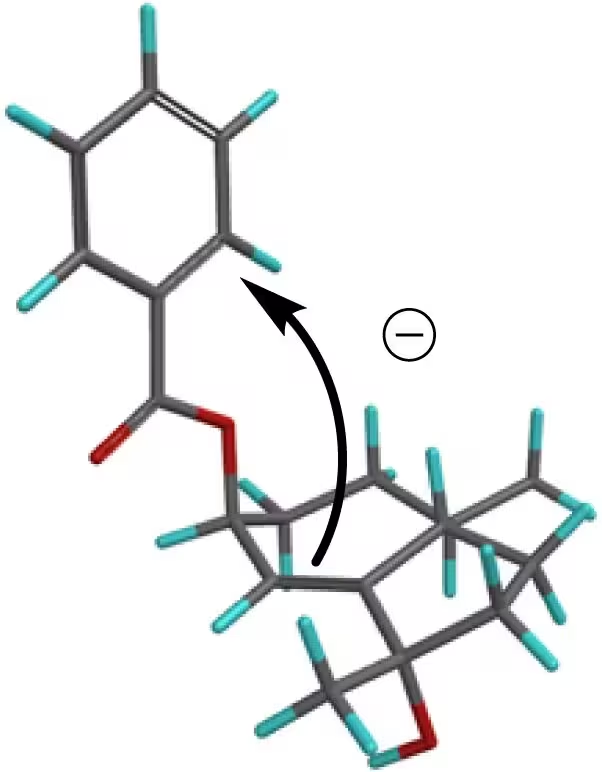
A significant portion of the investigation involved comparing the newly acquired laboratory data with existing scientific literature regarding related soft coral toxins. Specifically, the analysis revealed a structural discrepancy concerning a previously studied substance named antheliol. A derivative of 5-epi-clavuridin B was prepared via benzoylation to apply the allylic benzoate rule, allowing the team to clarify subtle geometric configurations.
By comparing experimental measurements with calculated nuclear magnetic resonance data and employing specialized CP3 statistical probability analyses, the authors concluded that previous structural assignments for antheliol required further correction. Their findings demonstrate that even closely related marine natural products can possess distinct stereochemical variations that elude basic detection methods.
What Do These Novel Marine Compounds Do in Laboratory Tests?
Following their structural identification, the isolated compounds were evaluated for potential biological activity against selected microbial strains. Specifically, compounds 1 through 4 and 6 through 8 were tested against Vibrio coralliilyticus, a temperature-dependent bacterial pathogen known to affect reef-building corals, as well as Micrococcus luteus and the yeast Candida maltosa.
Among the tested substances, compounds 2, 7, and 8 exhibited weak inhibitory effects against Vibrio coralliilyticus when applied at a concentration of 100 micrograms per disk. None of the tested molecules showed notable activity against Micrococcus luteus or Candida maltosa under the conditions used in the assay. While the observed antimicrobial potency was modest, the structural insights gained from these rare Okinawan soft corals provide a stronger foundation for understanding marine biochemical diversity and the complex biosynthesis pathways operating within Octocorallia.
The research was published in ACS omega on October 27, 2026.
This article has been fact checked for accuracy, with information verified against reputable sources. Learn more about us and our editorial process.
Last reviewed on .
Article history
- Latest version
Reference(s)
- Tani, Kazuki., et al. “Trinor-Guaiane-Type Sesquiterpenes with Unusual Skeletons from the Okinawan Soft Coral Clavularia viridis.” ACS Omega, vol. 11, no. 42, October 16, 2026, pp. 65432-65441. American Chemical Society (ACS), doi: 10.1021/acsomega.6c08064. <https://doi.org/10.1021/acsomega.6c08064>.
Cite this page:
- Posted by Divya Iyer