Hidden Microscopic Life Reveals How Melting Arctic Landscapes Are Connected
Advanced genetic sequencing shows that thawing permafrost and runoff are actively bridging terrestrial and freshwater ecosystems in the Canadian High Arctic.
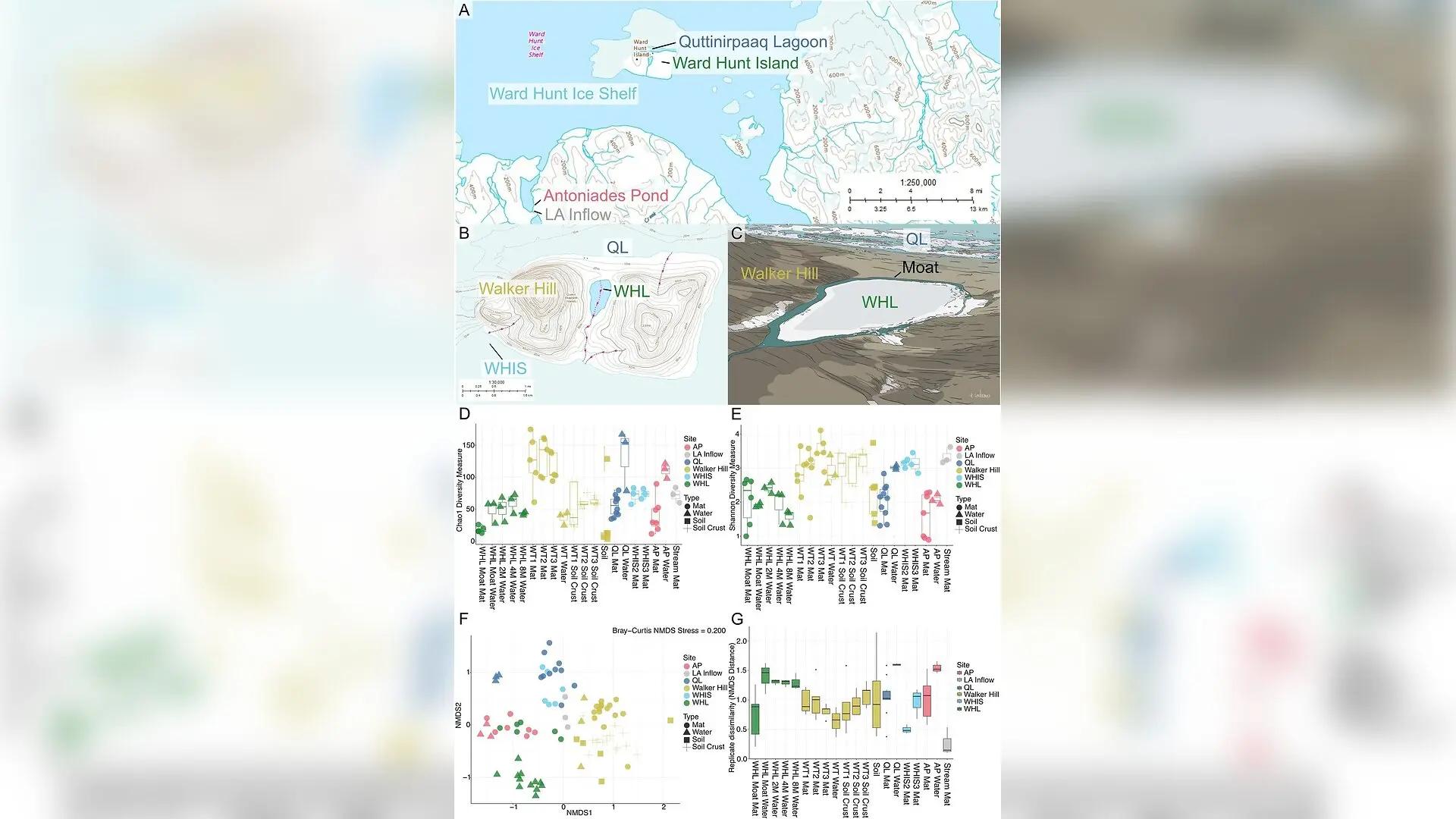
Hidden microscopic life thriving across Canada’s northernmost polar islands reveals how a warming climate is actively reshaping fragile polar ecosystems. Researchers examining the icy margins of the Last Ice Area found that microscopic eukaryotes, which are single-celled organisms like protists and fungi, display surprising ecological connectivity between melting land and freshwater lakes.
The study, published in FEMS Microbiology Ecology, explored terrestrial, freshwater, and coastal marine habitats around Ward Hunt Island, the Ward Hunt Ice Shelf, and Ellesmere Island in the Canadian High Arctic. Led by Patrick M. Hooper from the Natural History Museum in London alongside international collaborators, the team deployed advanced long-read genetic sequencing to catalog microscopic biodiversity in unprecedented detail.
Unlocking Polar Biodiversity With Long Reads
To capture the full spectrum of microscopic life, the investigators targeted the full-length 18S ribosomal RNA gene using Oxford Nanopore Technologies sequencing. This approach allowed the team to analyze samples collected during July 2022 from extreme environments, including the 9.7-meter-deep Ward Hunt Lake and nearby soil crusts. By sequencing nearly the entire gene length rather than short fragments, the researchers achieved much higher taxonomic resolution for groups that are notoriously difficult to classify.
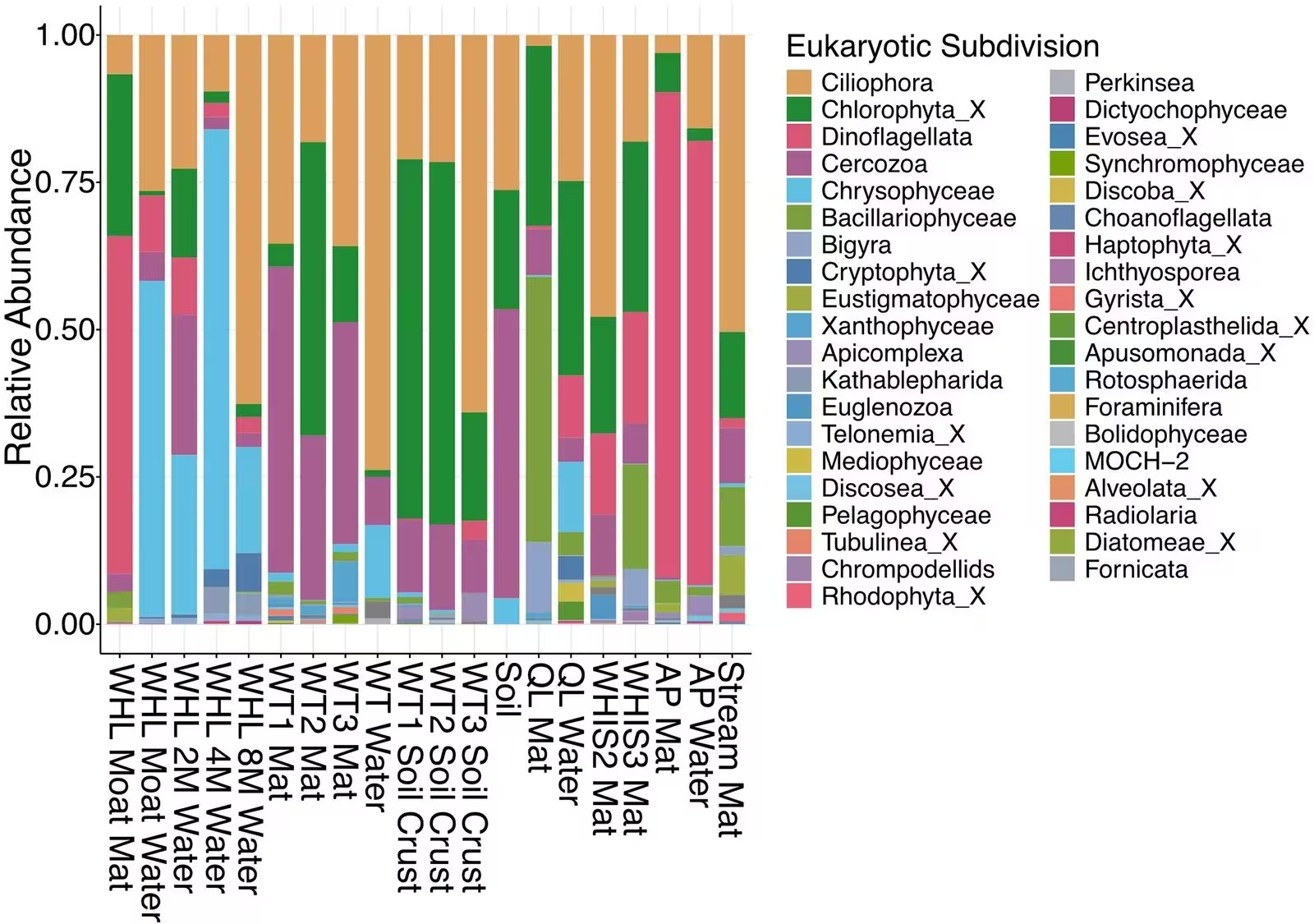
The analysis identified 1,136 eukaryotic taxa across 88 samples, including 716 protists, 225 fungi, 133 animals, and 62 land plants. Terrestrial microbial richness strongly correlated with soil moisture levels, echoing biogeographic patterns seen in lower latitudes. However, the extreme conditions of the polar desert meant that moisture availability acted as a primary bottleneck for life, turning damp soil crusts and water tracks into bustling biological hotspots.
How Meltwater Bridges Land and Freshwater Systems
The investigation revealed that terrestrial and freshwater microbial communities share significantly more taxa with each other than with nearby coastal marine environments. Specifically, about 10 percent of the total present diversity was shared across land and freshwater habitats. Using specialized source-tracking software, the authors calculated that terrestrial soil communities contributed roughly 54 percent of the microplankton found in Ward Hunt Lake.
As permafrost thaws and seasonal rainfall replaces snowfall across the Arctic, landscapes are becoming far more hydrologically active. Water running off thawing slopes washes organic material and terrestrial microbes directly into freshwater lakes. This natural pipeline means that accelerated warming could homogenize aquatic and terrestrial ecosystems, altering nutrient cycles and food webs in oligotrophic lakes that are nutrient-poor.
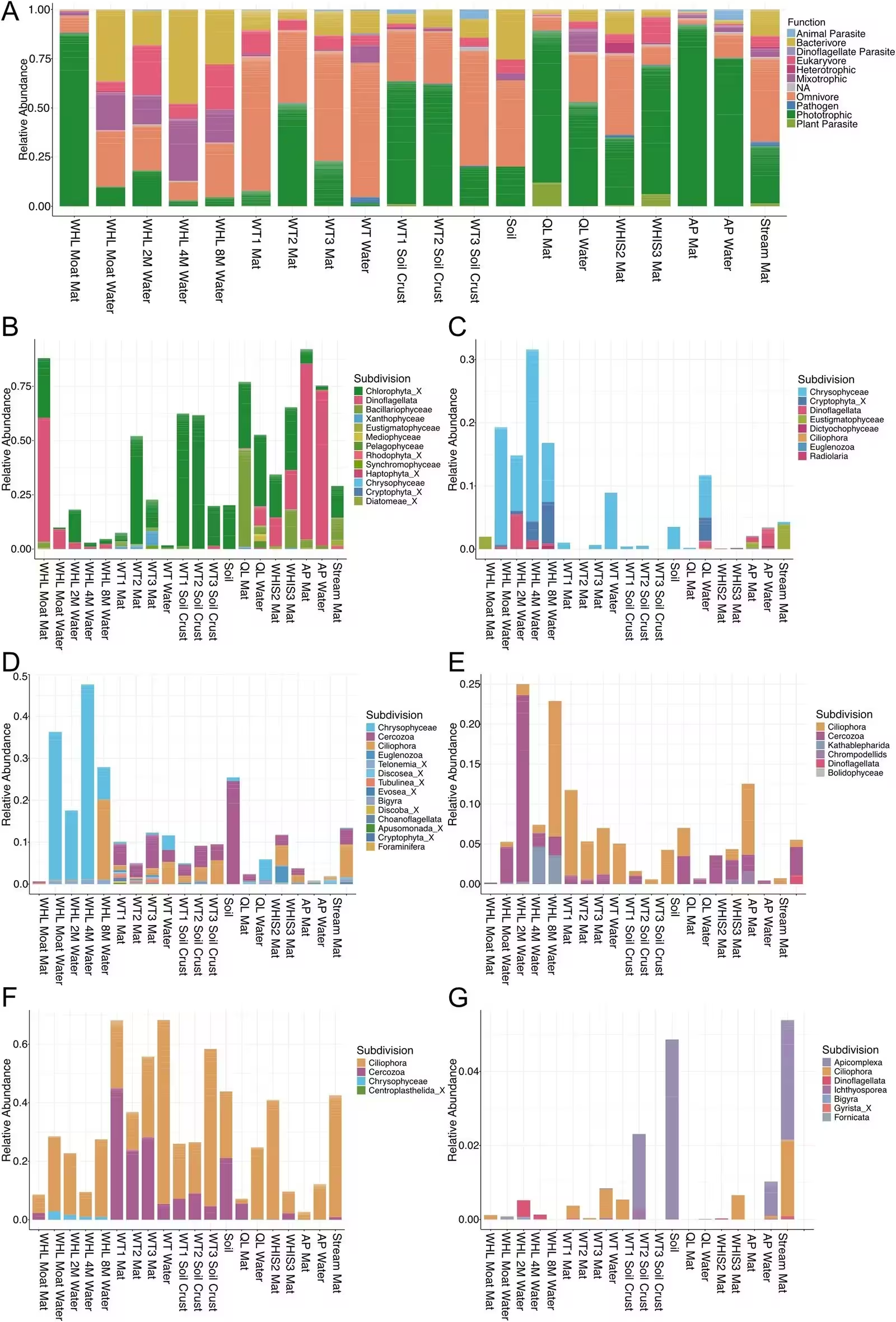
The Great Salinity Barrier in Coastal Waters
In stark contrast to the fluid exchange between land and lakes, coastal marine ecosystems remained largely isolated by a strict salinity barrier. At Quttinirpaaq Lagoon, a former freshwater bay that reconnected to the Arctic Ocean after an ice shelf collapse in 2008, the microplankton community was dominated by marine taxa with virtually no detectable input from surrounding land. Meanwhile, the benthic microbial mats at the bottom of the lagoon retained a stronger signature of terrestrial and freshwater species.
Only about three percent of all identified microbial eukaryotic taxa appeared across every single sampling location, indicating that most protists require highly specific habitat conditions rather than being widespread globally. The authors emphasize that understanding these hidden microbial connections is vital for monitoring how High Arctic environments respond to rapid cryospheric change.
The research was published in FEMS microbiology ecology on October 30, 2026.
This article has been fact checked for accuracy, with information verified against reputable sources. Learn more about us and our editorial process.
Last reviewed on .
Article history
- Latest version
Reference(s)
- Hooper, Patrick M., et al. “Diversity and connectivity of microbial eukaryotes in High Arctic terrestrial and aquatic ecosystems.” FEMS Microbiology Ecology, vol. 102, no. 11, October 30, 2026 Oxford University Press (OUP), doi: 10.1093/femsec/fiag096. <https://doi.org/10.1093/femsec/fiag096>.
Cite this page:
- Posted by Divya Iyer