Michigan Black Bears Eat Up to 36 Percent Human Food in Autumn
Isotope analysis of hair samples reveals how seasonal baiting and agriculture reshape wild bear nutrition.
American black bears roaming the forests of Michigan consume human foods for up to 36 percent of their diet during autumn hunting seasons, according to a recent long-term study. Researchers analyzed more than 2,800 hair samples collected from hunter-harvested black bears across the state between 2017 and 2021 to track how supplementary feeding and agricultural subsidies alter wild animal nutrition.
The study, published in Ecology and Evolution, sheds light on the complex interaction between wildlife management practices and large carnivore behavior. Sarah L. Schooler and her colleagues investigated how spatial and temporal variations in artificial bait availability, corn agriculture, and waste sites influence the assimilated diets of American black bears (Ursus americanus).
How Hair Isotopes Reveal Dietary Shifts Across Seasons
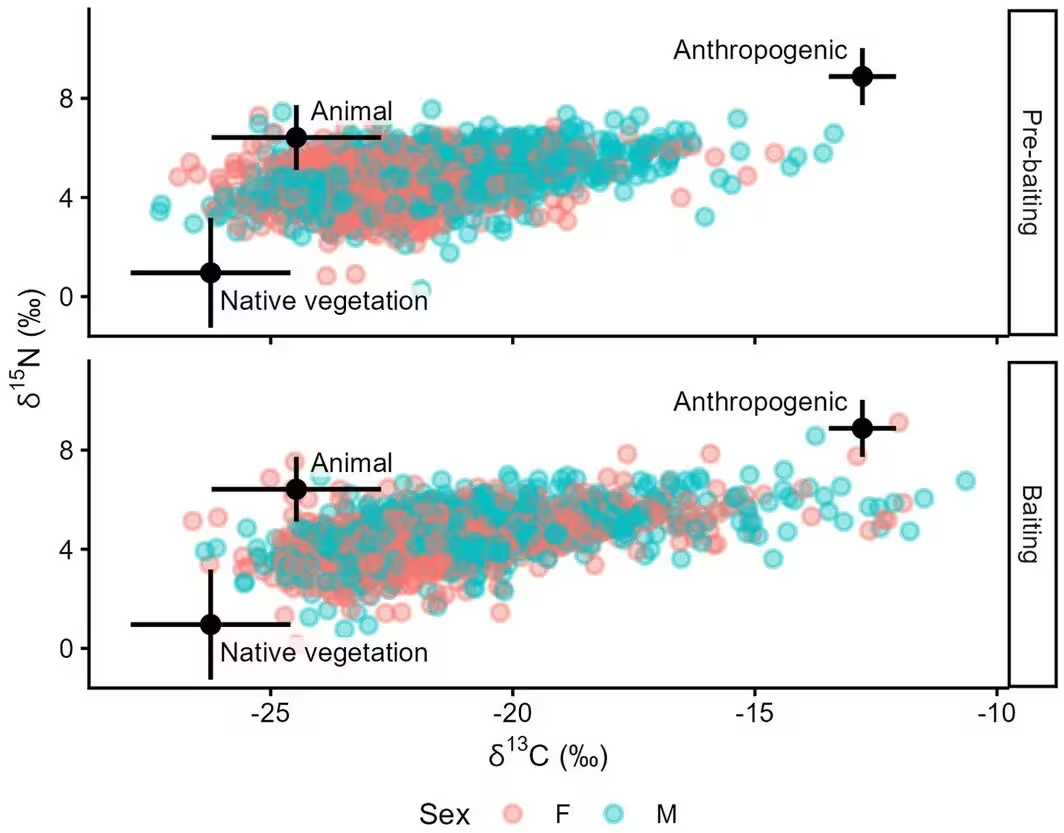
To reconstruct what the animals ate, the team examined stable isotopes of carbon and nitrogen locked inside the bears’ hair. Because mammalian hair grows at a steady rate of roughly 0.5 millimeters per day, sectioning individual hairs based on harvest dates allows scientists to separate spring and summer foraging from autumn intake.
Plant matter, wild animals, and human food subsidies leave distinct chemical signatures. Corn-based products enrich carbon levels, while animal tissues elevate nitrogen. During the pre-baiting window from May to early August, the bears subsisted largely on native vegetation at 51.9 percent, animal matter at 21.6 percent, and anthropogenic foods at 26.5 percent. Once the autumn baiting period opened in August, human-provided food jumped to 36.2 percent of the diet.
Surprising Discoveries Regarding Bait Density and Sex Differences
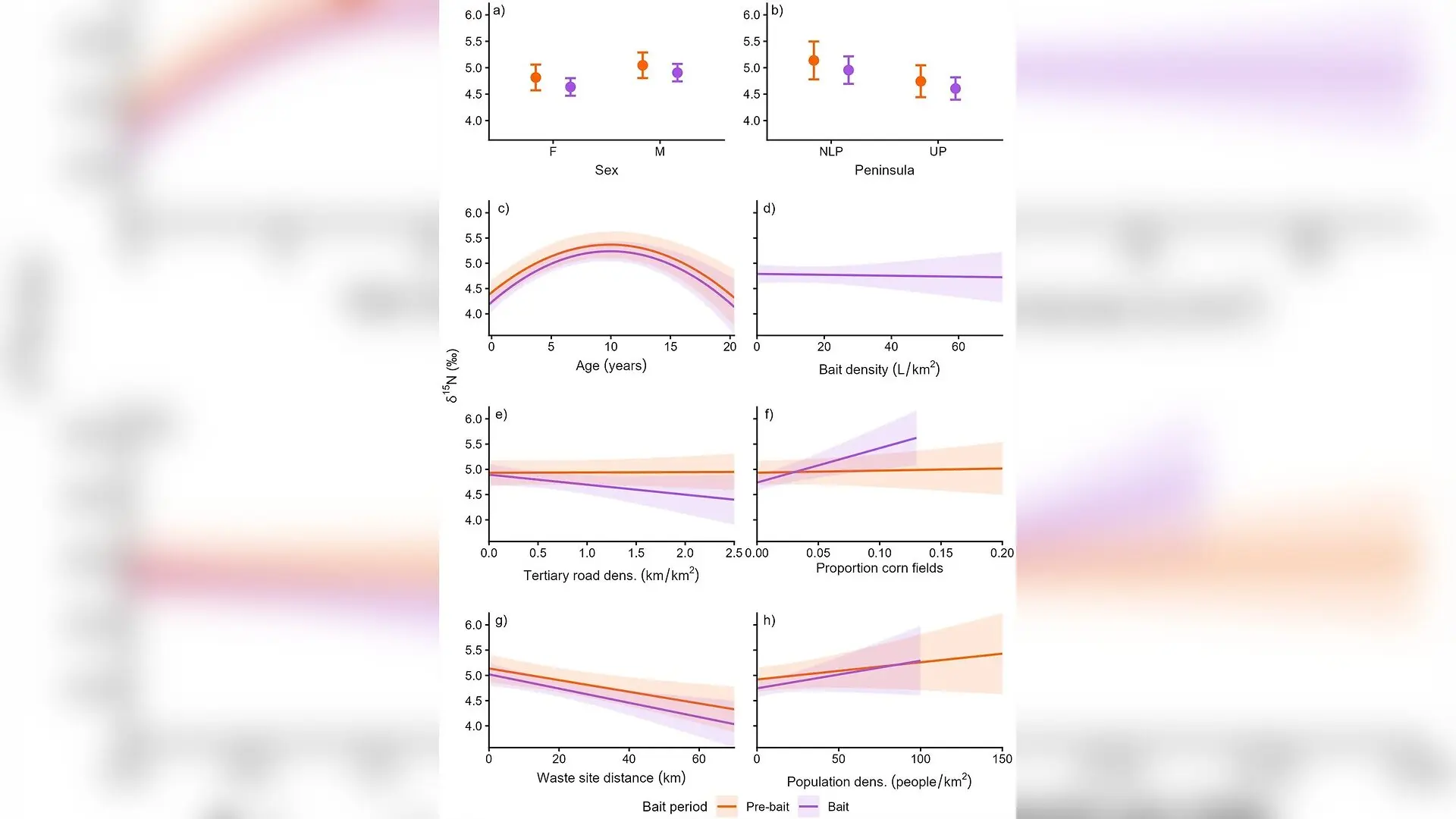
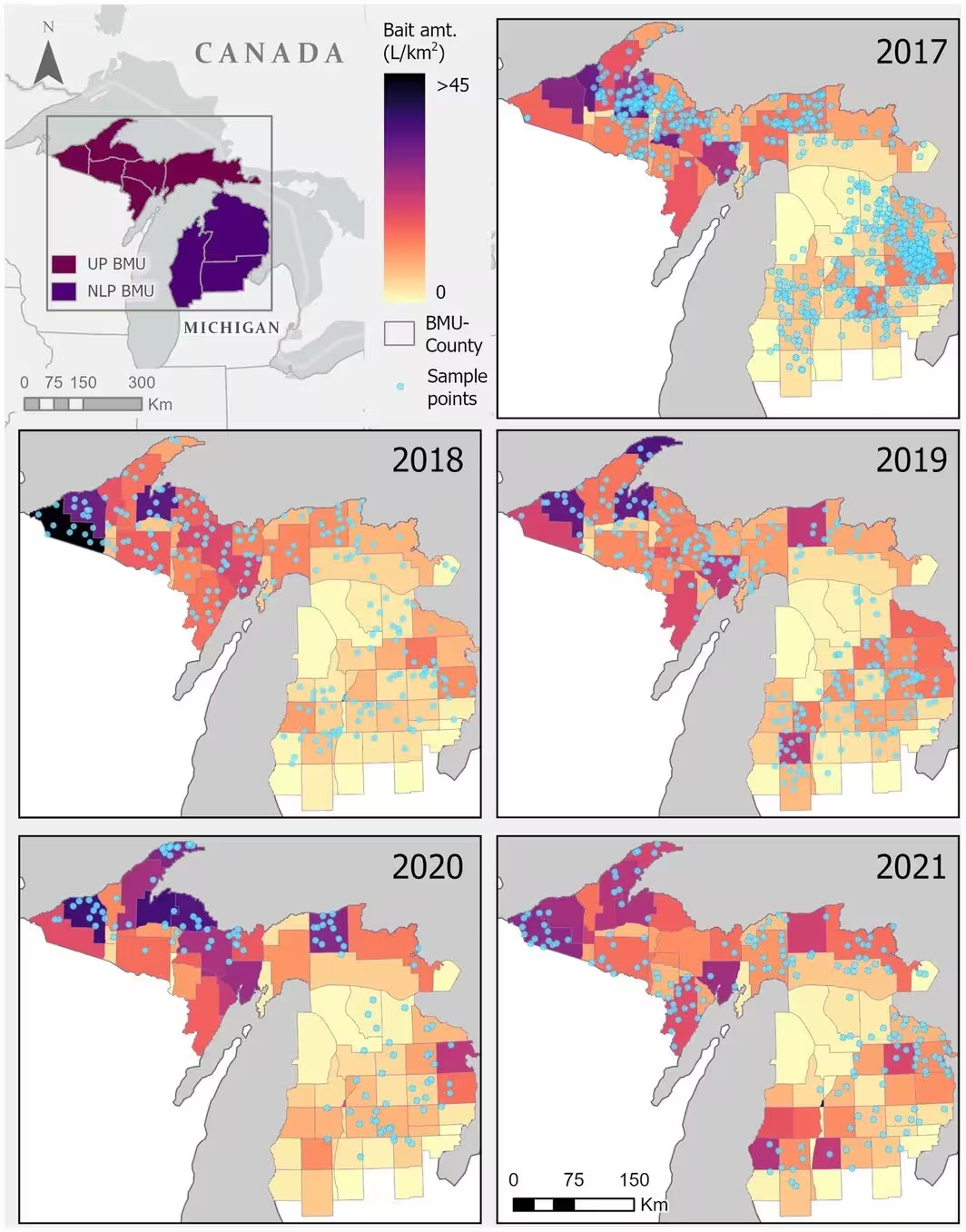
The authors hypothesized that higher local densities of hunter-placed bait would directly increase the proportion of human food consumed by individual bears. Surprisingly, statistical models revealed that estimated bait density within home ranges did not influence overall diet composition. The researchers suggest that bait was already so abundant across the landscape that it exceeded what local populations could possibly consume.
During the spring pre-baiting season, male black bears consumed more anthropogenic food than females, likely due to higher male energy demands and competitive dominance. However, both sexes consumed similar proportions of human-derived food during the autumn baiting season. Female bears experienced a sharp 9.7 percent increase in anthropogenic food consumption between the spring and autumn periods.
The Role of Age, Geography, and Waste Sites
Age played a predictable quadratic role in shaping isotope enrichment, peaking in middle-aged bears around 10 years old. Mature adults in their prime breeding years likely command superior social dominance, successfully excluding younger or older rivals from rich feeding locations such as bait stations and waste sites.
Geographic variations also emerged across Michigan. Bear hair samples from the Northern Lower Peninsula showed higher carbon enrichment than those from the Upper Peninsula, driven by heavier corn agriculture and differences in forest composition. Furthermore, nitrogen isotope enrichment increased for bears living closer to solid waste accumulation sites and processing facilities, reflecting a greater intake of meat products.
The authors caution that reliance on hunter-harvested specimens likely overrepresents the true population-wide consumption of anthropogenic food. Nonetheless, the findings demonstrate that human food subsidies form a major component of wild black bear nutrition, carrying implications for animal abundance, human-wildlife conflict, and disease transmission risks.
The research was published in Ecology and evolution on November 1, 2026.
This article has been fact checked for accuracy, with information verified against reputable sources. Learn more about us and our editorial process.
Last reviewed on .
Article history
- Latest version
Reference(s)
- Schooler, Sarah L.., et al. “Population‐Level Assimilated Dietary Responses of Black Bears to Baiting.” Ecology and Evolution, vol. 16, no. 11, October 29, 2026 Wiley, doi: 10.1002/ece3.74575. <https://doi.org/10.1002/ece3.74575>.
Cite this page:
- Posted by Kamran Akhtar