Soil Texture And Depth Control Nutrient Cycling In Highland Lake Basins
A study of 216 soil samples reveals how grain size and depth dictate nutrient availability and environmental leaching risks in agricultural watersheds.
Deep within the fragile agricultural lowlands surrounding Yilong Lake in southwest China, soil texture and depth act as hidden dials that control how vital nutrients circulate and escape into the environment. Researchers collected 216 soil samples across four distinct textures, including clay, loam, clay loam, and sand, spanning three depths down to 60 centimeters. The team discovered that while total nutrient reserves are largely dictated by soil grain size, the actual ratios of bioavailable nutrients available to crops and microbes shift dramatically based on depth and texture interactions. These findings were published in PLOS One, offering a detailed look at how highland lake basins process carbon, nitrogen, and phosphorus.
How Soil Grain Size Shapes Nutrient Storage
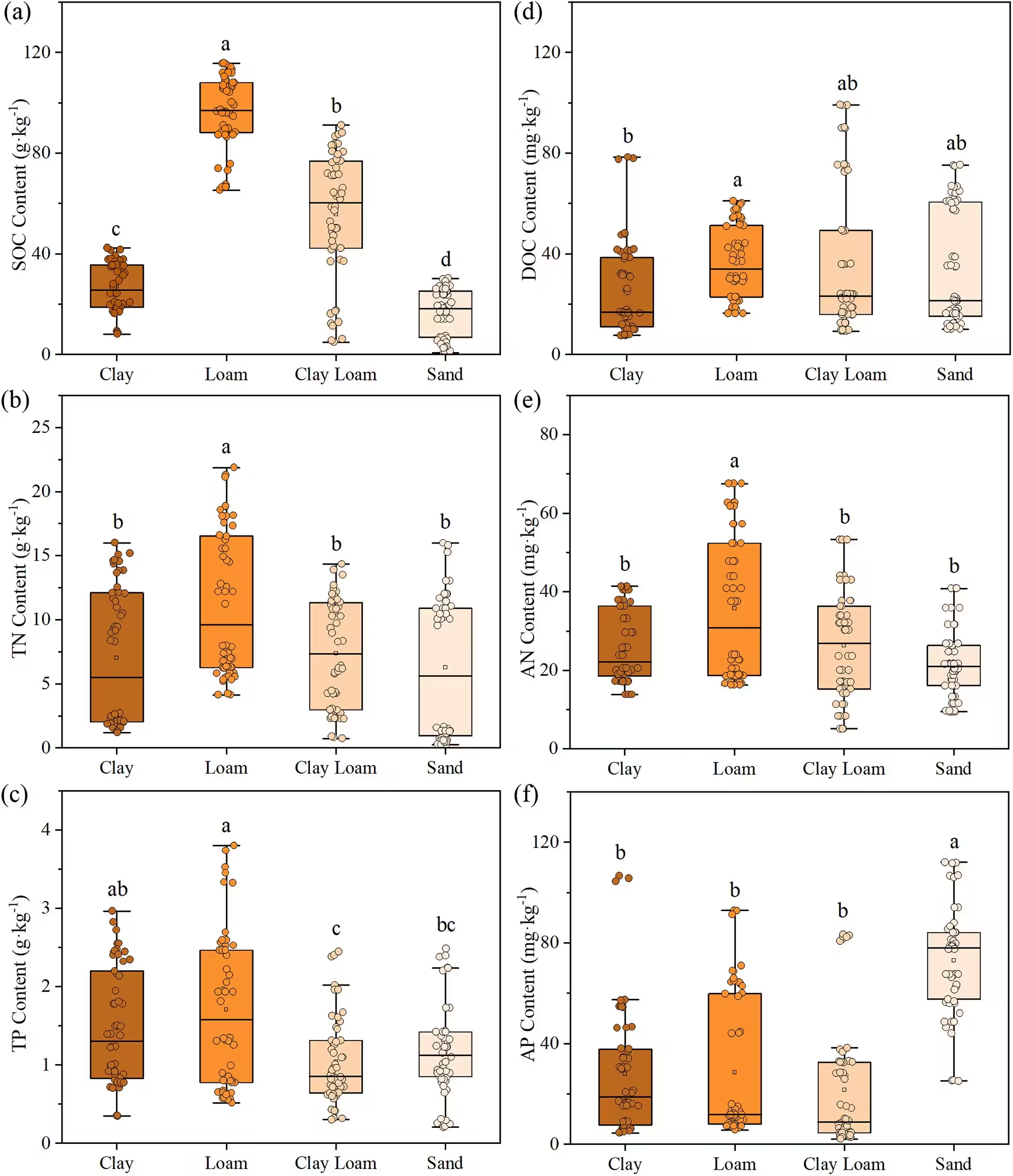
The physical composition of the ground dictates its ability to hold onto organic matter. Loam soils demonstrated the strongest capacity for carbon and nitrogen sequestration, boasting significantly higher total organic carbon and total nitrogen levels than sandy soils. Fine-grained particles create a large surface area that traps organic compounds and improves water retention, which stimulates plant productivity and organic inputs. Conversely, sandy soils featured coarse porosity that promoted rapid water infiltration, leaving them with low carbon-to-nitrogen ratios and heightened risks of nutrient leaching.
Clay loam soils presented a different challenge regarding phosphorus availability. Although these soils contained substantial total phosphorus reserves, iron and aluminum oxides under slightly alkaline conditions bound the mineral tightly, reducing available phosphorus. Ecoenzymatic analyses revealed that microbes in clay loam faced severe nitrogen limitations rather than phosphorus constraints, forcing them to alter their enzyme production to scavenge scarce nitrogen.
The Vertical Stratification of Farm Profiles
Soil depth introduced another layer of environmental regulation. Surface layers from 0 to 20 centimeters showed marked nutrient enrichment, holding substantially higher concentrations of dissolved organic carbon, available phosphorus, and soil organic carbon than subsoil layers sitting 40 to 60 centimeters deep. This surface aggregation stems from plant root accumulation and fertilizer application. However, total nitrogen levels remained relatively uniform across all depths, likely due to warm winter conditions and ammonia volatilization driven by local agricultural practices.
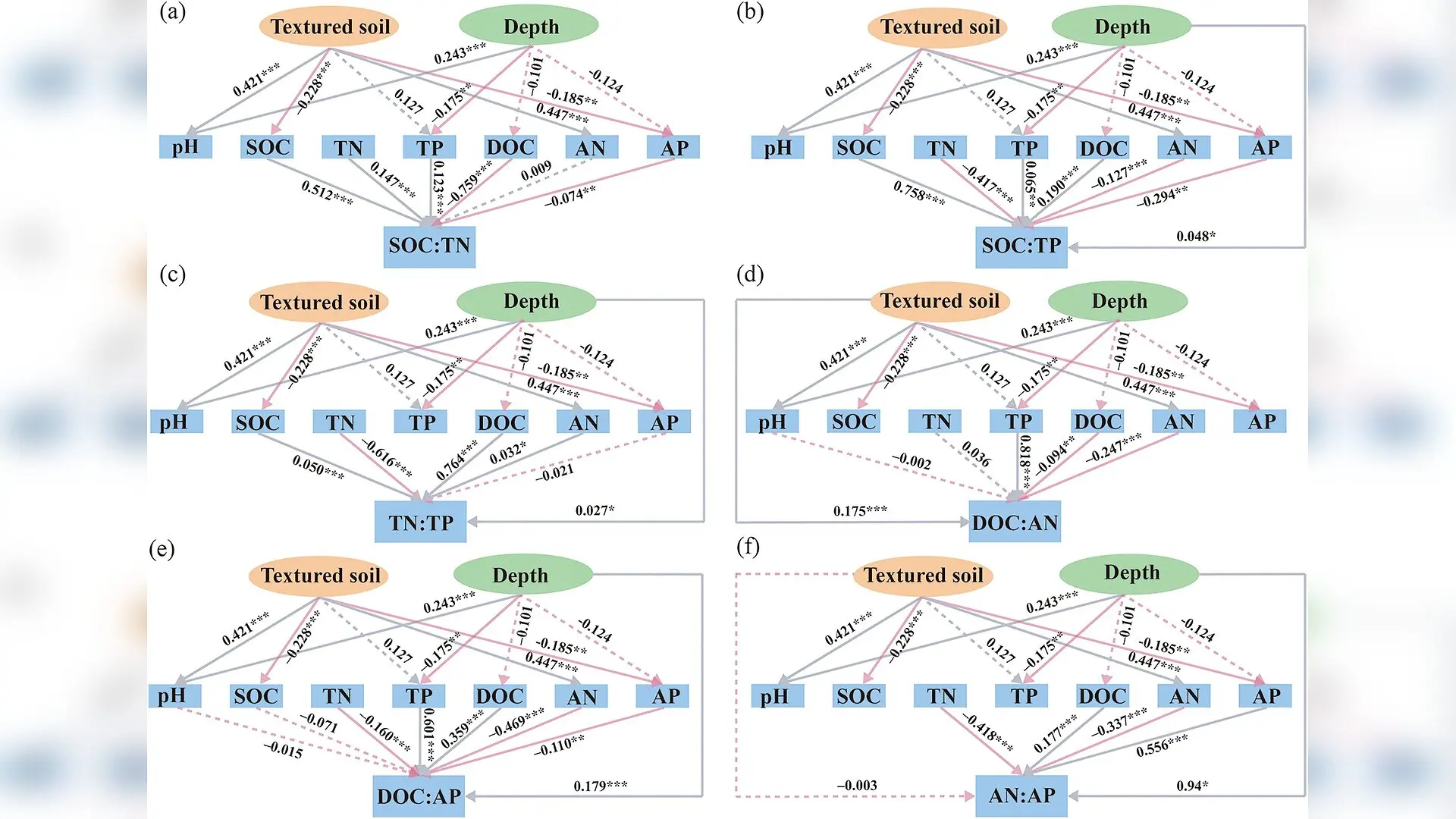
Path analysis demonstrated that soil texture indirectly governs the balance of available nutrients by regulating pools of soil organic carbon and ammonium nitrogen. Depth, meanwhile, directly altered nutrient ratios by shaping total phosphorus dynamics. These physical controls mean that management strategies must look beyond simple nutrient totals and account for how elements interact within specific soil strata.
Targeted Management for Fragile Watersheds
Agricultural runoff in shallow lake basins frequently triggers algal blooms that endanger aquatic biodiversity and water security. The study highlights the need for customized land management tailored to soil types. Loam requires balanced nutrient inputs and cover cropping to prevent imbalances, while sandy soils benefit from organic fertilizers and biochar to improve water-holding capacity and reduce wind erosion. By understanding how texture and depth regulate nutrient stoichiometry, farmers and policymakers can design precision fertilization techniques that protect downstream water quality while maintaining food security.
The research was published in PLOS One on October 29, 2026.
This article has been fact checked for accuracy, with information verified against reputable sources. Learn more about us and our editorial process.
Last reviewed on .
Article history
- Latest version
Reference(s)
- Lai, Yongru., et al. “Soil texture and depth differentially regulate total and available nutrient stoichiometry in Yilong Lake basin agroecosystem, China.” PLOS One, vol. 21, no. 10, October 29, 2026, pp. e0361813 Public Library of Science (PLoS), doi: 10.1371/journal.pone.0361813. <https://doi.org/10.1371/journal.pone.0361813>.
Cite this page:
- Posted by Divya Iyer