Massive Dam Model Reveals Hidden Seepage Dangers in Deep Riverbeds
Computer simulations compare core-wall and inclined-wall designs for earth-rock cofferdams built on thick foundation sediment.
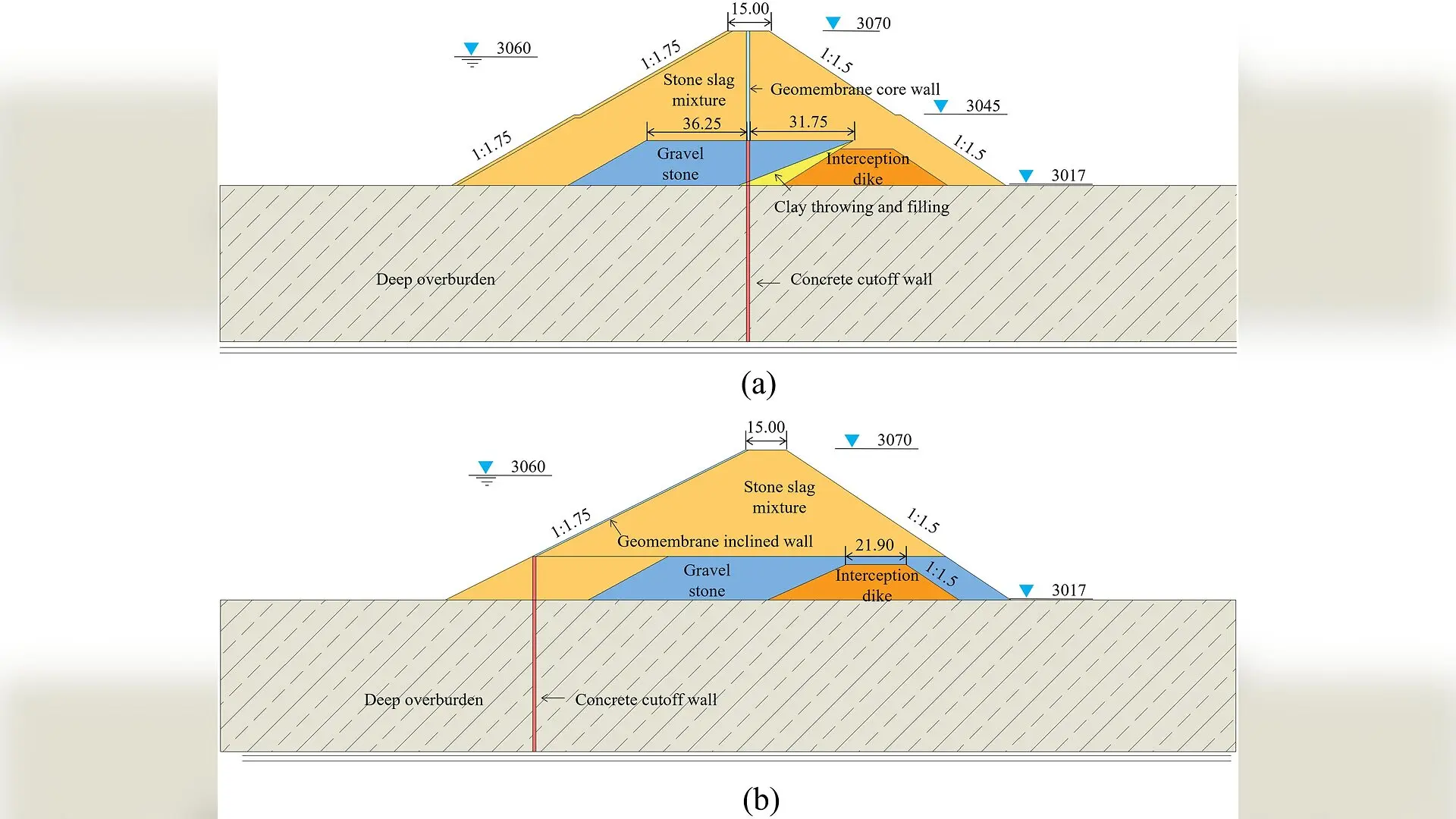
Engineers analyzing the proposed upstream earth-rock cofferdam for the Zhongyu Hydropower Station on the Yigong Zangbo River have revealed crucial insights into how deep overburden foundations influence massive dam structures. Building water conservancy projects on thick, loose sediment layers up to 60 meters deep presents severe engineering challenges involving water seepage and structural stability under pressure. Researchers Linsong Zhu and colleagues published their findings in PLOS One, detailing a comprehensive three-dimensional computer model that compares two distinct seepage-control strategies.
How Deep Overburden Layers Alter Dam Seepage Behavior
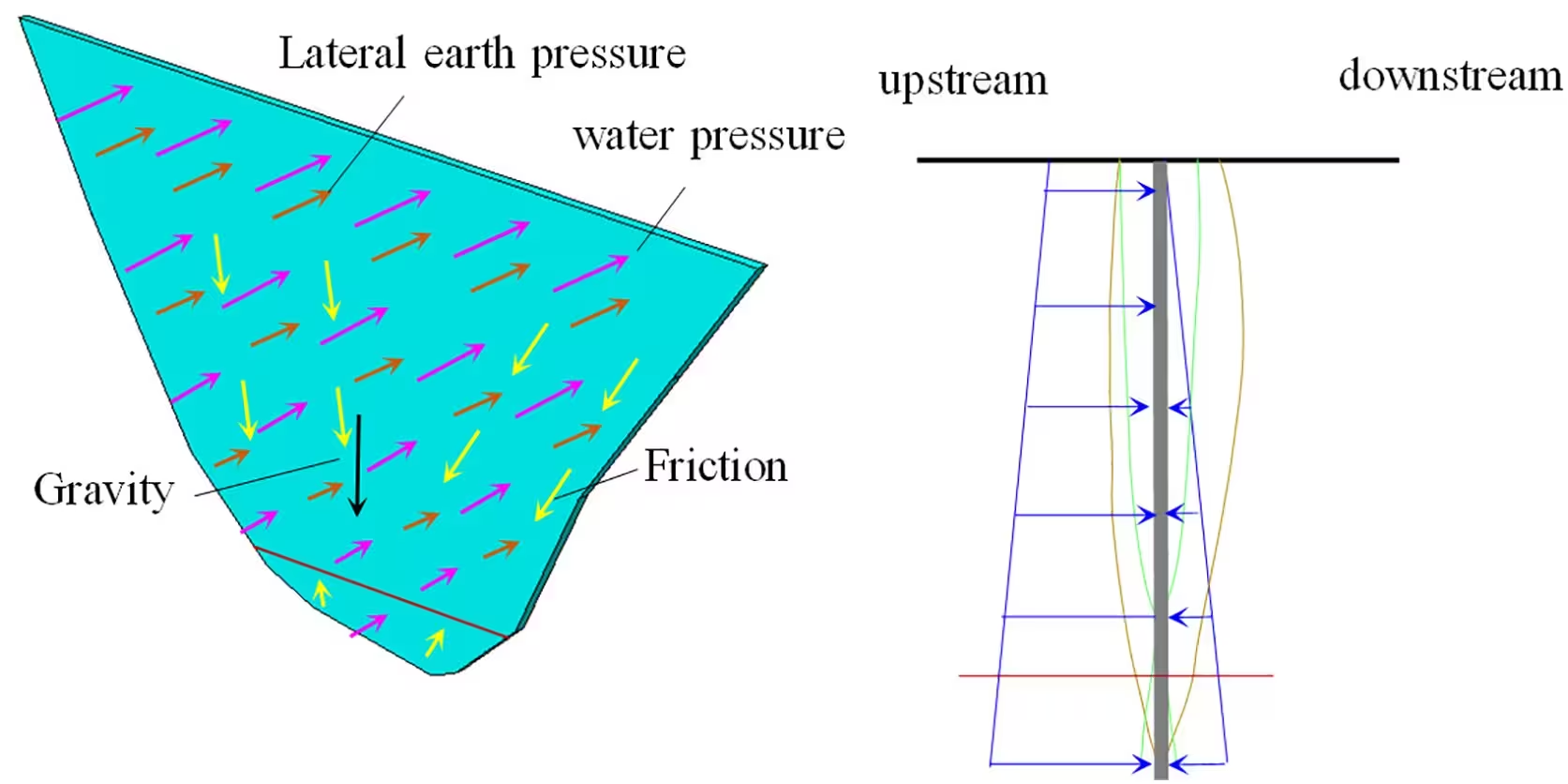
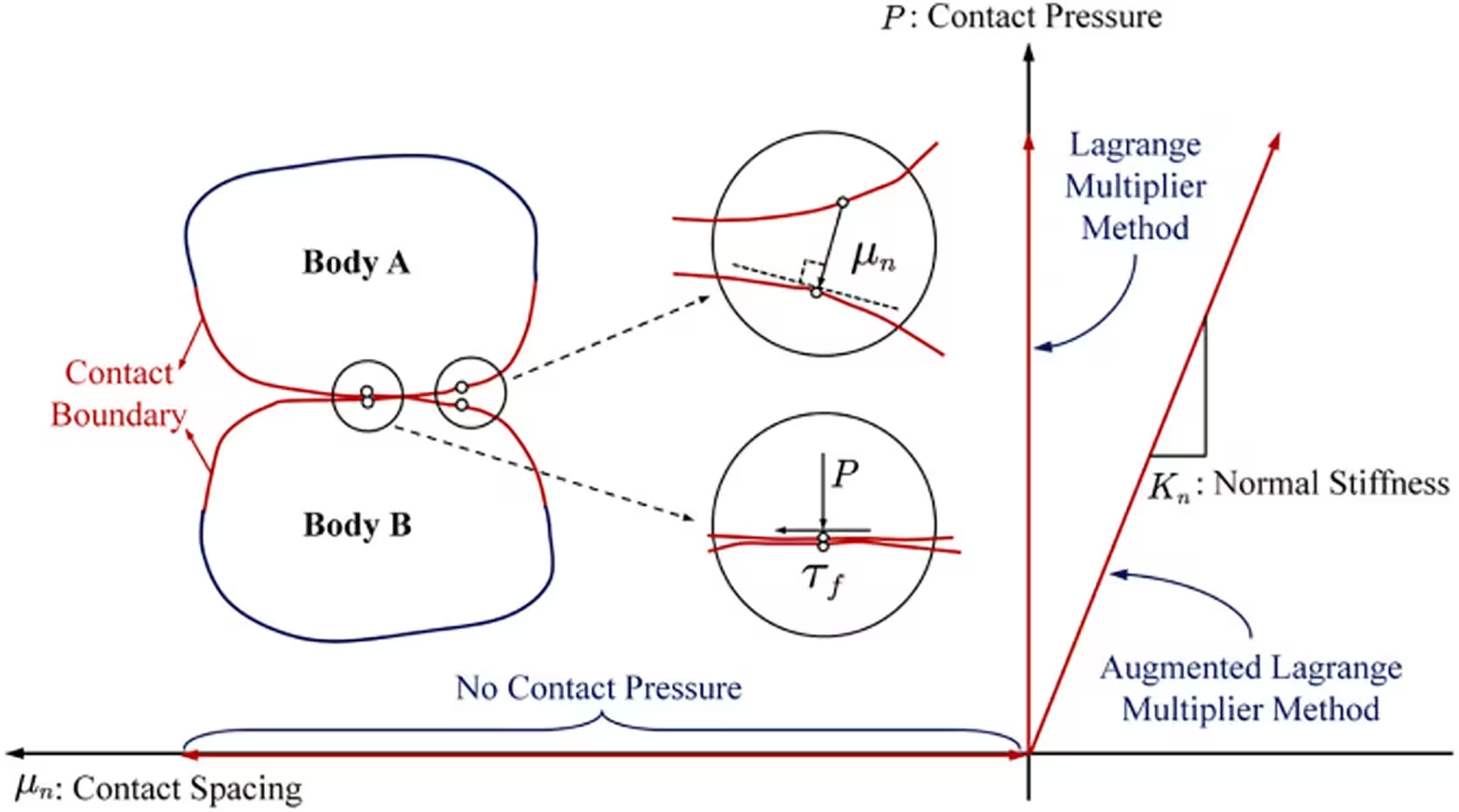
The study focused on the Yigong Zangbo River site, where the riverbed features a massive 45 to 60 meter thick layer of sandy gravel containing boulders and cobbles sitting above monzonitic granite bedrock. When engineers construct a 55 meter high earth-rock cofferdam with a 1.2 meter thick concrete cutoff wall in such loose foundations, water movement through the ground becomes a primary concern. The research team utilized a coupled finite element model to examine how water flow interacts with the mechanical stress of the soil skeleton.
By testing different cutoff-wall penetration depths of 50 percent, 70 percent, and 100 percent, the authors found that extending the concrete wall through the entire overburden thickness effectively eliminates short bypass paths. Full penetration dramatically lowers the phreatic line, which is the upper boundary of saturated soil, and cuts total water seepage down to a tiny fraction of the natural river flow. Specifically, full penetration resulted in total discharge rates of only 0.011 percent of the mean river flow for a core-wall layout and 0.015 percent for an inclined-wall layout.
Core Wall Versus Inclined Wall Design Performance
The investigation evaluated two main structural layouts, namely a composite geomembrane core-wall scheme and a composite geomembrane inclined-wall scheme. While both designs successfully manage water movement, they exhibit distinct mechanical and hydraulic trade-offs. The core-wall arrangement consistently transmitted less water than the inclined-wall arrangement across all tested penetration depths, producing up to 28.92 percent less seepage under full penetration conditions.
Despite superior seepage control, the core-wall design experienced slightly higher tensile stress levels within both the cofferdam body and the concrete cutoff wall. Stress analyses indicated that most of the dam fill remains under compression, but local tension zones emerge near the abutments and wall-rock contacts due to differential movement in the winding valley geometry. The maximum tensile stress reached 1.05 MPa in the core-wall scheme, compared to 0.91 MPa in the inclined-wall scheme, though both values remained well below the 1.5 MPa design safety threshold.
Evaluating Slope Stability During Rapid Water Drawdown
The team also simulated a rapid reservoir drawdown rate of 5 meters per day, dropping the upstream water level from 3,057.90 meters to 3,036.90 meters. During this transition, water trapped inside the upstream shell cannot escape instantaneously, creating a temporary imbalance where stabilizing hydrostatic support disappears while adverse seepage forces persist.
This lag in pore pressure dissipation temporarily reduces the safety factor of the upstream slope. For the core-wall scheme, the upstream slope factor dropped from 1.54 to a minimum of 1.446 before recovering, whereas the inclined-wall scheme saw its upstream safety factor fall from 3.55 to 1.70. While both systems maintained overall stability, the inclined-wall layout retained a higher upstream safety margin throughout the critical drawdown period, highlighting a fundamental engineering choice between minimizing seepage and maximizing transient slope stability.
The research was published in PLOS One on October 30, 2026.
This article has been fact checked for accuracy, with information verified against reputable sources. Learn more about us and our editorial process.
Last reviewed on .
Article history
- Latest version
Reference(s)
- Zhu, Linsong., et al. “Behavior of earth-rock cofferdam built on deep overburden foundation considering seepage effect.” PLOS One, vol. 21, no. 10, October 30, 2026, pp. e0361805 Public Library of Science (PLoS), doi: 10.1371/journal.pone.0361805. <https://doi.org/10.1371/journal.pone.0361805>.
Cite this page:
- Posted by Divya Iyer