Hudson River Estuary Sediments Contain Hidden Organic Linings That Reveal Seafloor Stress
Microscopic shell dissolution in New York sediment cores points to challenging benthic conditions and provides a new tool for tracking estuarine health.
Microscopic marine organisms in the Hudson River Estuary are shedding their outer protective shells and leaving behind hidden organic linings that reveal a troubling story of stress on the riverbed. Researchers analyzing sediment cores collected near Piermont Pier in New York discovered that delicate protein and polysaccharide structures, known as foraminiferal organic linings, make up more than thirty percent of the local microfossil population.
Estuaries serve as vital ecological bridges between land and the open ocean, acting as crucial zones for marine life, commercial shipping, and human recreation. However, these complex coastal waterways face mounting pressure from urban pollution, agricultural runoff, and climate-driven changes in oxygen and water chemistry. To understand how well these aquatic ecosystems are functioning, scientists often rely on benthic foraminifera, which are tiny single-celled organisms equipped with mineralized shells that sit directly on the seafloor.
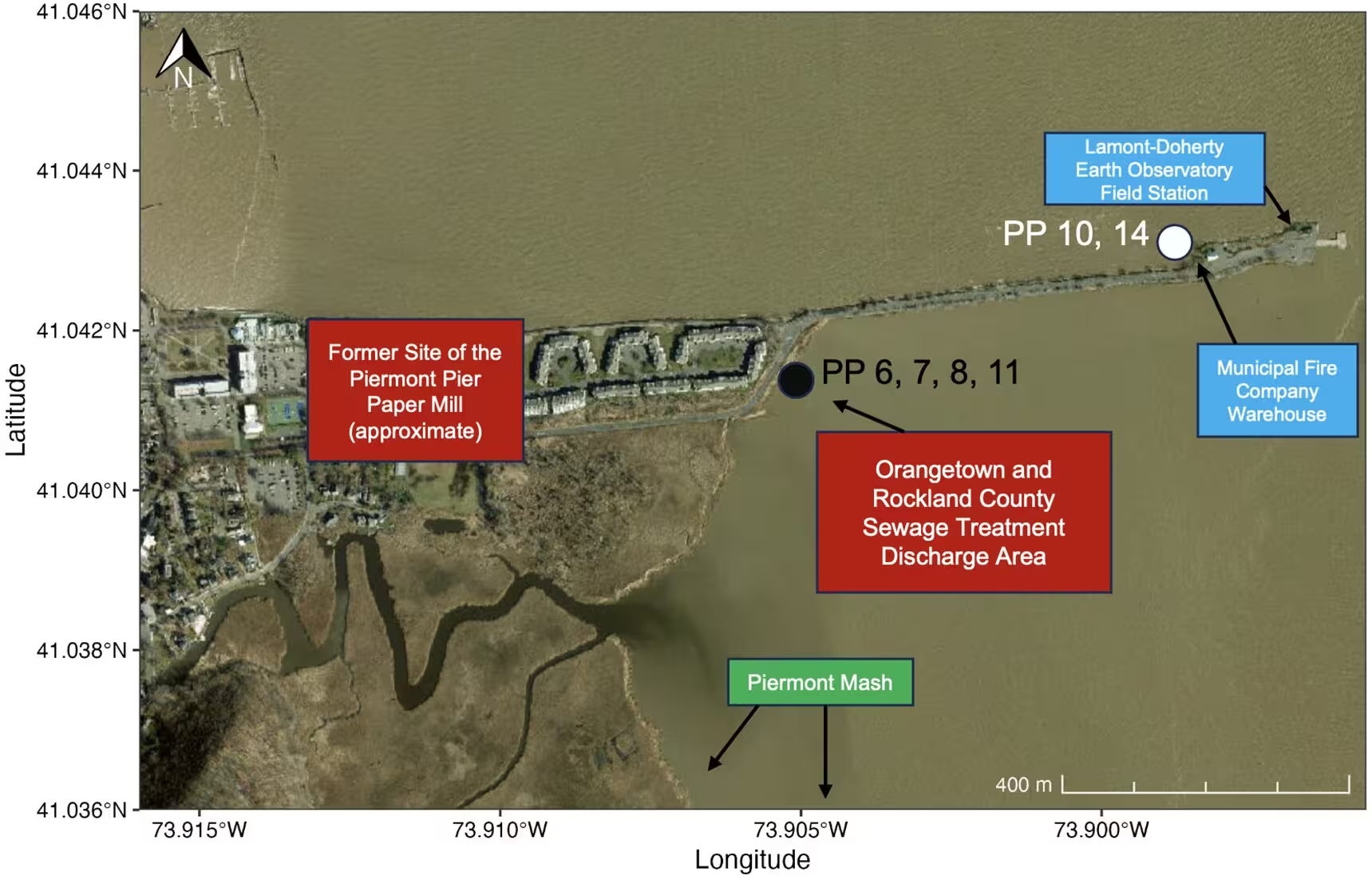
The research team, led by scientists from Barnard College and Vassar College, examined core top sediment samples gathered from six locations around Piermont Pier, situated approximately 40 kilometers north of New York Harbor. The study site experiences semidiurnal tides and sits near active municipal sewage treatment outfalls that discharge millions of gallons of treated water daily, alongside a legacy of industrial contamination from former paper mills and nineteenth-century railway operations. The findings were published in PLOS One, providing new insight into modern estuarine health.
Unveiling Hidden Linings in River Sediments
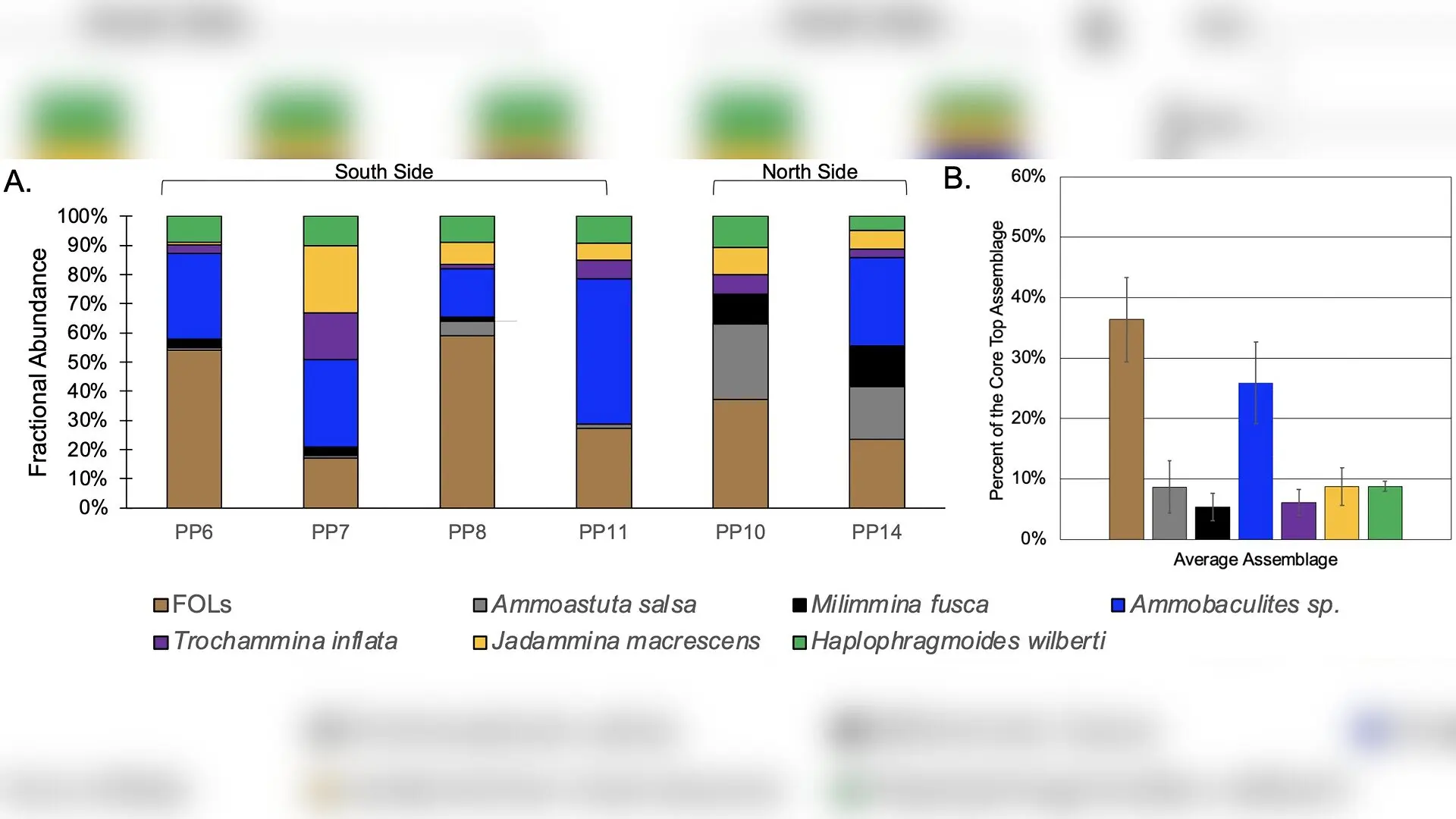
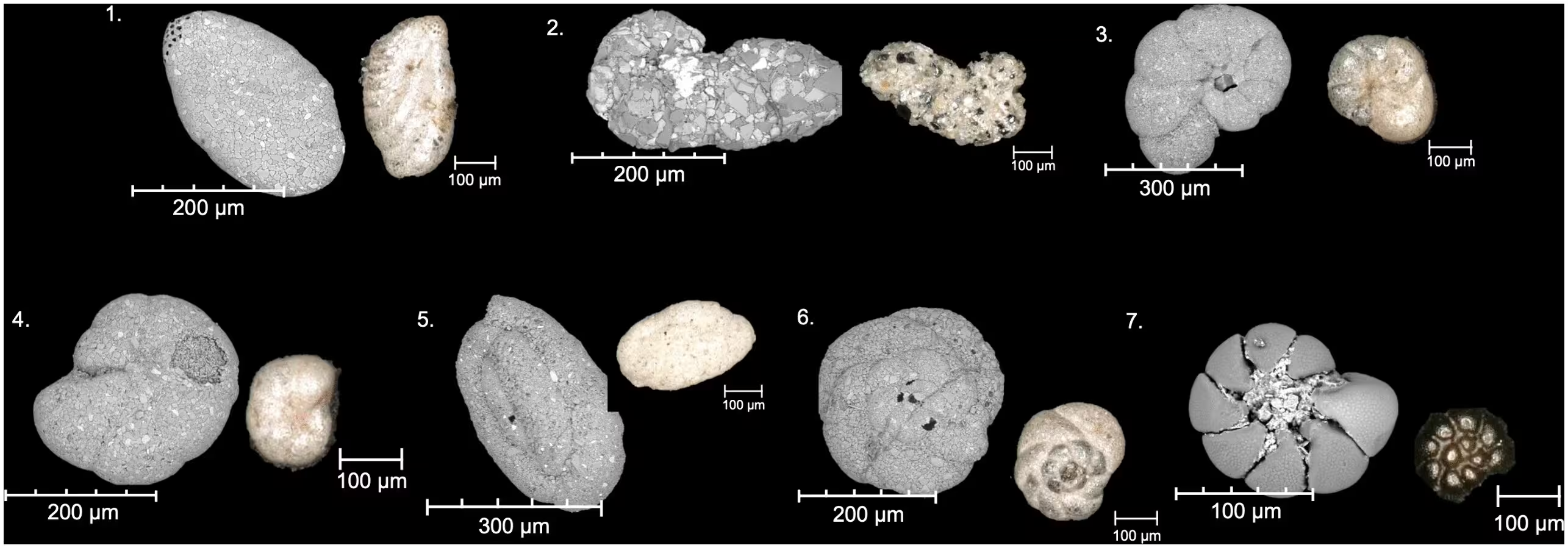
When the researchers washed and sieved the muddy core samples through fine 63-micron to 2-millimeter meshes, they encountered a diverse community of six distinct agglutinated foraminifera species, including Ammoastuta salsa, Miliammina fusca, Ammobaculites species, Trochammina inflata, Jadammina macrescens, and Haplophragmoides wilberti. Surprisingly, the team also found that organic linings, which form the internal framework of these organisms after their outer mineral shells dissolve, dominated the samples alongside intact specimens.
Through advanced imaging using a 3D digital microscope and tabletop scanning electron microscopy, the investigators successfully captured specimens in the actual process of shedding their outer tests. Out of 600 total individual foraminifera counted across the six core sites, exactly 188 were bare organic linings. Statistical analysis using a Beta-Binomial generalized linear model revealed a mean regional abundance of 31.4 percent for these stripped linings, with site-specific proportions climbing as high as 54 percent at one southern location near the pier.
What Shell Dissolution Reveals About Environmental Stress
The widespread loss of protective shells points directly to challenging environmental conditions on the estuary floor. Foraminifera typically lose their outer tests when bottom waters or porewaters become too acidic, oxygen-depleted, or overloaded with organic matter and nutrients. The physical geography of Piermont Pier, which functions as a solid stone jetty extending more than a kilometer into the river, tends to slow down local water currents and limit sediment mixing, potentially intensifying chemical stress in the surrounding mud and silt.
Furthermore, scanning electron microscopy revealed microscopic pyrite framboids clustered on several of the organic linings. These tiny mineral spheres form exclusively in reducing environments characterized by very low oxygen levels and high sulfate concentrations in the porewaters. While the researchers note that limited spatial sampling prevents them from pointing to a single definitive cause for the shell dissolution, the presence of these chemical signatures indicates that organic matter loading from nearby marshes and urban runoff plays a major role.
Next Steps for Estuarine Biomonitoring
The discovery of abundant organic linings provides a fresh baseline for monitoring the ecological health of the Hudson River Estuary, but it also highlights the complexities of interpreting microfossil records. Because these organic linings are much smaller and morphologically simpler than intact shells, identifying them down to the species level remains a significant challenge for marine scientists. The authors suggest that future investigations should pair sediment core collection with real-time sensor measurements of bottom-water oxygen, temperature, salinity, and pH to untangle the precise triggers behind shell degradation.
Establishing how these delicate organic structures respond to human-induced pressures will allow environmental managers to utilize foraminiferal linings as sensitive bio-indicators of pollution and acidification. As urban coastlines face increasing environmental volatility, tracking the hidden remains of these microscopic inhabitants offers a powerful window into the changing health of our nation’s estuaries.
The research was published in PLOS One on October 30, 2026.
This article has been fact checked for accuracy, with information verified against reputable sources. Learn more about us and our editorial process.
Last reviewed on .
Article history
- Latest version
Reference(s)
- Brenner, Logan., et al. “Hudson River Estuary sediments contain high fractional abundances of preserved globothalamean foraminiferal organic linings at Piermont, New York.” PLOS One, vol. 21, no. 10, October 30, 2026, pp. e0361863 Public Library of Science (PLoS), doi: 10.1371/journal.pone.0361863. <https://doi.org/10.1371/journal.pone.0361863>.
Cite this page:
- Posted by Kamran Akhtar