Buried River Pipelines Suffer 37 Percent Less Scour Near Sharp Bends
Laboratory experiments reveal how pipeline burial depth and unsteady flood flows dictate severe riverbed erosion downstream of sharp bends.
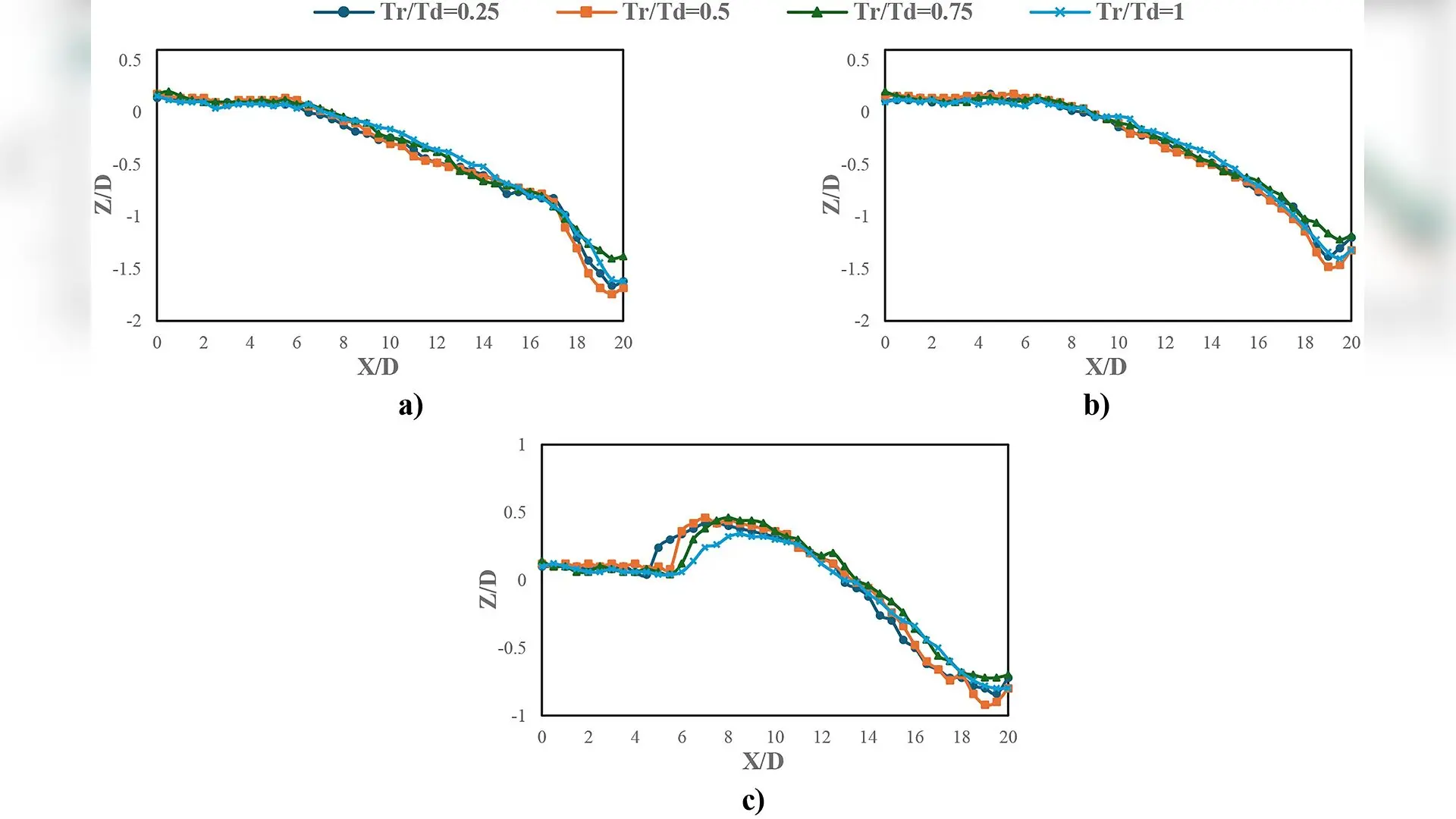
A 5-centimeter polycarbonate pipe placed flush with a channel bed downstream of a sharp river bend suffers a maximum scour depth reaching 9.3 centimeters, threatening vital underwater infrastructure during floods. When engineers bury that same pipeline beneath the bed material, the maximum scour hole around the pipe shrinks by an average of 37.1 percent while downstream sedimentation drops by 38.0 percent. These findings emerge from a laboratory study investigating how river bends and unsteady water flows interact with crossing pipelines.
Rivers naturally meander and form sharp curves, which generate complex helical flow patterns and secondary currents that alter velocity and pressure distribution. When transmission pipelines carrying water, oil, or gas cross these waterways immediately downstream of a curve, the moving water collides directly with the structure. While previous investigations focused heavily on straight channels or steady water flow, researchers wanted to understand the combined danger of sharp river bends and unsteady flood conditions. The complete study is published in PLOS One, detailing experiments conducted by Elaheh Barzegarpisheh and colleagues at Persian Gulf University.
Testing Different Burial Depths and Flood Hydrographs
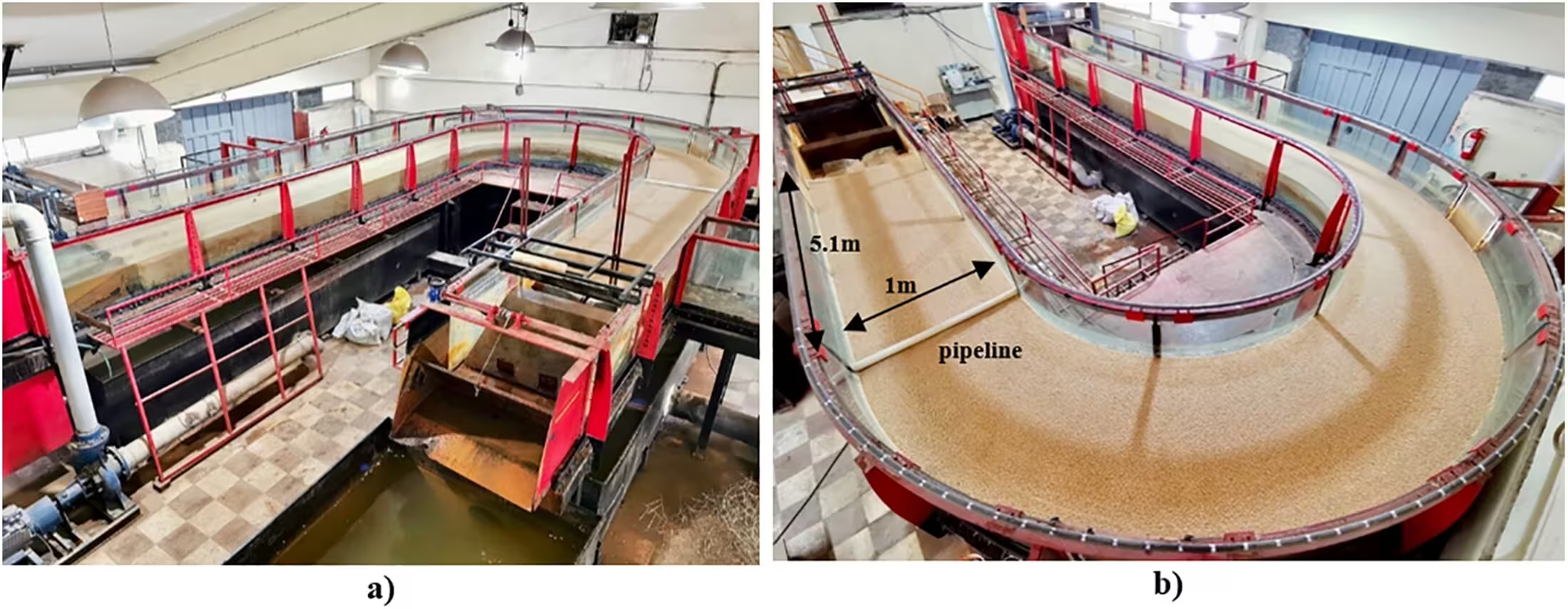
To simulate real river environments, the research team built a laboratory flume featuring a 180-degree sharp bend with a central curvature radius of 2 meters, connected to a 5.1-meter downstream straight reach. The flume bed consisted of uniform silica sand with a median grain size of 1.5 millimeters. Researchers installed a rigid polycarbonate pipe perpendicular to the flow across the 1-meter channel width at the exact exit point of the bend.
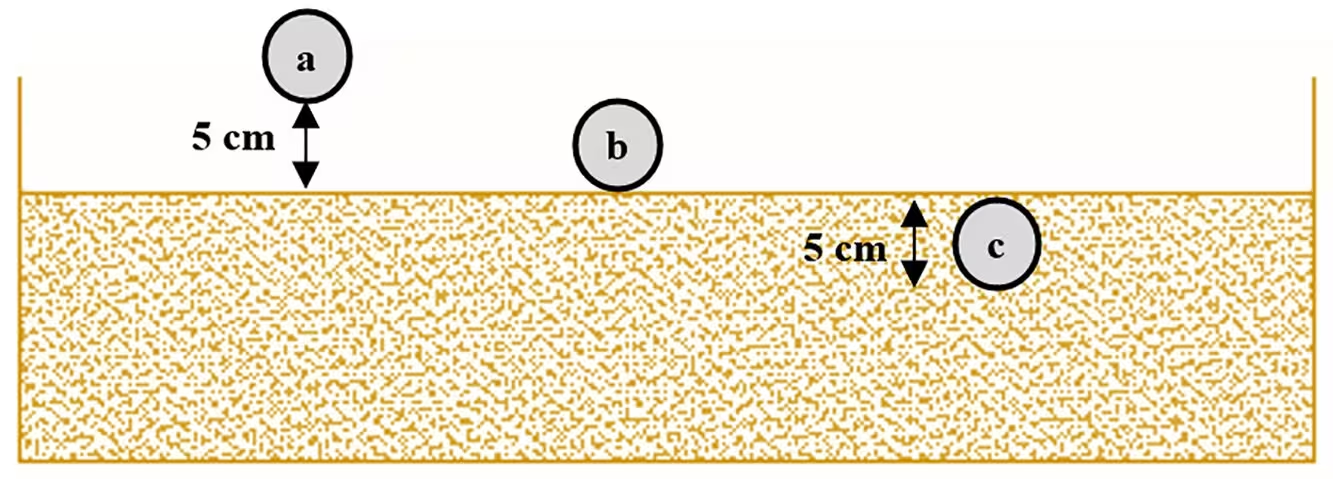
The team tested three distinct pipe installation configurations relative to the initial bed level: flush with the bed surface, elevated by one full pipe diameter above the bed, and buried one pipe diameter deep within the sand. Each setup was subjected to four different unsteady flow hydrographs lasting 100 minutes each, with discharge rates ranging from 25 to 60 liters per second. The water flow began under clear-water conditions before transitioning into a live-bed regime where sediment transport, scouring, and sedimentation occurred simultaneously.
Why Flush Pipes Suffer the Worst Scour Damage
After each test, researchers drained the flume and measured bed topography using a laser distance meter mounted on a movable rail system with a 1-millimeter accuracy. The data revealed that pipes positioned level with the bed experienced the most severe disruptions to the flow field, producing the largest scour holes and heaviest sediment accumulation. Direct impact from the bend outflow generated high shear stresses that destabilized the surrounding riverbed.
In contrast, the buried pipe configuration provided substantial protection against direct flow impingement. Because the water interacted only indirectly with the buried structure, turbulence intensity remained low and bed shear stresses failed to detach widespread sediment particles. When pipes were elevated above the bed, fluid passed both above and beneath the structure, yielding intermediate levels of scour that sat comfortably between the flush and buried conditions.
The Surprising Role of Flood Timing and Peak Discharge
The team also analyzed how the timing of peak flood discharge affected bed deformation. By testing hydrographs with varying rising-to-falling limb ratios, they discovered that flood timing played a smaller role in altering scour than the physical burial depth of the pipe itself. Hydrographs with a peak-time-to-duration ratio of 1.0 produced the greatest bed topography changes because the abrupt cessation of flow immediately after the peak prevented sediment redistribution.
Conversely, hydrographs featuring more gradual falling limbs allowed flowing water to continuously transport eroded sediments away from accumulation zones. Decreasing the peak discharge timing ratio from 1.0 to 0.75 resulted in an average 13.3 percent reduction in maximum scour and a 7.3 percent drop in sedimentation. Statistical models and empirical power-law equations developed from the laboratory data successfully predicted scour depths across the various installation conditions, giving river engineers new mathematical tools to safeguard critical energy infrastructure.
The research was published in PLOS One on October 27, 2026.
This article has been fact checked for accuracy, with information verified against reputable sources. Learn more about us and our editorial process.
Last reviewed on .
Article history
- Latest version
Reference(s)
- Barzegarpisheh, Elaheh., et al. “Investigation of the effect of outflow from a sharp bend, influenced by a pipe installed at the bend exit, on the scour pattern in the downstream straight reach under unsteady flow conditions.” PLOS One, vol. 21, no. 10, October 27, 2026, pp. e0360062 Public Library of Science (PLoS), doi: 10.1371/journal.pone.0360062. <https://doi.org/10.1371/journal.pone.0360062>.
Cite this page:
- Posted by Divya Iyer