Warming Peatlands Reveal Why Methane Isotopes Can Fool Climate Scientists
New incubation experiments show that carbon dioxide substrate dynamics, not microbial pathway shifts, drive unexpected isotope trends in thawing bog peat.
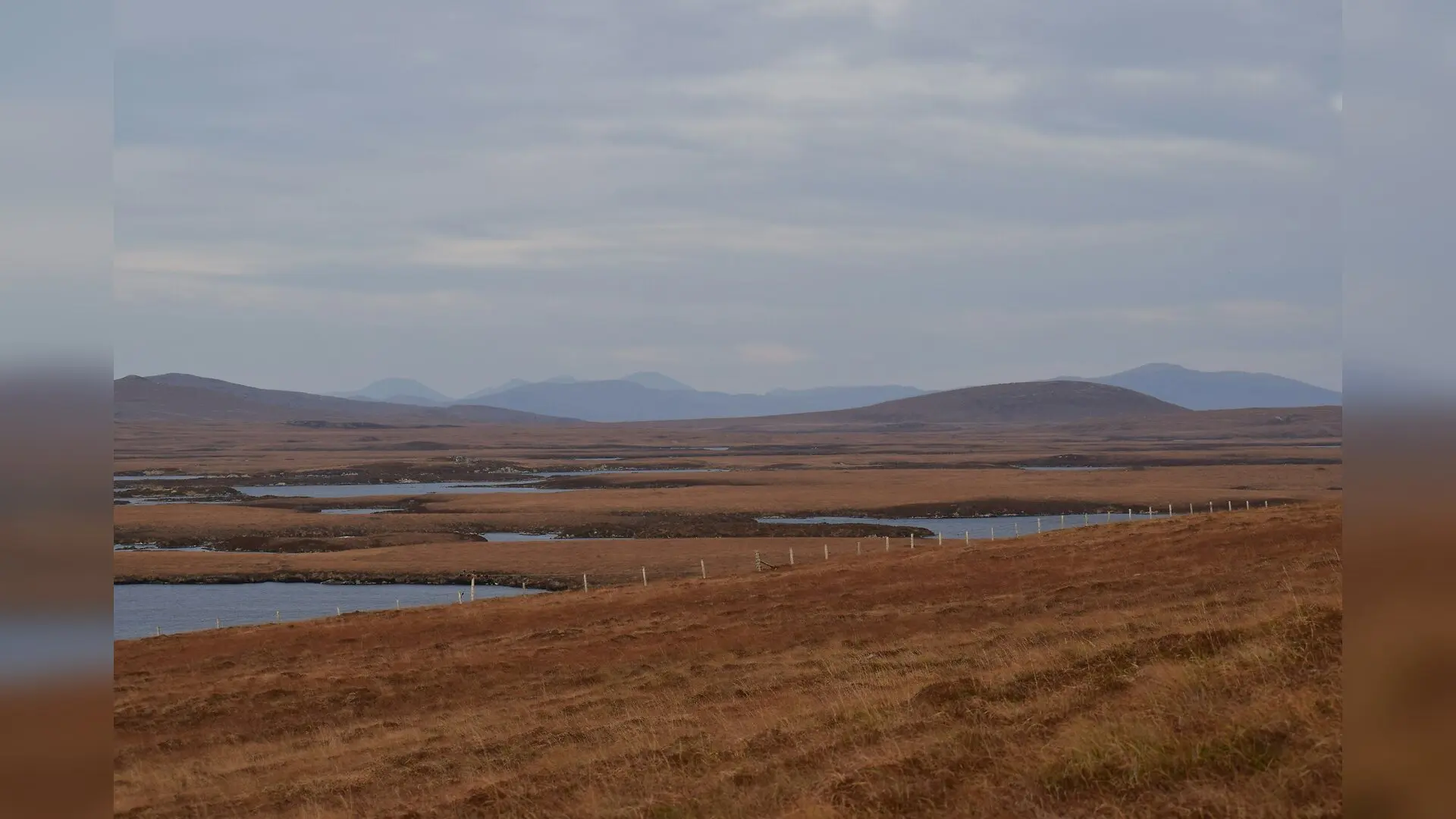
Peatlands cover roughly three to four percent of Earth’s land surface yet lock away about one-third of all global soil carbon, totaling up to six hundred billion metric tons of organic matter in waterlogged, oxygen-deprived soils. When these fragile northern ecosystems experience rising temperatures, their long-term storage stability is tested, shifting the balance of greenhouse gases released into the atmosphere. Researchers have long monitored stable carbon isotopes in carbon dioxide and methane to track how microbial communities break down this ancient organic matter under warming conditions. However, a study published in PLOS One reveals that traditional interpretations of these isotope signatures can be completely misleading when scientists ignore the shifting chemistry of the underlying carbon pools.
How Does Warming Alter Methane Production in Peatlands?
To investigate how temperature increases affect greenhouse gas dynamics, M. Elizabeth Holmes and colleagues at Florida State University collected peat cores from a depth of nine to nineteen centimeters below the water table at the Stordalen Mire in Sweden. The research team sealed the samples inside anaerobic containers and subjected them to controlled laboratory incubations at three distinct temperatures of fifteen, twenty, and twenty-five degrees Celsius. By measuring the concentrations and carbon isotope ratios of both carbon dioxide and methane over an eighty-four-day period, the authors tracked how microbial mineralization responded to thermal stress.
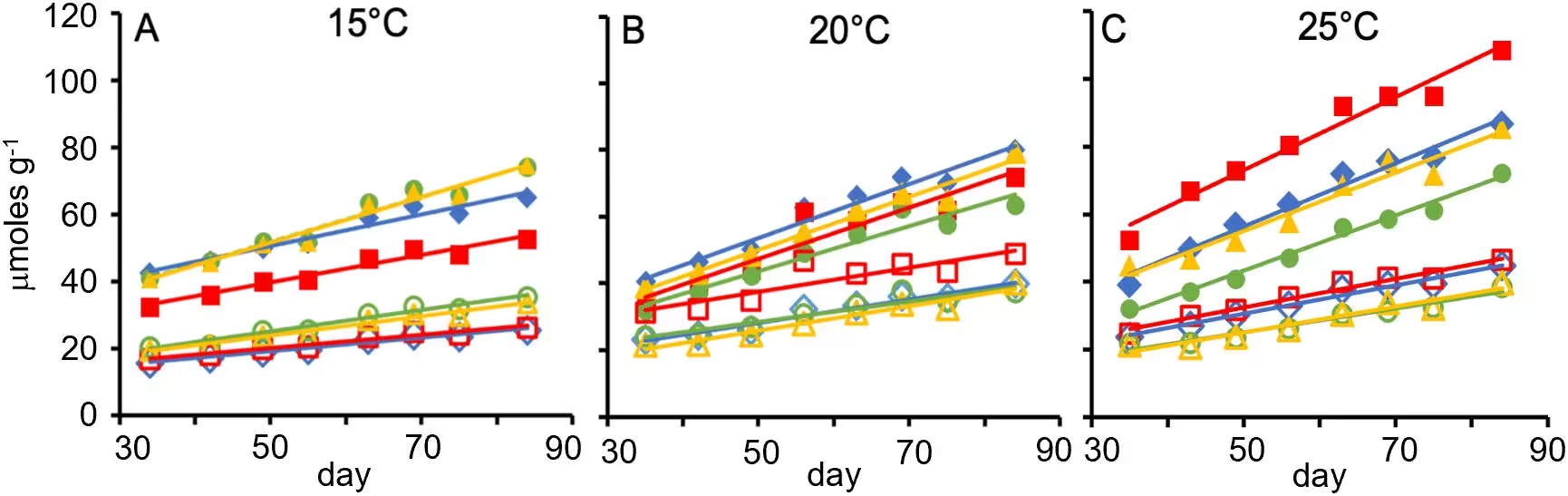
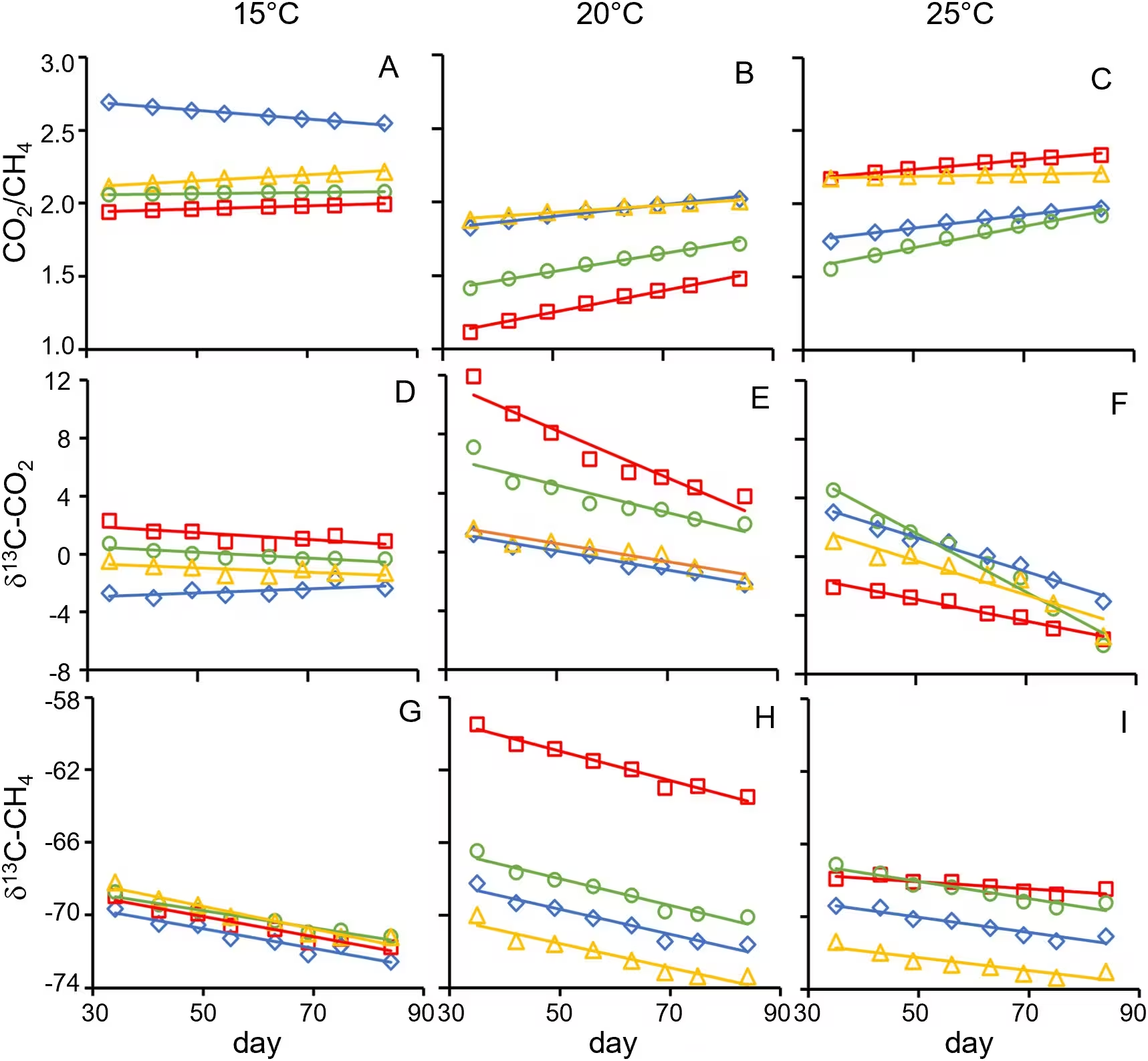
The experiments demonstrated that carbon dioxide and methane production rates increased significantly with every five-degree rise in temperature. Carbon dioxide production outpaced methane formation across all thermal treatments, yielding carbon dioxide to methane ratios greater than one. Interestingly, while carbon dioxide and methane concentrations grew steadily, the stable carbon isotope values for both gases unexpectedly dropped in parallel over time at twenty and twenty-five degrees Celsius. Methane and carbon dioxide both became increasingly depleted in carbon thirteen during the warmer incubations, displaying drops of up to six point sixty-eight per mil in carbon dioxide and three point fifty-eight per mil in methane.
Why Do Carbon Isotopes Shift Without Pathway Changes?
In many previous ecological investigations, scientists assumed that finding more carbon thirteen depleted methane meant that microbes had shifted toward hydrogenotrophic methanogenesis, a pathway where carbon dioxide is reduced to methane with large isotope fractionation. The new findings challenge this single-isotope assumption by demonstrating that the isotopic signature of methane is tightly coupled to the changing pool of carbon dioxide substrate. Non-methanogenic decomposition of organic matter continuously infuses the porewater with isotopically light carbon dioxide that carries a signature close to negative twenty-five per mil, reflecting the bulk organic matter.
When this newly generated carbon dioxide accumulates faster than methanogenesis can consume it, the entire carbon dioxide pool becomes increasingly depleted in heavy carbon isotopes. Because microbes use this carbon dioxide pool to manufacture methane, the resulting methane inherits those increasingly negative isotopic values. The authors implemented a custom isotope mass-balance model to test whether substrate pool dynamics alone could explain the observed trends. The model successfully reproduced the week-to-week isotopic shifts in both gases across all temperature treatments without requiring any major alterations in the underlying microbial pathways.
What Are the Broader Implications for Climate Science?
These findings suggest that environmental researchers must exercise caution when using carbon isotope ratios from field porewaters or incubation headspace gases to infer microbial pathway shifts. Small shifts in the ratio of carbon dioxide to methane production can substantially alter methane isotope values independently of any changes in microbial enzyme activity. Consequently, studies that rely exclusively on methane isotope measurements without accounting for carbon dioxide pool dynamics and total mineralization ratios risk misinterpreting how thawing permafrost peatlands process carbon under a warming climate.
The research team notes that while minor deviations late in the twenty-five degree Celsius incubations pointed toward a possible secondary contribution from acetoclastic methanogenesis, substrate pool dynamics remained the dominant control on isotope variability. The authors emphasize that achieving a robust understanding of wetland carbon cycling requires measuring multiple isotopic compounds simultaneously, including carbon dioxide isotopes, methane isotopes, hydrogen isotopes, and accurate gas production ratios.
The research was published in PLOS One on November 24, 2026.
This article has been fact checked for accuracy, with information verified against reputable sources. Learn more about us and our editorial process.
Last reviewed on .
Article history
- Latest version
Reference(s)
- Holmes, M. Elizabeth., et al. “Influence of CO2/CH4 production ratios on the isotope signature of methane.” PLOS One, vol. 21, no. 11, November 24, 2026, pp. e0363149 Public Library of Science (PLoS), doi: 10.1371/journal.pone.0363149. <https://doi.org/10.1371/journal.pone.0363149>.
Cite this page:
- Posted by Divya Iyer