How Evaporating Water Droplets Modify Turbulent Diffusion in Wet Atmospheres
New theoretical calculations reveal that rapid phase transitions suppress droplet diffusion in clouds while boosting mutual cross-effects between water vapor and liquid mass.
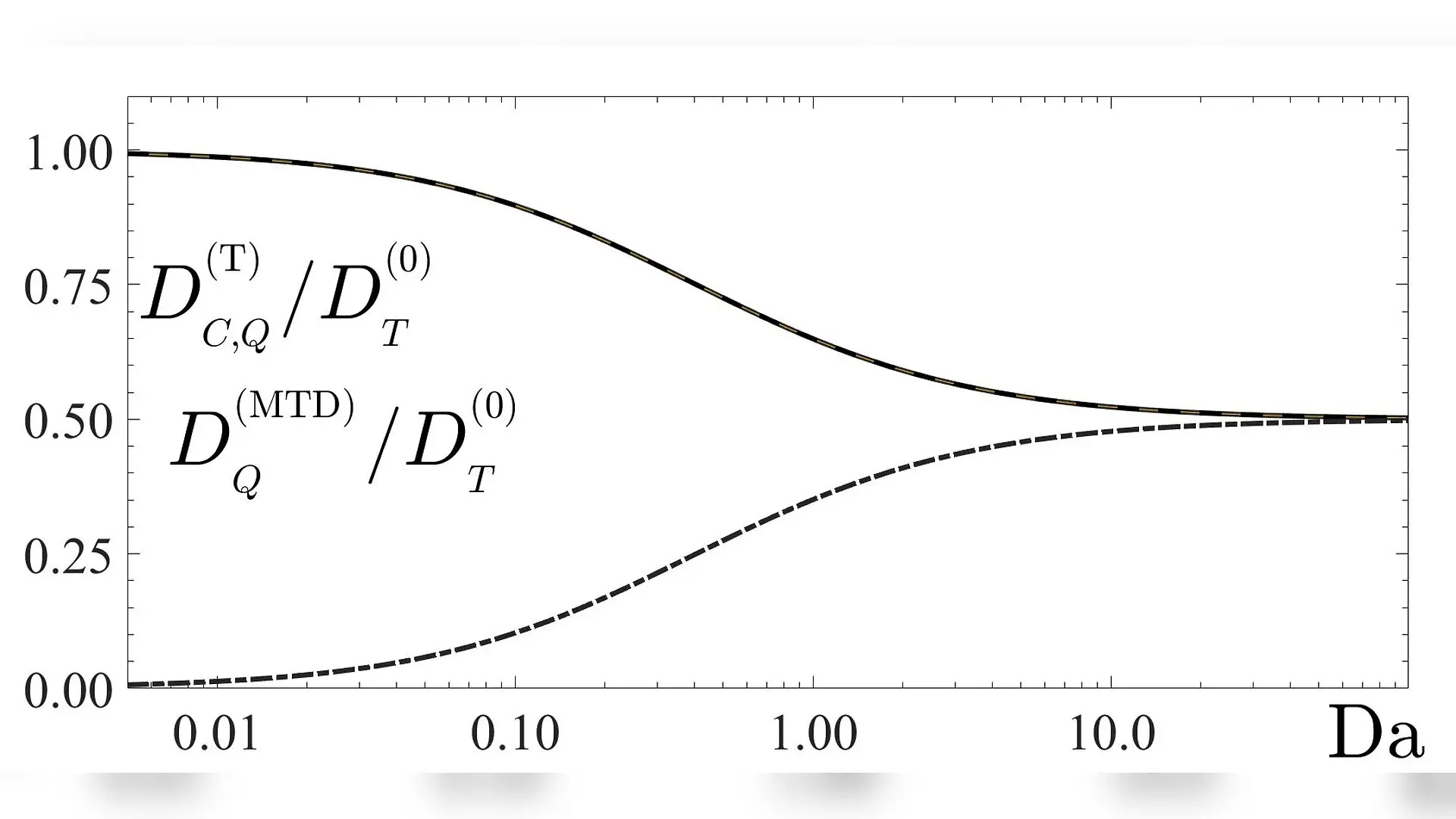
Water droplets evaporating in turbulent atmospheric air experience a rapid drop in turbulent diffusion because phase transitions alter how particles disperse across winds. Researchers have developed new mathematical expressions showing that when liquid water turns into gas faster than the surrounding air currents mix, droplet spreading becomes heavily suppressed. This theoretical work clarifies long-standing questions about how humidity and microscopic water phase changes alter weather patterns and cloud dynamics.
The study, published in the arXiv preprint server by physicists I. Rogachevskii from Ben-Gurion University of the Negev and N. Kleeorin from IZMIRAN, investigates how moisture transport differs fundamentally from standard chemical reactions in turbulent air. While previous atmospheric models heavily focused on dry air or simple passive tracers, real clouds contain billions of microscopic water droplets constantly shifting between liquid and vapor states. To capture these effects, the authors utilized a multi-scale analytical framework, separating fast small-scale turbulent fluctuations from large-scale meteorological movements.
How Does the Turbulent Damköhler Number Control Droplet Spreading?
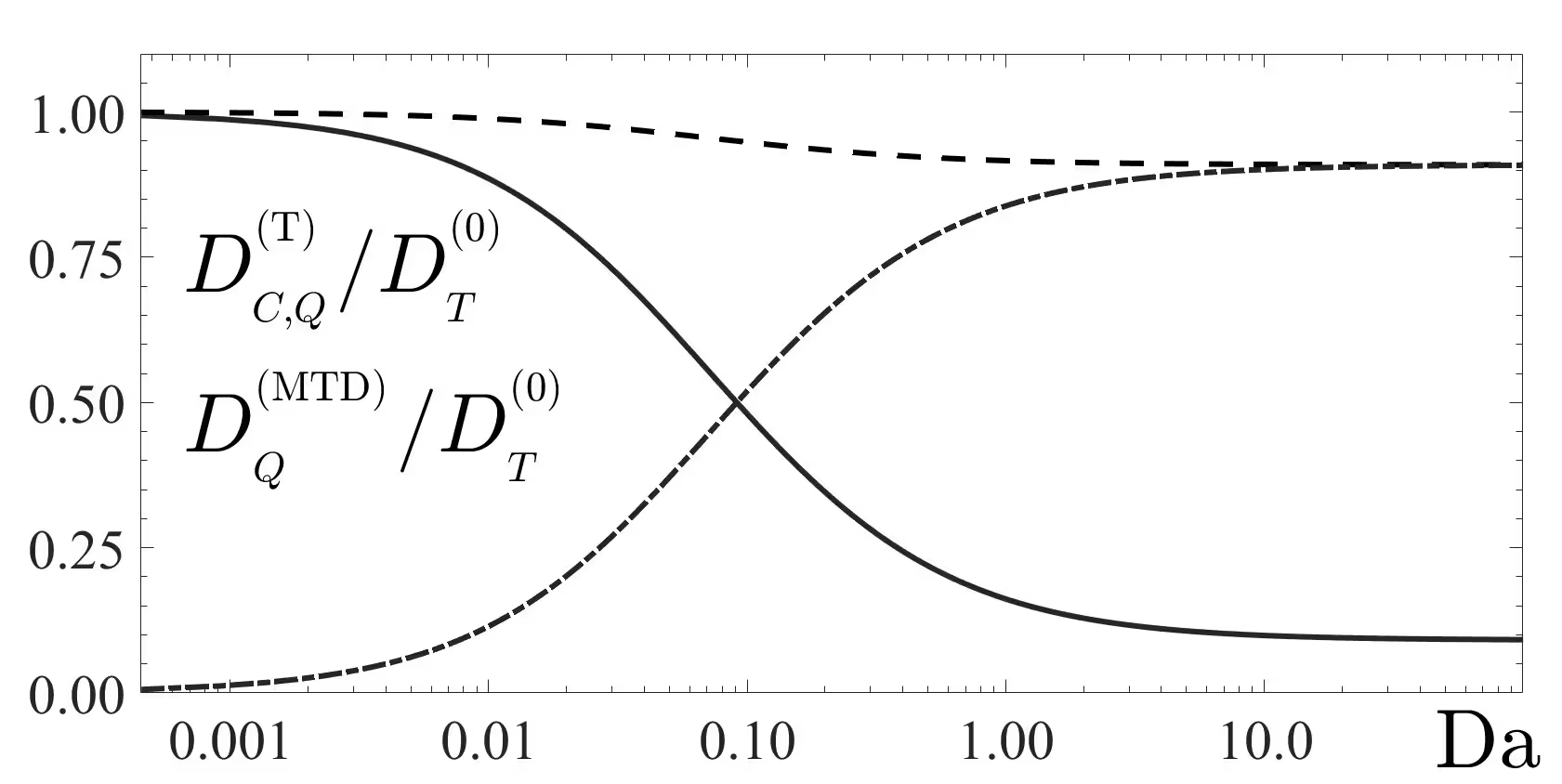
At the heart of the new calculations is the turbulent Damköhler number, a dimensionless ratio comparing the characteristic time of large-scale turbulent eddies against the rapid timescale of water vapor phase transitions. When this number increases, the coefficients governing the turbulent diffusion of both water droplets and water vapor sharply decline. The authors found that when droplet evaporation happens much faster than vapor condensation, the traditional turbulent mixing driven by wind shear simply cannot keep up, effectively locking the droplets into a restricted diffusion regime.
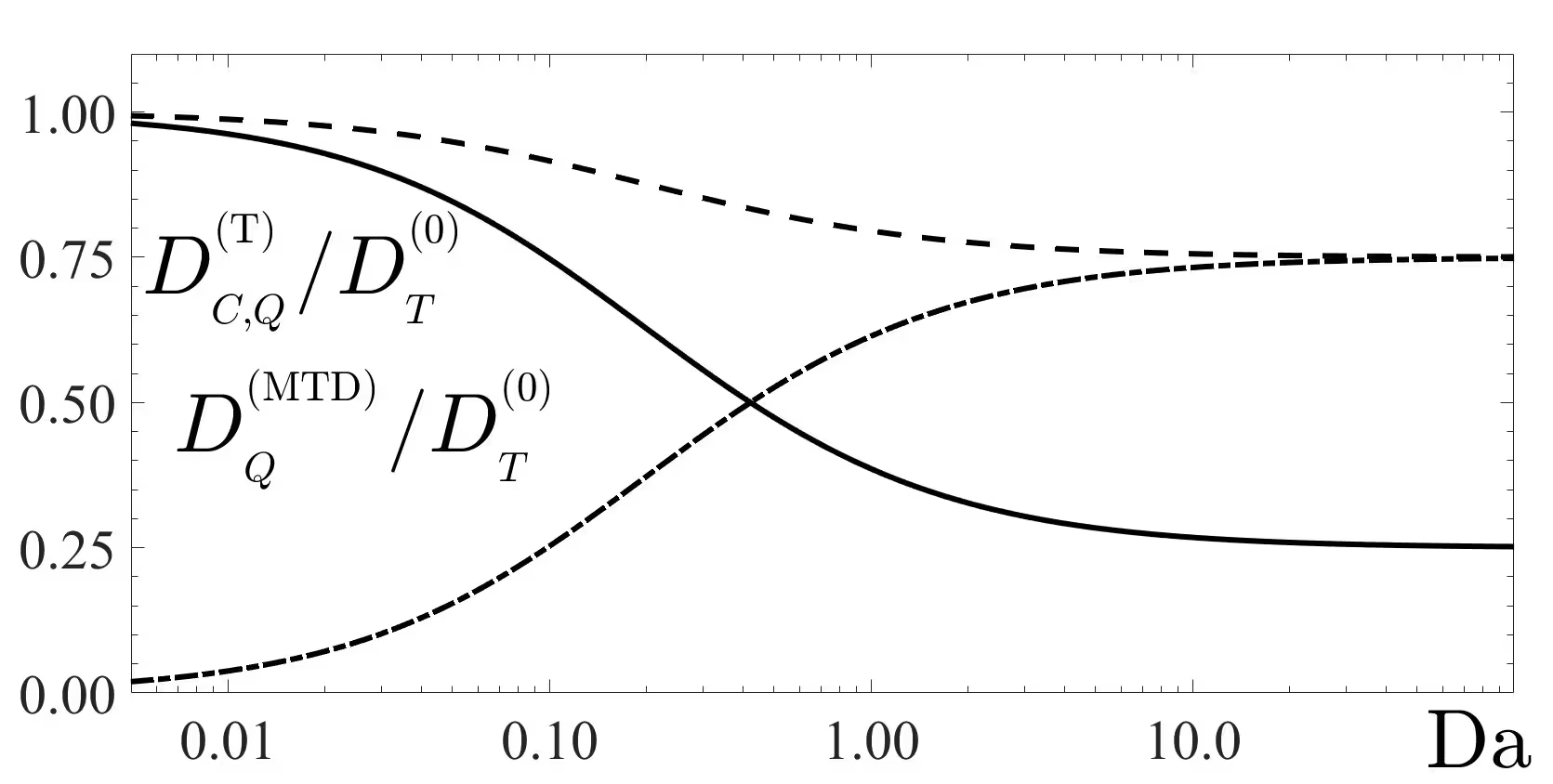
The mathematical model demonstrates that the standard turbulent diffusion coefficient for droplets is strongly reduced, becoming primarily dictated by the microphysical phase transition timescales rather than large-scale eddy turnover times. Conversely, mutual turbulent diffusion coefficients, which describe cross-effects where water vapor gradients drive droplet fluxes and vice-versa, actually increase with higher Damköhler numbers. This coupling reveals that moisture transport in wet atmospheres operates through intertwined pathways that standard dry turbulence models miss entirely.
Why Do Temperature and Droplet Size Alter Diffusion Rates?
Atmospheric conditions such as ambient temperature and average droplet radius play a vital role in modulating these transport coefficients. In typical cloud formations where droplet number densities range from fifty to one thousand per cubic centimetre, temperature increases cause the molecular diffusion coefficient of water vapor and surface vapor density to rise. This thermal boost drives up the turbulent Damköhler number, which in turn suppresses droplet and vapor diffusion even further.
However, the physical size of the droplets acts in the opposite direction. When effective droplet diameters increase from ten micrometers upward, the resulting Damköhler number decreases, allowing larger droplets to diffuse more freely through the air. The authors calculate that typical atmospheric parameters yield Damköhler numbers spanning from ten to one thousand, confirming that phase transition timescales frequently dominate over standard turbulent mixing times in real meteorological scenarios.
What Limitations Exist in the Current Theoretical Framework?
While the study provides robust analytical predictions supported by spectral tau approximations, the authors treat the system under specific idealised conditions. The research assumes a one-way coupling regime, meaning that droplet mass concentrations remain small enough not to alter the bulk density or momentum of the surrounding air currents. Furthermore, these equations model isotropic and homogeneous background turbulence, leaving fully inhomogeneous atmospheric boundary layers for future numerical validation.
These theoretical relationships offer essential building blocks for upgrading atmospheric turbulence closure models, such as the energy and flux budget frameworks used in meteorology. By properly accounting for how humidity and evaporation restrict turbulent transport, researchers can improve weather forecasting accuracy and better simulate how clouds evolve under changing thermal conditions.
The study was posted to the arXiv preprint server on November 24, 2026.
This article has been fact checked for accuracy, with information verified against reputable sources. Learn more about us and our editorial process.
Last reviewed on .
Article history
- Latest version
Reference(s)
- Rogachevskii, I.. “Effect of humidity and phase transition on turbulent diffusion of droplets and water vapour in atmospheric turbulent flows.” arXiv.org <http://arxiv.org/abs/2611.32703v1>.
Cite this page:
- Posted by Kamran Akhtar