Nearly Half of Pregnant Women in Nigeria Miss Basic Prenatal Care Visits
A national study reveals striking regional divides and socioeconomic barriers restricting adequate maternal health access.
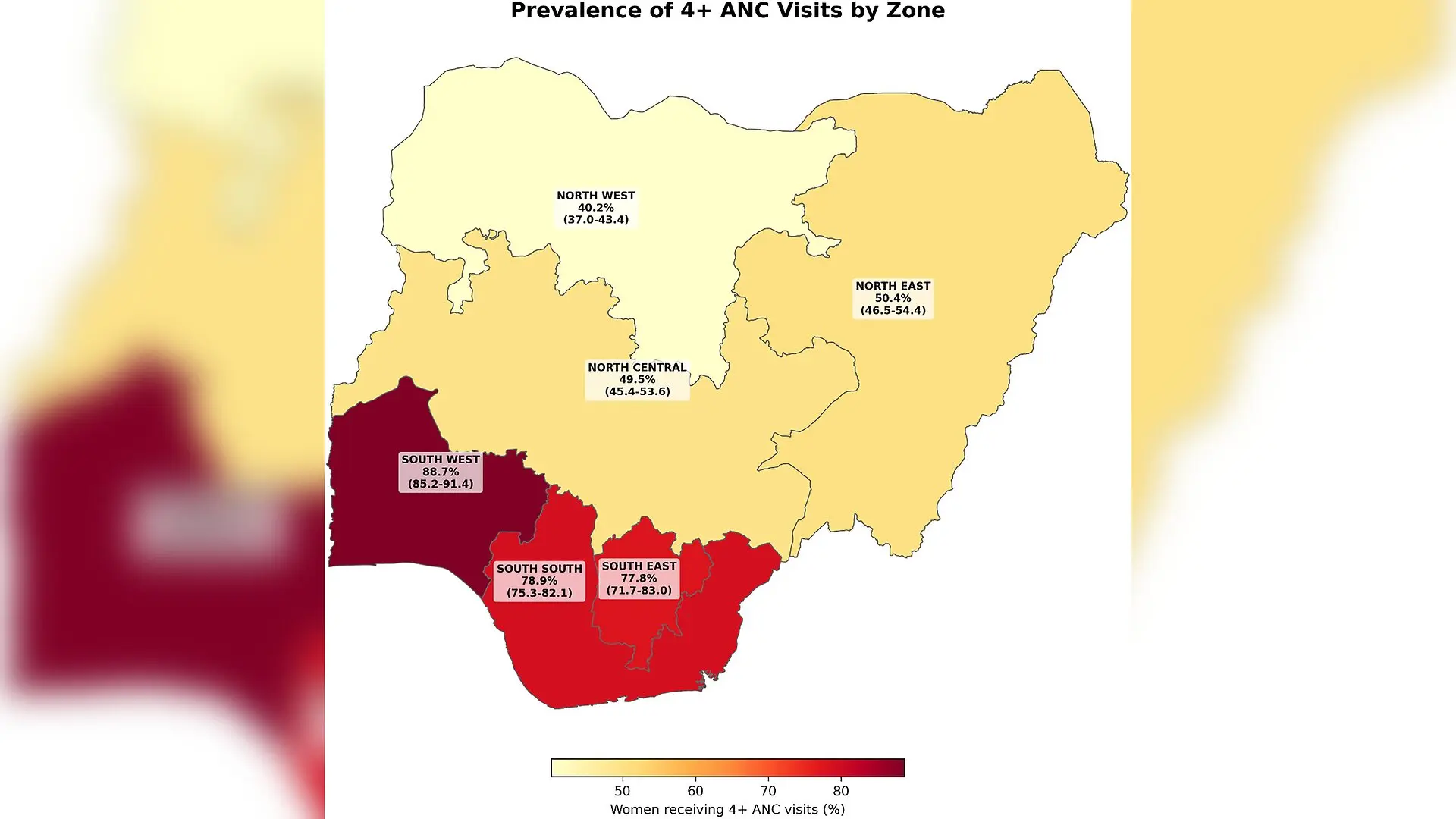
A sweeping new analysis of maternal healthcare trends reveals that nearly half of all pregnant women in Nigeria fail to reach the historical benchmark of four prenatal doctor visits. The research, published in PLOS One, shows that only 52.9 percent of women received at least four antenatal check-ups during their most recent pregnancy, highlighting deep divides in health access across the country.
What Does the 2024 National Survey Reveal About Prenatal Care?
To understand the current state of maternal health, Abdirasak Sharif Ali and colleagues examined data from the 2024 Nigeria Demographic and Health Survey. The research team focused on 12,797 married or cohabiting women who had a live birth in the three years preceding the study. While the World Health Organization updated its guidelines in 2016 to recommend a minimum of eight health contacts during pregnancy, the researchers used the traditional threshold of four visits to maintain historical comparability across national monitoring systems.
The findings demonstrate a near-even split nationwide. Exactly 52.9 percent of women achieved the four-visit mark, while 47.1 percent fell short. Behind this national average lies a complex web of individual and regional obstacles that shape whether expectant mothers receive essential screenings, nutritional support, and immunizations.
Why Are There Such Sharp Regional Disparities Across Nigeria?
Geographic location emerged as one of the strongest factors influencing prenatal care utilization. The study uncovered a striking North-South divide in healthcare access, with southern zones reporting significantly higher attendance rates than northern regions. The South West zone led the nation with 88.7 percent of women meeting the four-visit threshold, followed closely by the South South at 78.9 percent and the South East at 77.8 percent.
In contrast, the North West recorded the lowest national coverage at 40.2 percent. The North Central and North East zones hovered near 49.5 percent and 50.4 percent, respectively. After adjusting for individual wealth and education, rural residents still faced a 20 percent reduction in the odds of receiving adequate care compared to urban dwellers, pointing to persistent infrastructure hurdles.
How Do Education and Wealth Shape Pregnancy Health Outcomes?
Individual socioeconomic factors created even wider gaps in care. Women with higher education enjoyed nearly four times the odds of meeting the four-visit benchmark compared to those with no formal education, with adjusted odds ratios reaching 3.93. Household wealth played an equally powerful role, with women in the wealthiest quintile showing more than double the likelihood of achieving adequate visits compared to their poorest peers.
The analysis also highlighted several demographic patterns. Older mothers aged thirty to thirty-four showed higher odds of adequate care compared to teenagers aged fifteen to nineteen. Conversely, higher birth orders were linked to declining care frequency, where women having their sixth child or more were significantly less likely to complete four visits than first-time mothers.
What Are the Limitations and Next Steps for Maternal Healthcare?
The authors noted several important limitations in their work, including its cross-sectional design, which prevents drawing direct cause-and-effect conclusions. Furthermore, tracking the sheer number of visits does not measure the actual clinical quality or timing of the care received. The team emphasizes that future public health efforts must look beyond basic visit counts to evaluate adherence to the modern eight-contact WHO model, ensuring that all mothers receive comprehensive support regardless of their geographic location or economic status.
The research was published in PLOS One on November 24, 2026.
This article has been fact checked for accuracy, with information verified against reputable sources. Learn more about us and our editorial process.
Last reviewed on .
Article history
- Latest version
Reference(s)
- Ali, Abdirasak Sharif., et al. “Geopolitical zone disparities and correlates of minimum adequate antenatal care utilization in Nigeria: A multilevel analysis of the 2024 NDHS.” PLOS One, vol. 21, no. 11, November 24, 2026, pp. e0362846 Public Library of Science (PLoS), doi: 10.1371/journal.pone.0362846. <https://doi.org/10.1371/journal.pone.0362846>.
Cite this page:
- Posted by Michael Ellison