New Container Design Solves Major Bottleneck for Inland Waterway Shipping
Experts design an automated mobile hub to bring clean cargo shipping into urban centers and smaller waterways.
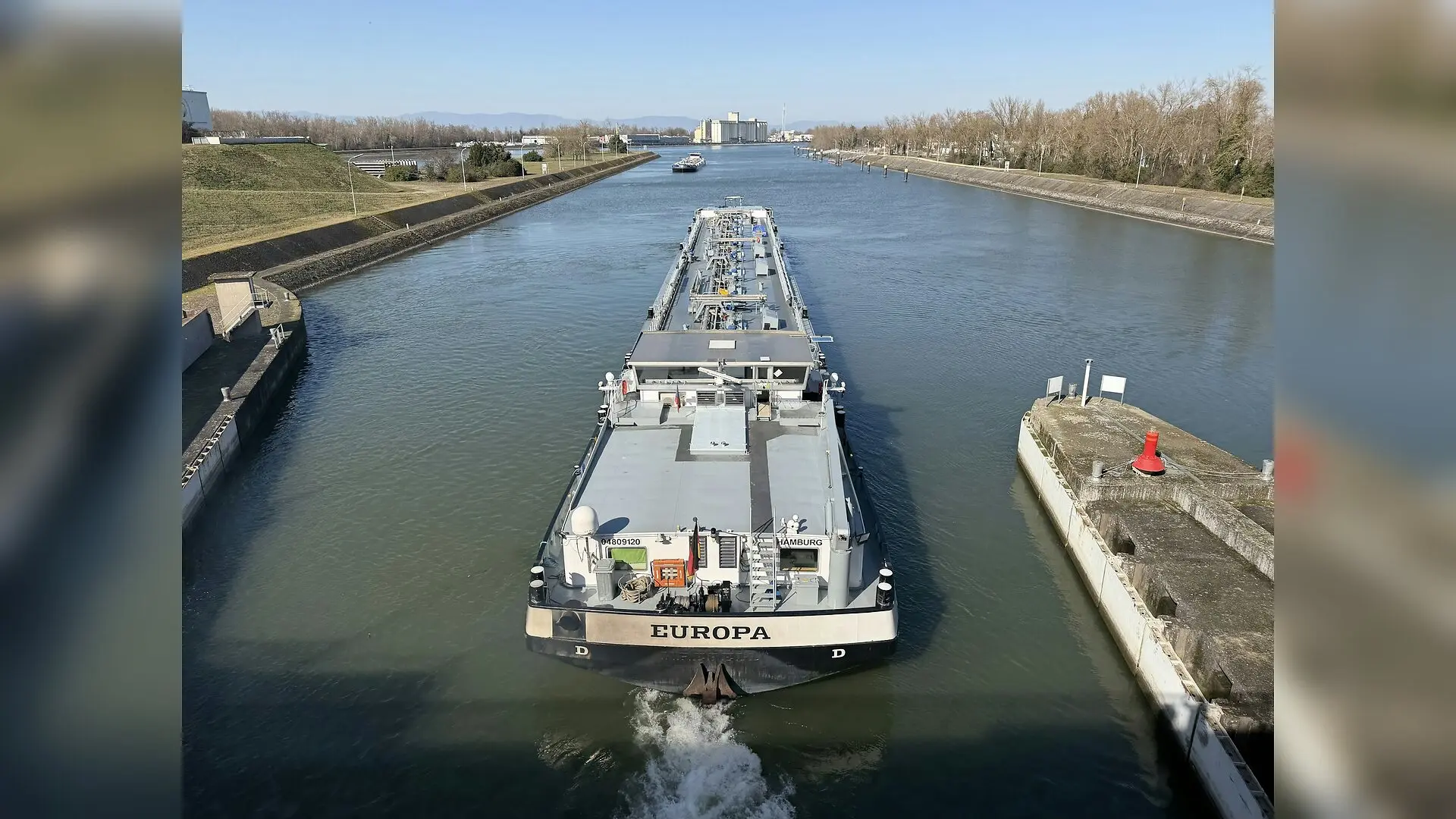
Inland waterways and canals across Europe could soon see a surge in flexible cargo traffic thanks to a newly designed Mobile Distribution Centre built to tackle urban congestion and freight bottlenecks. Developed by a multidisciplinary team of 16 experts through a series of workshops and surveys, the system aims to modernize inland waterway transport by connecting small vessels with emission-free last-mile delivery vehicles. The research team detailed their findings and the design process in a study published in Re-Generation in Transport, outlining a pathway to tap into the growing market for partial-load shipping.
Why Traditional Cargo Shipping Struggles to Reach City Centers
While large barges excel at hauling massive bulk volumes over long distances economically, the broader freight market is shifting toward breakbulk and containers. Traditional inland waterway transport in Western and Central Europe has historically focused on single-customer bulk cargo, making it difficult to integrate with modern urban supply chains where destinations lie far from canals. Road transport currently handles the vast majority of local distribution, but trucks suffer from congested infrastructure, chronic delays, low load factors, and high emissions.
Cargo consolidation is essential to improve the efficiency of both trucks and ships, but traditional consolidation models often fail due to strict time constraints and infrastructure limitations. Standard logistics models divide shipments into full loads for single customers and partial loads that require complex sorting and dedicated hub infrastructure. To compete effectively with road transport, the inland shipping sector needs a reliable way to handle less-than-vessel-load shipments where multiple clients share container space without requiring a human operator on site.
How the Mobile Distribution Centre Works in Practice
To bridge this gap, the expert group designed the Mobile Distribution Centre around a standard pallet-wide 20-foot or 40-foot ISO container that can be easily transported by inland vessels and placed at decentralized locations near waterways. The container features multiple roller shutter doors on its sides to allow flexible access even in tight spaces. Inside, the storage space is subdivided into individual secure slots using rolling containers or tire-mounted platforms, permitting users to load and retrieve cargo independently.
User management relies on an exterior graphical touchscreen interface and automated locks that open only the specific roller shutter door assigned to a customer. Users can interact directly with the unit or use their mobile phones to access their designated cargo slots. To maintain continuous operation, the system integrates a battery unit alongside a standard power grid connection, with future potential for solar panel integration.
What the Global Review of Urban Hubs Revealed
Before finalizing the design, the researchers reviewed 69 existing data points from various urban consolidation initiatives and mobile depot projects worldwide. Out of these reviewed initiatives, 34 used buildings as their primary shape, while ten employed containers and six relied directly on vessels. Last-mile distribution in these projects predominantly utilized electric delivery vehicles in 46 instances and cargo bikes in 29 instances, whereas heavy goods vehicles were used twelve times.
The review highlighted a major industry gap, as only ten initiatives integrated inland waterway transport into their logistics chains, and none featured a decentralized, automated container solution specifically tailored for multi-customer inland vessel networks. The new Mobile Distribution Centre addresses this void by allowing the temporal decoupling of supply and demand, mirroring parcel locker services familiar to consumers in urban retail environments.
Next Steps for Lab Testing and Full-Scale Pilot Tests
The research team plans to build a scaled 10-foot ISO container model and a semi-virtual demonstrator in a research laboratory to test the system under controlled conditions. The design will also be integrated into broader logistics simulations for intermodal transport services to evaluate its economic viability and operational efficiency. Further steps on the development agenda include constructing a full-scale prototype and launching pilot implementations in real-world urban and regional supply networks.
The research was published in Re-Generation in Transport on November 20, 2026.
This article has been fact checked for accuracy, with information verified against reputable sources. Learn more about us and our editorial process.
Last reviewed on .
Article history
- Latest version
Reference(s)
- Alias, Cyril., et al. “Designing a Mobile Distribution Centre to Facilitate Intermodal Urban and Decentralised Supply Concepts Using Inland Waterway Transport.” Lecture Notes in Mobility, November 20, 2026, pp. 499-506. Springer Nature Switzerland, doi: 10.1007/978-3-032-36095-3_62. <https://doi.org/10.1007/978-3-032-36095-3_62>.
Cite this page:
- Posted by Divya Iyer