NASA Curiosity Rover Discovers Mysterious Tiny Holes on Mars That Defy Explanation
NASA’s Curiosity rover has discovered a mysterious object on Mount Sharp that defies explanation after 14 years of exploration on the Martian surface.
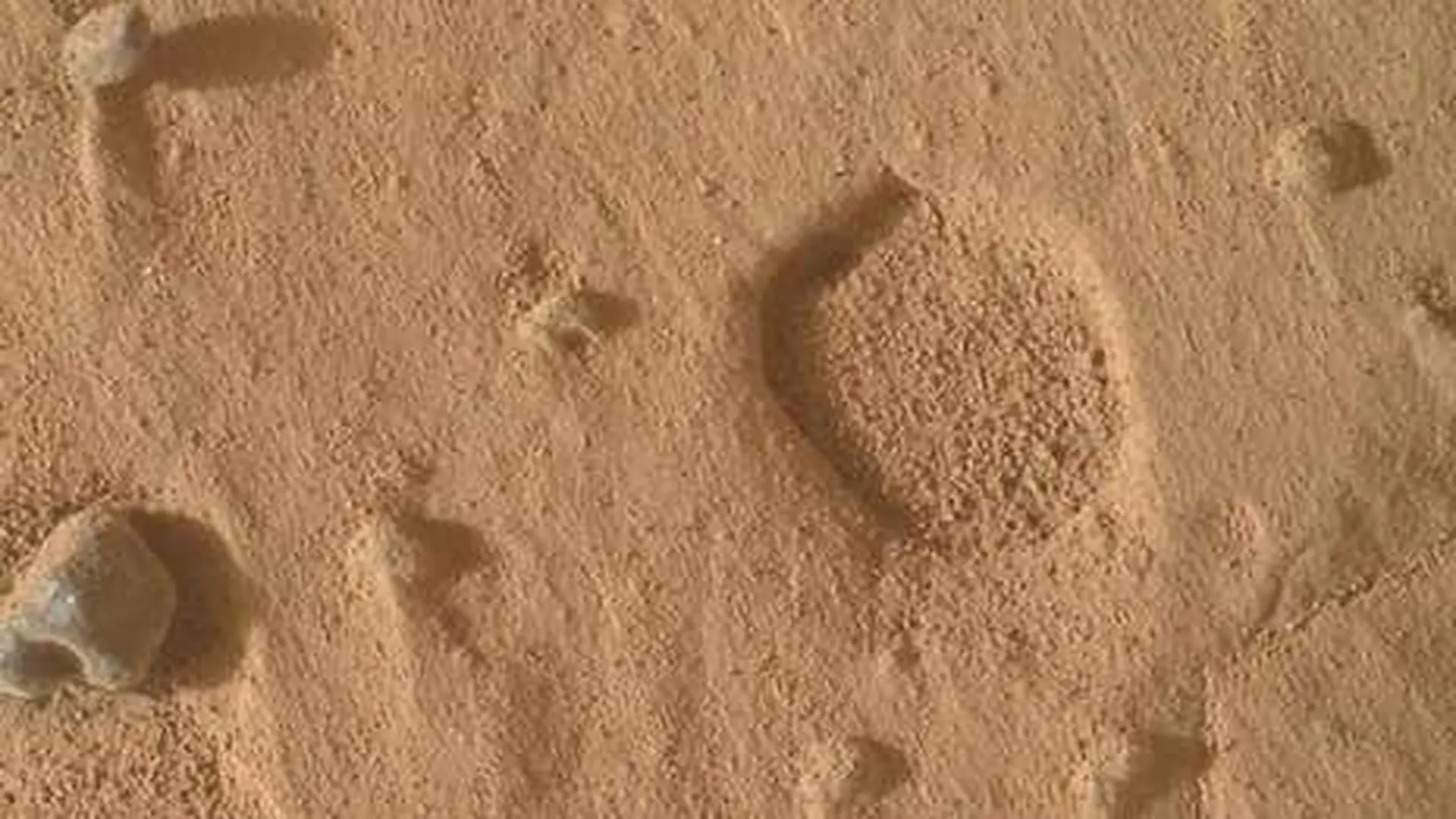
NASA’s Curiosity rover has uncovered a geological enigma on the surface of Mars, documenting a series of small, shallow depressions that defy standard explanations. Detected in August 2026, these peculiar surface features have puzzled researchers, as they lack the telltale signs of typical Martian erosion patterns observed throughout the mission’s 14-year lifespan.
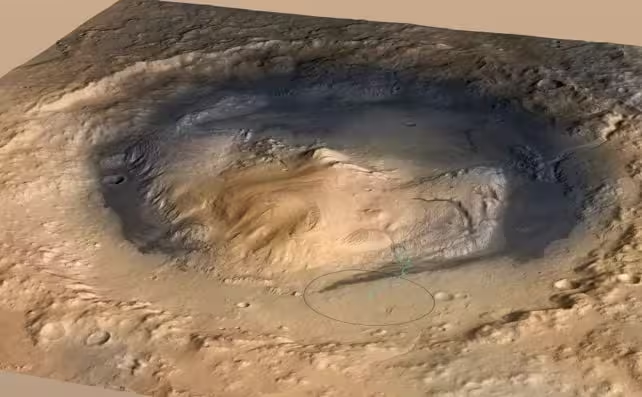
The discovery was made within the Valle Grande, a sprawling valley etched into the sulfate-rich strata of Mount Sharp, the massive central peak rising from the floor of Gale Crater. As Curiosity navigates this complex terrain, the shifting composition of the bedrock continues to offer scientists a high-resolution view of the planet’s ancient environmental history.
Anomalous Markings Challenge Geological Models
While the Martian surface is scarred by countless craters and weathered pits, the current discovery stands out due to the unique morphology of the indentations. One specimen, captured by the rover on August 19, 2026, measures approximately 1 centimeter (0.4 inches) in diameter. Unlike common pockmarks often left behind when mineral nodules or pebbles weather out of softer surrounding rock, these new features appear without any visible debris or remnant material nearby.

To investigate further, the mission team deployed the Mars Hand Lens Imager (MAHLI) to secure high-resolution close-ups. Simultaneously, the rover’s Mastcam system generated stereo imagery, allowing engineers to construct three-dimensional models of the sites. These data points are essential for determining the precise depth and geometry of the features, which will be critical in evaluating potential formation mechanisms.
Climbing the Layers of Martian History
Curiosity’s transit through the sulfate-rich layers follows an extensive study of the nearby boxwork formations, a web-like network of mineral ridges that NASA researchers attribute to ancient groundwater activity. Having surpassed a vertical climb of 1,000 meters (3,280 feet) up the 5.5-kilometer-tall (3.4-mile) Mount Sharp, the rover is now sampling rock layers that serve as a chronological archive of Mars’ transition from a wet, potentially habitable world to the arid environment seen today.
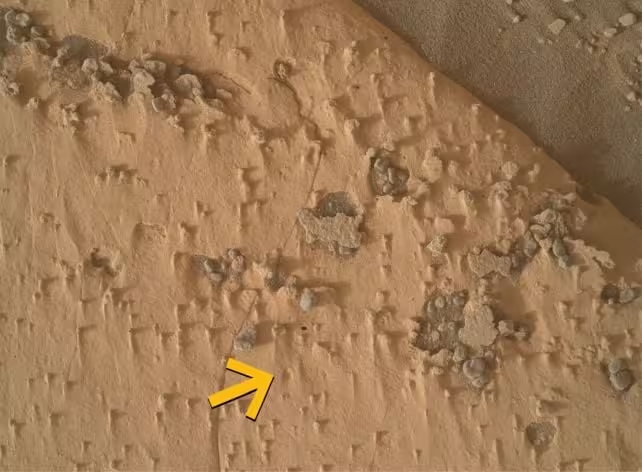
Beyond the mysterious pits, the Curiosity team is analyzing abrupt shifts in bedrock texture and erosion resistance in the surrounding gray-toned layers. Chemical analyses are currently underway to understand why these neighboring formations weather in such divergent ways.
While various hypotheses are being evaluated, from exotic erosion processes to unique mineralogical properties of the bedrock, investigators have yet to confirm a definitive cause. For now, the images remain under rigorous examination as the team continues to piece together this latest Martian puzzle.
This article has been fact checked for accuracy, with information verified against reputable sources. Learn more about us and our editorial process.
Last reviewed on .
Article history
- Latest version
Reference(s)
- “Sol 3397: Mars Hand Lens Imager (MAHLI) – NASA Mars Exploration.” NASA Mars Exploration <https://mars.nasa.gov/raw_images/1029787/>.
- “Sol 4988: Mars Hand Lens Imager (MAHLI) – NASA Mars Exploration.” NASA Mars Exploration <https://mars.nasa.gov/raw_images/1627698/?site=msl>.
Cite this page:
- Posted by David Anderson