New Review Reveals Surprising Vitamin D Links in Women With Uterine Fibroids
Tissue studies show reduced receptor expression inside growths, but researchers urge caution over causal claims.

New research reveals that women with uterine fibroids, which are the most common noncancerous growths of the female reproductive tract, frequently display lower circulating levels of vitamin D than healthy controls.
Fibroids affect a substantial proportion of women during their reproductive years, causing heavy bleeding, pelvic pain, and fertility challenges. Despite their high prevalence, the exact triggers behind these growths remain complex and incompletely defined. Recent investigations have increasingly pointed toward an endocrine link involving the vitamin D-vitamin D receptor axis. The research was published in PLOS One.
What Does the Scoping Review Show About Vitamin D and Fibroid Prevalence?
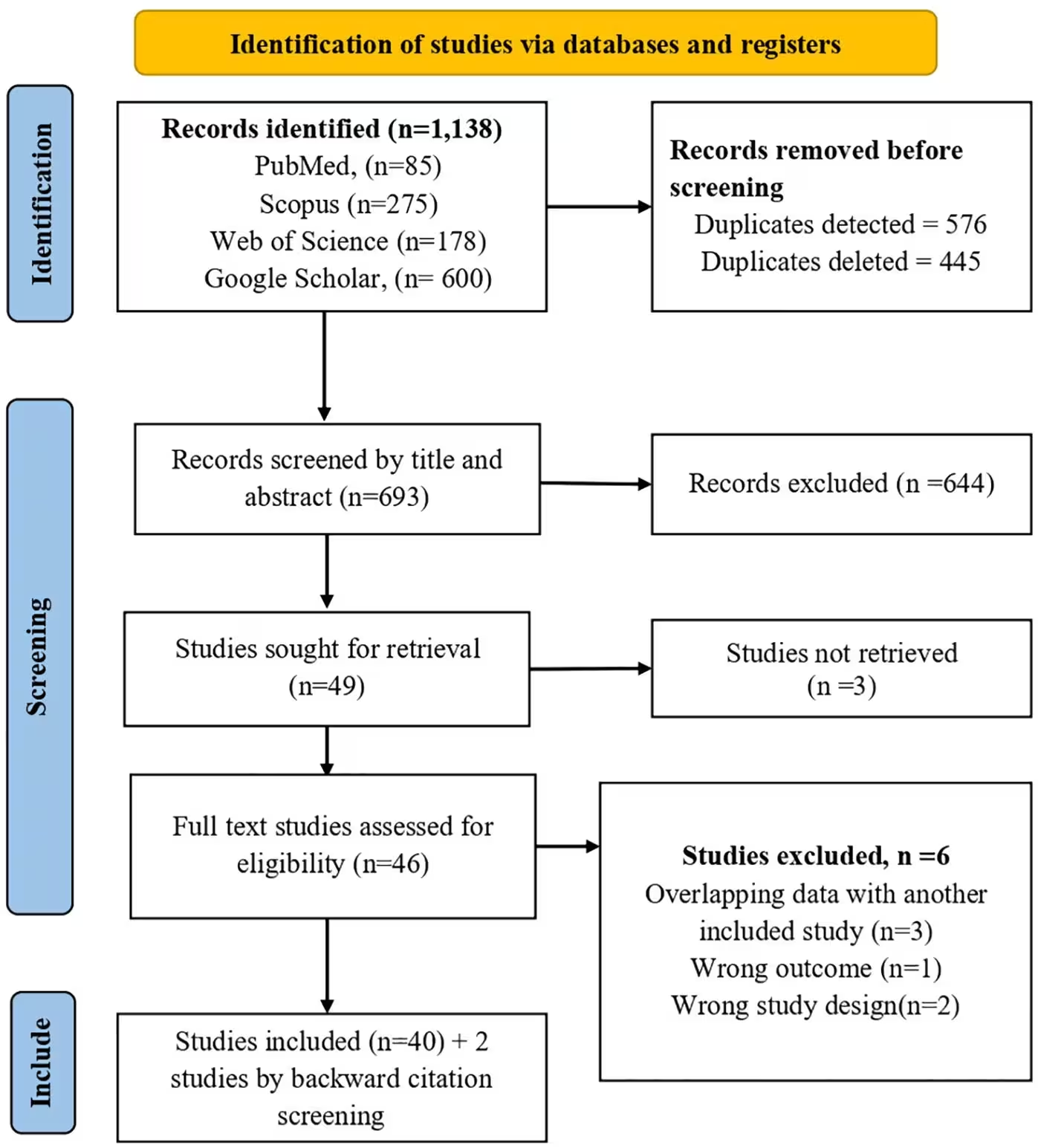
The investigation mapped clinical, molecular, and genetic findings from 42 separate studies following standardized scoping review guidelines. Among the clinical studies reviewed, the vast majority reported that women diagnosed with fibroids had lower blood concentrations of 25-hydroxyvitamin D compared to women without growths. Furthermore, several papers noted an inverse relationship between vitamin D status and the overall volume or total count of fibroid lesions.
However, the strength of these epidemiological links varies considerably because many observational investigations failed to adjust for major confounding variables. Only a fraction of the clinical studies accounted for body mass index, ethnicity, or seasonal variations in sunlight exposure. Because fat tissue can sequester vitamin D and higher body mass is independently linked to fibroid development, unadjusted analyses leave room for alternative interpretations.
How Does Tissue-Level Biology Respond to Vitamin D Signalling?
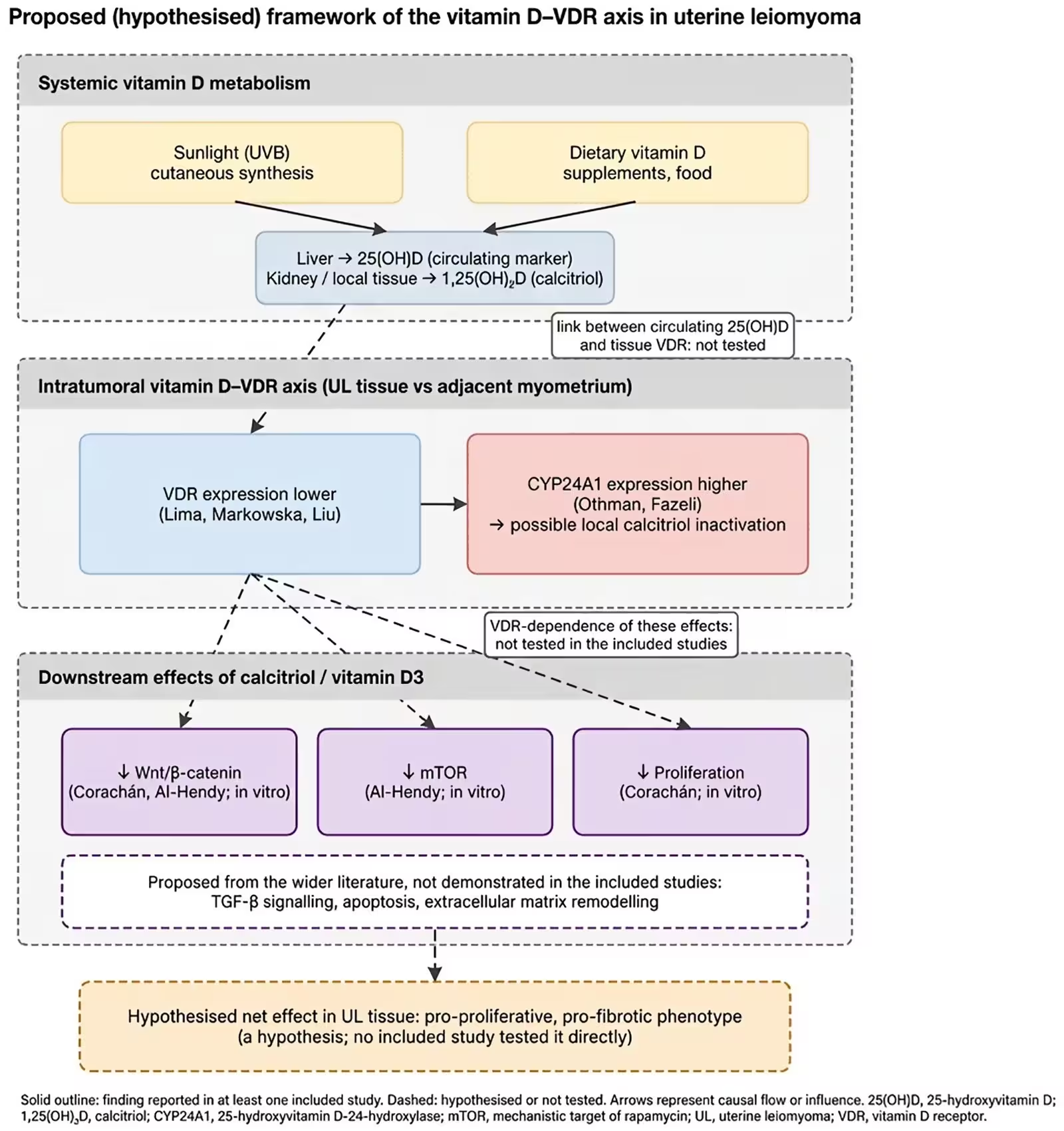
Laboratory experiments analyzed as part of the review indicate that vitamin D acts as more than just a passive blood marker. Human tissue analyses demonstrated that the vitamin D receptor is expressed at significantly lower levels inside fibroid tissue when compared to the adjacent normal myometrium, which is the muscular wall of the uterus. At the same time, the enzyme responsible for breaking down active vitamin D, known as CYP24A1, is upregulated inside the tumours.
This dual mechanism suggests that fibroid tissue might actively attenuate local vitamin D signalling. In cell culture experiments, the active form of vitamin D, called calcitriol, suppressed cell growth by inhibiting Wnt/β-catenin signalling pathways. These cellular findings support the concept that local hormone resistance could sustain the pro-fibrotic environment characteristic of uterine growths.
What Are the Outstanding Limits and Next Steps for Researchers?
A critical limitation identified in the published literature is the complete separation between systemic blood assays and tissue-level receptor measurements. None of the evaluated studies measured circulating vitamin D alongside tissue receptor expression and clinical outcomes in the same group of participants. Moreover, the cross-sectional design of most clinical reports leaves open the possibility of reverse causation, where heavy bleeding and chronic inflammation associated with fibroids might lower vitamin D levels rather than the deficiency causing the tumours.
The authors outline a clear roadmap for future investigations to resolve these questions. Upcoming studies will need to employ liquid chromatography tandem mass spectrometry for precise vitamin D quantification, integrate simultaneous tissue biopsies, and include diverse populations, particularly women of African descent who face a disproportionate burden of the condition.
The research was published in PLOS One on November 18, 2026.
This article has been fact checked for accuracy, with information verified against reputable sources. Learn more about us and our editorial process.
Last reviewed on .
Article history
- Latest version
Reference(s)
- Katamba, Godfrey., et al. “The vitamin D-vitamin D receptor axis in uterine leiomyomas: A scoping review of clinical, molecular, and genetic evidence.” PLOS One, vol. 21, no. 11, November 18, 2026, pp. e0363360 Public Library of Science (PLoS), doi: 10.1371/journal.pone.0363360. <https://doi.org/10.1371/journal.pone.0363360>.
Cite this page:
- Posted by Elizabeth Taylor