Scientists Discover Why Massive Landslides Are Suddenly Ripping Through Frozen Canadian Ground
Decades after wildfires, Canada’s northern forests are experiencing destabilized permafrost, triggering massive, landscape-altering landslides.
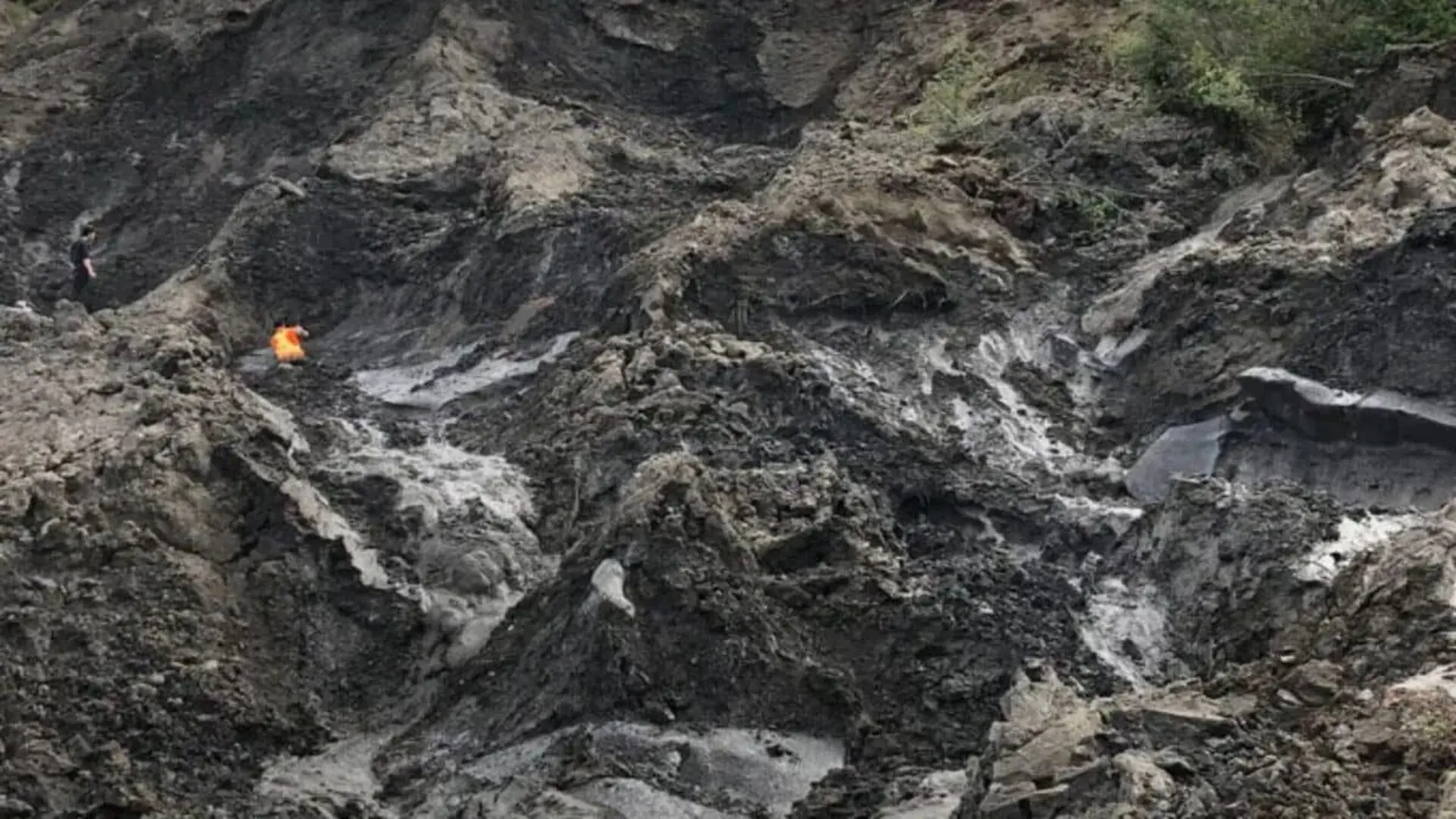
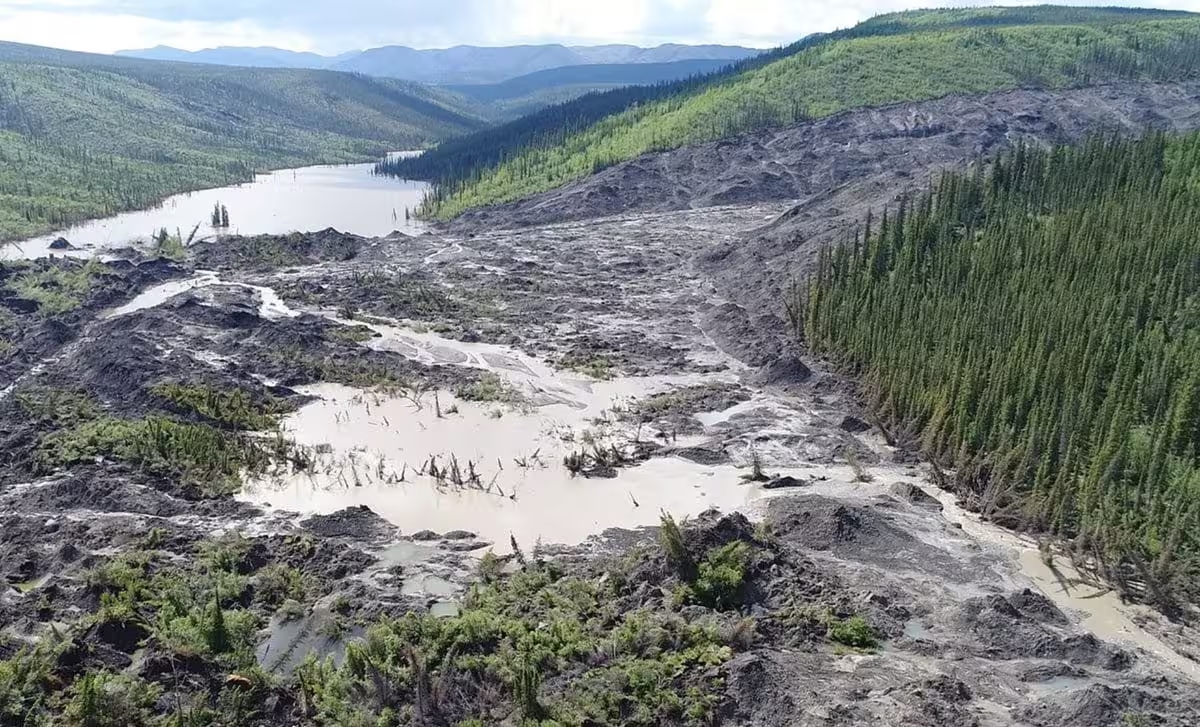
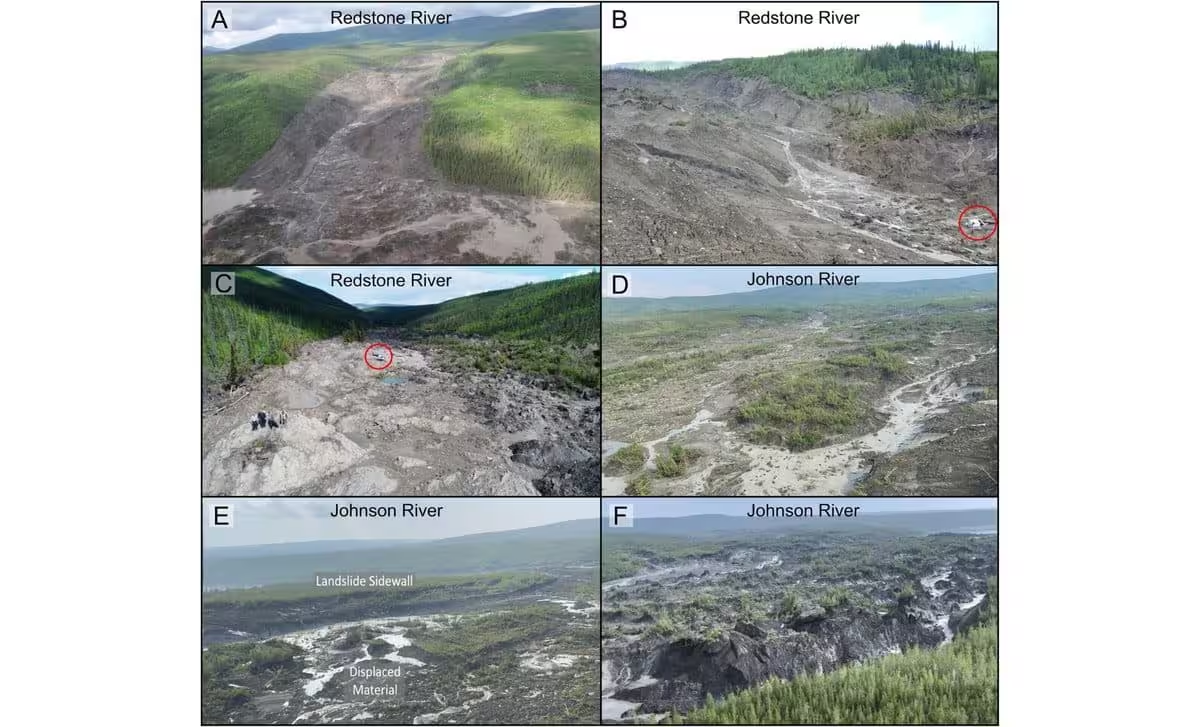
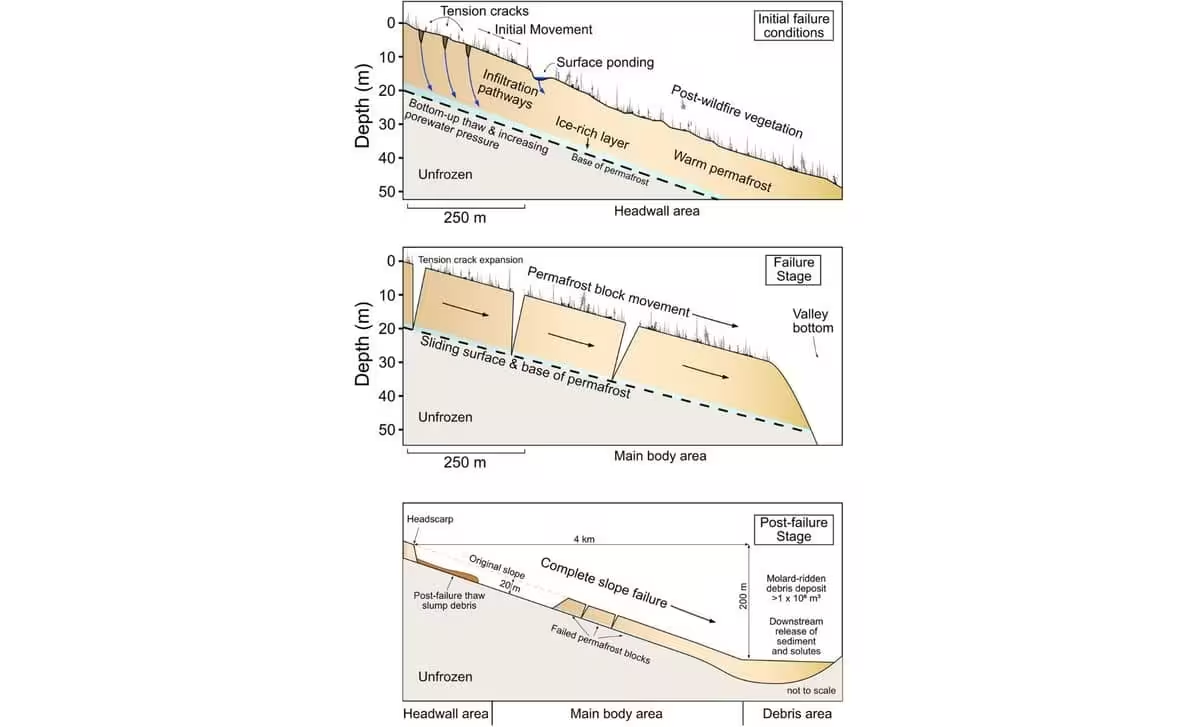
Massive landslides that carved through Canada’s Mackenzie Valley in 2017 and 2018 have revealed a disturbing new mechanism of geological failure. Unlike typical landslides, where thawing surface ice creates a sludge-like slurry, these events involved the displacement of intact, frozen earth blocks, some measuring millions of cubic meters. Geologists are now identifying this phenomenon as a “permafrost detachment slide,” a process driven by deep-seated thermal instability that can remain hidden until the landscape suddenly gives way.
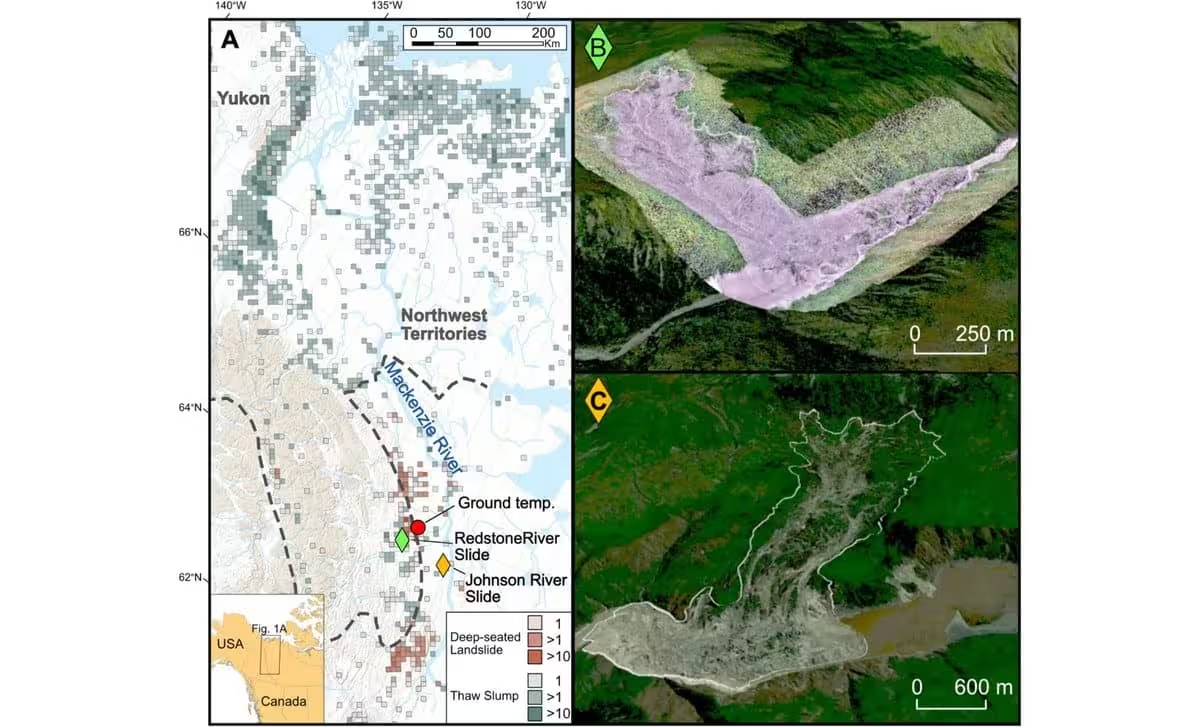
The Mackenzie River basin, which spans roughly 20 percent of Canada’s landmass, serves as the ancestral home of the Dene people, who appropriately named the waterway dehcho, or “big river.” For millennia, this region has been locked in a stable, frozen state. However, as global temperatures climb, the permafrost—defined as ground that stays frozen for at least two consecutive years—is losing its structural integrity. When researchers from the University of Alberta began investigating the aftermath of the massive 2017 and 2018 slides, which moved 4.5 million and 18 million cubic meters of earth respectively, they discovered the sliding surfaces were located roughly 20 meters below the surface.
Deep-Rooted Instability Linked to Historic Wildfires
The research, published in Geophysical Research Letters, suggests that the stability of northern slopes is being compromised by a “double-punch” of modern climate warming and the lingering legacy of past wildfires. As Joseph Young and his colleagues observed, intense summer heat and the cumulative impact of fires—even those that occurred decades ago—form tension cracks in the surface. These fissures allow moisture to penetrate deep into the soil, slowly weakening the base of the permafrost layers far below the surface.
Once this deep-seated weakening occurs, the upper layers of frozen ground lose their foundation and detach, sliding downhill as rigid blocks. The danger does not end with the initial collapse; the failure exposes massive amounts of ice-rich soil to the air, which then begins to thaw, creating secondary landslides and permanently altering the local topography.
Broader Consequences for Northern Infrastructure and Waterways
The implications of this thawing are widespread. In addition to triggering massive slope failures, the breakdown of frozen ground is physically altering northern ecosystems. In some instances, the melting permafrost releases trapped mineral deposits into river systems, which can lead to dramatic shifts in water chemistry and appearance. Meanwhile, infrastructure in Arctic regions faces an existential threat as the ground beneath roads and buildings turns to mush.
Economic projections underscore the severity of the situation. Some estimates indicate that damages to public and private infrastructure in Alaska alone could exceed $50 billion by 2050 as the permafrost continues to degrade. The Mackenzie Valley landslides serve as a stark indicator that the environmental changes occurring in the far north are not merely surface-level issues, but structural shifts that will reshape the landscape for generations to come.
This article has been fact checked for accuracy, with information verified against reputable sources. Learn more about us and our editorial process.
Last reviewed on .
Article history
- Latest version
Reference(s)
- Young, J. M.., et al. “Permafrost Detachment Slides: A Distinct High‐Magnitude Permafrost Mass Wasting Process.” Geophysical Research Letters, vol. 53, no. 18, September 23, 2026 American Geophysical Union (AGU), doi: 10.1029/2026GL124103. <https://agupubs.onlinelibrary.wiley.com/doi/10.1029/2026GL124103>.
Cite this page:
- Posted by Elizabeth Taylor