Bone Hardware Infection Study Reveals Heart Valve Inflammation Is Rare In Routine Surgical Cases
Analysis of eighty-eight surgical patients suggests routine heart ultrasound scans could be safely bypassed for low-risk individuals.

Only three out of eighty-eight patients with common bone and joint hardware infections accompanied by a dangerous bloodstream bacterial infection actually developed infective endocarditis, a severe heart valve inflammation. The finding suggests that routine heart ultrasound scans might be safely skipped for many low-risk surgical patients.
Surgical site infections involving orthopedic hardware pose major clinical hurdles, particularly when bacteria enter the bloodstream. Doctors routinely perform transthoracic echocardiography, a non-invasive ultrasound of the heart through the chest wall, for every case of Staphylococcus aureus bacteremia, which is a condition where the common bacterium Staphylococcus aureus invades the blood. Medical guidelines recommend this imaging to catch infective endocarditis early, but performing the scan on every single patient strains hospital resources and increases medical costs.
To evaluate whether existing risk stratification tools could help doctors prioritize who actually needs a heart scan, a team of researchers led by Léo Sallée at Assistance Publique-Hôpitaux de Paris examined medical records from two university hospitals in Paris and Bordeaux. The retrospective cohort analysis, published in the Journal of bone and joint infection, looked at adult patients treated between January 2014 and January 2024 for early bone and joint infections following non-spinal orthopedic surgeries like hip and knee replacements or fracture fixations.
How Well Do Risk Scores Predict Heart Complications?
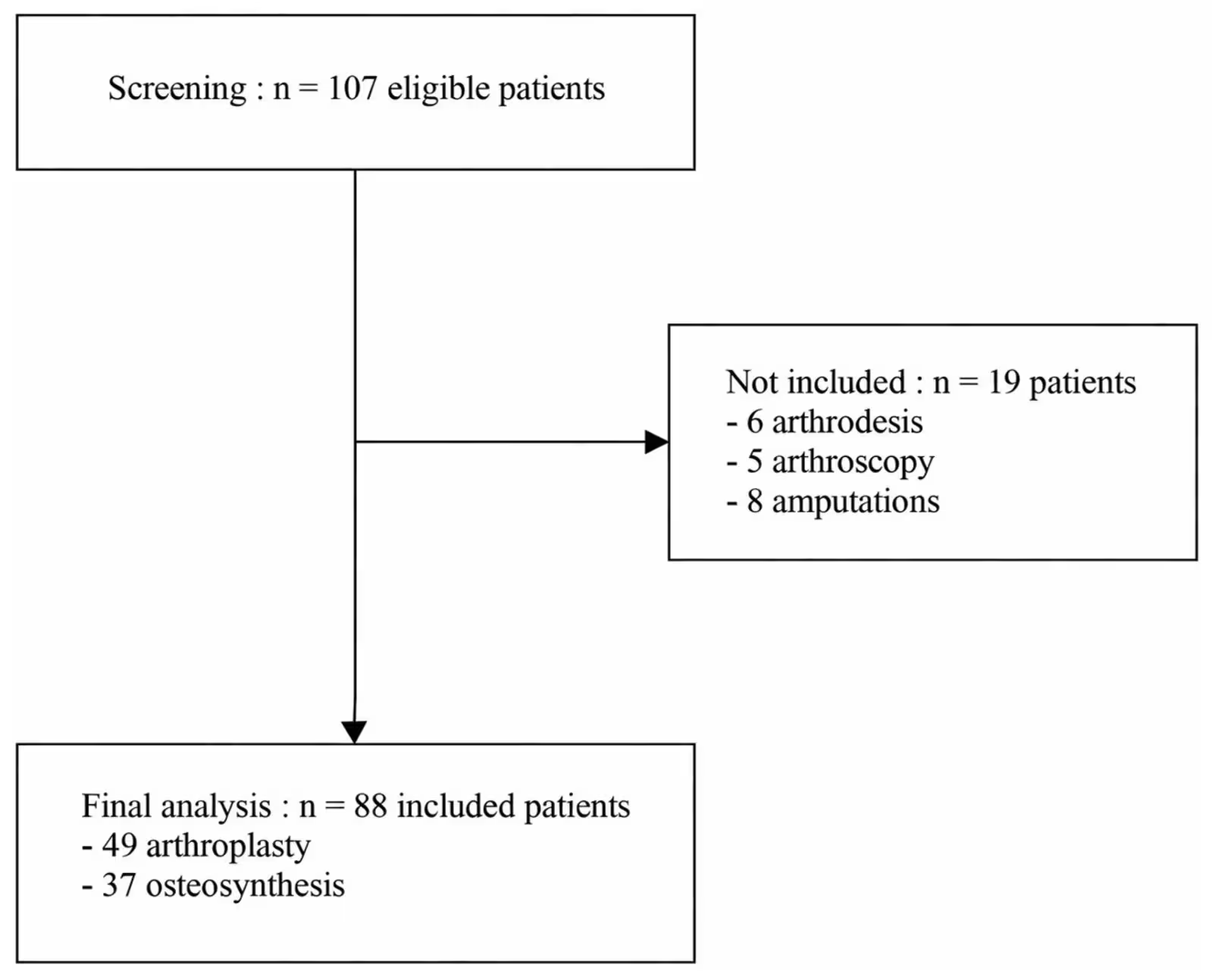
The researchers tested the performance of two established risk prediction systems known as the VIRSTA and PREDICT scores. Out of one hundred seven initially eligible individuals, eighty-eight patients met the strict criteria for the final evaluation after excluding smaller subgroups such as spinal procedures, arthroscopies, and amputations. Among these eighty-eight individuals, whose average age was sixty-six years, just three patients developed infective endocarditis, representing an incidence rate of about three percent.
Both risk evaluation tools demonstrated high sensitivity and negative predictive value, meaning they were exceptionally reliable at identifying patients who were safe from heart valve infection. None of the patients classified as low risk by either scoring method went on to develop infective endocarditis. However, the scores tended to flag many individuals as high risk when they ultimately remained healthy, indicating that the tools may overestimate the true danger in this specific surgical population.
Which Patients Face Higher Danger From Bloodstream Infections?
Statistical analysis revealed specific clinical factors strongly linked to the rare cases of heart valve inflammation. Patients who suffered from liver dysfunction known as hepatocellular insufficiency or experienced life-threatening blood pressure drops called sepsis or septic shock showed a significantly elevated risk. All three individuals who developed infective endocarditis were over seventy-five years old, had undergone lower-limb surgeries, and registered high risk scores on both evaluation scales.
Routine heart ultrasounds were performed on eighty-five percent of the study participants, usually within five days of their first positive blood test. Thirteen patients did not receive the scan because they lacked other medical complications and showed no abnormal heart murmurs during physical examinations, and none of them later developed heart infections. These observations indicate that physical exam findings and specific clinical indicators could guide physicians in deciding which patients genuinely require urgent cardiac imaging.
What Are the Limitations of This Retrospective Analysis?
Because the investigation relied on historical medical records from two centers, the authors emphasized that the conclusions should be interpreted as exploratory observations rather than definitive practice changes. The total number of heart infection events was very small, and not every participant underwent a heart ultrasound. Furthermore, all patients received at least six weeks of targeted antibiotic therapy to treat their primary bone infections, which might have successfully cleared any undetected, mild heart valve inflammation before it could cause noticeable symptoms.
The findings point toward a more selective approach for hospital resource allocation. By reserving cardiac imaging for high-risk individuals with specific warning signs, medical teams can reduce unnecessary diagnostic tests and lower healthcare expenses without compromising patient safety.
The research was published in Journal of bone and joint infection on November 18, 2026.
This article has been fact checked for accuracy, with information verified against reputable sources. Learn more about us and our editorial process.
Last reviewed on .
Article history
- Latest version
Reference(s)
- Rodrigues, Sébastien., et al. “Risk of infective endocarditis in patients with orthopedic surgical site device-related infection and Staphylococcus aureus bacteremia.” Journal of Bone and Joint Infection, vol. 11, no. 6, November 18, 2026, pp. 735-742. Copernicus GmbH, doi: 10.5194/jbji-11-735-2026. <https://doi.org/10.5194/jbji-11-735-2026>.
- Posted by Faisal Qureshi