Scientists May Have Finally Identified the Architect of Earth’s Mysterious 500 Million Year Old Tunnels
For 170 years, a mysterious deep-sea tunnel builder has eluded scientists. New research suggests the prime suspect behind these structures may be wrong.
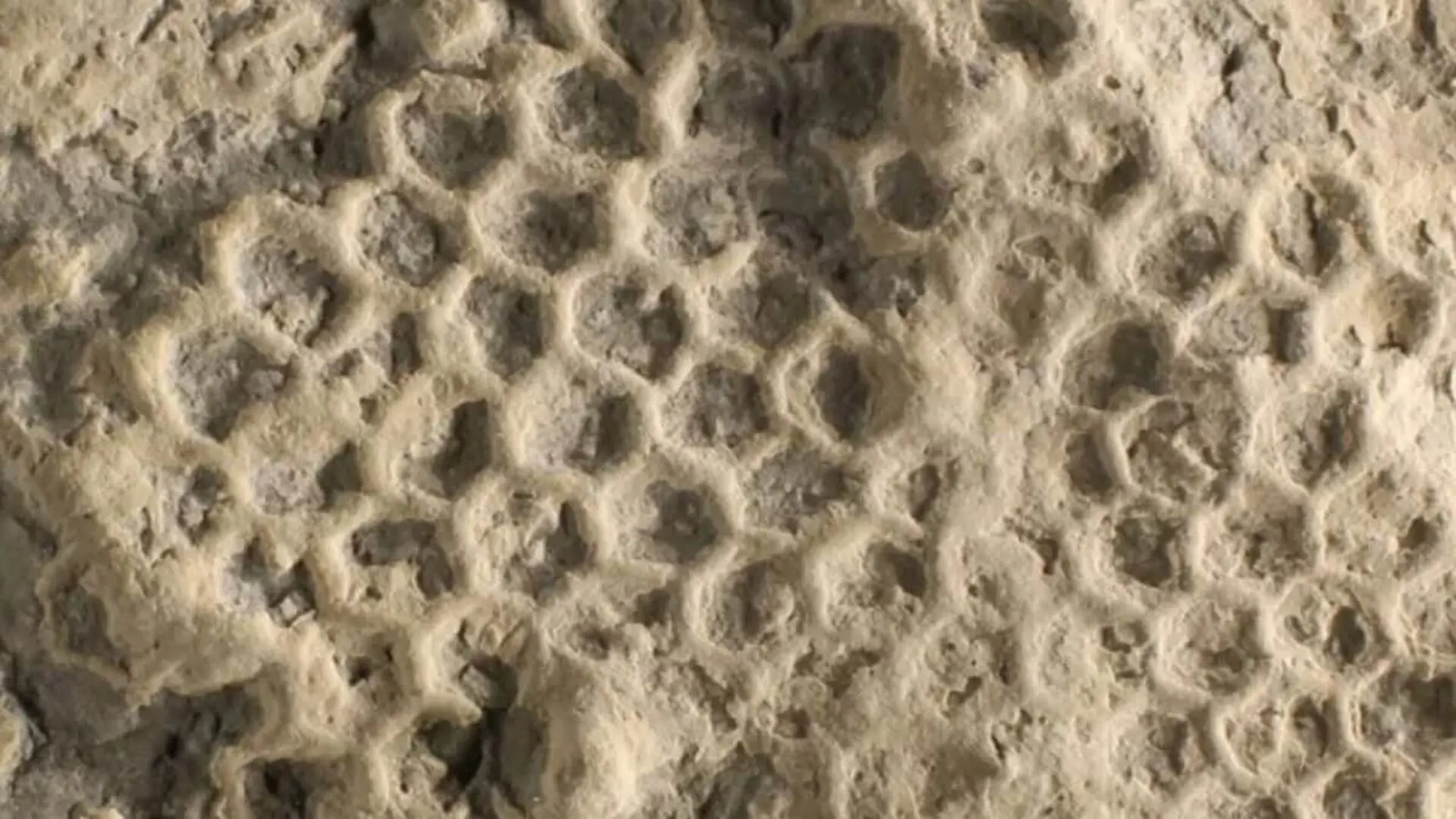
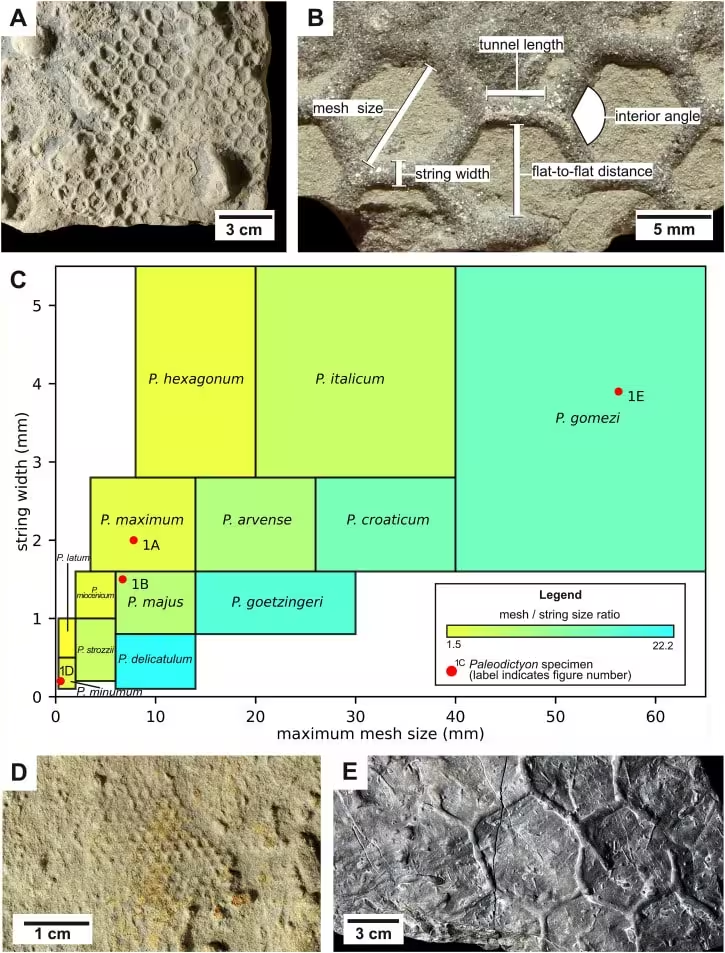
For more than 170 years, paleontologists have been haunted by a recurring, geometric riddle: intricate, hexagonal tunnel networks etched into marine rock layers across the globe. Known as paleodictyon, these patterns first emerged during the Cambrian period over 500 million years ago. Despite their ancient origins, the mystery persists because these structures are still being created on the modern seafloor. Yet, the elusive architect has never been observed or found preserved within its complex home. A new analysis, however, is challenging the long-standing consensus that a soft-bodied worm is responsible, pointing instead toward a small, jointed-limbed arthropod.
Reframing the Architecture of Ancient Tunnels
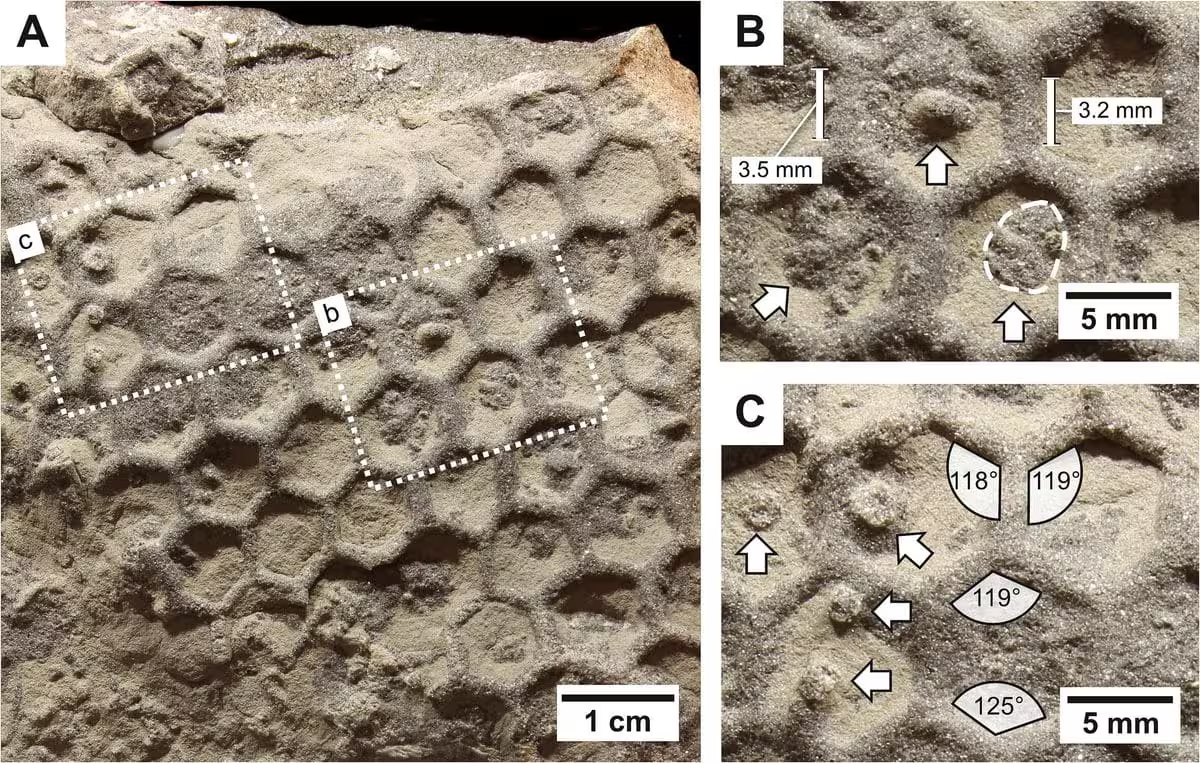
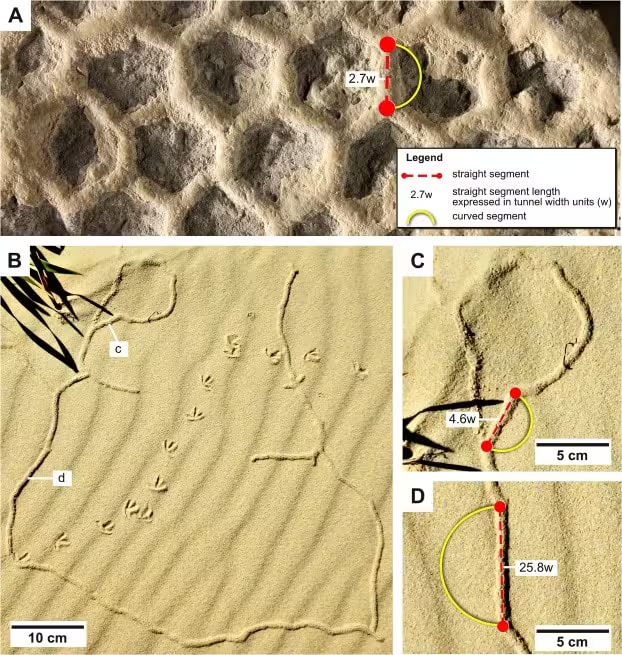
The research, published in Earth-Science Reviews and led by Andrea Baucon, utilized high-resolution imagery and 3D modeling to analyze tunnels gathered from Italy, Poland, and Portugal. By comparing these fossilized traces with the behavior of extant creatures, the team found that the geometry of the networks—defined by precise 120-degree branching angles and sharp, linear walls—is fundamentally inconsistent with the movement patterns of worms. Soft-bodied organisms typically navigate via paths of least resistance, resulting in curved, erratic tunnels. In contrast, arthropods utilize a mechanical excavation process that involves shifting sediment with jointed limbs, a method perfectly suited for creating the clean, angular walls observed in the fossil record.
Precision and Spatial Awareness
The study highlights a remarkable level of uniformity across the networks, suggesting the creator possesses a form of spatial intelligence. The tunnels remain consistent in width and structure over long distances, indicating that the builder frequently corrects its path to maintain the hexagonal grid. This capacity for self-correction suggests a level of navigational skill typically associated with complex creatures rather than simpler, blind-moving organisms. Furthermore, the bathymetric range where these modern traces are found—between 1,300 and 5,000 meters deep—aligns with habitats known to host a variety of infaunal arthropods, such as isopods, amphipods, and decapods.
Future Investigations into Deep-Sea Builders
While the study provides a compelling case for arthropods, the primary purpose of these intricate burrows remains speculative. Theories range from nutrient traps and bacterial cultivation to sophisticated signaling networks designed for communication via chemical or acoustic cues. To move beyond inference, the research team advocates for the use of autonomous deep-sea technology. By deploying time-lapse imaging and environmental DNA sampling at active sites, scientists hope to finally catch the cryptic architect in the act of construction.
“Being able to watch the producer alive as it creates these structures would be like travelling back in time — giving us the chance to observe directly how one of the most enigmatic patterns in the fossil record is made,” said Baucon.
This article has been fact checked for accuracy, with information verified against reputable sources. Learn more about us and our editorial process.
Last reviewed on .
Article history
- Latest version
Reference(s)
- Baucon, Andrea., et al. “Can arthropods produce Paleodictyon?.” Earth-Science Reviews, vol. 281, October 1, 2026, pp. 105639 Elsevier BV, doi: 10.1016/j.earscirev.2026.105639. <https://www.sciencedirect.com/science/article/pii/S0012825226002503?via%3Dihub>.
- <https://www.researchgate.net/profile/Andrea-Baucon-2>.
Cite this page:
- Posted by Elizabeth Taylor