Mapping 242 Heat-Response Genes Reveals How Canola Fights Extreme Temperatures
Genomic clustering and co-expression network analysis highlight key regulatory hubs that could help breed heat-resilient oilseed crops.
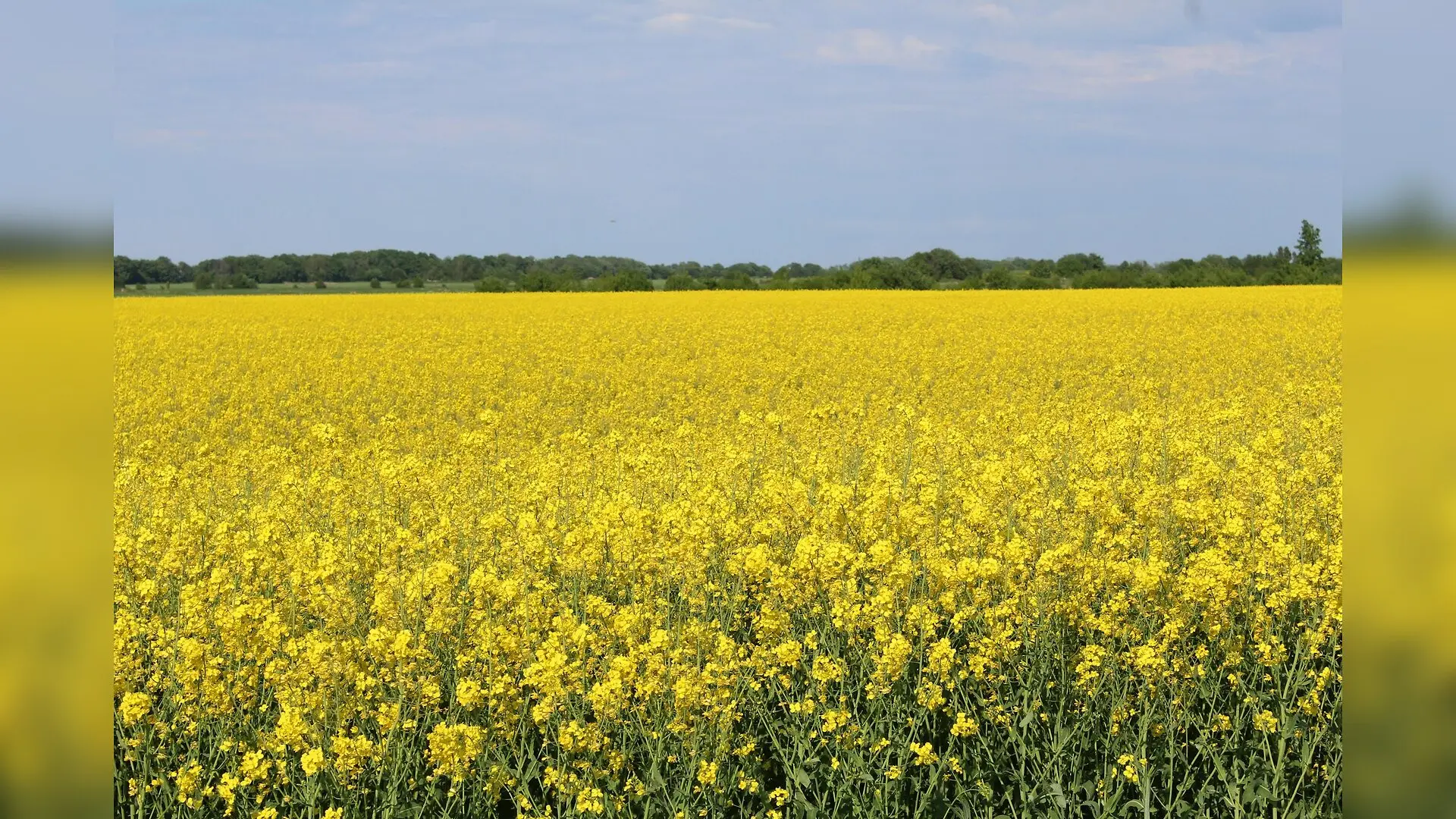
When temperatures exceed 29 degrees Celsius, canola crops suffer severe reproductive failure and dramatic yield drops, threatening global oil and livestock feed production. Researchers have now mapped 242 candidate heat shock-responsive genes across the genome of Brassica napus, revealing how these plants coordinate their molecular defenses against rising global temperatures.
Published in Planta, the review synthesizes multi-omics evidence to examine how heat shock proteins and heat shock transcription factors protect cellular machinery. Canola, an amphidiploid species created through the historical hybridization of Brassica rapa and Brassica oleracea, is widely grown for vegetable oil and high-protein livestock feed. As climate change increases the frequency of damaging heatwaves, understanding how these crops cope with thermal stress has become a major agricultural priority.
How Genomic Clustering and Duplication Shape Stress Defense
The research team compiled 242 putative heat shock-responsive genes, dividing them into major chaperone and transcription factor families including 49 HSP70s, 41 HSP40s, 40 HSP20s, 37 heat shock transcription factors, 30 HSP60s, 26 HSP90s, 13 HSP100s, and 6 HSP10s. By analyzing their physical locations on the Darmor-bzh v4.1 reference genome, the authors identified 27 distinct gene clusters containing 60 of these loci. These groupings include 15 homogeneous clusters of related gene families and 12 heterogeneous clusters combining multiple families within 200 kilobases of each other.
This non-random distribution suggests that tandem duplication and evolutionary expansion have driven the organization of heat-stress defenses in polyploid crops. Comparative analysis across 32 Brassicaceae species showed that polyploid plants average 300 heat shock-responsive genes compared to 124 in diploids, reflecting substantial gene family expansion following whole-genome duplication events.
Which Master Regulators Drive Co-Expression Networks?
To understand how these genes function together, the investigators constructed a co-expression network using RNA sequencing datasets from three independent studies comprising 15 tissue samples. Filtering for robust correlations above 0.6 yielded 240 connected genes partitioned into six distinct modules. Fifty genes emerged as candidate hub nodes, featuring prominent roles for HSP70 and HSP40 chaperones as well as six master transcription factors.
Crucially, 17 of these top-ranked hub genes physically co-localized with the genomic clusters identified on the chromosomes. This overlap points to a potential shared regulatory environment, where physical proximity on the genome may help coordinate rapid transcriptional responses during sudden heat stress. The authors also found that Brassica napus exhibits extensive family expansions compared to model plants like Arabidopsis thaliana, including a 4.3-fold expansion in HSP100 genes and a 2.8-fold increase in HSP90 genes.
What Are the Limitations and Next Steps for Breeders?
Despite these comprehensive genomic insights, the authors caution that the 242 cataloged genes remain candidate markers rather than uniformly validated thermotolerance regulators. The co-expression network is exploratory, and residual batch effects across independent RNA-seq experiments cannot be completely ruled out. Furthermore, gene copy number variations and the absence of clear Arabidopsis counterparts do not automatically prove adaptive superiority or lineage-specific functions without direct experimental testing.
Translating these findings into resilient commercial varieties will require functional validation using techniques like CRISPR-based gene editing, alongside field trials under agronomically relevant conditions. By combining pangenomic data, epigenetic profiling, and marker-assisted selection, breeders can target these newly mapped regulatory hubs to protect essential oilseed crops against future climate extremes.
The research was published in Planta on November 18, 2026.
This article has been fact checked for accuracy, with information verified against reputable sources. Learn more about us and our editorial process.
Last reviewed on .
Article history
- Latest version
Reference(s)
- Cantila, Aldrin Y.., et al. “Heat shock-responsive genes in Brassica napus: from omics-driven discovery to gene editing.” Planta, vol. 265, no. 1, November 18, 2026 Springer Science and Business Media LLC, doi: 10.1007/s00425-026-05230-5. <https://doi.org/10.1007/s00425-026-05230-5>.
Cite this page:
- Posted by Faisal Qureshi