Rare Genetic Ataxias Reveal Sharply Different Rates of Physical Decline
A multi-year tracking study of two uncommon neurodegenerative conditions uncovers why one progresses rapidly while the other remains relatively stable.
Two rare genetic brain disorders show strikingly different speeds of physical decline over a five-year tracking period, offering new clarity for upcoming clinical trials. Researchers following patients with spinocerebellar ataxia type 7 and spinocerebellar ataxia type 8 found that while one condition worsens rapidly, the other progresses at a much slower pace.
Spinocerebellar ataxias are inherited neurodegenerative conditions marked by the gradual loss of coordination and balance due to deterioration in the cerebellum, the part of the brain that controls movement. Because types 7 and 8 are exceptionally rare, accounting for a tiny fraction of all ataxia cases, their long-term natural progression had remained poorly defined until now. A team of investigators across North America analyzed data collected through the Clinical Research Consortium for the Study of Cerebellar Ataxias, evaluating patients over multiple years to chart how these disorders change over time.
How Fast Do These Rare Conditions Progress?
The study, published in Neurology: Genetics, followed 27 individuals with spinocerebellar ataxia type 7 and 51 individuals with spinocerebellar ataxia type 8 who had baseline evaluations, with many completing longitudinal check-ups over a span of up to five years. Motor severity was measured using a standard clinical rating scale known as the Scale for the Assessment and Rating of Ataxia, which scores symptoms from zero to 40 based on issues with balance, speech, and limb coordination.
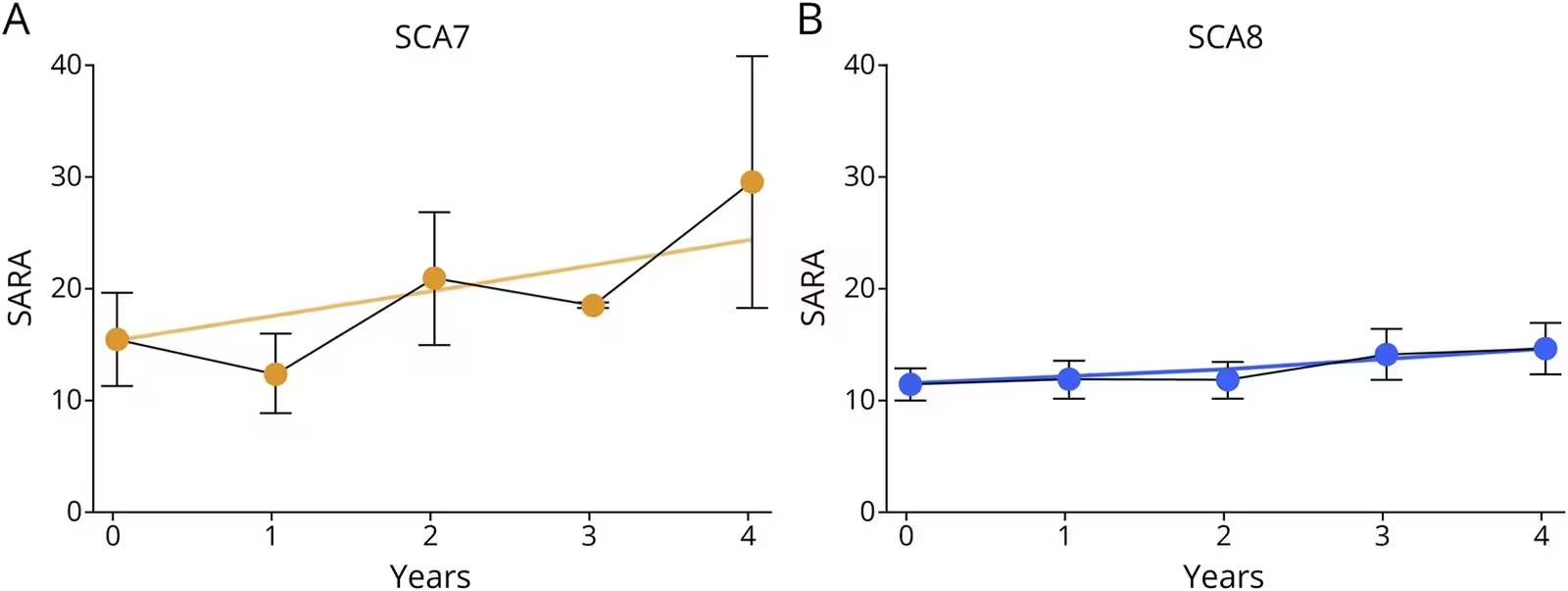
The findings revealed a sharp contrast between the two conditions. Patients with spinocerebellar ataxia type 7 experienced an aggressive clinical course, with their motor scores worsening by an average of 1.68 points each year. In contrast, those with spinocerebellar ataxia type 8 exhibited a much milder progression of 0.47 points per year, pointing toward relative clinical stability during the observation window.
What Drives the Physical Decline?
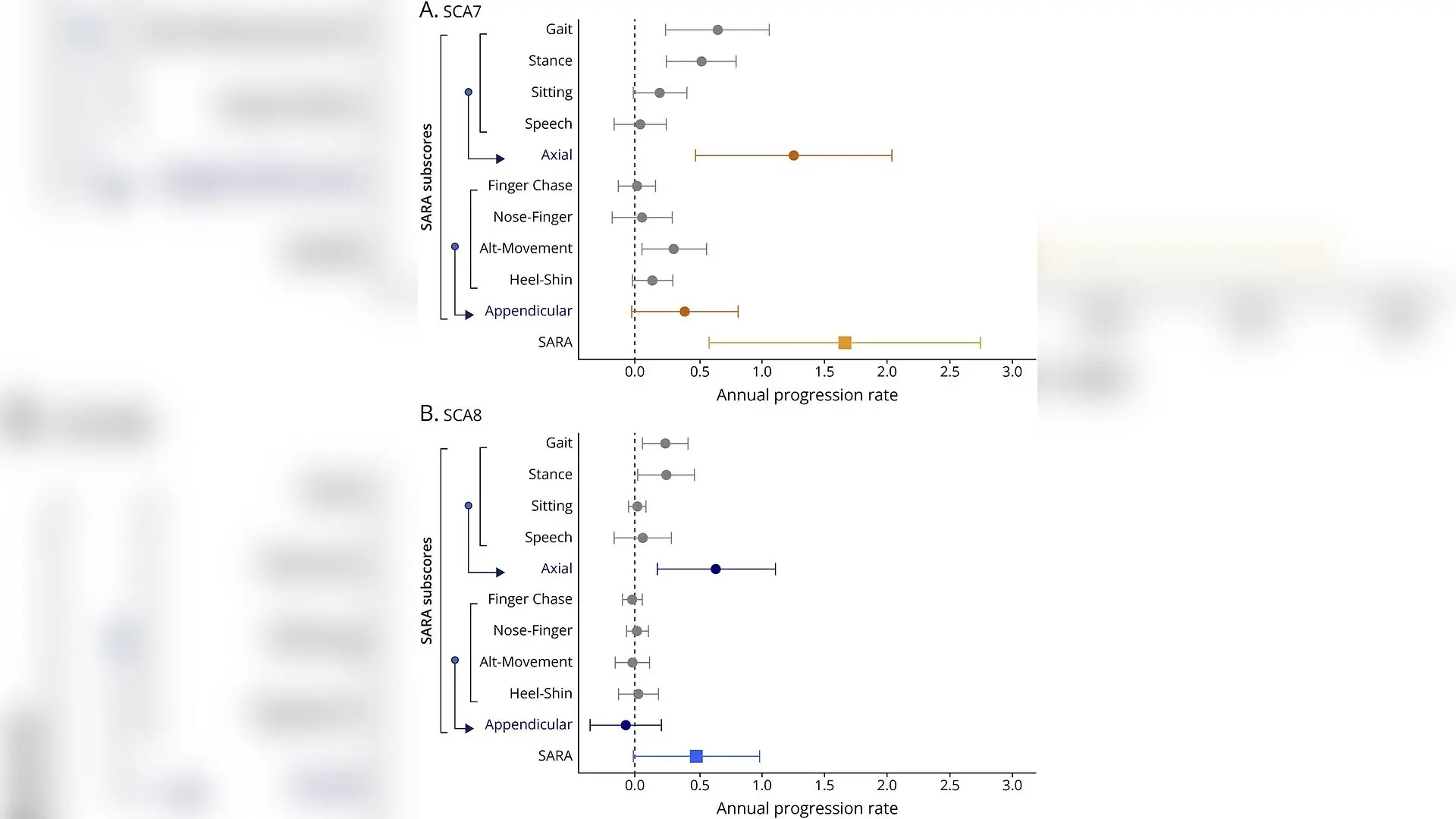
When the researchers broke down the scores into specific physical components, they discovered that both diseases are primarily driven by deterioration in axial motor functions rather than limb coordination. Difficulties with walking, known as gait impairment, and trouble maintaining balance while standing were the primary factors pushing scores higher in both cohorts.
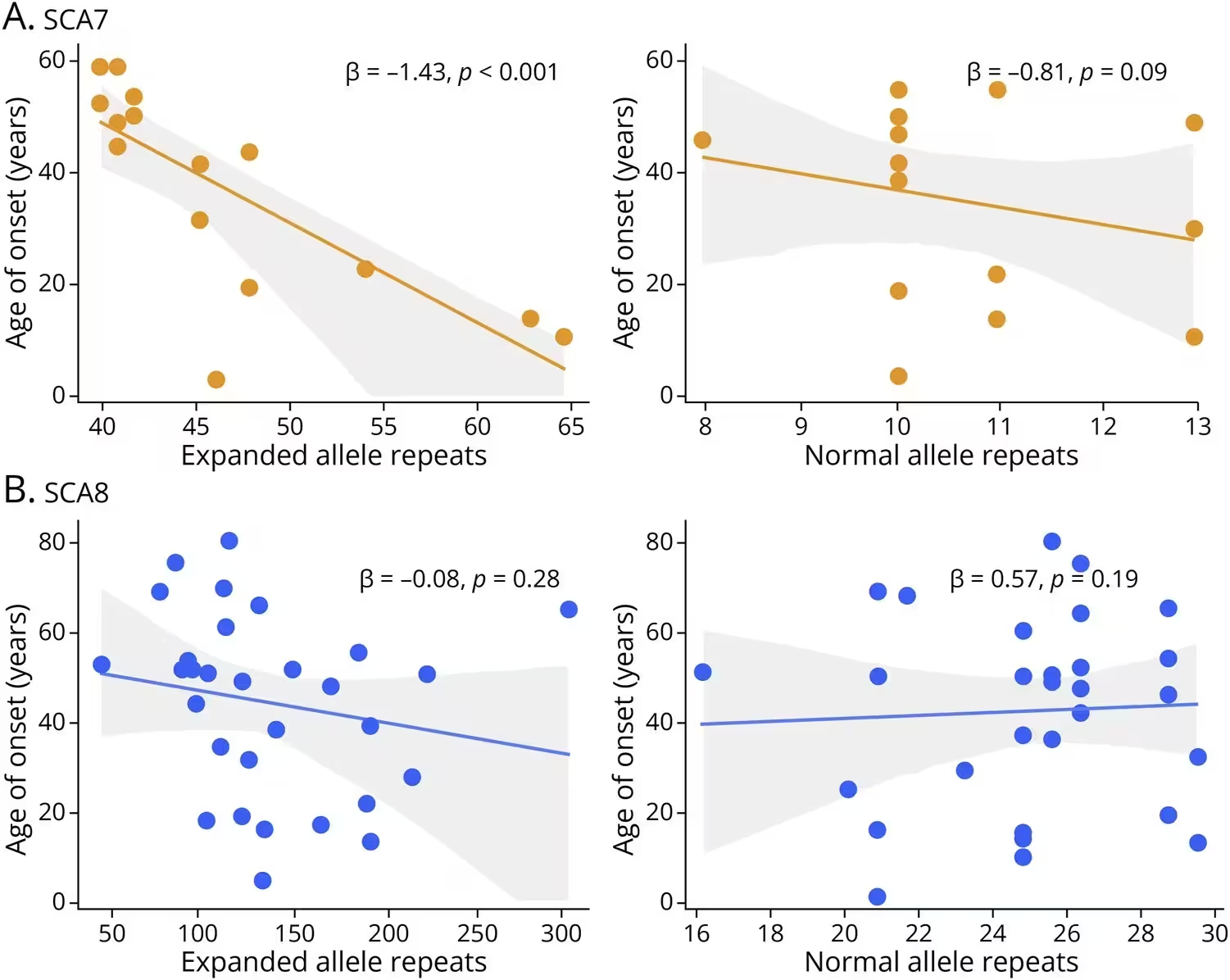
For patients with spinocerebellar ataxia type 7, genetic testing showed that the age when symptoms first appeared was strongly tied to the length of a specific repeating DNA sequence inside the ATXN7 gene. Individuals with longer repeat expansions tended to develop the condition at an earlier age and experienced more severe baseline motor impairment. However, no such direct link between repeat length and age of onset appeared in the cohort with spinocerebellar ataxia type 8, reflecting the complex genetic mechanisms underlying that specific subtype.
Are Mental Health and Cognition Affected?
Beyond motor skills, the team also tracked cognitive performance and depressive symptoms using standardized questionnaires over the multi-year study. Surprisingly, neither group showed significant longitudinal decline in cognitive function or reported depression scores during the follow-up period.
The authors note that these stable mental health scores must be interpreted with caution. Throughout the tracking period, the proportion of participants using antidepressant medications increased notably in both groups. This growing reliance on treatment may have helped stabilize mood symptoms or masked subtle psychological changes that questionnaires failed to capture. Additionally, repeat testing can sometimes trigger practice effects, where individuals improve slightly simply because they remember the tests from prior visits, potentially masking early cognitive shifts.
What This Means for Future Therapeutic Trials
Detailed visual assessments performed on subset participants with spinocerebellar ataxia type 7 confirmed profound central retinal dysfunction and color vision deficits, aligning with the cone-rod dystrophy characteristic of the disease while peripheral vision remained relatively preserved. These comprehensive natural history findings establish crucial quantitative benchmarks that clinical researchers can use to design better therapeutic trials and measure whether experimental treatments can successfully slow disease progression.
The research was published in Neurology. Genetics on November 17, 2026.
This article has been fact checked for accuracy, with information verified against reputable sources. Learn more about us and our editorial process.
Last reviewed on .
Article history
- Latest version
Reference(s)
- Lin, Yi-Cheng., et al. “The Natural History of Spinocerebellar Ataxia Types 7 and 8.” Neurology Genetics, vol. 12, no. 6, December 1, 2026 Ovid Technologies (Wolters Kluwer Health), doi: 10.1212/NXG.0000000000200452. <https://doi.org/10.1212/NXG.0000000000200452>.
Cite this page:
- Posted by Faisal Qureshi