Why Nature Uses Only A Tiny Fraction Of All Possible Protein Folds
Computational models reveal that artificial proteins with unobserved folds are just as stable as natural ones, pointing to evolutionary habits rather than biophysical limits.
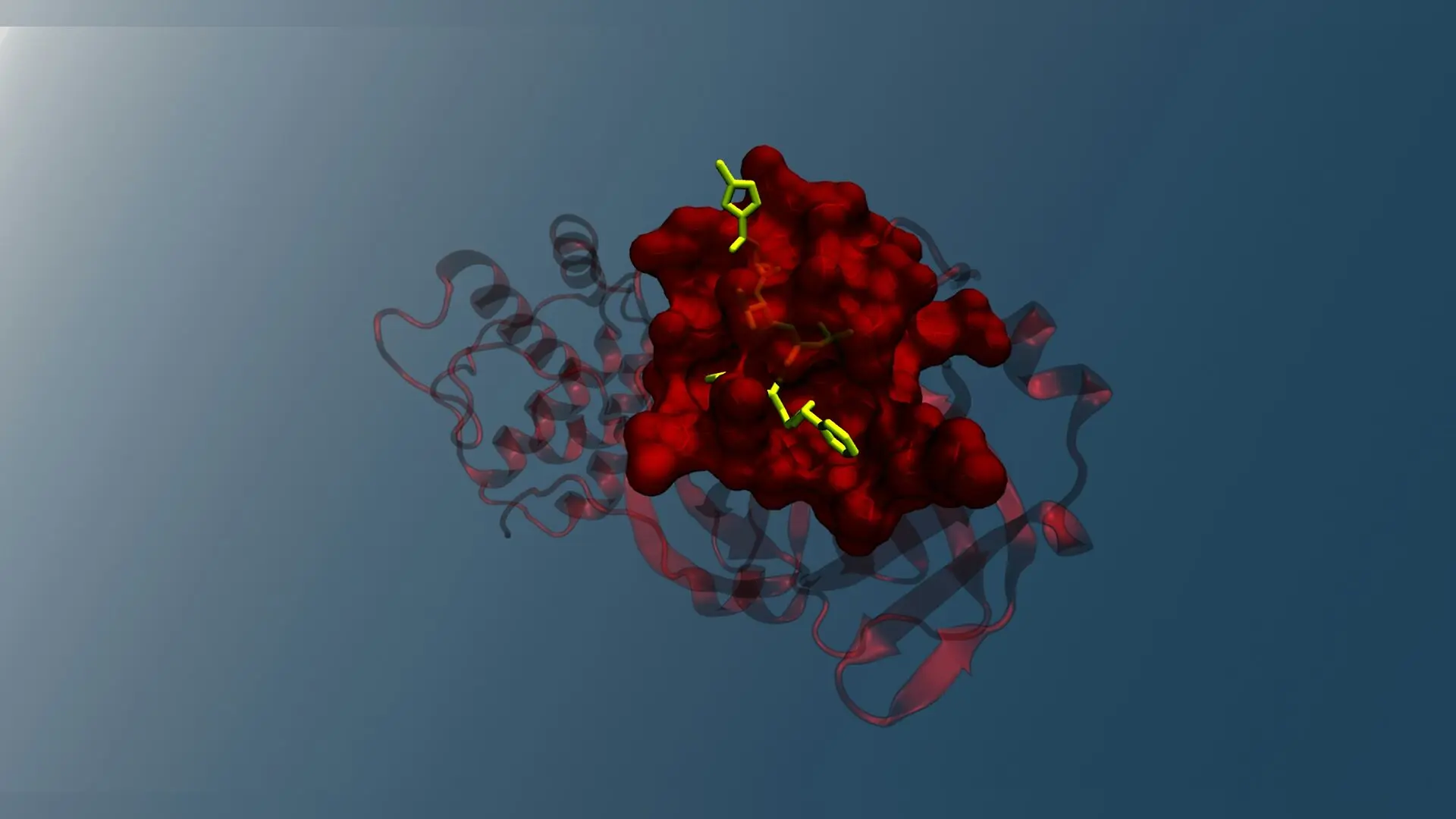
Living things utilize only a tiny sliver of the structural shapes that proteins are theoretically capable of forming, according to an analysis exploring why evolution leaves most molecular designs completely untouched. Although life features tens of thousands of functional protein families, researchers note that science has characterized slightly over one thousand distinct protein folds, meaning many different families share the exact same core architecture.
To understand why nature explores such a narrow range of shapes, Harutyun Sahakyan and Eugene V. Koonin from the National Institutes of Health examined the forces shaping protein structures, with their analysis available on the arXiv preprint server. Despite millions of sequenced genomes and metagenomes across the globe, the rate at which scientists discover completely new protein architectures has been steadily slowing down over time. Even when computational models predicted more than two hundred million protein structures, which is three orders of magnitude more than all experimentally solved structures cataloged in the Protein Data Bank, the search yielded fewer than ten thousand distinct folds.
Why Does Nature Ignore Most Possible Protein Folds?
Two major schools of thought attempt to explain why nature displays such limited structural diversity. One hypothesis suggests that natural evolution has already exhausted the viable architectures available to small protein domains, meaning nearly all functional shapes have already been found. The opposing view argues that the combinatorial space of stable protein shapes is immensely vast, but evolutionary processes simply have not sampled the vast majority of them.

Under this second scenario, evolution prefers to tinker with and repurpose existing protein domains rather than build completely new structures from scratch. Consequently, a small core set of well-tested folds accounts for the vast majority of globular proteins found in living organisms. Rare architectures exist in what researchers describe as a long tail of domain abundance distributions, largely untouched by day-to-day biological needs.
Can Artificial Design Unlock Hidden Molecular Shapes?
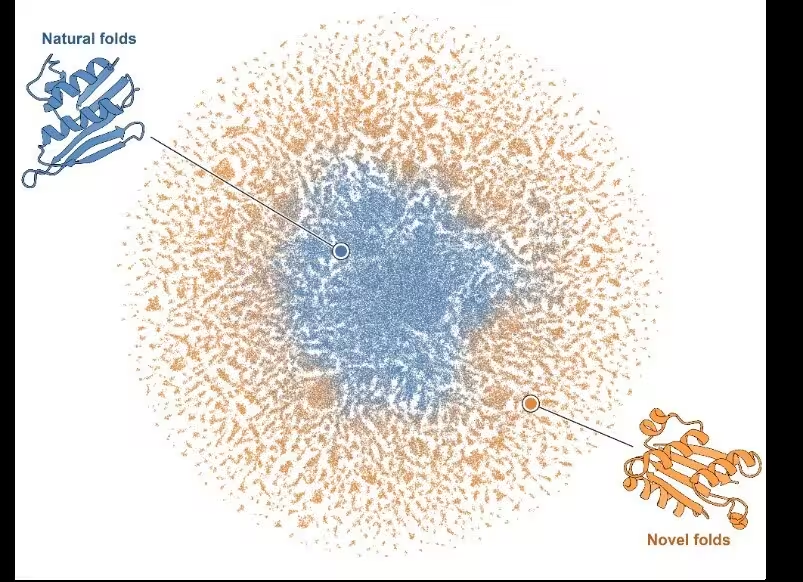
Recent breakthroughs in computational protein design allow scientists to test whether unobserved structures are actually stable or biophysically inferior. When researchers computationally generated all possible shapes for specific classes of proteins, laboratory experiments proved that these artificial designs were just as stable and foldable as natural proteins. Furthermore, simulated evolution from random sequences showed that roughly half of newly evolved proteins adopted entirely novel folds not found in living organisms.
These artificial proteins required roughly the same number of mutations to evolve as proteins with natural folds, averaging around four hundred amino acid changes. This finding indicates that the absence of these novel shapes in nature does not stem from biophysical weakness. Instead, evolutionary contingency appears to dictate that modifying a working shape is safer and easier than inventing a brand new one.
Where Do Brand New Structural Shapes Still Emerge Today?
While standard evolution favors repurposing old designs, new folds do occasionally arise through specific biological pressures. One primary driver is the evolutionary arms race between bacteria and viruses. Viruses encode specialized anti-CRISPR proteins designed to shut down bacterial immune defenses, and many of these viral weapons display completely unique folds with no known structural homologs in cellular life.
Additionally, the likelihood of discovering or generating a novel fold increases with protein size, simply because longer chains of amino acids possess a much larger combinatorial space of possible topologies. However, as structural complexity grows, the probability of convergent evolution dropping into the exact same fold independently becomes much smaller. Exploring these uncharted regions of structural space could ultimately help scientists train more powerful prediction models for biotechnology and medicine.
The study was posted to the arXiv preprint server on November 24, 2026.
This article has been fact checked for accuracy, with information verified against reputable sources. Learn more about us and our editorial process.
Last reviewed on .
Article history
- Latest version
Reference(s)
- Sahakyan, Harutyun. “Evolutionary constraints on protein fold diversity.” arXiv.org <http://arxiv.org/abs/2611.33104v1>.
Cite this page:
- Posted by Omar Mirza