How California Moths Read Changing Daylight to Time Their Two Yearly Generations
Controlled growth chamber experiments reveal that spotted tussock moths track daily shifts in light rather than absolute day length to trigger seasonal hibernation.
Coastal California spotted tussock moths bypass genetic programming by reading changing day lengths to time their two yearly generations. Kenneth G. Strothkamp from the California Academy of Sciences investigated how these insects decide whether to rapidly mature into adults or hunker down for a multi-month winter pause.
While most regional populations of the insect only manage a single annual cycle because of harsh winters, the coastal population in California squeezes in two distinct broods each year. Scientists previously debated whether these creatures relied on absolute day length or monitored daily shifts in light to trigger their seasonal transformations. The study is published in PLOS One, detailing how controlled growth chambers solved this long-standing entomological puzzle.
How Can Moths Tell Spring From Late Summer?
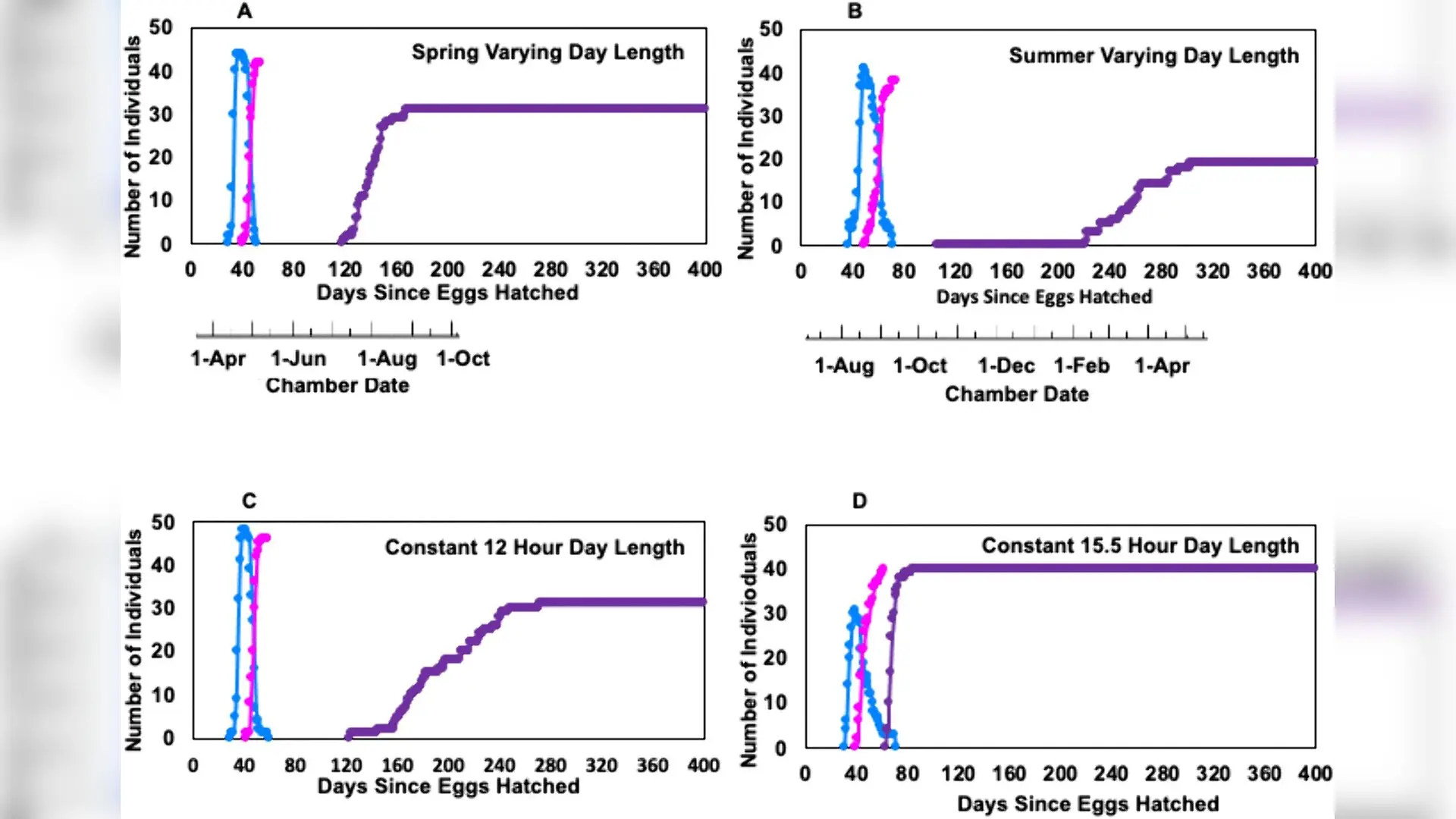
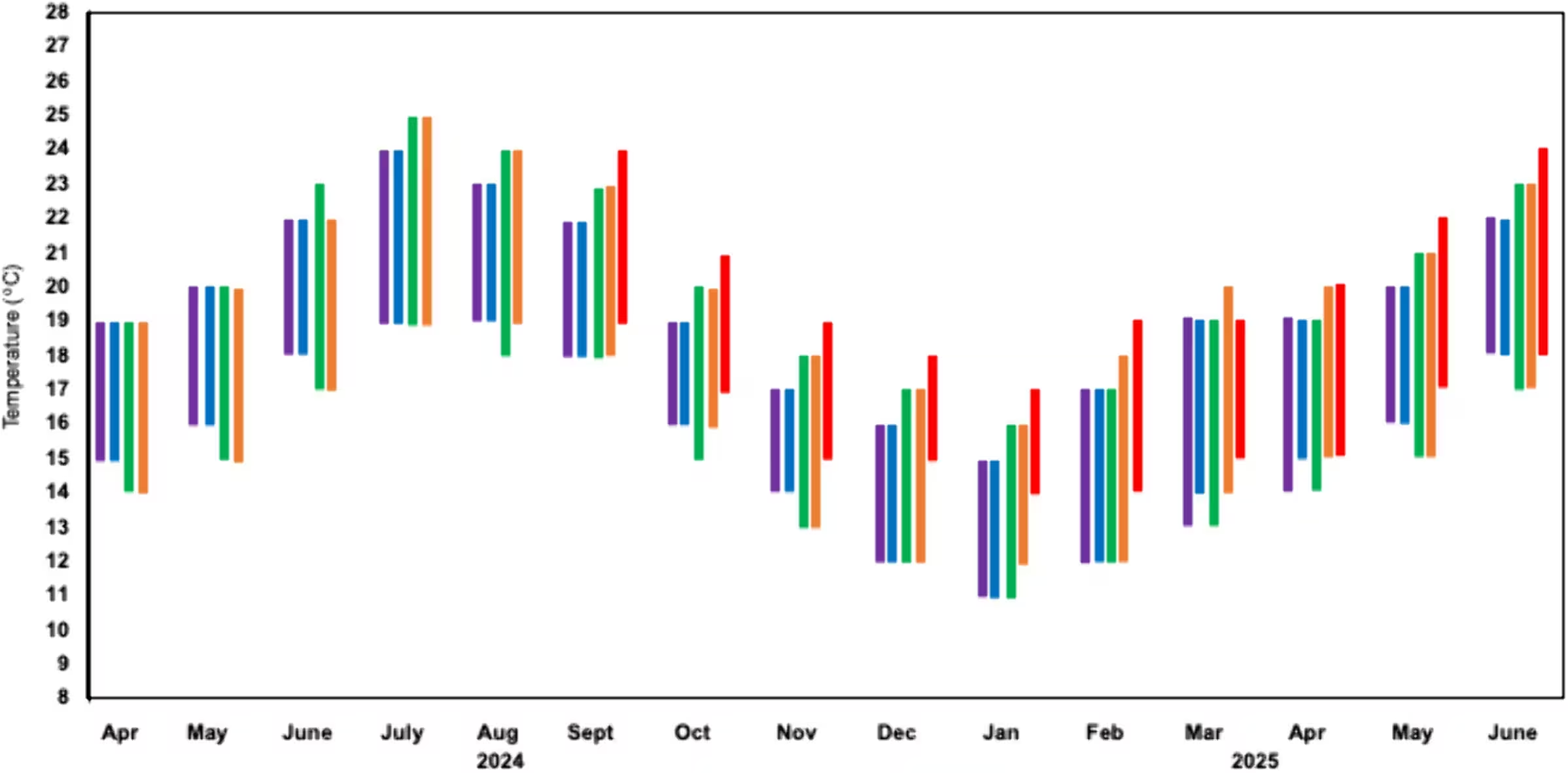
Because spring and late summer share similar absolute day lengths, a simple short-versus-long day measurement is insufficient for animals developing on either side of the summer solstice. To test this, researcher Strothkamp raised sibling caterpillars from eggs in light-tight growth chambers that precisely replicated local temperatures, humidity, and food quality. Some cohorts experienced constant day lengths, while others lived under naturally increasing spring light or decreasing summer light.
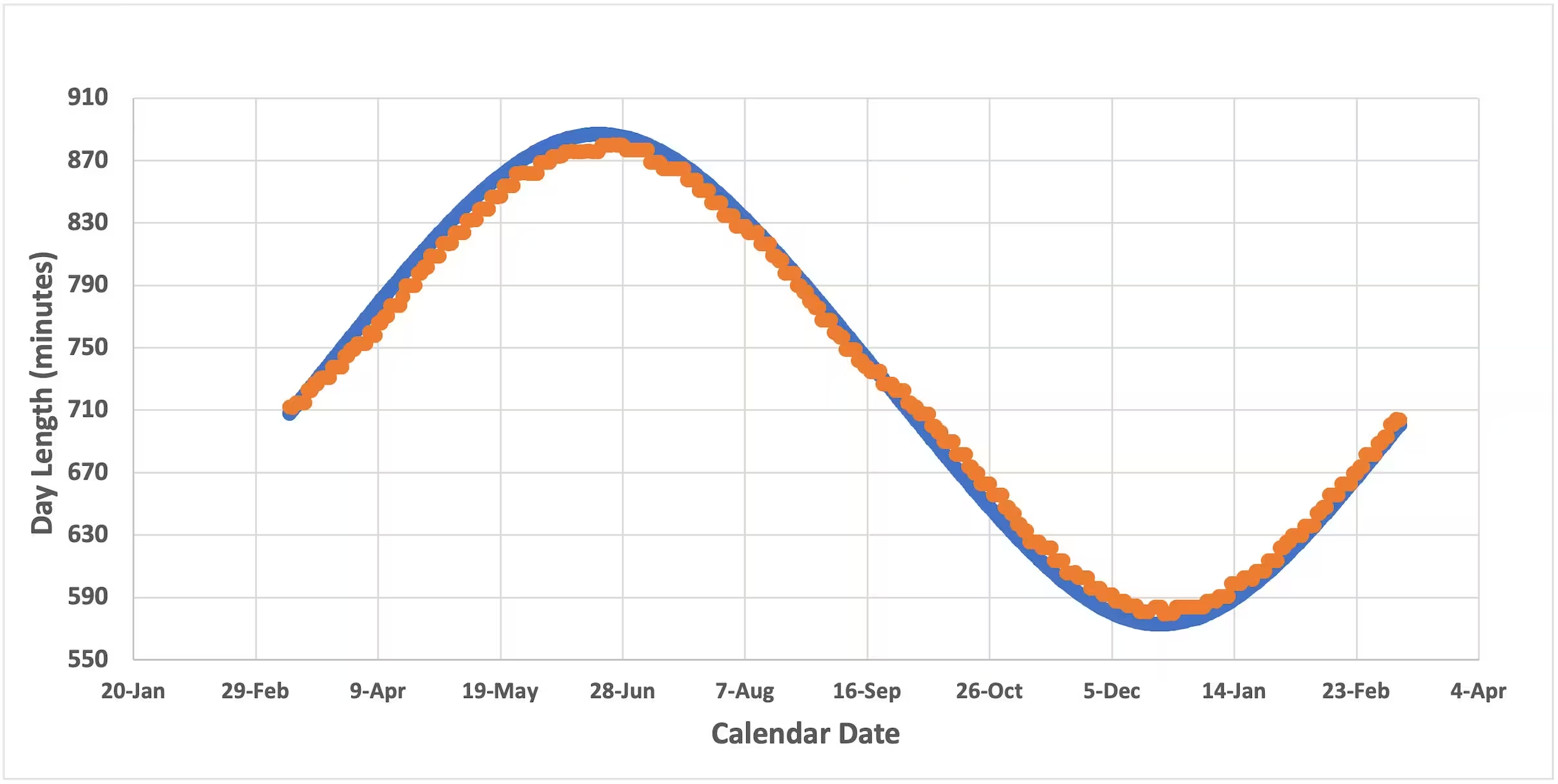
The results showed that absolute day length alone failed to match real-world behavior. Sibling caterpillars exposed to constant summer-length light did not enter the expected winter pause, and those kept in constant spring conditions developed much more slowly than wild insects. Only the cohorts exposed to naturally changing light matched the exact flight timelines observed in wild coastal populations.
Why Do Caterpillars Slow Down Their Growth in Summer?
The experiment revealed a distinct behavioral shift during the later larval stages of summer-raised insects. Caterpillars experiencing decreasing day lengths stretched their fourth and fifth instars significantly longer than spring cohorts, taking up to sixty-two days to reach pupation instead of forty-six days. This developmental slowdown acts as a physiological preparation period, allowing the insects to accumulate essential nutrient reserves before entering their prolonged winter diapause.
By tracking the timing of pupation and adult emergence, the work demonstrated that both spring and winter pauses compress their timelines to synchronize adult flight periods. Pupae appear to use the stable lighting around the solstices to coordinate their final transformations, ensuring large numbers of adults emerge together to maximize reproductive success.
These findings suggest that the ability to track daily shifts in light may be far more widespread among insects than previously recognized. Future studies will need to reexamine other temperate species to see if directional day length changes play a hidden role in governing their seasonal life cycles.
The research was published in PLOS One on November 25, 2026.
This article has been fact checked for accuracy, with information verified against reputable sources. Learn more about us and our editorial process.
Last reviewed on .
Article history
- Latest version
Reference(s)
- Strothkamp, Kenneth G.. “Lophocampa maculata detects and uses the annual changing day length to regulate its bivoltine life cycle.” PLOS One, vol. 21, no. 11, November 25, 2026, pp. e0362604 Public Library of Science (PLoS), doi: 10.1371/journal.pone.0362604. <https://doi.org/10.1371/journal.pone.0362604>.
Cite this page:
- Posted by Michael Ellison