Cage Siloxane Coatings Preserve Nanoporous Aerogels And Boost Catalytic Activity
Molecular-level siloxane shells successfully prevent structural shrinkage and inhibit gold nanoparticle aggregation in high-temperature chemical reactions.
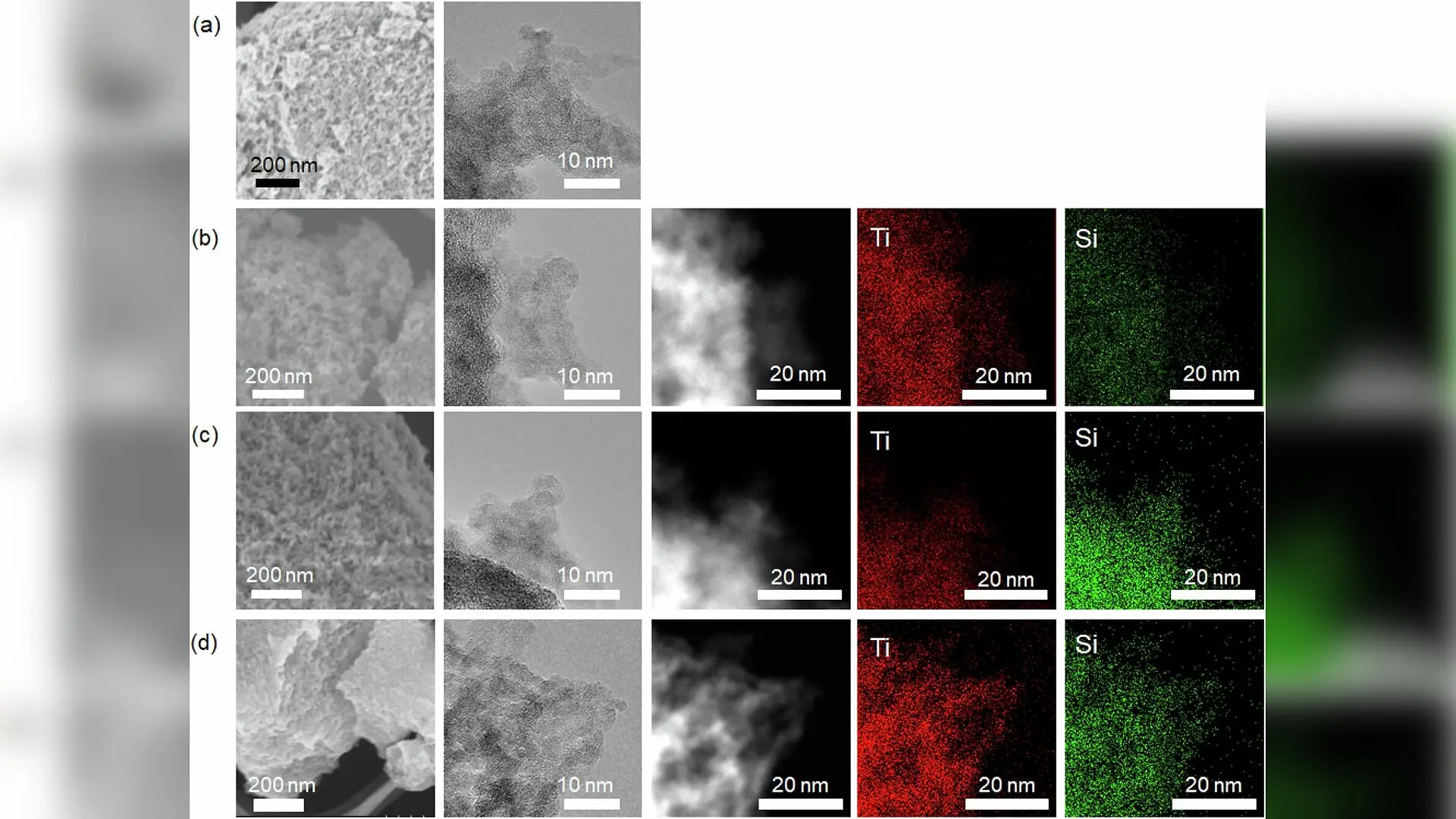
Applying a microscopic layer of cage-like silicon molecules onto titanium-based aerogels can dramatically improve their structural durability and catalytic performance. A research team led by Madoka Chino at Tokyo Metropolitan University investigated how this protective coating modifies porous materials to create more stable environments for metal catalysts. Their findings reveal that these molecular shells prevent the delicate aerogel framework from shrinking during drying and successfully inhibit metal nanoparticle clumping during high-temperature chemical reactions.
Porous titanium dioxide materials are widely celebrated for their chemical stability and efficiency in facilitating light-driven chemical reactions. However, these monolithic structures face severe physical limitations. When exposed to liquids or elevated temperatures, their open networks tend to collapse, and supported metal catalysts like gold tend to aggregate into larger particles, which quickly destroys their catalytic activity. Previous attempts to shield these surfaces using silica coatings required complex chemical steps or harsh pH controls, leaving many types of metal nanoparticles and supports incompatible with the process.
How Did the Research Team Construct Molecular Siloxane Shells?
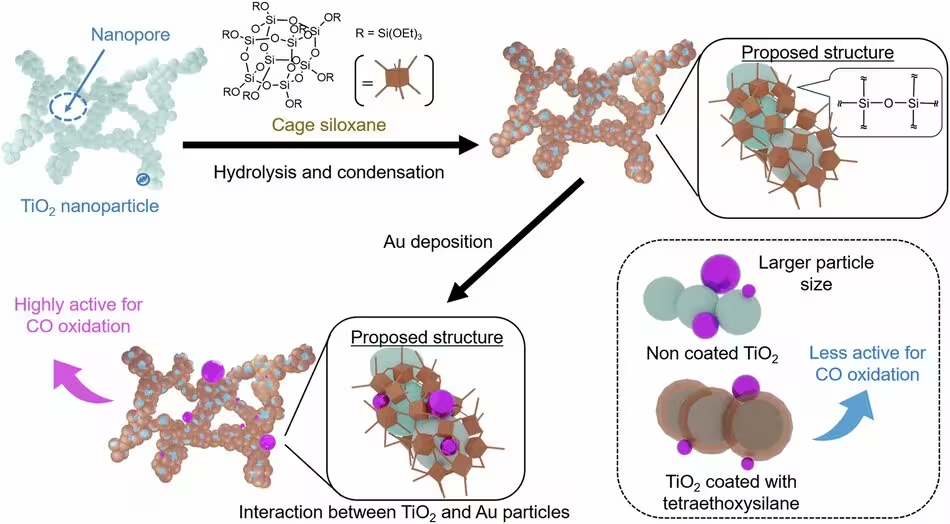
To overcome these hurdles, the investigators utilized a surface sol-gel approach involving triethoxysilyl-functionalized double-four-ring cage siloxanes, which are rigid nanobuilding blocks possessing well-defined molecular structures. The team immersed wet titanium dioxide gels composed of interconnected anatase nanocrystals into a solution containing these cage siloxanes under controlled thermal conditions. The detailed procedures and spectroscopic analyses were recently published in the Journal of Sol-Gel Science and Technology. Through controlled hydrolysis and condensation, the siloxane precursors formed a uniform, nanometer-thick coating across the complex internal pore network of the metal oxide framework.
Measurements of the resulting materials demonstrated that the siloxane-modified aerogels experienced significantly less volume shrinkage during drying than uncoated samples. For instance, unmodified titanium dioxide xerogels underwent ninety percent volume shrinkage, whereas the cage-siloxane-coated materials limited this shrinkage to seventy percent. This structural preservation directly translated into higher BET surface areas, ranging from four hundred to four hundred forty-six square meters per gram, alongside preserved pore volumes that facilitated superior mass transport.
Why Do Coated Catalysts Resist Thermal Agglomeration?
To evaluate the anti-agglomeration efficacy of the protective layers, gold nanoparticles were deposited onto the modified aerogels using a precipitation technique without external reducing agents. Transmission electron microscopy and X-ray absorption fine structure analyses confirmed that the average size of the gold nanoparticles on the siloxane-coated samples was substantially smaller, averaging six nanometers for the cage-siloxane sample compared to eleven nanometers for the uncoated reference material. The siloxane network acts as a physical barrier and an array of anchoring sites that restrict particle mobility and stop adjacent metal clusters from coalescing.
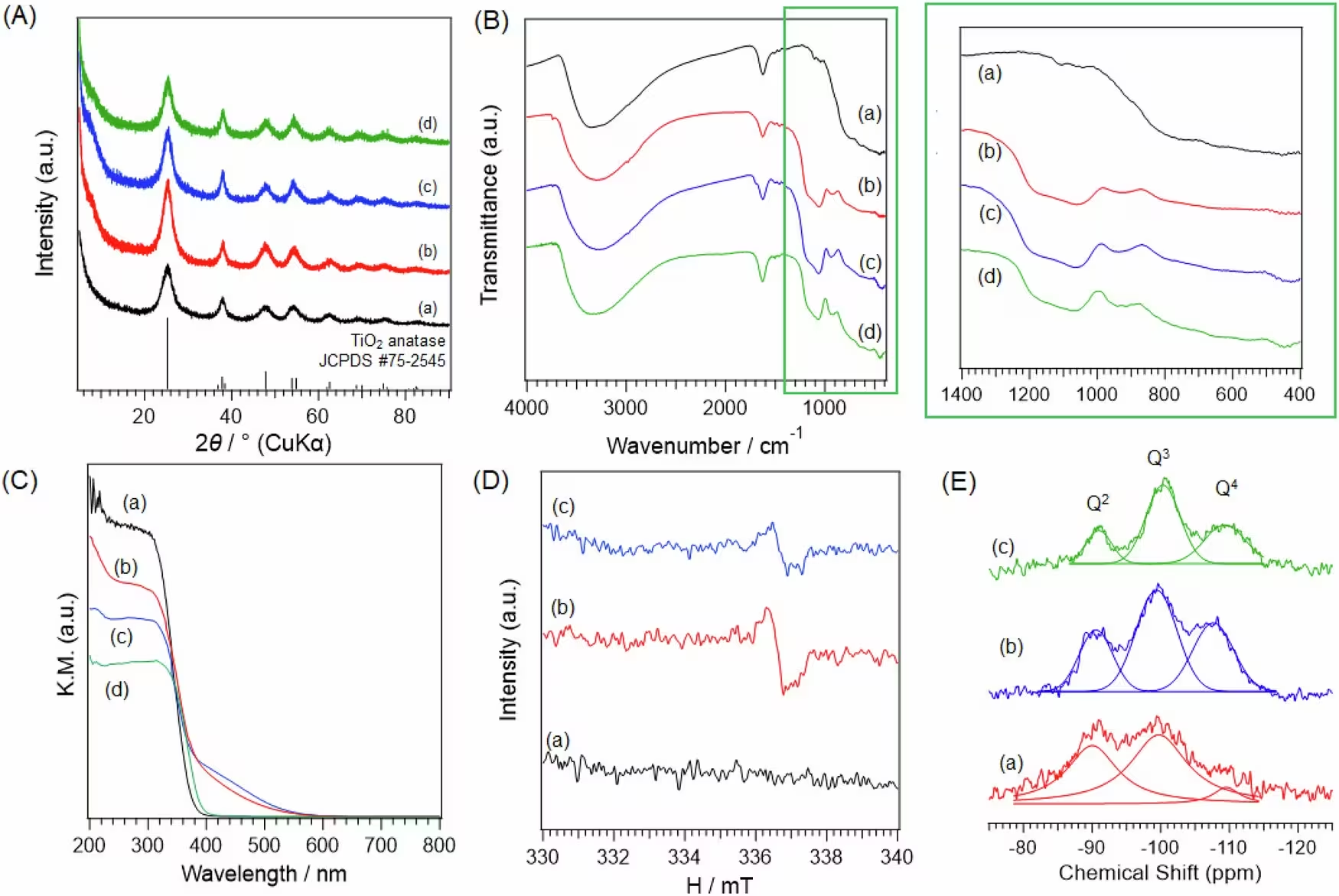
Catalytic evaluations using carbon monoxide oxidation as a model reaction at two hundred degrees Celsius demonstrated that the siloxane-coated samples outperformed their uncoated counterparts. While uncoated gold-titania catalysts suffered from particle growth and declining conversion efficiency over time, the coated variants maintained their structural integrity and catalytic activity throughout the test duration. Spectroscopic probes further revealed that the cage-siloxane layer created a distinct interfacial chemical environment, preserving electronic communication between the gold nanoparticles and the titania support while successfully preventing sintering.
What Limitations Remain for Scale-Up Applications?
Despite these promising improvements, certain challenges must be addressed before such materials see widespread industrial use. The synthesis process requires precise management of solvent mixtures, moisture levels, and reaction temperatures, such as refluxing in toluene, to achieve the desired degree of siloxane modification and partial titanium reduction. Furthermore, a fraction of loosely bound siloxane species can leach out during subsequent aqueous metal loading steps, indicating that further optimization is needed to lock the molecular coating permanently onto the metal oxide surface under diverse operational conditions.
The research was published in Journal of Sol-Gel Science and Technology on November 26, 2026.
This article has been fact checked for accuracy, with information verified against reputable sources. Learn more about us and our editorial process.
Last reviewed on .
Article history
- Latest version
Reference(s)
- Chino, Madoka., et al. “Molecular-level siloxane coating on nanoporous anatase TiO2 for controlled Au nanoparticle deposition.” Journal of Sol-Gel Science and Technology, vol. 120, no. 3, November 26, 2026 Springer Science and Business Media LLC, doi: 10.1007/s10971-026-07260-7. <https://doi.org/10.1007/s10971-026-07260-7>.
Cite this page:
- Posted by Anjali Singh