How Nano-Biochar Particle Size And Surface Chemistry Shape Environmental Remediation
A comprehensive review reveals how synthesis routes and surface engineering alter nano-biochar behavior, highlighting key environmental risks and trade-offs.
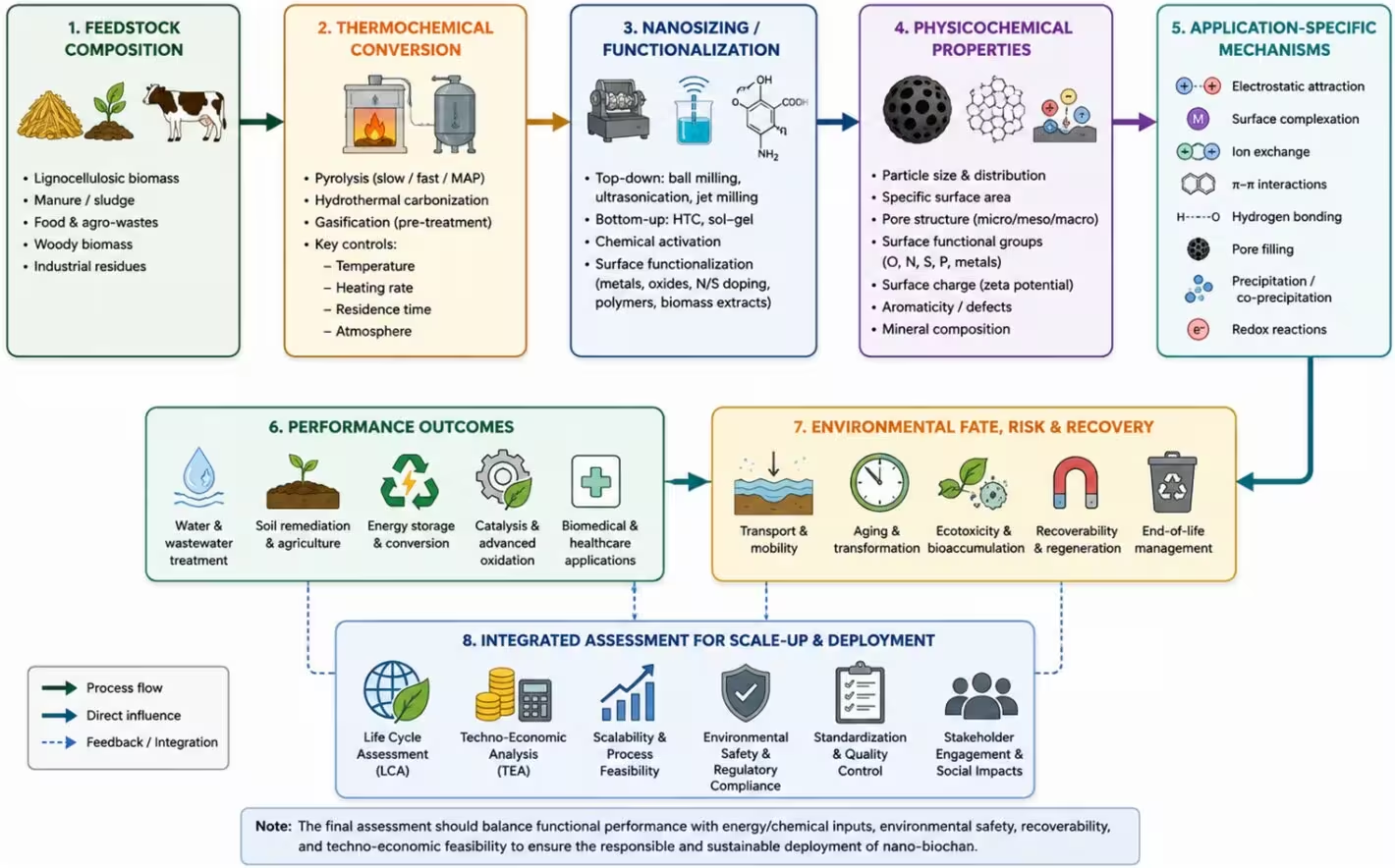
Nano-biochar materials derived from renewable biomass offer a promising alternative to traditional carbon nanomaterials, but their actual performance depends heavily on production methods and environmental conditions. A comprehensive review published in Discover Environment by Kirti Yadav and colleagues examines how reducing biochar to nanoscale dimensions alters its surface area, pore structure, and chemical reactivity.
How Do Top-Down And Bottom-Up Production Methods Change Nano-Biochar Properties?
Producing nano-biochar typically involves either breaking down bulk biochar through mechanical means like ball milling or building carbon structures from molecular precursors via hydrothermal carbonization. Mechanical milling can reduce particle sizes to roughly thirty nanometers after extended processing, but excessive milling often increases energy demand and promotes unwanted particle aggregation. Alternatively, hydrothermal processing handles wet biomass under heat and pressure to yield oxygen-rich surfaces without requiring dry feedstocks.
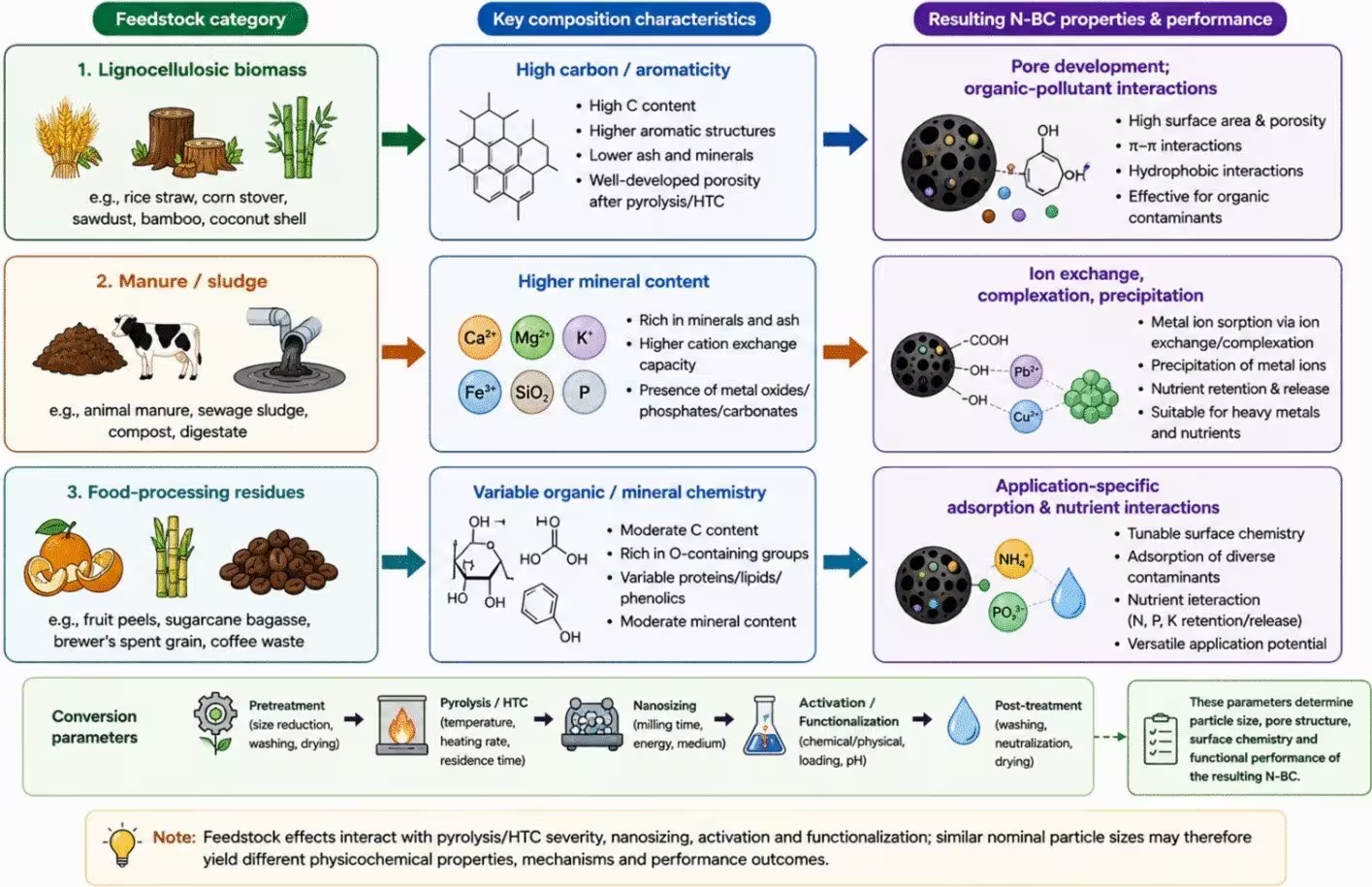
The choice of starting material dictates the final mineral content and aromaticity of the product. Lignocellulosic feedstocks such as wood and straw develop extensive pore networks, whereas manure- and sludge-derived materials introduce higher mineral concentrations that influence subsequent chemical interactions. Researchers must balance these preparation routes against energy consumption and chemical waste generation.
What Mechanisms Drive Contaminant Removal In Aquatic And Soil Environments?
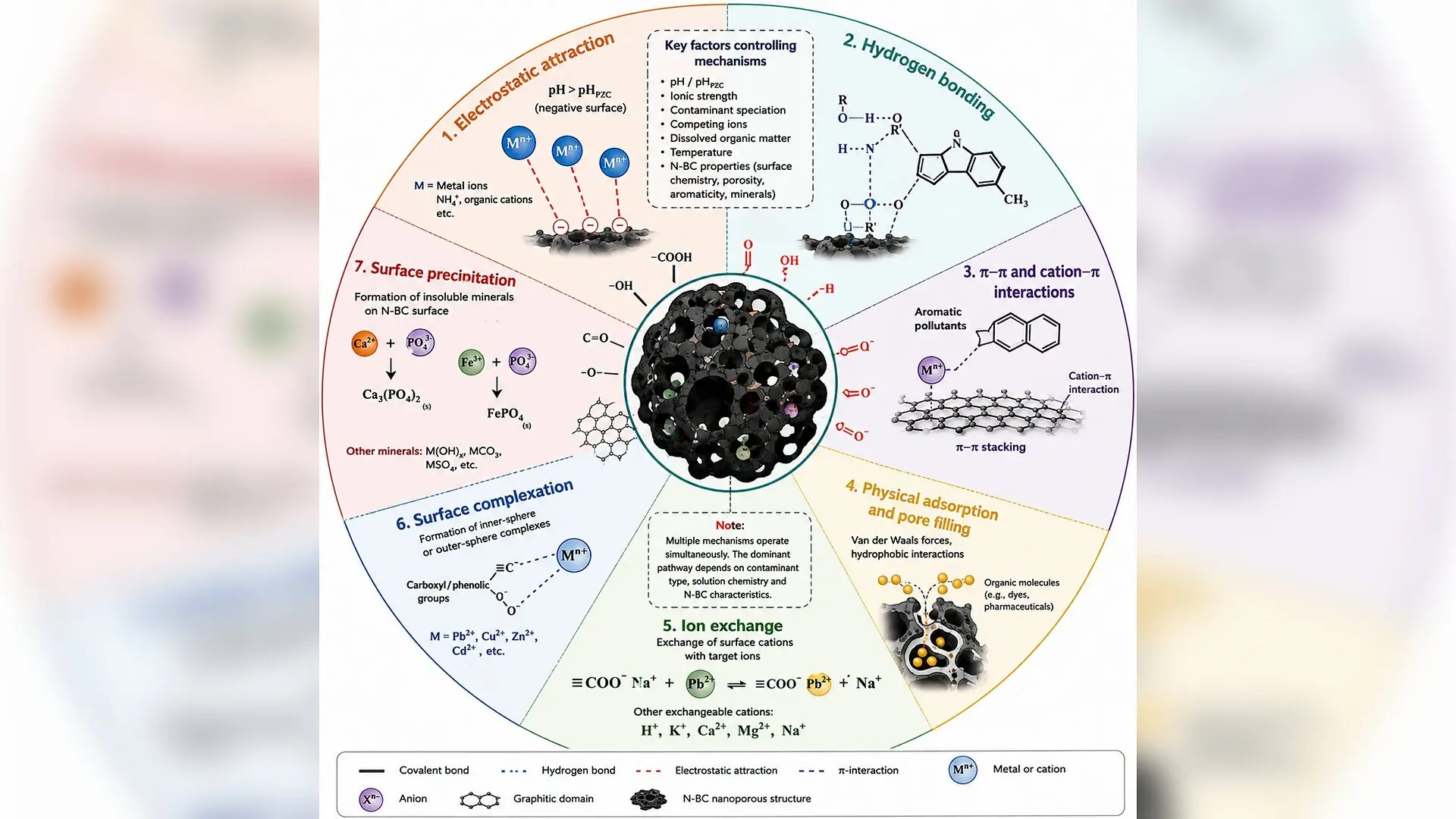
Nano-biochar removes heavy metals, organic dyes, and pharmaceutical pollutants through a combination of physical and chemical pathways. Rather than relying on pore filling alone, these carbon materials engage in electrostatic attraction, ion exchange, surface complexation, and mineral precipitation. For instance, the presence of surface hydroxyl and carboxyl groups allows the nanomaterial to bind metal ions such as lead and cadmium effectively.
However, single-solute laboratory tests often overestimate adsorption efficiency because real-world water bodies contain competing ions and dissolved organic matter. Furthermore, aging processes in soil and water can oxidize the nanoparticle surface over time, altering its charge and mobility. This dynamic nature means that initial laboratory performance does not always guarantee long-term stability or permanent contaminant immobilization.
What Environmental Risks Arise From Enhanced Nanoparticle Mobility?
While smaller particle sizes improve contaminant contact and agricultural nutrient retention, they also increase environmental mobility. Enhanced hydrodynamic mobility allows nano-biochar to migrate deeper into soil profiles, raising concerns about potential groundwater transport and unintended co-migration of bound pollutants. Consequently, high mobility acts as a double-edged sword that facilitates remediation while demanding strict environmental risk assessments.
The authors emphasize that future investigations must transition from short-term laboratory performance demonstrations to holistic evaluations. Incorporating standardized characterization, life-cycle assessments, and multi-component field validation will help determine whether nano-biochar can deliver safe, scalable benefits across agricultural and environmental applications.
The research was published in Discover Environment on November 26, 2026.
This article has been fact checked for accuracy, with information verified against reputable sources. Learn more about us and our editorial process.
Last reviewed on .
Article history
- Latest version
Reference(s)
- Kirti, , et al. “Synthesis characterization and applications of nano biochar derived from waste biomass.” Discover Environment, vol. 4, no. 1, November 26, 2026 Springer Science and Business Media LLC, doi: 10.1007/s44274-026-01123-2. <https://doi.org/10.1007/s44274-026-01123-2>.
Cite this page:
- Posted by Bilal Abbasi