How Precooking Maize at Different Temperatures Changes the Quality of Adjunct Beer
Thermal pretreatment of maize at ninety-five degrees Celsius maximizes alcohol yield, while milder heating secures better taste scores.
Brewing scientists have discovered that carefully adjusting how maize is precooked before it enters the mash tun can turn the locally grown grain into a highly efficient partial substitute for malted barley, boosting alcohol content and fermentation speed without ruining the drink’s taste. The beverage industry relies heavily on malted barley, but rising raw material costs and soaring consumer demand in regions like Ethiopia have triggered an urgent search for cheaper, abundant cereal alternatives that maintain high quality standards.
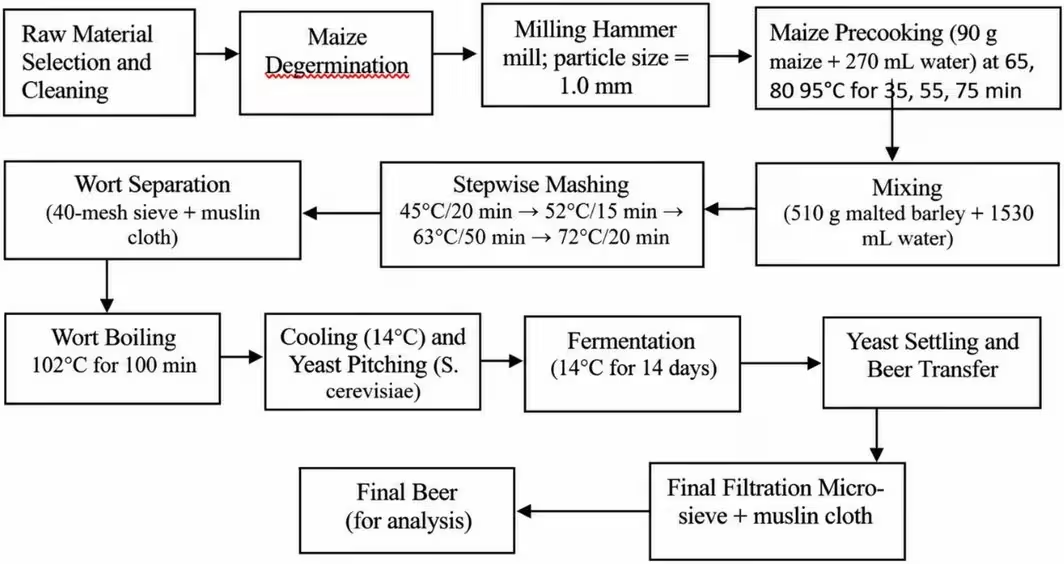
To evaluate how maize processing influences the final brew, researchers Behailu Bisenebet Mossie and Wendu Hilemichael Hilemeskel from the Bahir Dar Institute of Technology in Ethiopia tested a fifteen percent maize and eighty-five percent barley malt ratio under varying thermal conditions. The study, published in Food Science & Nutrition, explored nine different precooking treatments by combining three distinct temperatures of sixty-five degrees Celsius, eighty degrees Celsius, and ninety-five degrees Celsius with three different heating durations of thirty-five, fifty-five, and seventy-five minutes.
How Does Precooking Temperature Change Starch Conversion in Grain Admixtures?
Maize starch is naturally difficult for brewing enzymes to access because its gelatinization temperature sits higher than that of barley starch. Without adequate thermal pretreatment, the starch molecules remain tightly packed and resist breaking down into the simple sugars that yeast cells need to consume. By heating the maize grist prior to mashing, the researchers disrupted the rigid granular structure of the cereal starch, making it vastly more susceptible to the alpha-amylase and beta-amylase enzymes supplied by the malted barley.
The team tracked how these thermal adjustments rippled through the entire brewing process, measuring original gravity, final gravity, real extract, alcohol levels, and fermentation rates. When the maize was precooked at ninety-five degrees Celsius for seventy-five minutes, the wort achieved a remarkable original gravity of thirteen degrees Plato and an impressive apparent degree of fermentation reaching nearly eighty-five percent. This intense treatment maximized the release of fermentable extracts, allowing the yeast to convert sugars into ethanol with high efficiency.
What Are the Trade-Offs Between Fermentation Speed and Sensory Appeal?
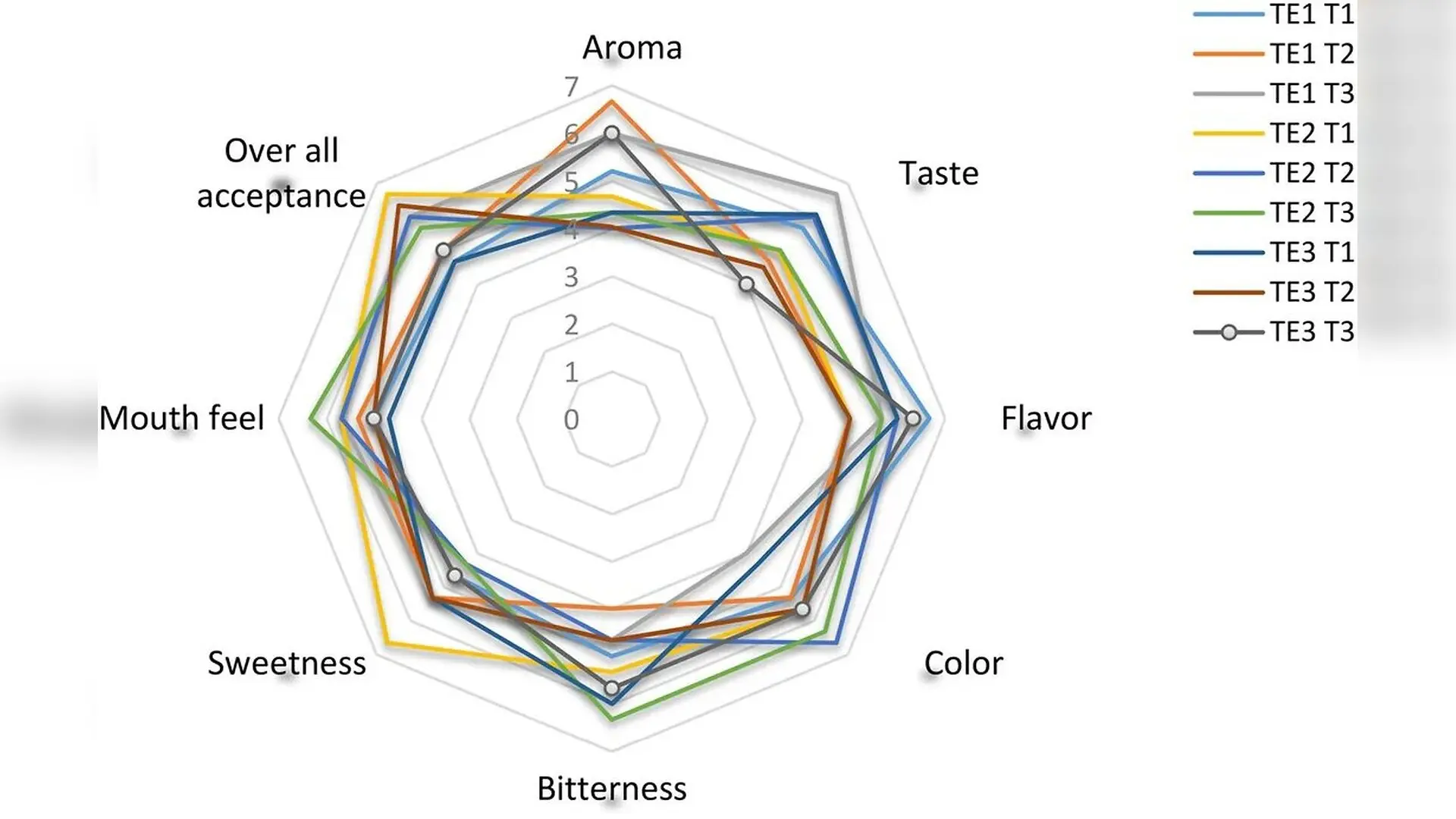
While the most aggressive heating conditions produced the highest alcohol yield at five point eight percent by weight and the fastest fermentation rate at one point five three units per day, they did not automatically yield the best-tasting beverage. Sensory panels evaluating the finished brews using a seven-point hedonic scale found that extreme heat could cause slight over-processing or diminish delicate aroma compounds. In contrast, moderate precooking conditions around eighty degrees Celsius for thirty-five minutes struck a delicate balance, scoring the highest overall sensory acceptability at six point six out of seven.
The evaluation revealed that shorter heating at moderate warmth preserved natural flavor integration and produced pleasant sweetness and smooth mouthfeel that compensated for lower color intensity. Meanwhile, prolonged exposure to high temperatures generated heavier Maillard browning reactions and increased bitterness, which altered the flavor profile. These findings indicate that commercial breweries must choose between optimizing strictly for maximum alcoholic output or tailoring the pretreatment parameters to secure superior consumer taste preferences.
What Limits Exist for Maize Adjunct Brewing in Local Markets?
The laboratory trials confirmed that replacing fifteen percent of malted barley with locally sourced white maize is entirely viable for expanding industrial production capacity. However, the analysis also recorded yeast viability levels ranging from fifty-one to nearly sixty-one percent, suggesting that the specific nutritional composition and environmental stresses of adjunct brewing place moderate physiological demands on the yeast cells. Future commercial applications will require careful economic and energy assessments to determine the large-scale cost-effectiveness of these thermal pretreatments alongside further optimization of grain ratios and storage stability.
The research was published in Food science & nutrition on November 23, 2026.
This article has been fact checked for accuracy, with information verified against reputable sources. Learn more about us and our editorial process.
Last reviewed on .
Article history
- Latest version
Reference(s)
- Mossie, Behailu Bisenebet., et al. “Optimization of Maize Precooking Conditions for Partial Replacement of Barley Malt in Beer Production.” Food Science & Nutrition, vol. 14, no. 11, November 23, 2026 Wiley, doi: 10.1002/fsn3.72632. <https://doi.org/10.1002/fsn3.72632>.
Cite this page:
- Posted by Robert Brown