Hidden Genetic Regulators Control Human Cell Survival Through Translation Rather Than Peptides
A genome-wide screen across human cells reveals that tiny upstream RNA regions dictate cell growth by acting as structural traffic lights rather than protein factories.
A sweeping genetic analysis reveals that small translated regions hidden inside the front sections of human messenger RNAs control cell survival primarily through their physical translation rather than the tiny proteins they produce. These regulatory components, known as upstream open reading frames, sit in the noncoding leader sequences preceding major protein-coding genes and have long puzzled researchers trying to determine whether their main job is making miniature functional peptides or acting as traffic lights for cellular machinery.
To untangle this mystery, an international research team led by Maria Rubtsova and Nikita Shepelev at Lomonosov Moscow State University mapped the functional impact of nearly a thousand of these regions across multiple human cell lines using high-throughput gene editing. The new work, published in Nucleic Acids Research, demonstrates that disrupting these upstream sequences frequently impairs cell growth, but the consequences depend heavily on cell type and structural alterations rather than the loss of any encoded microprotein.
How Did Researchers Test Nearly a Thousand Translated Regions?
The investigators built a specialized library for the Cas9 genome editing tool to target 969 translated upstream open reading frames across three distinct human cell models. These included near-haploid leukemia cells known as HAP1, lung adenocarcinoma cells called A549, and noncancerous embryonic kidney cells designated as HEK293T. By employing these diverse cellular backgrounds, the team could observe whether the fitness effects of disrupting these elements were universal or specific to certain tissues.
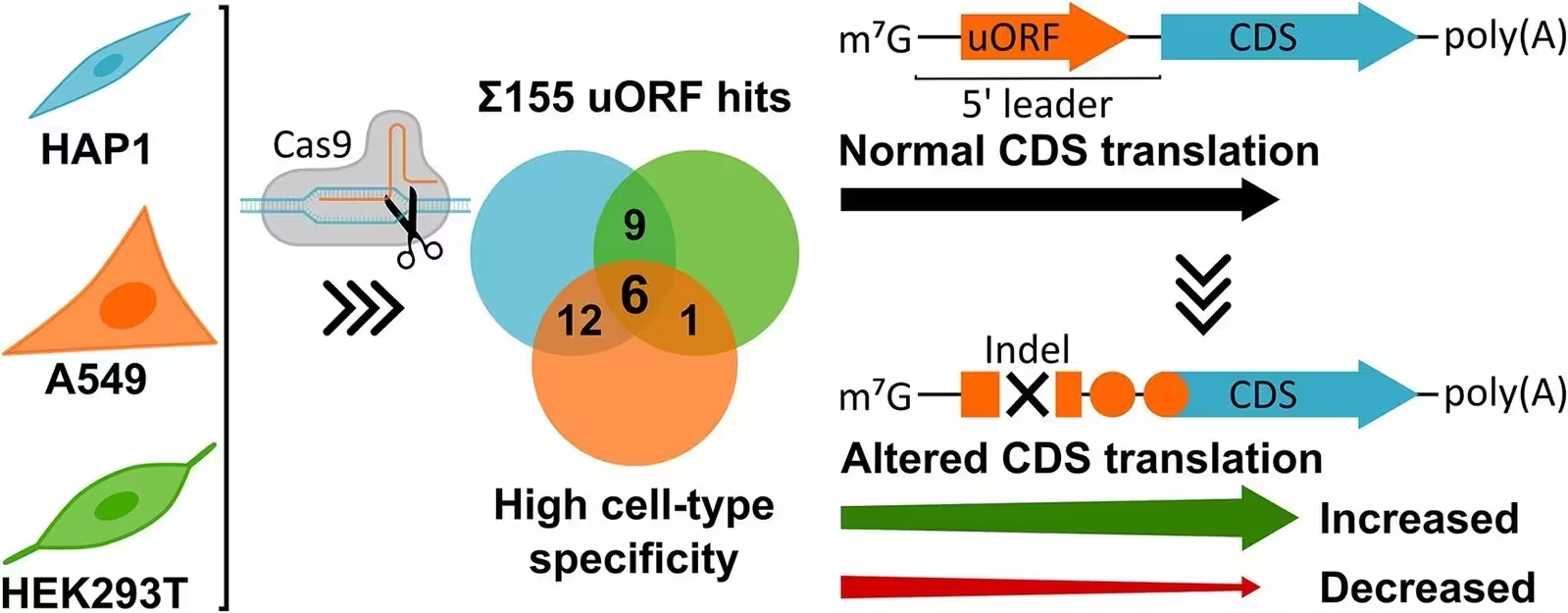
Out of the nearly one thousand targets, the disruption of 155 sequences significantly impaired cell proliferation in at least one cell line. However, these growth defects showed striking cell-type specificity, with only six targets sharing essential functions across all three lines. Furthermore, evolutionary conservation scores and protein-coding potential metrics failed to distinguish which upstream regions were essential for cell survival, indicating that traditional sequence conservation markers do not reliably predict their regulatory importance.
Why Do Small Mutations Cause Massive Changes in Gene Regulation?
To understand why cutting these regions altered cell growth, the authors analyzed the spectrum of genetic insertions and deletions generated by the editing process. They discovered that mutations did not simply abolish a functional peptide. Instead, small sequence alterations frequently remodeled the architectural relationship between the upstream region and the downstream protein-coding sequence, creating abnormal overlaps or fusions that severely repressed main gene translation.
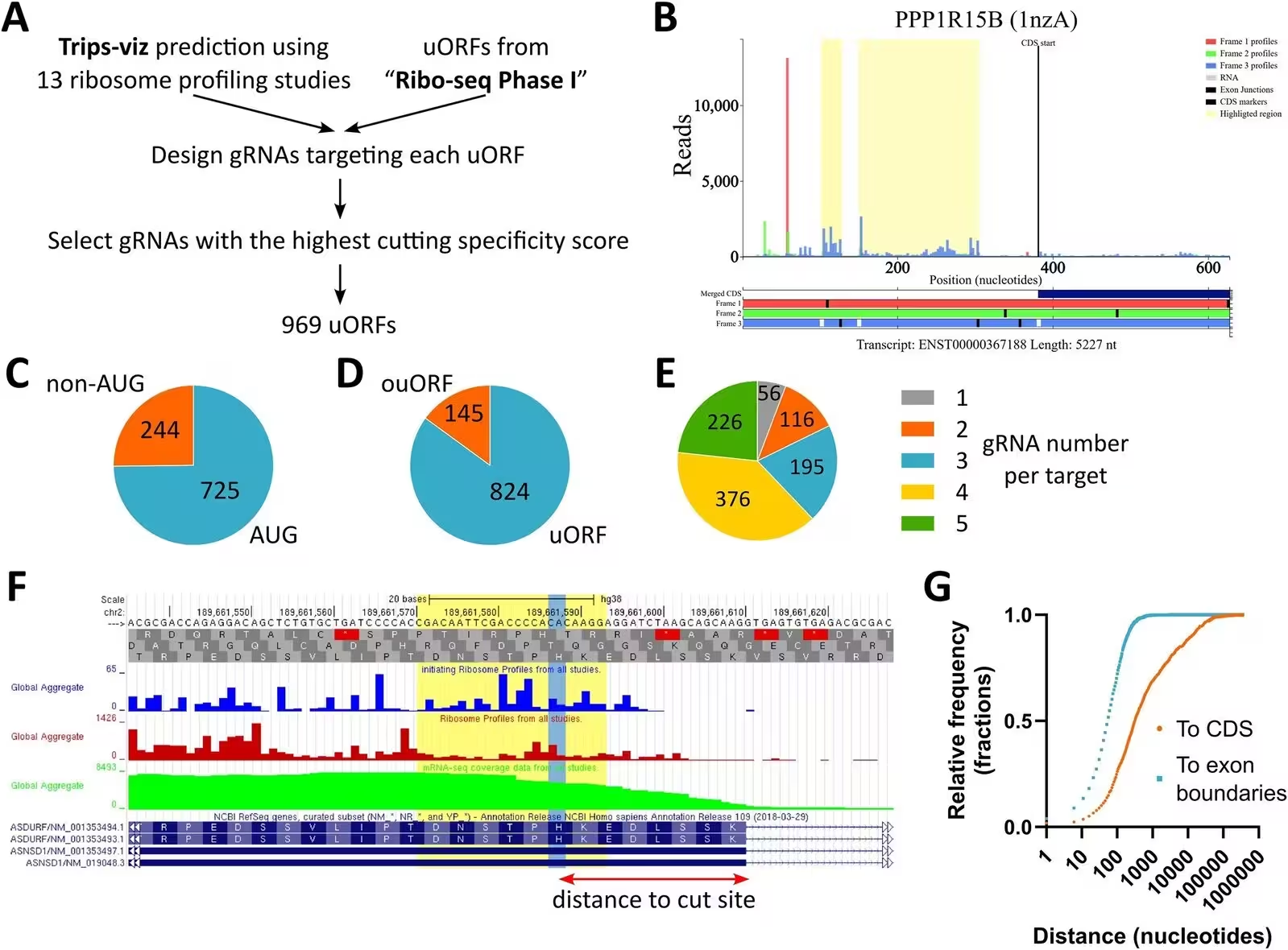
For example, saturation-style mutation tracking in specific target genes like DDX23 and TRAM1 showed that frame-shifting indels often triggered strong translational repression of the primary coding sequence. Conversely, mutations that eliminated the start codon of the upstream region relieved this repression. These findings indicate that the primary role of these upstream sequences is to act as delicate regulatory gatekeepers controlling how efficiently the cell translates the main protein.
What Does This Mean for Human Genetic Disease Research?
The discovery that upstream translation acts as a pervasive layer of gene control sheds light on how naturally occurring DNA variants might contribute to human pathologies. By scanning public genetic databases, the team identified thousands of variants within these leader regions that remain unannotated regarding standard protein changes but are capable of shifting translational control. Because these regulatory regions are particularly dense within short leader sequences, even single-letter DNA alterations can completely disrupt normal cellular proliferation. Future clinical diagnostics may need to pay closer attention to noncoding variants located within these translated upstream segments to fully understand their role in human disease.
The research was published in Nucleic acids research on November 23, 2026.
This article has been fact checked for accuracy, with information verified against reputable sources. Learn more about us and our editorial process.
Last reviewed on .
Article history
- Latest version
Reference(s)
- Shepelev, Nikita M., et al. “Translons upstream of protein-coding regions rather than their products are crucial for proliferation of human cells of distinct origin.” Nucleic Acids Research, vol. 54, no. 22, November 23, 2026 Oxford University Press (OUP), doi: 10.1093/nar/gkag1263. <https://doi.org/10.1093/nar/gkag1263>.
Cite this page:
- Posted by Robert Brown