Summer Vitamin D Deficiency Triples Mortality Risk While Winter Drops Show No Link
A large population study reveals that testing vitamin D during sunny months predicts health outcomes, while winter deficiencies show no increased risk.
A large new study reveals that having low vitamin D levels in the middle of summer is tied to nearly triple the risk of death, whereas the same deficiency recorded during winter shows no such link. The surprising findings challenge decades of standard medical practice regarding how and when doctors should test patient vitamin D status.
Vitamin D is primarily manufactured in human skin through exposure to ultraviolet B radiation from the sun, peaking globally about one month after the height of summer. Because up to half of Western populations regularly take vitamin D supplements or undergo blood tests, identifying who truly faces health risks from a deficiency remains a major public health priority. Clinical guidelines traditionally recommend testing patients during darker winter months when levels naturally drop by up to half, but researchers suspected that year-round stability matters more than seasonal fluctuations.
To investigate how the timing of a blood draw alters health predictions, Karl Michaëlsson and his research team at Uppsala University analyzed data from two Swedish population-based groups comprising 5,010 women averaging 68 years of age and 7,291 women and men averaging 74 and 73 years old respectively. The team published their results in PLOS Medicine, tracking participants over an average of 11 years using national registries to record all deaths and bone fractures.
The researchers quantified serum 25-hydroxyvitamin D3, which is the primary circulating form of the vitamin that reflects both natural sunlight synthesis and dietary intake. Blood samples were collected across all four seasons, and participants completed detailed questionnaires about lifestyle, outdoor physical activity, and supplement use.
Why Does Summer Vitamin D Deficiency Predict Higher Mortality Rates?
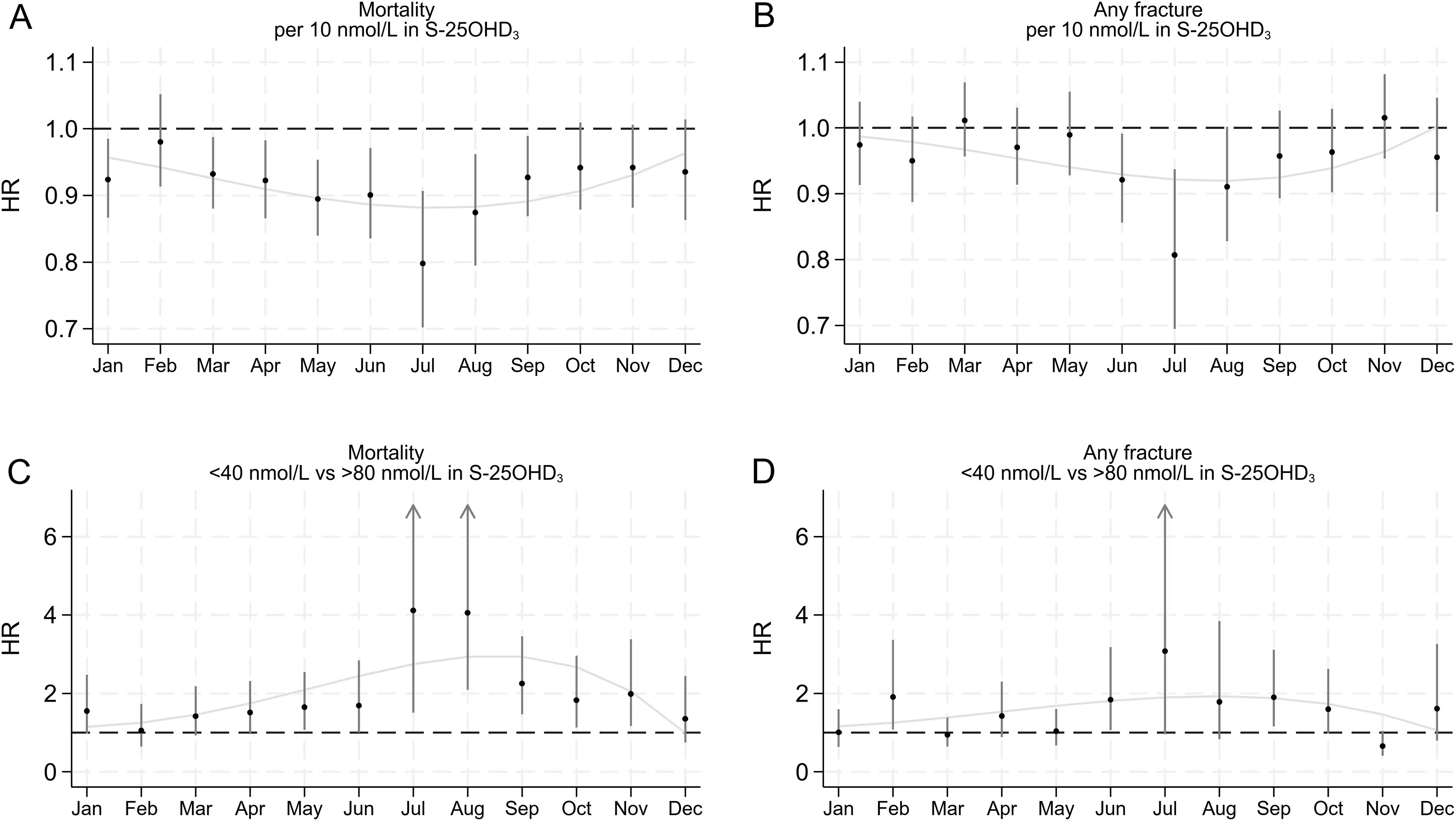
Participants who maintained low serum vitamin D concentrations below 40 nanomoles per liter from July through September faced an adjusted hazard ratio for all-cause mortality of 2.86 compared to individuals with high summer levels above 80 nanomoles per liter. Each 10 nanomole per liter increase in summer vitamin D conferred a protective hazard ratio of 0.88 for mortality.
Conversely, individuals who registered low vitamin D levels between January and March showed no statistically significant increase in mortality rates compared to those with high winter levels. The researchers observed a similar seasonal pattern for broken bones. A summer vitamin D deficiency was associated with an adjusted hazard ratio of 1.97 for any fracture and 2.82 for hip fractures, whereas winter deficiencies showed no such elevated risks.
How Do Fat Reserves and Sun Behavior Shape Year-Round Status?
The human body stores roughly three-quarters of its total vitamin D inside fat tissue, slowly releasing the nutrient into the bloodstream during dark winter months when sun exposure is scarce. Individuals who fail to build adequate reserves during the sunny season lack this protective buffer, pointing toward chronic insufficiency or metabolic impairments rather than a normal seasonal dip.
The team found that self-reported habits strongly influenced these baseline measurements. People who preferred seeking shade during sunny weather had vitamin D concentrations that averaged 10 nanomoles per liter lower than sun-seeking peers, even after adjusting for time spent outdoors. Exercise levels, by contrast, showed no seasonal variation and did not explain the divergence in health outcomes.
What Are the Limitations of This Observational Work?
Because the investigation relied on an observational design, the authors noted that it cannot establish direct causation between vitamin D levels and death or fracture rates. The study population consisted exclusively of White adults in Sweden, meaning the conclusions might not translate directly to nonwhite populations who handle calcium absorption and excretion differently. Furthermore, outdoor sun exposure and tanning habits were self-reported through questionnaires, leaving room for minor reporting inaccuracies.
The authors suggest that their findings explain why numerous randomized controlled trials of vitamin D supplementation have failed to show clear health benefits, as those trials often recruited participants based on winter tests rather than summer deficits. Assessing vitamin D status during the sunny season could finally help researchers target true deficiencies and design more effective clinical interventions.
The research was published in PLOS Medicine on November 24, 2026.
This article has been fact checked for accuracy, with information verified against reputable sources. Learn more about us and our editorial process.
Last reviewed on .
Article history
- Latest version
Reference(s)
- Michaëlsson, Karl., et al. “Season of sampling and the relationship of serum 25-hydroxyvitamin D3 with mortality and fracture: A population-based cohort study.” PLOS Medicine, vol. 23, no. 11, November 24, 2026, pp. e1005080 Public Library of Science (PLoS), doi: 10.1371/journal.pmed.1005080. <https://doi.org/10.1371/journal.pmed.1005080>.
Cite this page:
- Posted by Priya Sharma